
Wyckoff Heights Roofs Take a Beating – Here’s Who Actually Knows How to Fix Them
The first stress test reveals everything the surface fix missed. The leak you’re staring at on your ceiling in Wyckoff Heights is often the least useful clue about what’s actually failing on your roof – water travels across flashing, edges, and membrane seams, picking up speed and direction before it ever decides where to show up indoors, which means chasing the stain usually puts you in the wrong place from the start.
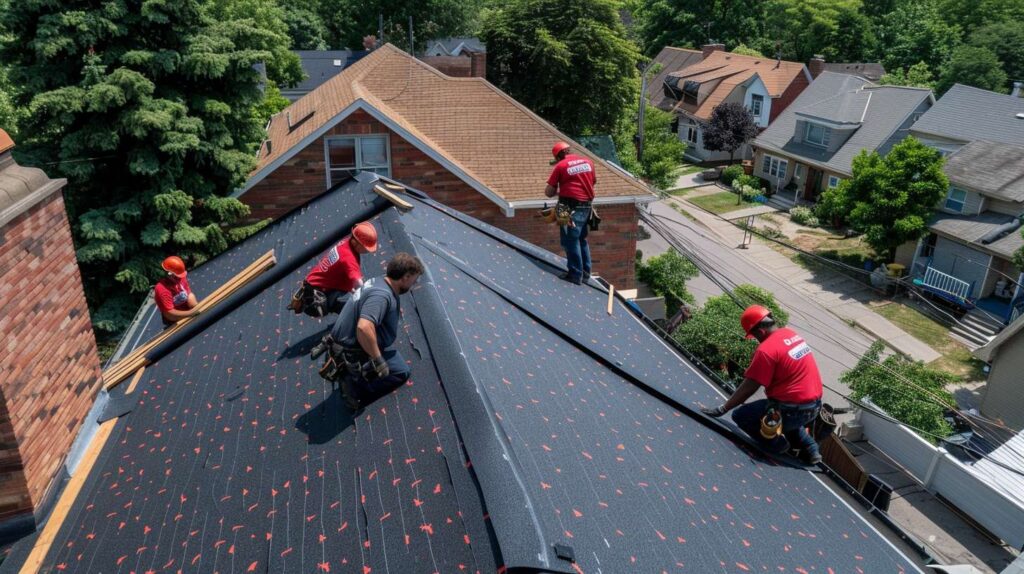
Why the Ceiling Stain Is Usually the Wrong Starting Point
Three houses into Wyckoff Avenue, this is where my phone usually starts ringing after hard wind. People describe the stain like it’s a confession – brown circle near the light fixture, soft spot in the drywall, a drip that only happens when it rains hard from the northwest. But a stain is a destination, not a source. The water that made it might have entered at the parapet edge, slipped under a flashing transition, or pooled in a low spot on a flat section three or four feet away from where it finally came through. Think of it the way you think about the A train going local between Jay Street and High Street – the delay doesn’t start at the stop where everybody groans. It started earlier, and you just didn’t feel it until now.
Three houses into Wyckoff Avenue, this is where my phone usually starts ringing after hard wind – and what I hear almost every time is a homeowner describing the ceiling while the roof edge is still sitting there with the real answer. Wyckoff Heights housing stock is mostly attached or semi-attached brick, a lot of it built between the 1920s and 1950s, which means layers of roofing history on top of each other. Old patchwork from previous owners, flashing that’s been re-caulked more times than anyone remembers, rear additions with their own roofline transitions sitting at odd angles to the main structure. That’s where problems start. Not at the stain.
YES → This is an emergency roof repair situation. Call immediately. Protect interior with buckets and plastic. Do not wait for weather to clear.
NO → Continue to Step 2.
YES → Schedule a roof inspection within 24-48 hours. Focus on shingles, edge metal, flashing transitions, and drain areas before another storm hits.
NO → Continue to Step 3.
YES → Book a full roof inspection to assess whether targeted repair still makes sense or whether roof replacement planning is the more honest path.
NO → Continue to Step 4.
YES → Start with targeted roof leak detection and chimney flashing repair or skylight inspection. A full-scope repair plan may still be needed after tracing the full path.
NO → Schedule a general roof inspection – the entry point may be less obvious than any of the above.
Where Wyckoff Heights Roof Problems Actually Begin
Flat sections that hold water longer than they should
Here’s the part nobody likes hearing: most leaks don’t come from a clean hole in the roof. They come from transitions – a spot where two different roof systems meet, where the flashing was never fully sealed to the parapet, where a drain sits low enough to collect debris and slow things down. I’m Latasha Monroe, and after 14 years coordinating emergency roofing calls and leak-pattern triage for Dennis Roofing, I can usually name the failure category before the crew pulls up to the building – not because I’m guessing, but because I’ve heard the same combination of symptoms enough times to recognize the pattern before anyone gets on the ladder.
Sloped areas where wind damage starts small
I had a caller once who swore the stain told the whole story. It was 6:12 a.m. on a cold March morning, and she was on Stockholm Street describing water coming through her bathroom vent in neat little clicks, like a metronome. She was absolutely certain the vent boot had failed. But when our crew got up there, the vent boot was fine. The real issue was water traveling from loose chimney flashing two roof sections uphill, running along the sheathing until it found the vent penetration as its easiest exit point. That’s the day I started telling people: leaks commute before they arrive.
If you’re pointing at the ceiling, I’m already asking what the roof edge looks like. Flat roof drainage failures, membrane seam issues, and wind-lifted shingle edges all produce similar indoor symptoms but need completely different repairs. And in Wyckoff Heights specifically, the situation gets complicated fast – attached homes share drainage paths across property lines, rear extensions sit at angles that catch wind differently than the front of the building, and parapets on older flat sections were sometimes built low enough that standing water has nowhere to go when drains clog. Brooklyn wind channels along these blocks in ways that stress edges differently than what homeowners expect, which is why edge metal and flashing details tend to fail here before the field of the membrane does.
| What You Notice Indoors | What Often Causes It on the Roof | Common Roof Types Affected | Typical Service |
|---|---|---|---|
| Brown ceiling stain near exterior wall | Failed edge metal or parapet flashing | Flat roof, modified bitumen | Flashing repair, roof leak detection |
| Water near chimney or fireplace | Open or corroded chimney flashing | Asphalt shingle roof, flat sections | Chimney flashing repair |
| Drip at or near a vent or light fixture | Water traveling from uphill flashing or seam failure | Flat roofing, EPDM, TPO | Roof leak detection, targeted repair |
| Bubbling or soft ceiling after rain | Ponding water over clogged drain or low spot | Flat roof, tar and gravel | Drain clearing, membrane inspection, roof repair |
| Stain that appears only in heavy wind-driven rain | Lifted shingle tabs or exposed nail line at edge | Asphalt shingle roofing | Wind damage repair, shingle repair or replacement |
| Water marks near skylight frame or shaft | Failed skylight flashing or deteriorated curb seal | Any roof type with skylight penetration | Skylight repair, flashing replacement |
Flat Roof / Flat Roofing
Asphalt Shingle Roof
Metal Roof / Metal Roofing
Rubber Roof / EPDM / TPO / Modified Bitumen / Tar and Gravel
Patches, Coatings, and Full Replacements Are Not the Same Bet
Blunt truth: a neat-looking patch can hide a messy roof. I remember one August afternoon – right around 3:40 – when a landlord in Wyckoff Heights kept insisting his flat roof had been “fixed twice already,” so the bubbling ceiling in the top-floor unit had to be a plumbing problem. Our inspection found a patch laid over trapped moisture on an old modified bitumen section, and the summer heat had turned the whole thing into a little steam factory. He went quiet for a full ten seconds when we showed him photos – which, in this job, is basically a confession. The patch looked fine from above. The substrate underneath had been wet for months. Roof repair, roof coating, roof sealing, and roof replacement are four different tools, and they’re not interchangeable. A patch is only as honest as what’s underneath it, and a coating applied over soaked insulation is decoration, not protection.
| Using Roof Coating as a Solution – Honest Assessment | |
|---|---|
| Pros | Cons |
| ✔ Extends waterproofing life on an otherwise sound membrane | ✘ Cannot solve soaked or compressed insulation underneath |
| ✔ Reflective coatings reduce heat absorption on Brooklyn flat roofs in summer | ✘ Open seams and failed flashing details still leak through a coated surface |
| ✔ Lower upfront cost than full flat roof installation or replacement | ✘ Rotten decking will not be stabilized by a surface coating |
| ✔ Can add 5-10 years to a system that’s genuinely still structurally sound | ✘ Applied over a wet substrate, it traps moisture and accelerates decay |
| ✔ Worthwhile prep step before a more involved repair on the right candidate roof | ✘ Masking bubbling or blistering without addressing the cause creates a bigger repair later |
- Mastic over a wet section – if the substrate beneath is damp when you seal over it, you’ve just created an enclosed moisture environment. On modified bitumen and flat roofing, this accelerates delamination.
- Layering new material over trapped moisture – a second or third patch on the same spot is almost always covering up something the first patch didn’t fix, not fixing it.
- Ignoring bubbling – surface bubbles on a flat roof or modified bitumen section are moisture vapor trying to escape. They are not cosmetic. Pressing them down or coating over them delays a conversation you’ll eventually have at a higher price.
- Assuming a leak “stopped” because it rained less – dry weather doesn’t close open seams or re-adhere lifted flashing. The entry point is still there. The next storm will find it again.
What to Check Before You Assume You Need a New Roof
Fast clues after a storm
A roof leak is a lot like a stalled train – what ruins your morning started farther back on the line. Water doesn’t enter at the ceiling. It enters somewhere on the roof surface, at an edge, a seam, or a flashing detail, and then it travels – sometimes several feet, sometimes across multiple sections of a mixed-roofline building – before it finds the path of least resistance into your living space. That travel time is why the stain’s location is often misleading, and why the photos that matter most to a roofer are the ones taken from outside, showing the edge conditions, the parapet, the drain area, and the flashing transitions – not the wet spot on the drywall.
Details worth photographing for the roofer
During one windy Sunday in November, I was coordinating emergency roof repair calls when a family sent over a video of shingle tabs fluttering near their gutter line – just flapping in the wind like playing cards in bicycle spokes. They figured they needed a few shingles re-nailed. But the wind had also exposed weak decking along the edge, and water was already tracking toward the fascia in a way that changed the whole scope of the job. That one stuck with me because it looked small from the sidewalk and expensive from ten feet up – honestly, the most Wyckoff Heights kind of roof problem there is. And I’ll say it plainly: I don’t trust any assessment that calls something “just a few shingles” or “definitely a whole new roof” without actually tracing the route first. Ground-level guesses in either direction can cost you.
So what exactly would you want a roofer to see before you start guessing at the price?
| Common Assumptions That Lead to the Wrong Roofing Service | |
|---|---|
| Myth | Fact |
| “The stain is where the leak is coming from.” | Water travels before it exits. The stain marks the end of the route, not the entry point. Proper roof leak detection traces backward from the stain. |
| “Flat roofs always need full replacement when they leak.” | Many flat roof leaks are isolated seam, drain, or flashing failures – fully repairable without a new flat roof installation if the substrate is sound. |
| “One missing shingle is always a minor fix.” | A missing shingle can expose decking to moisture entry, and wind damage to the surrounding tabs or edge metal may be more significant than the shingle itself. |
| “A roof coating will stop the leak.” | Roof coating is a waterproofing extension tool for sound membranes. It does not repair open seams, failed flashing, or saturated insulation underneath. |
| “Insurance always covers storm-related roof work.” | Insurance claim roofing coverage depends on the cause, your policy details, and documented evidence of storm damage. Pre-existing wear is typically excluded – documentation matters from day one. |
How a Solid Wyckoff Heights Roofing Visit Should Unfold
But that’s not where the line broke – and a good roofing visit is built around finding exactly where it did. A competent inspection for residential roofing or commercial roofing doesn’t start at the stain. It starts with a conversation about when and where water appeared, then moves outside to document failure points before anyone looks at the ceiling again. Ask for exterior photos of the actual failure point, and one photo that connects that exterior point to the interior leak path – that’s the documentation that actually tells the story. The visit should end with a clear explanation of whether this is an emergency roof repair situation, a targeted roof leak repair, or the beginning of a replacement conversation, and the scope should be written out, including gutters, skylight details, chimney flashing, and any waterproofing concerns that came up during inspection.
Do I need roof repair or a full roof replacement?
Can you work on flat roofs and shingle roofs?
Will insurance claim roofing help after wind damage?
Do gutters, skylights, and chimney flashing get checked during the same visit?
If water is already moving through your house or you think storm damage may have opened the roof edge, don’t sit on it waiting for a second opinion from a neighbor. Call Dennis Roofing and get a real inspection – one that traces the actual route – instead of another guess-and-patch visit that buys you three months and a bigger problem.