
Manhattan Beach Is One of Brooklyn’s Most Exclusive Neighborhoods – the Roof Should Reflect That

Most problems I see on Manhattan Beach roofs aren’t caused by old age – they’re caused by small details that somebody rushed through during installation and nobody caught until water found its way in. The right response isn’t to guess at a fix. It’s to follow how water actually moves across that specific roof system first, then decide whether you’re looking at a targeted repair, a replacement, or something in between.
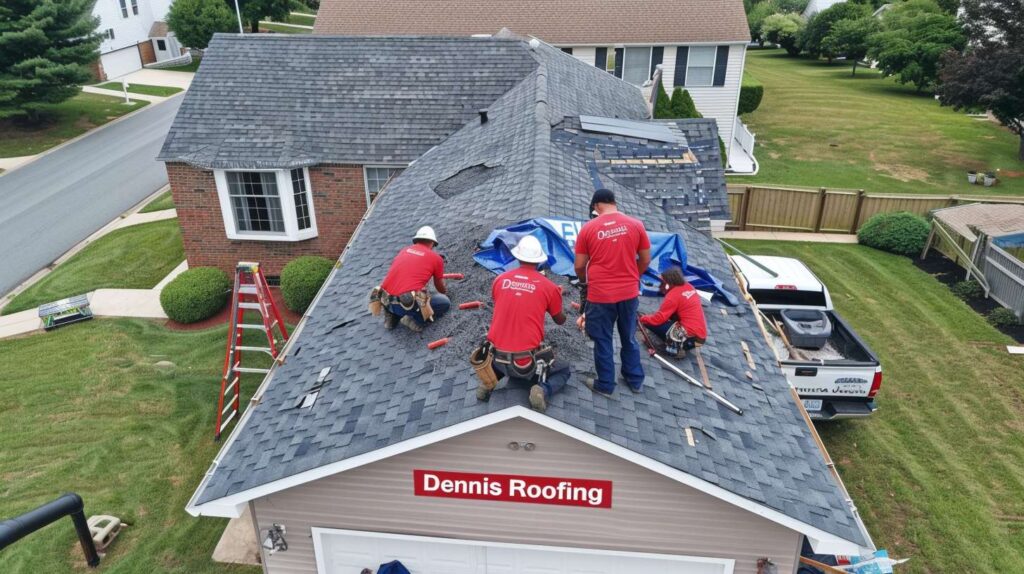
Professional roofers installing new shingles on a Manhattan Beach home under clear blue skies

Why Luxury Homes Near the Water Still End Up With Leaks

On a Manhattan Beach roof, the first thing I look at is where the water hesitates. Expensive homes in this neighborhood often have complicated rooflines – dormers, skylights, rear flat sections, decorative copper trim – and every one of those transitions is a place where water can slow down, turn sideways, or get invited in through a gap that’s two millimeters wide and invisible from the curb. The issue usually isn’t age. It’s that the install was done to look right, not to perform right, and the water eventually finds out.

Here’s where the path changes: water doesn’t respect aesthetics. I’m Marcus Webb, and after 17 years specifically tracing leak paths and drainage behavior on high-end Brooklyn homes near the water, I can tell you plainly that the most dangerous roof is often the one that looks expensive and complete from the sidewalk. Fresh copper accents, clean ridge lines, matching shingles – none of that tells you what’s happening at the flashing laps, the perimeter edge, or underneath a membrane that was never properly tied in.

MYTH VS. FACT: What Manhattan Beach Homeowners Assume About High-End Roofing
Myth What Actually Happens on the Roof
“If the roof is newer, it shouldn’t leak.” New roofs fail from bad installation details, not just age. A two-year-old roof with poor flashing laps can leak faster than a well-maintained fifteen-year-old system.
“A small stain means a small repair.” Ceiling stains mark where water finally slowed down – not where it entered. The actual entry point can be several feet away, and the moisture path in between may involve saturated insulation or rotted decking.
“Copper trim means the whole system was installed correctly.” Decorative copper signals aesthetic attention, not waterproofing quality. The membrane tie-ins and step flashing behind the copper are what actually controls water – and they’re invisible from grade.
“Flat roof sections are less important than the main pitched roof.” Flat roofs over rear extensions pond water, trap moisture under old membranes, and funnel failure directly into finished living spaces. Ignoring them because they’re smaller is one of the most expensive mistakes on these properties.
“Skylights only leak when the glass fails.” Skylight glass almost never fails. Water enters through the curb flashing, the pitch transition, or the surrounding waterproofing membrane – all of which are installation and maintenance issues, not glass issues.

Quick Facts: What Matters First in a Manhattan Beach Roof Evaluation
PRIMARY RISK
Wind-driven water at transitions – dormers, chimneys, skylights, and low-slope connections are the first places to examine when any leak appears near the water.
MOST-MISSED ISSUE
Flashing and edge details – chimney flashing, parapet caps, drip edge, and perimeter membrane terminations are consistently underbuilt on otherwise high-end roofs.
ROOF TYPES INVOLVED
Flat roof sections combined with sloped asphalt shingle or metal roofing transitions – these mixed systems require assembly-level review, not surface-only inspections.
BEST FIRST SERVICE
A roof inspection with documented leak tracing – not blind patching. Patching without tracing the water path tends to push the problem six feet in a different direction.

Follow the Water Before You Decide on Repair or Replacement

Here’s the blunt version: an expensive house does not automatically have an expensive-quality roof. I remember being on a Manhattan Beach block just after 6:30 in the morning, the off-the-water wind hitting harder than the forecast said it would, and the homeowner was genuinely embarrassed – the leak had only shown up the night before while they were hosting people. The house looked immaculate from the curb. But the roof had a sloppy chimney flashing repair from a previous contractor, and water had been traveling sideways under the surface before it ever showed on their ceiling. That block sits close enough to the waterfront that directional weather exposure is stronger than most owners realize. Three or four blocks inland, that same wind comes in differently. The leak behavior changes, the failure points shift, and the inspection has to account for that.

Separating a targeted roof repair from a full roof replacement means following the water through the field, the seams, all the penetrations, and then checking decking condition underneath. You can’t make that call from a ladder at the eaves. On mixed-system homes – which describes a lot of Manhattan Beach properties with rear flat roof sections attached to pitched shingle or metal roofing – the residential roofing and commercial roofing logic actually overlap. Flat membranes, drainage slopes, and seam integrity all matter the same way they do on a commercial building, and they need to be evaluated the same way.

Follow the water, and it tells you whether you’re dealing with one failed detail or a system that’s reached the end of its reliable life. Emergency roof repair should solve active entry points first – cosmetic concerns come after the water stops moving.

If you guess before you trace the water, you’re just paying for prettier mistakes.

Decision Tree: Roof Repair, Emergency Repair, or Replacement?
START: Did water enter the home during the last storm?

↓ YES
Is the entry point active right now?
YES →
🚨 Emergency Roof Repair
Stop active intrusion first. Call same day.
NO → Was it tied to one detail (flashing, skylight, vent)?
YES → Roof Repair / Roof Leak Repair at the specific failed detail
NO → Moisture in multiple areas or under old membrane layers? → Roof Replacement / New Roof. If uncertain: Roof Inspection first.

↓ NO
Are shingles, membrane seams, or flat roof edges visibly failing?
YES → Roof Inspection + Likely Planned Repair before the next storm season
NO → Schedule Roof Maintenance and annual Roof Inspection to stay ahead of it

Service Choice by Roof Condition and Roof Type
Observed Condition Likely Roof Type Best Service Why That Choice Fits
Isolated chimney flashing failure, one interior stain Shingle roof with masonry chimney Chimney flashing repair + roof leak repair Damage is localized. Full replacement isn’t warranted if the field and decking are sound.
Skylight staining, drip at frame during rain Pitched shingle or low-slope roof with skylight Skylight repair + perimeter waterproofing correction The curb and surrounding field are almost always the source – skylight glass is rarely the problem.
Aging asphalt shingle roofing, second repair in three years Asphalt shingle roofing Roof replacement / new roof installation Repeated repairs signal systemic failure. Continued patching costs more over time than a proper new roof.
Flat roof with visible ponding, soft spots when walked Flat roof – EPDM, TPO, or modified bitumen roofing Full flat roof replacement with drainage correction Saturated insulation can’t be dried in place. Replacing the membrane without fixing the slope just repeats the problem.
Metal roofing with fastener backout or open seams Metal roof – standing seam or exposed fastener panel Commercial roof repair or targeted metal roof re-fastening and seam sealing Seam and fastener failures are repairable if the substrate is intact – but they need to be addressed before coastal wind loading makes them worse.
Storm-lifted edges, exposed underlayment visible from street Shingle roof or metal roof Emergency roof repair + wind damage repair + insurance claim documentation Active exposure requires immediate temporary protection. Proper documentation supports insurance claim roofing and prevents disputes over pre-existing conditions.

The Flat Roof Problem That Gets Minimized Too Often

A few summers ago, I stood on a rear flat roof three blocks from the water – specifically off Oriental Boulevard, where the salt air comes in low and direct – and watched the whole story reveal itself. My client was a retired attorney, sharp guy, very composed, who kept saying, “It’s only a small flat roof over the rear section, how bad can it be?” And honestly, from the yard it looked fine. The masonry was immaculate. The copper accents were expensive. The patio furniture was covered like the property was curated. But once we opened up part of that assembly, we found trapped moisture sitting beneath an old modified bitumen roofing layer that had been due for replacement years earlier. The insulation underneath was holding water like a sponge. That’s what a flat roof over a rear section can become when it’s treated like an afterthought on an otherwise polished home – and it’s far more common than people want to hear. Flat roofing in any form, whether that’s modified bitumen roofing, EPDM roofing, TPO roofing, rubber roof systems, or tar and gravel roof assemblies, requires assembly-level judgment at every stage. You have to evaluate drainage slope, seam integrity, insulation condition, and membrane tie-ins. Surface guessing – poking around with a probe and deciding it looks okay from above – doesn’t tell you what’s sitting underneath.

Flat Roofing Options for a Manhattan Beach Rear Section or Extension
Option Pros Cons
Modified Bitumen Roofing Strong seam reliability when torch-applied correctly; handles foot traffic well; reputable track record on Brooklyn residential extensions Seams can open if installation is rushed; UV degradation over time without reflective coating; older layers must be fully removed, not overlaid
EPDM Roofing Excellent UV and temperature resistance; flexible in cold weather; seams can be repaired without full replacement if caught early Seam adhesive is vulnerable to coastal wind stress if improperly bonded; dark surface absorbs heat; drainage sensitivity requires correct slope or ponding develops
TPO Roofing Reflective white surface reduces heat load; heat-welded seams are very reliable when done properly; good chemical resistance Seam quality depends heavily on installer skill and equipment calibration; thinner membranes can be punctured; performs best on clean, properly sloped decks
Roof Coating Over Existing Surface Lower upfront cost; can extend life of a sound membrane; reflective options reduce energy load; no tear-off waste Only appropriate when the existing membrane is structurally intact and seams are sound – not a substitute for replacement; coating over trapped moisture accelerates failure; coastal wind exposure can stress lap edges if preparation is inadequate

⚠ WARNING
Why a Small Rear Flat Roof Should Never Be Dismissed
  • Small flat roof sections sit directly above finished interior spaces – when they fail, water enters fast and causes outsized damage to ceilings, walls, and structural framing.
  • Trapped moisture beneath the membrane can rot decking completely without showing a single interior stain until it’s a structural problem.
  • Insurance claim roofing becomes complicated when adjusters determine that moisture damage predates the storm event – a condition that’s common with neglected flat sections and very difficult to dispute after the fact.
  • Repeated caulking as a maintenance strategy is not flat roof repair. Caulk over a failing membrane seam or compromised flashing buys weeks, not seasons – and creates a misleading surface appearance that can hide deterioration from the next contractor who looks at it.

Details That Separate a Durable Roof From an Expensive-Looking One

Skylights, Flashing, and Runoff Changes

If you were standing next to me during the inspection, I’d probably ask: where do you think the water goes after that corner gets hit with wind? One August afternoon, around 3:15, full sticky heat, I got a call after a quick storm rolled through off the coast. The owner was convinced they needed emergency roof repair from wind damage. The shingles looked intact. But when I ran a hose test – something I do on almost every ambiguous leak – it became clear that a beautiful skylight installation had been set without enough respect for the surrounding roof pitch and waterproofing membrane. Water was backing up and sneaking in around the frame every single time. And here’s the thing that trips people up: the ceiling stain was three feet from the skylight. That’s because leak stains show you where water finally slows down enough to reveal itself – not where it first got in. The entry point is almost never directly below the wet ceiling.

Gutters and Roof Edges That Quietly Decide Everything

Truth is, roofing near the water is a detail game, not a glamour game. The decisions that determine whether your roof actually holds up for fifteen years are made at the corners, the penetrations, and the edge metal – places where water pauses, turns, accelerates, or gets invited in through a gap nobody thought to seal. Roof waterproofing isn’t a single product you apply at the end. It’s a sequence: proper chimney flashing repair, correctly lapped step flashing, watertight skylight repair at the curb, gutter installation pitched to move water away from the fascia, gutter repair before a single winter storm hits, roof sealing at all penetrations, and roof leak detection before any stain becomes a warranty argument. Skip one of those, and the water will find it. It always does.

High-Value Details That Deserve Extra Scrutiny on Manhattan Beach Homes

Chimney Flashing – step and counter flashing must overlap and seal fully

Skylight Curb and Flashing – curb height and membrane tie-in control water, not the glass

Gutter Pitch and Discharge Points – incorrect slope causes overflow and fascia saturation

Parapet Caps – loose or unflashed caps push water directly into the wall assembly

Edge Metal – drip edge and perimeter termination bars hold everything at the margins

Low-Slope Transitions – where pitched and flat systems meet is where failures concentrate

Roof-to-Wall Intersections – vertical transitions require counter flashing, not just sealant

A Pretty Roofing Detail vs. A Functioning Roofing Detail
What Looks Impressive
  • Copper accents and decorative trim
  • Clean ridge lines and matching shingles
  • Fresh roof coating on a flat section
  • Uniform color across the full roof field
  • Visible symmetry and architectural detail
What Actually Keeps Water Out
  • Membrane tie-ins at every transition
  • Properly lapped flashing with correct overlap dimensions
  • Drainage slope that moves water off the surface
  • Sealant compatibility with the membrane material
  • Secure edge termination that holds under directional wind load

Questions Smart Homeowners Ask Before Hiring a Roofing Company Here

I explain it like an aquarium seam – if one edge is weak, the whole system eventually tells on itself. And honestly, the same logic applies to vetting a contractor. Before you call anyone, you’ll want to know whether they inspect by tracing water movement or just by walking the surface looking for obvious damage. A real roof inspection includes photo documentation at every transition point, deck condition assessment where soft spots or moisture are suspected, and a clear explanation of drainage corrections when slope is involved. Ask specifically about material compatibility when flat and pitched systems meet – a contractor who gives you a vague answer on that question hasn’t thought it through. If storm damage is involved, find out whether they document scope for insurance claim roofing purposes before any work starts, because scope disputes after the fact are painful. Roof maintenance and roof cleaning aren’t afterthoughts on a property this close to the water – salt air and debris accelerate membrane wear faster than people expect. And if the building has any commercial roof repair needs on mixed-use sections, make sure the contractor has experience on both system types, not just residential work. – Marcus Webb, Dennis Roofing

Before You Call a Manhattan Beach Roofing Contractor – Verify These First
  1. Leak timing and weather conditions – Did it happen during heavy rain, wind-driven rain, or snow melt? The weather type often points directly to the failure mechanism.
  2. Where interior staining appears – Note every stain location on every floor. The pattern tells a story about where water is traveling, not just where it arrived.
  3. Roof age and last roof installation or roof replacement date – If you don’t know, check permit records at the NYC DOB – it takes five minutes and tells you exactly what was pulled for prior work.
  4. Whether the home has flat roof sections or skylights – Mixed systems require contractors with specific experience on both, and your first call should establish that clearly.
  5. Any recent gutter repair or masonry work – New masonry repointing and gutter replacements both disturb flashing lines and are common triggers for leaks that don’t show up until the next hard rain.
  6. Whether photos from prior repairs exist – Prior repair documentation helps a contractor understand what’s already been attempted and prevents them from repeating the same failed approach.

Questions Manhattan Beach Homeowners Ask About Residential Roofing
Do I need roof repair or a new roof?
That depends on what the water tracing shows. If the failure is isolated to one detail – a flashing lap, a vent boot, a skylight perimeter – you’re likely looking at a targeted roof repair. If moisture has worked into multiple areas, the decking is compromised, or you’ve had repeated repairs on the same system, a new roof installation is the more honest answer. The inspection is what tells you which one it is, not the size of the ceiling stain.
Can a flat roof leak be fixed without full replacement?
Sometimes, yes – but only if the membrane is structurally sound and the insulation underneath isn’t saturated. If the assembly has trapped moisture or the seams have opened in multiple places, patching creates a false surface fix while the damage continues underneath. Probing the deck and checking for wet insulation first is non-negotiable before recommending repair over flat roof replacement.
What roofing material works best near the water?
For pitched sections, quality asphalt shingle roofing with proper underlayment and sealed penetrations performs well in southern Brooklyn’s coastal-adjacent conditions. Metal roofing is durable if seams and fasteners are correctly maintained. On flat sections, TPO roofing and EPDM roofing both handle UV and temperature swings reliably – the deciding factor is usually installation quality and drainage design, not the material name on the label.
Will insurance cover storm damage repair or wind damage repair?
Generally yes, if the damage is clearly tied to a storm event and the roof was in reasonable condition beforehand. The complication arises when pre-existing deterioration is mixed in with storm damage – adjusters will separate the two, and pre-existing issues won’t be covered. Thorough photo documentation at the time of inspection, before any repairs, is the single most important step in protecting your insurance claim roofing outcome.
How often should I schedule roof maintenance and roof inspection?
Twice a year is the right answer for most Manhattan Beach properties – once in the fall before winter weather, and once in spring after it. Homes with flat roof sections, skylights, or significant tree coverage deserve closer attention. Roof cleaning to clear debris from drains and valleys is part of that maintenance cycle, not a separate luxury service. Catching a deteriorating seam or a clogged drain leader in October costs a fraction of what the same issue costs in February after three months of water movement.

Your roof is a water management system first and a visual statement second – and Dennis Roofing inspects it that way, tracing the exact path water takes before recommending any repair or replacement. Call Dennis Roofing today and get a clear answer, not a guess.