Project Portfolio
Roofs We've Fixed, Built, and Made Right Across Brooklyn
Every job here started with a real problem – a flat membrane failing on a Red Hook warehouse, shingles blown off a Park Slope rowhouse after a nor’easter, a chimney collar that had been patched so many times nobody could find the original flashing anymore. This portfolio shows the range: what the roof looked like when we got there, what we found, and what it took to fix it right.
No stock photography. No composite case studies. These are actual jobs from actual buildings.
- Home
- /
- Project Portfolio
The Work Speaks for Itself - But the Diagnosis Is the Real Story
Most of the projects here don’t look impressive from the finished photo. A flat roof that drains properly looks the same as one that’s quietly pooling toward a failed seam. Shingles we replaced look like shingles. That’s the point.
What the photos can’t always show is what happened before anyone picked up a tool: where the water was actually getting in, why two prior repairs hadn’t held, what was sitting underneath the old surface that nobody had looked at. The work that holds long-term is the work that started with finding the right problem.
Each project entry in this portfolio includes what we repaired or installed, what building type we were on, what we found on inspection, and how the job was scoped before work started. The specifics matter – a commercial TPO membrane job on a six-story building in Bushwick doesn’t share much with an asphalt shingle replacement on a Carroll Gardens rowhouse, and treating them the same is how callbacks happen.
Residential, Commercial, and Everything In Between
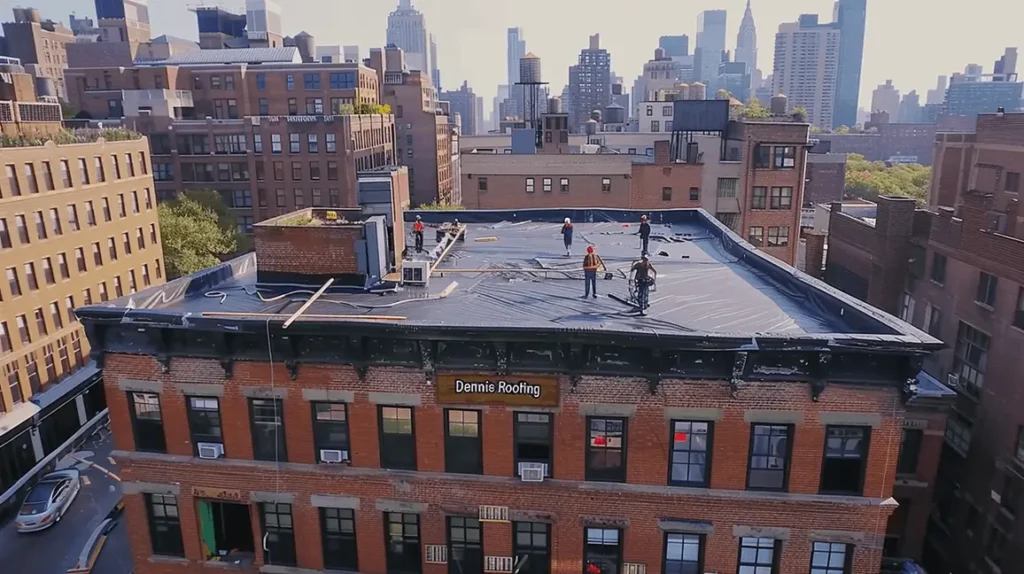
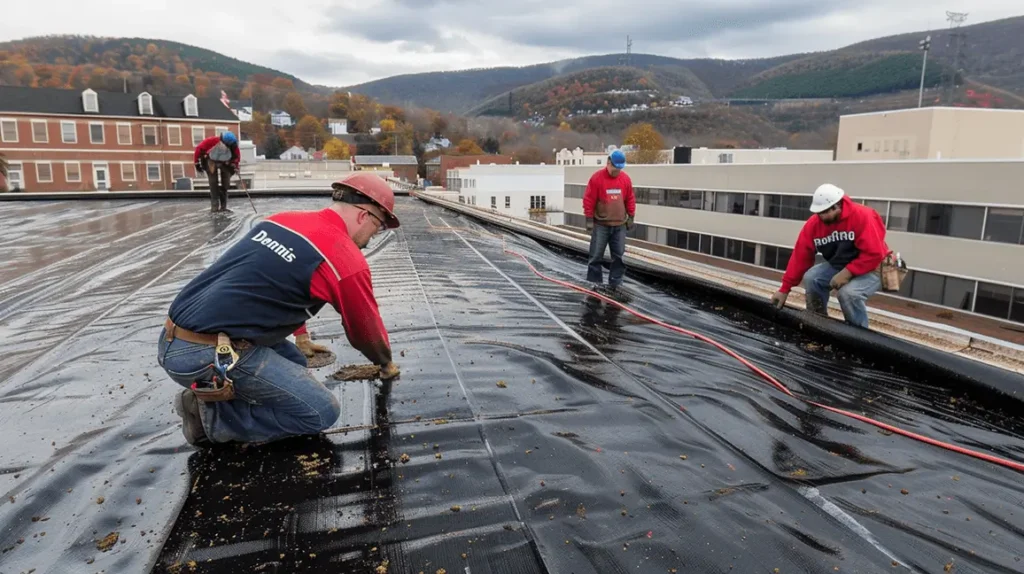
Flat membrane systems cover most of the commercial side of Brooklyn – TPO and modified bitumen on warehouses, mixed-use buildings, and multi-unit residential. These systems need proper drainage design and regular seam attention to stay functional, and the repair or replacement scope changes significantly depending on what’s underneath. Full tear-offs, targeted seam work, drainage rework – the right call depends on the building, not a default approach.
Asphalt shingle work on attached rowhouses is the most common residential call, and also the one with the most variation. Storm damage, age-related wear, or a previous repair that didn’t hold – each situation gets assessed on its own. What’s under the current surface matters as much as what’s visible on top, which is why the inspection happens before any scope is written.
Metal roofing comes up more often now on gut renovations and commercial properties where longevity is the priority. Standing seam installation, tie-in work with existing masonry, proper underlayment – done right, a metal roof outlasts multiple shingle cycles and requires far less ongoing attention. The tradeoff is a higher upfront cost, and whether it makes sense depends on how long the owner is holding the building.
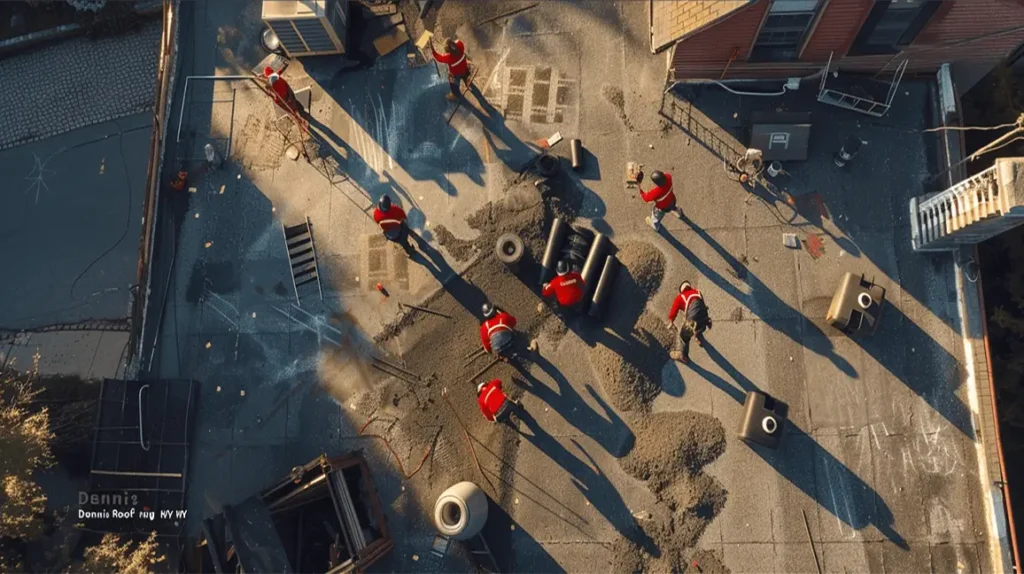
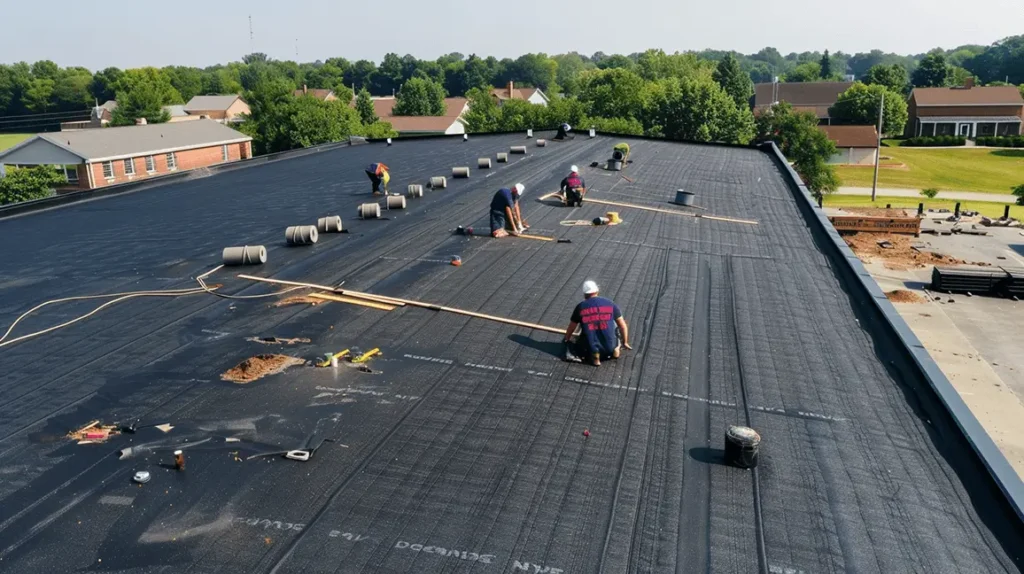
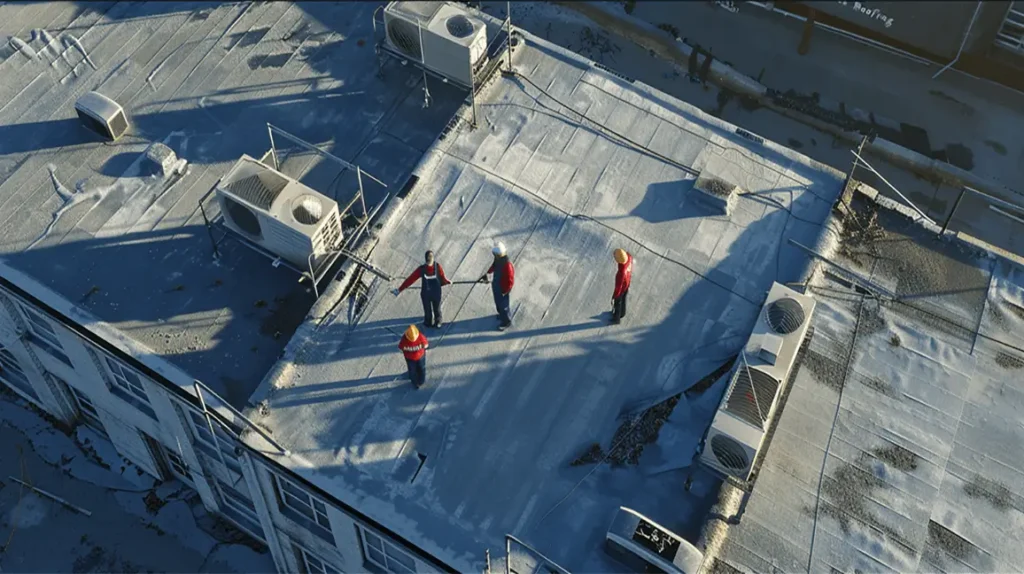
Chimney repair and flashing work are woven through almost every project type. Flashing failure around chimney collars is the most common source of the leak calls we trace – and the repair often goes deeper than it first appears once you see what previous contractors left behind.
Storm damage documentation is a separate discipline from the repair itself. Getting the roof back together is one part of the job; making sure the damage is recorded specifically enough to support an insurance claim is another. Vague reports produce vague payouts, and the gap between the two usually falls on the property owner.
Skylight installation and gutter work round out the scope. Penetrations and drainage are where roofs fail most quietly – a skylight curb that wasn’t set right, a gutter configuration that backs water toward the fascia. These don’t always show up as obvious roof problems, but they become ones.
What an Honest Project Entry Looks Like
Every project that goes into this portfolio went through the same process: inspection before estimate, written scope before work, photos during and after, and a final walkthrough before the crew left the site. Nothing here was scoped by phone or priced from the curb.
The before photos are included because they’re where the actual information is. A blister on a flat membrane tells you where moisture penetrated the system. A curled shingle edge tells you whether you’re looking at localized damage or a roof that’s aging across the field. A rusted, caulked-over flashing collar tells you how many contractors worked on this building without solving the underlying problem.
The jobs that show up here range from a single-day shingle repair on a Canarsie two-family to a multi-phase flat roof replacement on a commercial property in Sunset Park. The building size and repair scope vary. The process doesn’t.
Your Building Could Be the Next One Done Right
A portfolio isn’t a guarantee – but it’s the closest thing you can get to seeing how a roofing crew actually works before you hire them. Look at what we’ve taken on, what we found, and what the finished job looked like. Then call us and we’ll tell you exactly what we’d do on your building.
Free inspection and written estimate before any work starts. Emergency line available around the clock for jobs that can’t wait. Licensed, insured, and ready for whatever Brooklyn throws at a roof.