
Greenwood Heights Is Growing Fast – and That Means More Roofs That Need to Be Done Right
Let’s look at what happens in the second season after a patch. A repair can look completely successful through one stretch of bad weather, maybe even through a full winter, and then the next cycle of freeze-thaw or summer humidity pulls back the curtain on what was actually going on underneath. That’s not a knock on every repair job – it’s just how flat-roof seams, aging flashing, and tired membranes behave when the fix addressed the symptom but not the system.
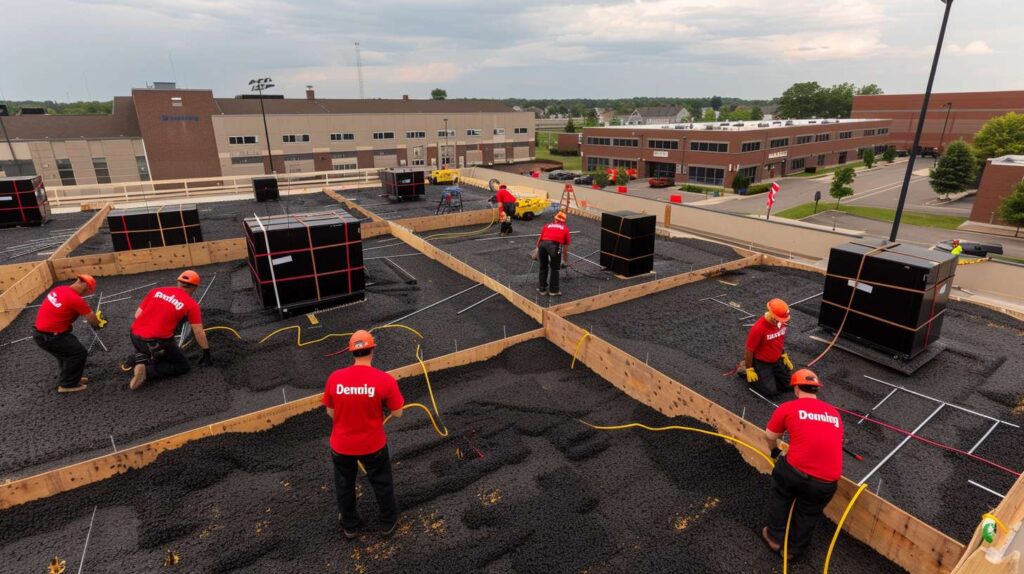
Second-season failures tell you more than the first patch ever did
On a Greenwood Heights block, timing is half the roof. The neighborhood has been turning over fast – renovations, new tenants, quick sales, deferred maintenance getting kicked down the road one more season. Every one of those things adds pressure to a roof that might already be working harder than it looks. And roofs don’t fail on wishful thinking; they fail on timelines.
Quick Facts: What This Guide Helps You Decide
Best Next Step
Get an inspection before authorizing another patch – especially if you’ve repaired the same area before.
Most Misleading Sign
A leak that disappears for one season. Absence of dripping is not the same as a sound roof.
Most Vulnerable Systems Locally
Flat roof assemblies and chimney flashing transitions – common on Greenwood Heights rowhouses and mixed-use buildings.
When to Act
Before summer humidity sets in or right after storm damage – not months later when the damage compounds.
5 Assumptions Brooklyn Owners Make After a Roof Patch – and Why They’re Costly
| Myth | Real Answer |
|---|---|
| “If the leak stopped, the repair worked.” | A dry ceiling means moisture isn’t entering at that rate right now. It doesn’t mean the underlying seam, membrane, or flashing is sound. Roof leak detection often turns up damage that simply isn’t draining yet. |
| “A new skylight is probably where the leak is coming from.” | Skylights get blamed constantly. The actual path is usually an aging low-slope system or deteriorated flashing that channels water toward the nearest opening. Skylight repair may not solve anything if the roof around it is failing. |
| “One missing shingle means a one-shingle fix.” | One visible shingle loss is usually a symptom, not the full story. The asphalt shingle roofing around it may be brittle, granule-depleted, or compromised by age – a condition that shows up in sections, not single spots. |
| “Flat roofs only need attention when water comes inside.” | Ponding, seam movement, and membrane deterioration on flat roof systems all happen before a drip appears indoors. Waiting for the drip means the insulation and decking below are already absorbing moisture. |
| “A renovated interior means the roof is probably in good shape.” | Interior renovation and roof condition are completely unrelated. A freshly painted ceiling tells you nothing about what’s happening above the decking. Roof inspection is the only thing that tells you where the roof actually stands. |
Repair, replacement, or inspection: use the roof condition instead of the last invoice
Here’s the plain truth. What you spent last year has no bearing on what the roof needs today. The decision has to come from current condition – membrane state, flashing integrity, insulation saturation, drainage behavior – not from what felt like enough money at the time. That’s especially true in Greenwood Heights, where the building stock runs heavy on rowhouses, mixed-use properties, and low-slope roofs with varying ages and repair histories. I’m Pam Guerrero, and the 17 years I’ve spent coordinating Brooklyn roofing schedules and weather-window timing have made one thing clear: the owners who make the best decisions are the ones who base them on what’s on the roof right now, not on the last invoice in their drawer.
I remember one call where the bucket showed up before the diagnosis. It was a Wednesday, fog still hanging low off the harbor, maybe 6:40 in the morning, when a landlord on 22nd Street called about a “small leak” that had come back. They’d patched the flat roof the year before and moved on. Never addressed the seam movement near the drain line. By the second warm season, tenants were putting bowls under a light fixture, and what should have been a targeted roof repair had turned into a flat roof replacement conversation – because the seam had kept moving through every heat-and-cool cycle while everyone assumed the patch had it handled.
What actually changes a repair-versus-replacement decision isn’t the leak itself – it’s the pattern. Recurring roof leak repair at the same area, saturated insulation, visible membrane movement, flashing that’s aged past its functional window, and a surface that can’t hold a new roof coating or sealing application without trapping moisture below – those are replacement signals. A single isolated failure on a system that’s otherwise sound? That still qualifies for repair. The difference only becomes clear from the roof, not from the living room.
What usually still qualifies for roof repair
- Isolated membrane puncture or seam separation on an otherwise intact flat roof
- Missing or cracked shingles in a limited area with sound decking underneath
- Chimney flashing repair where the base flashing is still structurally attached
- Minor gutter repair or gutter installation that’s causing localized overflow and saturation
- Roof coating or roof sealing refresh on a membrane with no wet insulation below
- Storm damage repair limited to edge flashing or a small field area
What usually points toward roof replacement
- Multiple layers of previous patching stacked over the same low-slope field
- Widespread granule loss or brittle, cupped shingle roofing across large sections
- Saturated insulation confirmed by inspection – moisture is already inside the assembly
- Consistent ponding that drainage adjustments can’t correct
- Flashing failures at multiple transitions simultaneously (parapet, chimney, skylight)
- Roof age at or past the expected life for the material type
Decision Guide: Inspection, Repair, or Replacement?
Did the leak return after a previous patch?
YES → Likely signals deeper system failure. Move toward roof replacement consultation or roof inspection now to confirm scope.
NO → Continue to next question.
Is the roof older than the expected material lifespan?
YES → Age combined with any active issue leans toward roof replacement consultation.
NO → Continue to next question.
Are water stains spreading or appearing in new areas?
YES → Moisture is traveling. Schedule roof inspection now before more decking is affected.
NO → Continue to next question.
Is there visible flat roof ponding or seam separation?
YES → If there’s also an active interior leak, this is emergency roof repair territory. If dry inside, schedule inspection now.
NO → Damage appears isolated. Likely a targeted roof repair – confirm with inspection first.
Condition-Based Service Guidance: Common Roofing Systems in Greenwood Heights
| Roof Type | Usually Repairable When… | Replacement More Likely When… | Inspection Should Verify… |
|---|---|---|---|
| Asphalt Shingle Roofing | Damage is limited to a small section with sound decking and intact surrounding shingles | Widespread brittleness, cupping, or granule loss across multiple roof sections | Decking integrity, underlayment condition, flashing at all roof penetrations |
| Metal Roofing | Panel seam separation or fastener failure is localized with no rust penetration | Corrosion has spread through panel field or substrate rot is present below panels | Seam integrity, fastener condition, rust mapping, and flashing at edges and penetrations |
| EPDM Roofing | Seam lifting or small puncture with dry insulation confirmed below the membrane | Multiple seam failures, saturated insulation, or membrane shrinkage pulling from edges | Insulation moisture content, seam adhesion across the full field, drain and edge detail |
| TPO Roofing | Isolated weld failure or puncture in an otherwise intact membrane without moisture intrusion | Widespread weld delamination, excessive brittleness, or moisture confirmed under membrane | Heat-weld seam condition across full field, drainage slope adequacy, substrate condition |
| Modified Bitumen Roofing | Surface cracking or minor seam lift without wet insulation or structural decking movement | Heavy alligatoring, repeated patch failures at same location, or saturated substrate | Lap seam adhesion, surface oxidation depth, and insulation dryness at core samples |
| Tar and Gravel Roof | Gravel displacement is surface-level and the built-up layers below are still intact and dry | Multiple patch layers stacked, active ponding, and moisture found in more than one core location | Number of existing layers, drain flow, and wet insulation mapping before any new coating |
Growth around the building changes what the roof has to survive
If I asked you what changed since last spring, would you say the roof – or just the building around it? Rooftop equipment, contractor foot traffic from neighboring renovations, staging debris blocking drains, gutter lines neglected through a busy tenant turnover – none of those things announce themselves as roof problems, but every one of them can turn a borderline membrane into an active leak situation without the roof itself changing at all. The roof may not have changed much; the timeline around it did.
What Changed Around the Roof?
Neighborhood momentum problems that get mistaken for random leaks
▶ Renovation Traffic and Contractor Footfall
▶ Drain Blockage From Debris and Staging Dust
▶ Chimney and Parapet Transitions Opening Up
▶ Gutter Work Done Without a Full Roof Review
Humidity, ponding, and flashing are where small stories turn expensive
Flat roofing problems that keep pretending to be minor
Three seams, one drain, and a week of humidity can tell you plenty. On a flat roof installation in Greenwood Heights – especially on an older rowhouse or mixed-use building where the drainage slope is already working against gravity – seam stress accumulates quietly. Roof waterproofing on these systems depends on intact seam adhesion and a functioning drain that actually clears between storms. When ponding sits for 48 hours or more after rain, the membrane is being stressed at every low point. That’s not a cosmetic issue. That’s the beginning of a wet insulation problem that shows up months later as a much bigger number on an invoice.
Why chimney and skylight areas get blamed first
People almost always blame what they can see most recently. I once had a commercial roofing client call during a Friday thunderstorm, right around 4:15 p.m., convinced their leak was coming from a brand-new skylight installation. The actual problem was ponding on an aging tar and gravel roof that had been patched so many times it was basically holding memory instead of structure. That job stuck with me because in fast-growing parts of Brooklyn, people often blame the newest thing they can see instead of the oldest roofing layer they can’t. The insider move here is to trace the water path backward from where it appears inside, because roof leak detection is almost never a straight vertical line – water travels through flashing channels, along decking, and through low-slope transitions before it finds somewhere to drip.
🚨 Call Now – Emergency Roof Repair
- Active ceiling drip during or after storm
- Interior paint bubbling or blistering after heavy rain
- Water entering near an electrical fixture
- Membrane visibly lifted or separated near a drain
- Wind damage has exposed underlayment or decking
📋 Book Soon – Inspection & Planned Service
- Isolated granule loss noticed in gutters
- Roof coating showing age and surface weathering
- Minor gutter repair needed before rainy season
- Seasonal roof cleaning overdue
- One-time ceiling stain with no current active moisture
⚠ What Repeated Patching Hides
Stacking patch over patch on EPDM roofing, TPO roofing, modified bitumen roofing, and tar and gravel roof systems without checking wet insulation, seam movement, drainage slope, and substrate condition doesn’t buy time – it buys a bigger problem at a worse moment. Each layer seals over the evidence while moisture continues moving through the assembly below.
The math isn’t subtle: repeated emergency roof repair on the same system will eventually cost more than a planned replacement scheduled on your timeline, not the storm’s.
Before crews are scheduled, get the facts that keep the job from drifting
A rushed patch is like taping a cracked delivery crate: it holds until the next trip. One August afternoon, just after a brutal stretch of humid weather, I was lining up crews when a homeowner near Greenwood Cemetery told me, “We only need one shingle put back.” Once the team got up there, the asphalt shingle roofing had been cooked brittle in uneven sections across a wide field, and the flashing around the chimney had started letting water travel sideways into the wall assembly. That job still comes to mind because it’s exactly how growing neighborhoods get fooled – fresh paint, renovated interior, and an old roof system quietly losing the argument. The visible damage was one shingle. The real scope was a chimney flashing repair and a much broader roof condition assessment.
Before you call, it’s worth pulling together a few things: when the leak appears (during rain, or days after), where it shows up inside, any photos of stains on the ceiling or walls, your roof type if you know it, dates of prior roof repair or roof replacement work, and whether there was recent storm damage that might open an insurance claim roofing conversation. Also worth noting whether gutters or skylights are part of the picture, and whether you’re dealing with a residential roofing situation or a commercial roofing building with mixed-use floors. And honestly, in my opinion, the most expensive roofing mistake in a fast-moving neighborhood isn’t the storm damage itself – it’s the gap between the first warning sign and the first real roof inspection. That gap is almost always where the cost doubles.
Before You Call Dennis Roofing – Have This Ready
- When does the leak appear? (During rain, hours after, or unrelated to weather?)
- Where does it show up inside – ceiling, wall, near a fixture or vent?
- Photos of any ceiling or wall staining, even old or faint ones
- Roof type, if known (flat, shingle, metal, or unknown)
- Any prior roof repair or roof replacement, and roughly when
- Whether recent storm damage, wind damage, or hail may have triggered the issue
- Whether gutters, a skylight, or rooftop equipment is part of the picture
- Whether insurance claim roofing may apply based on storm timing
Questions Greenwood Heights Owners Ask Before Authorizing Roofing Work
▶ How do I know if I need roof repair or roof replacement?
▶ Do flat roof leaks always show directly below the damage?
▶ Can a roof inspection happen before I decide on a new roof?
▶ What if wind damage started the problem but the leak showed up later?
▶ Do commercial roofing and residential roofing leaks get diagnosed differently in mixed-use buildings?
If a leak came back, a flat roof is holding water, or you’re genuinely unsure whether you need roof repair or a new roof in Greenwood Heights – don’t let another season be the thing that makes the decision for you. Call Dennis Roofing and get a real inspection before the next weather swing turns a manageable problem into a much bigger conversation.
– Pam Guerrero, Dennis Roofing | Serving Greenwood Heights, Brooklyn, NY