
Carroll Gardens Is One of Brooklyn’s Quietest Neighborhoods – but Roof Problems Don’t Stay That Way
Silence Outside, Trouble Overhead
Can you imagine paying a bill you didn’t know was running? That’s the thing about Carroll Gardens – the tree-lined streets and brownstone stoops give everything a calm, settled feeling, and that calm makes it easy to forget that roof problems are the original quiet bills, collecting interest in the dark while you go about your week. Water doesn’t knock. Wind damage doesn’t leave a note. Age just works.
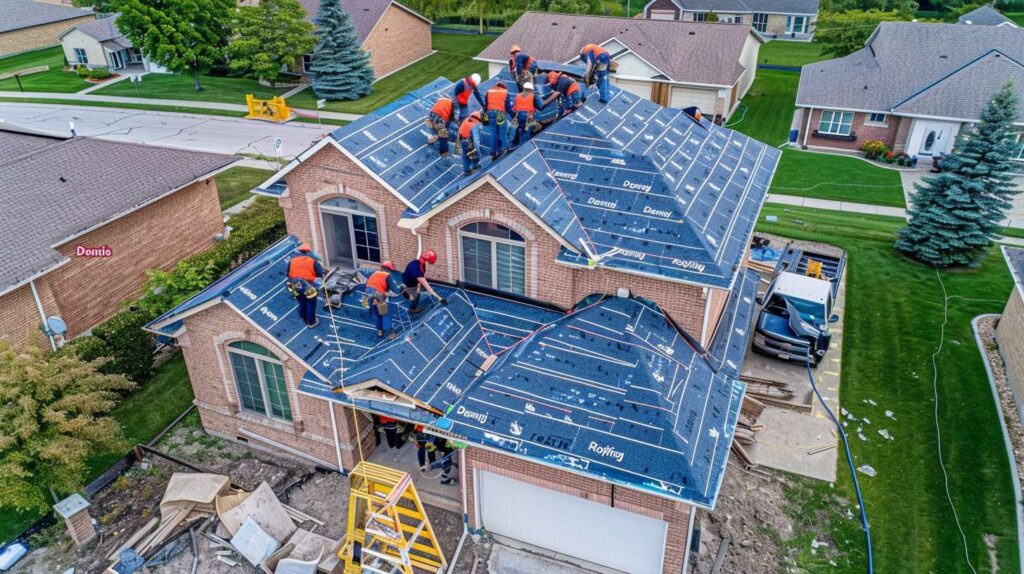
What people expect is that a peaceful neighborhood means a stable building. What actually happens is that flat roof seams separate slowly, flashing lifts a little after each freeze, and skylight edges let moisture work its way in so gradually that the first drip inside feels like a surprise – even though the roof had been sending signals for months. By the time Carroll Gardens gets loud about a roof problem, the damage has usually been quiet for a long time.
Which Roofing Service Fits the Problem You’re Seeing
The first job isn’t Googling roofing companies at midnight – it’s matching what you’re actually seeing to the right service, because a ceiling stain and an active storm leak are two very different starting points. I took a call at 6:17 in the morning on a perfectly calm Sunday from a brownstone owner on Carroll Street who kept apologizing because the neighborhood was so quiet she could hear every drip. The storm had passed overnight, but the roof leak repair problem didn’t announce itself until everyone woke up. By the time our team got there, it wasn’t dramatic from the sidewalk – just failed flashing near a skylight and water that had traveled three rooms away. That building, like a lot of the mixed-use and residential properties around Court Street and Smith Street, has layers: pitched sections, flat back sections, skylights, and original chimney stacks that all age at different rates.
When Repair Is Enough
Targeted fixes cover a lot of ground. Roof leak repair, roof leak detection, chimney flashing repair, skylight repair, gutter repair, roof sealing, and storm damage repair are all situations where you don’t need to tear anything off – you need the right hands on the right problem. I’m Latasha Monroe, and in 14 years of walking Brooklyn property owners through residential roofing and commercial roofing problems that felt bigger than they were, the majority of calls that started with “I think I need a new roof” turned out to need a focused repair and a proper inspection instead. That’s not always the answer, but it’s the right first question.
When Replacement Starts Making More Sense
Here’s the blunt version: if a roof has been patched three or four times in the last decade and the same areas keep failing, repair is just a way of paying twice. Roof replacement, new roof installation, flat roof installation, or a full switch to a metal roof or shingle roof system starts making financial sense when patchwork is outrunning durability. And honestly, I’d rather tell someone that once – clearly, at the kitchen table – than keep them in a cycle of temporary fixes that each cost real money and solve less each time.
| What You Notice | Likely Roof Issue | Best First Service | Typical Building Type |
|---|---|---|---|
| Water stain on top-floor ceiling, no active drip | Failed flashing or open seam | Roof leak detection + chimney flashing repair | Carroll Gardens brownstone |
| Bubbling or soft spots on flat roof surface | Membrane failure or ponding water | Flat roof inspection + targeted roof repair | Mixed-use storefront or row house |
| Water around skylight frame after rain | Failed skylight seal or flashing | Skylight repair + roof sealing | Brownstone or renovated row house |
| Overflow from gutters during moderate rain | Blocked or undersized drainage | Gutter repair or gutter installation | Residential or small commercial building |
| Missing or curling shingles after wind event | Wind damage to asphalt shingle system | Storm damage repair + insurance claim roofing assessment | Pitched-roof brownstone or row house |
| Repeated leaks in the same commercial space | Aging flat roof system at end of service life | Commercial roof repair or flat roof replacement | Court Street or Smith Street commercial property |
The Roof Systems We See Most in Carroll Gardens
Flat roofing and pitched roofing don’t age the same way, and in Carroll Gardens you’ve got both on the same block – sometimes on the same building. A July afternoon before a block association meeting is when I spoke with a restaurant tenant on a commercial property whose prep area had sprung a flat roof leak. It hadn’t been a major storm, just sustained heat followed by a quick hard rain – and that’s exactly the combination that exposes old flat roofing seams. He said, “This street looks peaceful, so why does my ceiling sound like popcorn?” and that line stuck with me because that’s Carroll Gardens in a sentence. Commercial roof repair on flat systems often starts with heat expansion that nobody noticed until rain showed up to finish the argument.
If you’ve got a flat roof – EPDM, TPO, modified bitumen, tar and gravel, rubber roof – here’s the insider tip worth keeping: don’t just ask whether there’s a leak. Ask specifically about seam condition, drainage pattern, and edge detail during a roof inspection. Three loose seams can do more cumulative damage than one obvious storm event, especially when ponding water is involved. On pitched roofs, asphalt shingle roofing and metal roofing fail differently – shingles lift and crack, metal expands at fastener points – and both need different maintenance schedules than flat systems. Knowing which system you have isn’t just trivia; it changes what roof maintenance and roof coating actually need to do.
- ✔EPDM Roofing – rubber membrane, excellent longevity on low-slope commercial roofs
- ✔TPO Roofing – energy-reflective membrane, common on commercial flat roofs
- ✔Modified Bitumen Roofing – layered, torch-applied or cold-applied, widely used in Brooklyn
- ✔Tar and Gravel Roof – built-up roofing, older stock, often found on pre-1980 commercial buildings
- ✔Asphalt Shingle Roofing – cost-effective, widely available, standard on pitched residential roofs
- ✔Metal Roof – long service life, excellent wind resistance, growing in popularity in Brooklyn
- ✔Roof Coating – extends membrane life, useful on aging flat roofs before full replacement is needed
- ✔Roof Waterproofing – critical at penetrations, edges, and parapet walls on any flat system
Don’t Wait for a Leak to Pick Your Schedule
The roof does not care whether your week is busy.
Emergency roof repair usually lands on someone’s calendar after a delay that felt reasonable at the time – loose flashing that “didn’t seem urgent,” a membrane edge that lifted slightly after a wind event, a maintenance call that got pushed two months. I still think about a windy Thursday around 8:40 p.m. when a small commercial property owner on Degraw Street called after hearing metal scraping on the roof but couldn’t see anything from the sidewalk. It turned out to be loose edge metal on an older roof installation, and if that had waited one more day of wind, it could have escalated into a full wind damage repair and an insurance claim roofing situation that would have cost him significantly more – in money, time, and tenant disruption. That job ended with him saying, “I’m glad I called,” which is a sentence I’d like every Carroll Gardens property owner to have a reason to say.
- Don’t climb onto a wet flat roof – membrane surfaces are slick and the edge condition may be compromised.
- Don’t assume the leak source is directly above the stain – water travels along joists and rafters, sometimes ending up two or three rooms away from the actual opening.
- Don’t wait for a second storm before scheduling service – the second event almost always causes more interior damage than the first because the path is already open.
Practical Questions Brooklyn Property Owners Ask Before Booking
People aren’t usually looking for roofing jargon when they call. They want to know what happens next, how much disruption to expect, and whether addressing something now can actually push a full replacement further down the road. Those are fair questions, and they deserve direct answers – not a sales pitch.
- When you first noticed the problem – even an approximate date helps with damage tracking
- Whether water is actively entering right now – this determines urgency level immediately
- Which room or unit is affected – top floor, rear unit, commercial space, etc.
- Roof type if known – flat, pitched, shingle, metal, or “I have no idea” is all fine
- Any recent storm or wind event – timing relative to weather matters for diagnosis and insurance purposes
- Whether skylights, chimneys, or gutters are near the problem area – these are the most common entry points in Carroll Gardens buildings
A quiet bill doesn’t stay quiet forever. Call Dennis Roofing today to schedule a roof inspection, roof repair, or emergency roof repair – before a small problem in Carroll Gardens turns into a large one. – Latasha Monroe, Dennis Roofing