
Dyker Heights Homes Are Well-Maintained All Year Round – the Roof Is No Exception
I tell everyone that in Dyker Heights, the best-kept houses are often the ones where the owners have quietly fixed roofing details nobody walking down the block ever notices. The second floor flashing, the skylight edge, the gutter transition – all invisible from the sidewalk, all critical. This article is about showing you how smart owners stay ahead of hidden wear with the right inspection rhythm, the right repair timing, and a clear-eyed read on when a bigger call is actually the cheaper one.
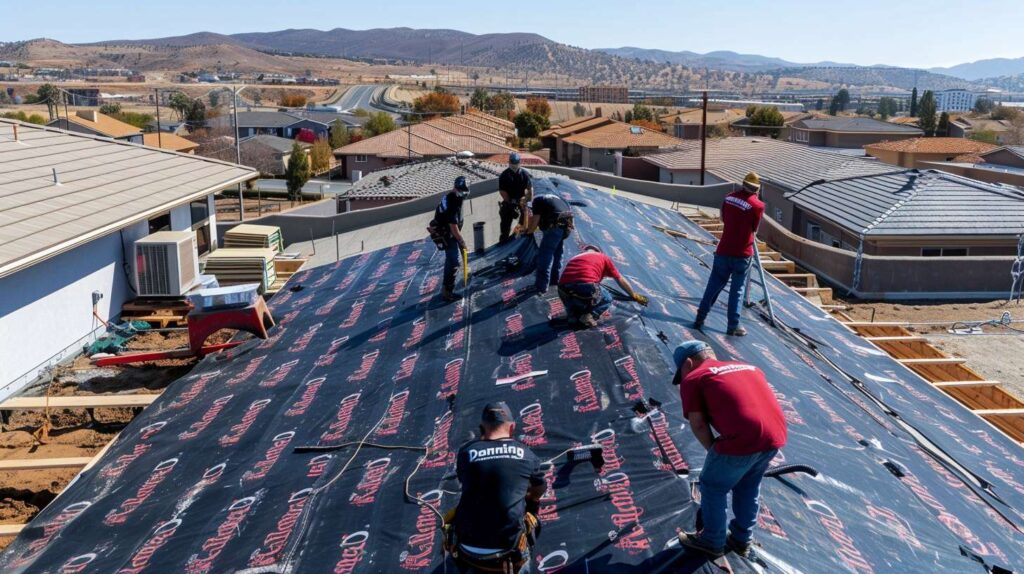
What Well-Kept Dyker Heights Homes Usually Have in Common Overhead
I tell everyone the neatest houses on the block are often hiding the smartest roofing decisions – and those decisions almost never look dramatic. No shiny new shingles, no big crew, no dumpster in the driveway. What they’ve got instead is a pattern of catching quiet failures early: the small, easy-to-miss problems in flashing, seams, gutters, or skylight edges that stay completely silent until they become expensive. That’s the real difference between a home that holds its value and one that surprises its owner with a ceiling stain the week before the holidays.
On 83rd Street, I’ve seen roofs fool people from the curb. Dyker Heights homeowners take curb appeal seriously – and they should – but that pride in what neighbors see can quietly become a blind spot for what the weather is working on above the cornice line. Start wide, then look at the joint. From 30 feet back, a roof can look perfectly fine: no obvious missing shingles, no sagging ridge, gutters painted and flush. Get closer and you find lifted flashing at the chimney base, a cracked pipe boot, a gutter pulling free from the fascia right where meltwater runs hardest. Those are the spots where residential roofing problems begin, quietly, long before any water shows up inside.
| Myth | Real Answer |
|---|---|
| “If the house looks clean, the roof is fine.” | Quiet failures – lifted flashing, cracked pipe boots, separated seams – are invisible from the ground and have nothing to do with how clean the siding looks. |
| “A small ceiling stain means a small repair.” | Water travels along rafters and deck seams before it drips. In Dyker Heights row homes, a stain near a window can trace back to flashing six feet away. |
| “Newer flat roofs don’t need inspection.” | Installation quality varies. Even a newer flat roof can have improper seam welds, edge failures, or drain obstructions that turn into emergency roof repair quickly. |
| “Gutters are separate from roofing problems.” | A blocked or pulling gutter changes how water exits the roof edge. Backed-up water drives under shingles and into fascia – that’s a roofing problem with a gutter cause. |
| “No missing shingles means no wind damage.” | Wind lifts shingles and drops them back down, breaking the adhesive seal underneath. The shingle stays in place; the water barrier doesn’t. You won’t see it. That’s exactly what a roof inspection catches. |
Where Quiet Failures Start Before You Ever See a Leak
Shingle Roofs and Transition Points
Here’s the blunt part: a clean house can still have a tired roof. And after 19 years in roofing, Chris Tobin has learned the first leak clue is rarely the true entry point – the water you see inside has almost always traveled a good distance from where it came in. The weak joints are what matter most: chimney flashing, pipe boots, skylight edges, ridge cap seams, and the line where the gutter system meets the roof deck. Those are the places worth a real, close look – not a glance from the ladder, but actual hands-on contact. That’s where quiet failures live.
I once climbed up after a windstorm and found the problem in under three minutes. It was early January, maybe 7:15 in the morning, still half-dark, and the homeowner met me in the driveway before I even cut the engine – water had started dripping near a second-floor window overnight. The whole block assumed it was gutter repair. Once I was up there, the gutters were exactly fine. What I found was chimney flashing repair and a line of lifted shingles that had been catching wind off the avenue, letting water run straight under the cap. The gutter was never the issue. The transition point was. That’s exactly how quiet failures work – they let something innocent take the blame.
Flat Roofing Seams and Drains
Start wide, then look at the joint – and on a flat roof, the joints are everything. One summer afternoon on a rear extension behind a tidy brick home off 14th Avenue, I walked a rubber roof the owner described as “pretty new.” Felt solid underfoot, looked patched up, no obvious standing issues. What I found was somebody had patched that EPDM roofing with an incompatible sealant years before – the kind of mismatched material that holds just long enough to fool everybody through a mild season, then opens up the minute summer storms hit seriously. That roof had been generating repeated roof leak repair calls not because the membrane was old, but because the patch chemistry was wrong from day one. Flat roofing trouble almost always starts at seam separation, pooling near blocked drains, membrane shrinkage at edges, or bad past patching on EPDM roofing, TPO roofing, and modified bitumen roofing systems.
| Roof Area | Quiet Failure | What You Notice First | Best Service Match |
|---|---|---|---|
| Chimney Flashing | Mortar cracks, lifted or corroded step flashing | Stain near fireplace wall or ceiling | Chimney flashing repair |
| Skylight Curb | Failed sealant, cracked curb flashing, lifted edge | Interior drip at skylight frame after rain | Skylight repair, roof sealing |
| Asphalt Shingles | Broken seal strips, missing granules, wind-lifted tabs | Granules in gutters, water under shingles | Roof repair, wind damage repair, or roof replacement if widespread |
| Flat Roof Seam | Separation, membrane shrinkage, poor lap adhesion | Interior stain weeks after rain, roof surface bubbling | Flat roof repair, commercial roof repair, EPDM or TPO seam work |
| Gutter Edge | Gutter pulling from fascia, blocked downspout trapping water | Overflow, fascia rot, ice dam streaking | Gutter repair, gutter installation, roof edge inspection |
| Roof Vent Penetration | Cracked pipe boot, failed collar seal | Attic moisture, stain directly below vent stack | Roof leak repair, roof waterproofing at penetrations |
| Low-Slope Drain Area | Ponding water, blocked drain collar, membrane depression | Standing water hours after rain, soft spots on membrane | Flat roof installation assessment, drain clearing, roof coating review |
Not every drip near a window is a gutter problem. Not every flat-roof stain calls for a new coating. And not every missing shingle means it’s time for a full roof replacement. Misdiagnosing the source is the single biggest reason homeowners end up making the same roof leak repair call two or three times in the same season – each time patching something visible while the real entry point keeps working quietly. A proper roof inspection identifies the actual failure, not just the spot where water decided to show itself.
How to Decide Between Roof Repair, Roof Replacement, or a New Installation Plan
If I were standing in your driveway, I’d ask one question first: when’s the last real roof inspection? Not a quick ladder look – a proper, hands-on walk where someone checked the flashing, pressed on the membrane, looked at the ridge, and documented what they found. Decision-making should start with condition, not panic. An isolated flashing failure on an otherwise solid shingle roof is a repair call. Repeated roof leak detection in three different zones on a 22-year-old system with brittle shingles and compromised decking is a different conversation entirely. The first step is always knowing what you actually have.
And honestly, replacement is the right answer only when too many joints, seams, and transitions have started failing at once – when patching one spot just moves the problem to the next weak point. That’s not a scare tactic. That’s math. If you’re making repair calls every season and each one reveals another trouble zone, the roof assembly itself has lost its integrity, and the honest recommendation is a new roof plan, not another bandage. That’s the opinion I’d give a neighbor, and it’s the one Dennis Roofing gives every time.
- One flashing failure at chimney or skylight
- Isolated wind damage – a few lifted shingles
- Single identifiable leak source
- Recent roof with a localized problem area
- Flat roof with one seam separation, no deck damage
- Repeated roof leak detection across multiple zones
- Brittle, cracked, or heavily granule-stripped shingles
- Failing flat roof membrane across multiple sections
- Widespread decking concerns beneath the surface
- Patch history covering several areas over short time
| Scenario | Typical Scope | Estimated Range |
|---|---|---|
| Roof Inspection | Full walk, photos, written findings | $150 – $350 |
| Roof Leak Repair (Flashing or Skylight) | Chimney flashing repair or skylight repair, sealant work | $350 – $900 |
| Emergency Roof Repair (Storm) | Wind damage repair, temporary cover, shingle/flashing reset | $500 – $1,800 |
| Flat Roof Installation (Rear Section) | EPDM, TPO, or modified bitumen on small addition or extension | $2,500 – $6,500 |
| Full Roof Replacement (Residential) | Shingle roof or flat roof tear-off and new installation, typical row home | $7,500 – $18,000+ |
The Maintenance Rhythm That Keeps Trouble Small
What to Check Season by Season
The pencil-behind-the-ear answer is this: the goal isn’t constant work, it’s regular attention to trim, joints, fasteners, and finish before water gets an invitation inside. I had a retired couple call Dennis Roofing before a big holiday gathering – in Dyker Heights, when family visits, everything gets scrutinized, and they wanted the house right. What started as a routine roof cleaning appointment turned into a real conversation once I got up there. A small skylight repair issue had been sitting quietly for two seasons, and the sealant around two transitions had dried out enough that water was finding its way in during hard rain. We handled both that day. Honestly, that one appointment probably saved them from a much more significant roof replacement discussion within the next couple of years. Small attention, big result.
A roof works a lot like a shop table – if one joint gets loose, the whole thing starts talking. Roof maintenance, roof cleaning, roof sealing, and roof coating aren’t glamorous, but they’re what keeps a repair bill from turning into a replacement budget. Timing matters too: gutter repair and gutter installation are best handled in fall before freeze cycles start, while roof coating and flat seam reviews are summer work when temperatures let materials cure properly. And here’s an insider tip worth repeating – before you approve any patch, sealant, or coating work, ask specifically whether it’s chemically compatible with your existing roof system. EPDM, TPO, modified bitumen, and asphalt shingles all respond differently to sealant products. A mismatched material can look fine for one season and set up a bigger failure the next.
| Season | What to Check | Why It Matters |
|---|---|---|
| Winter | Wind-lifted shingles, ice dam formation at eaves, interior ceiling changes | Winter wind off the water hits Dyker Heights hard. Lifted shingles and ice-driven water are the top emergency roof repair triggers between December and March. |
| Spring | Full roof inspection, roof leak detection check, gutter repair, chimney flashing condition | Spring rain tests everything winter moved. This is the right window to document what happened and fix it before summer heat bakes in the damage. |
| Summer | Flat roof seam review, roof coating application, skylight installation or skylight repair | Heat-activated membrane products cure best now. Summer is also the ideal time for planned skylight work when dry conditions hold consistently. |
| Fall | Roof cleaning, debris removal from drains, roof sealing touchups, pre-winter gutter and drain check | Blocked drains and leaf-packed gutters turn the first hard freeze into water-under-shingle damage. Fall cleanup is the cheapest maintenance call you’ll ever make. |
- ✅ Book a real inspection – not a ladder glance. A documented inspection gives you a baseline and catches quiet failures before they grow.
- ✅ Clear all drainage paths – gutters, downspout openings, flat roof drains, and scuppers need to flow freely before every rain season.
- ✅ Watch skylight corners – the edge where the curb meets the roofing membrane is the first place sealant fails. Check it after every significant storm.
- ✅ Inspect flashing after wind events – chimney flashing, valley flashing, and step flashing can lift slightly and reseat, leaving the seal compromised without looking obviously damaged.
- ✅ Document storm changes for insurance – if wind or storm damage repair becomes a claim, photos taken immediately after the event matter. Save them timestamped before any cleanup.
- ✅ Ask whether any patch matches your roof system – before approving repair materials, confirm they’re compatible with your existing membrane or shingle type.
Questions Smart Homeowners Ask Before Scheduling Roofing Service
Do you want somebody to guess at the stain, or diagnose the roof?
- Where the leak appeared – ceiling, wall, around a window, or near a fixture
- When it happens – during rain, after snow melt, or randomly with no clear pattern
- Roof age if known – even an approximate installation year helps frame the conversation
- Past repairs – what was fixed, when, and by whom if possible
- Storm timing – whether the issue started after a specific weather event
- Interior stain photos – taken close and with good lighting, ideally before it dries
- Roof type – shingle roof, metal roofing, flat roof, EPDM roofing, TPO roofing, tar and gravel roof, or modified bitumen roofing
If your roof is showing one of these quiet failures – or you’re simply overdue for a real inspection – Dennis Roofing can get up there, document what’s actually happening, and walk you through the next step without any guesswork. Give us a call and let’s start with the honest picture.