
Sea Gate Is Surrounded by Water on Three Sides – Your Roof Needs to Reflect That
Not every repair addresses the source – some only treat the symptom. In Sea Gate, the roofing material you choose is only part of the equation; the bigger problem is how your edges, flashing, and terminations are built to handle wind-driven water pushing in from three directions at once. This article breaks down which roofing services actually solve the cause – not just the stain on your ceiling.
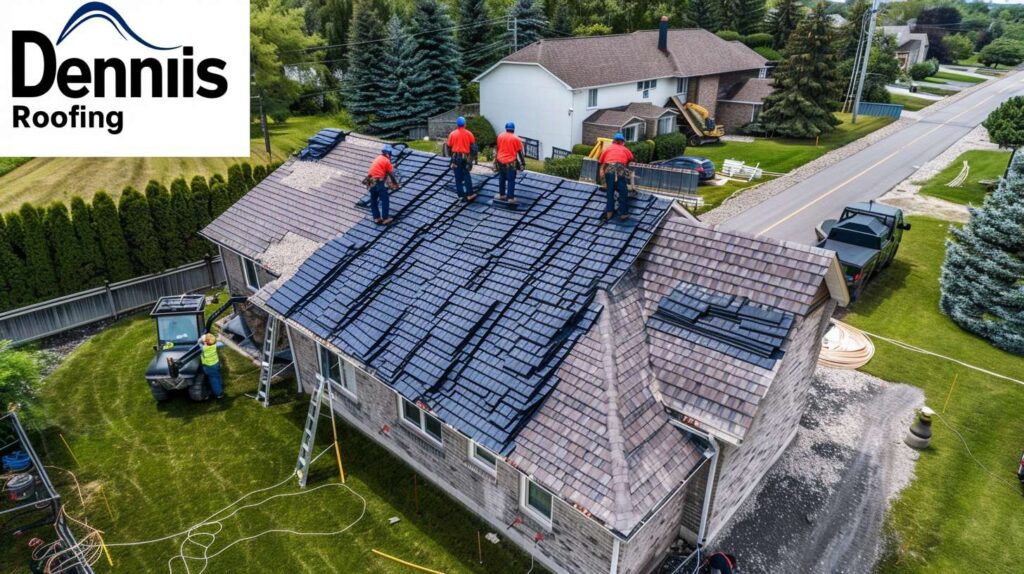
Why Sea Gate Roofs Fail at the Edges First
I look at Sea Gate roofs the same way I used to look at boat seams – start with the edge, because that’s where water gets ambitious. Three sides of water changes the rules before a drop of rain even lands, and what that means practically is that no roof system, whether it’s a residential roofing project on a Cape Cod-style detached house or a commercial roofing job on a low-slope structure near the gate, will perform correctly if the perimeter details aren’t built for this exposure. A flat roofing membrane can be pristine at the field and still let water in at the edge metal. A shingle roof can be neatly laid and still lift at the corners. Even a well-sourced metal roofing system will fail if the seam and termination work isn’t dialed in for crosswind. Water tests the joints first – that’s always been true on boats, and it’s just as true on these houses.
Here’s the part most homeowners don’t get on the first visit. I remember a gray February morning in Sea Gate, around 7:10, when I stepped onto a flat roof behind a row of attached homes and the membrane looked fine from ten feet away. The homeowner kept saying the leak only showed up after northeast wind, not just rain. When I checked the metal edge, the fastener line had started to work loose in one corner, and wind-driven spray was being pushed under the termination instead of falling straight off. From inside, it looked like a ceiling leak. From the roof, it was a shoreline exposure problem. The actual failure was never at the spot the homeowner pointed to – it was at the edge, the transition, the termination. That pattern shows up constantly in Sea Gate, and it’s why an interior stain rarely tells you the whole story.
| Myth | Field Reality |
|---|---|
| “A thicker roof solves everything.” | Membrane thickness and shingle weight don’t protect a bad edge installation. Wind drives moisture under the assembly at terminations – not through the field. Thickness is irrelevant at that point. |
| “If the leak is by the skylight, the skylight is always the problem.” | Water travels. In Sea Gate, wind wraps roof planes and drives moisture uphill before it enters. Chimney flashing, parapet caps, and adjacent transitions are often the true entry points – the skylight is just where it shows up. |
| “Flat roofs only leak because they pond.” | Ponding is a long-term degradation issue. Most active flat roof leaks here start at parapet edges, seams near the perimeter, or termination bars that weren’t fastened for wind uplift. The water doesn’t wait for a pond to form. |
| “A recent roof repair means the system was fixed.” | A repair solves what the contractor addressed – not necessarily what was actually failing. In waterfront exposure, patching one detail while leaving adjacent edge work unchanged is common, and the next wind event finds the next weak point. |
| “Any Brooklyn roofer understands Sea Gate exposure.” | Sea Gate’s peninsula geometry means wind loads, exposure angles, and flashing stress patterns are different from inland Brooklyn work. A contractor without direct waterfront experience will often diagnose the visible problem and miss the exposure context entirely. |
Which Roofing Service Fits the Problem You Actually Have
The first job is sorting a symptom from a system failure – and those are different problems with different price tags. As Danny Kowalski, a project manager with 17 years in roofing who is known around Sea Gate for diagnosing repeat-leak houses, will tell homeowners: a leak that comes back after a repair wasn’t actually fixed, it was quieted. Sea Gate has its own patterns worth knowing – attached row homes where one unit’s flashing problem becomes three units’ leak problem, detached houses on the exposed western and northern sides where wind wraps corners hard off the water, low-slope rear sections that drain toward shared property lines, and chimney intersections on older homes where the original flashing was never designed for this kind of crosswind. Getting the service right starts with recognizing which of those patterns you’re dealing with.
So what are you really dealing with: a worn-out roof, or a roof detail that never matched the exposure?
Repairable Failures
If the field of the roof is still structurally sound, a lot of Sea Gate leaks are correctable without touching the whole system. Roof leak repair, chimney flashing repair, skylight repair, and gutter repair all fall into this category when the deck and primary membrane are still performing. Roof sealing and roof coating can extend service life on a flat roof that’s been inspected and confirmed dry. And storm damage repair – particularly wind damage repair after northeast weather – often covers edge metal, lifted flashings, and displaced cap sheets without requiring a full tear-off. The key phrase is “field still sound.” If it is, these scoped repairs make real economic sense.
Replacement-Level Failures
At some point, chasing individual failures on an aging assembly stops being a strategy. Roof replacement becomes the right call when EPDM roofing has shrunk at the perimeter and pulled terminations loose across multiple points, when TPO roofing seams are separating in multiple locations, when modified bitumen roofing shows blistering and delamination across the field, or when a tar and gravel roof system has been repaired so many times the layers are trapping moisture. The same logic applies to asphalt shingle roofing where starter and edge detailing have failed in a way that repeated shingle swaps can’t correct. A new roof with a flat roof installation, or a fresh shingle system detailed properly for wind exposure, isn’t a luxury at that stage – it’s the only repair that will actually hold.
| Observed Condition | Likely Cause | Best Service | Applies To |
|---|---|---|---|
| Isolated flashing leak on a sloped roof | Failed step or counter flashing at chimney or wall intersection | Chimney flashing repair; targeted roof leak repair | Residential sloped roofs, attached and detached homes |
| Repeated parapet-edge leak on flat roof | Termination bar loose, coping cap separation, or membrane shrinkage at parapet | Edge/parapet corrective repair; if widespread, flat roof installation (replacement) | Flat roofs on attached homes, commercial buildings |
| Post-storm missing shingles | Wind uplift from crosswind exposure; underdriven nails or insufficient starter course | Storm damage repair; wind damage repair; insurance claim roofing assessment | Shingle roofs on exposed sides of Sea Gate |
| Recurring leak after past patching | Original failure source was never correctly identified; adjacent detail still open | Roof leak detection; exposure-pattern inspection; corrective repair or replacement depending on age | Any roof type with two or more prior repairs |
| Aging commercial flat roof with seam issues | UV degradation of TPO or EPDM field seams; wind stress on perimeter details over time | Commercial roof repair if seams are isolated; full commercial roofing replacement if widespread | Commercial low-slope buildings, rear flat sections |
| Skylight-area staining with uphill source | Water traveling from chimney flashing or adjacent transition, not the skylight itself | Roof leak detection first; chimney flashing repair or skylight repair based on water-test findings | Sloped residential roofs with skylights and chimney penetrations |
Materials That Hold Up Better Near the Waterline
Bluntly, a decent roof system installed the wrong way is still a bad roof. And honestly, I’d rather see a modest material detailed correctly for Sea Gate than a premium product installed with generic edge work that was designed for a Queens row house nowhere near the water. That said, material selection does matter once the detailing conversation is settled. For flat roofs, EPDM roofing and TPO roofing both perform well when seams and terminations are done right – EPDM tends to be more forgiving on repair, while TPO gives you better reflectivity if heat load is a concern. Modified bitumen roofing and rubber roof systems are reliable mid-range choices with a strong track record on attached Brooklyn homes where the rear section is low-slope. On the sloped side, metal roofing handles wind better than anything else if the panel profiles and edge clips are sized for uplift, not just aesthetics. Asphalt shingle roofing is still the most common system and can work well here – the issue is almost never the shingle itself, it’s the starter course, drip edge, and nail pattern at the exposed corners. That’s where most shingle failures in Sea Gate start.
| Material | Pros | Cons |
|---|---|---|
| Asphalt Shingle | Cost-effective; widely available for repair; works well on steeper slopes; compatible with chimney flashing and skylight details | Wind resistance at corners depends heavily on starter and edge installation; repeated uplift cycles degrade sealant strips; not ideal for low-slope sections |
| Metal Roofing | Best wind resistance of sloped options; minimal seam vulnerability on standing-seam profiles; long service life; compatible with residential and commercial roofing | Higher upfront cost; thermal expansion requires correct clip fastening; not all contractors have waterfront edge-detailing experience with metal |
| EPDM Roofing | Excellent flexibility in cold weather; field repairs are straightforward; cost-effective for residential flat sections; long proven track record | Seams rely on adhesive – wind-driven pressure at termination bars can expose adhesion failures over time; darker surface adds heat load |
| TPO Roofing | Heat-welded seams are stronger than adhesive; reflective surface reduces summer heat load; preferred on commercial roofing projects; seam integrity is testable | Older formulations had brittleness issues in cold; quality varies by manufacturer; edge and parapet detail work still determines performance here |
| Modified Bitumen | Good puncture resistance; torch-applied versions bond well at seams; handles foot traffic better than single-ply; common on older Brooklyn homes | Mineral surface wears over time; torch-applied work requires experienced hands near combustibles; not recommended on thin substrates without proper fastening |
| Tar & Gravel | Gravel ballast resists wind uplift at the field; multi-ply built-up system adds redundancy; time-tested on low-slope commercial and older residential buildings | Heavy – structural load must be verified; difficult to locate leaks under gravel; not easily repaired without disturbing ballast; increasingly replaced by single-ply on new work |
Attached Homes with Rear Flat Sections
Detached Homes with Shingle Slopes and Chimneys
Low-Slope Commercial Buildings
Homes Adding Skylight Installation or Roof Coating
What an Exposure-Focused Inspection Should Catch Before the Next Storm
If I’m standing in your driveway, the first question I’m asking is: where does the wind hit first? Not “where is the stain?” – that question comes later. The stain is a downstream result. The first inspection question is which side of this building takes the weather, and then I work inward from there: edge metal, drip profile, flashing at every penetration, drain or gutter condition, parapet cap seams, and membrane or shingle transitions between roof planes. Roof inspection done this way catches problems before they become emergency calls. And the maintenance work that comes out of a good inspection – roof cleaning, gutter repair, gutter installation when the drainage pattern is wrong, roof maintenance on aging assemblies – that’s the kind of spending that prevents a $600 problem from becoming a $14,000 one by the time water gets into the deck.
Emergency Issues Versus Maintenance Issues
I was called out after a night storm a few falls back, maybe 5:30 in the morning, still dark enough that I needed a headlamp to check a shingle roof near the western side of Sea Gate. The owner said the roof had been repaired the year before – so how were they leaking again? A section of asphalt shingle roofing had been installed neatly enough, but the starter and edge detailing weren’t built for the kind of crosswind that area gets off the water. That was a job where I had to explain that a roof can look tidy and still be wrong for the location. That kind of failure – active leak, soaked decking, wind still blowing – is an emergency. It can’t wait for a scheduled slot. But a lot of what I find during inspections is the other category: cosmetic surface staining that’s already dried, minor gutter separation, roof sealing that’s due for renewal, or a planned skylight installation that just needs proper scheduling. Knowing which is which saves a homeowner from panic spending and from ignoring something that’s actually urgent.
Applying fresh sealant over chimney flashing, skylight frames, membrane edges, and parapet transitions without correcting the underlying assembly is one of the most common ways water problems get buried rather than fixed. Caulk compresses and cracks under the thermal cycling and wind stress this location gets. Worse, it can redirect water under the assembly, where it travels further before showing up inside. By that point, the entry point is concealed under multiple product layers and the interior damage is larger than it would have been with a straight repair the first time. If a contractor’s first answer to a repeat leak is “we’ll seal it again,” that’s a signal to ask harder questions.
Questions Homeowners Ask When the Leak Keeps Coming Back
One August afternoon, heat index over 95, I met a retired couple near Lyme Avenue who were convinced their skylight was leaking. I water-tested the skylight first and got nothing. Then I followed the staining uphill and found chimney flashing that had been sealed three different times with three different products. The house sat where the wind curled in off the water and hit one roof plane harder than the others. Repeat leaks almost always mean the roof was treated as a spot problem instead of an exposure problem – the fix addressed the visible suspect while the actual entry point stayed open. The questions below come up constantly on those jobs, and they’re worth answering straight.
In Sea Gate, the roof that lasts is the one built for the exposure – not just the one that looks right from the street. Call Dennis Roofing for a roof inspection, roof repair, or full replacement evaluation based on how your building actually sits in the weather – not guesswork.