
Gerritsen Beach Is a Tight-Knit Coastal Community – and the Roofs Here Need to Be Just as Tough
Some fixes are designed to last until you’ve paid and left. In a coastal neighborhood like Gerritsen Beach, the roof problems that end up costing the most are rarely the dramatic ones – they’re the quiet stain on the ceiling, the edge wear you chalk up to age, the patch that seems to be holding. This guide is here to help you read your roof the way the weather already does: on a timeline – today, after the next storm, and heading into winter.
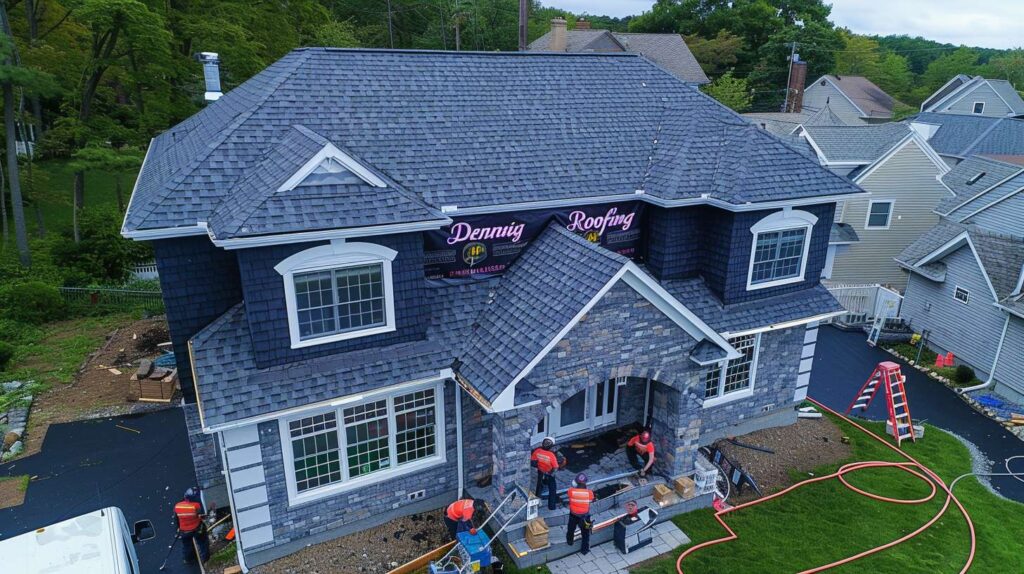
What Quiet Coastal Roof Damage Looks Like Before It Turns Expensive
Some fixes are designed to last until you’ve paid and left. The most dangerous Gerritsen Beach roof problems don’t announce themselves with a hole or a collapsed section – they show up as a soft discoloration above a window, a bubble in the ceiling paint, a small streak near the chimney that only appears after a hard rain. By the time those signs turn dramatic, the damage has usually been traveling through layers for weeks. That’s the timeline problem nobody wants to talk about: what looks minor today can mean active leakage after the next northeast wind, and real structural cost by the time winter digs in.
Three blocks from the water, I start paying attention before I even look up. On Gerritsen Avenue and the streets closest to the bay, I’m watching for how the wind moves, where salt crust builds on window ledges, how gutters are angled, and whether roof edges show that telltale dark staining that says drainage isn’t going where it’s supposed to. Salt-heavy air works quietly on flashing seams, on the exposed edges of flat roofs, on any fastener that wasn’t rated for coastal exposure. The roof might look intact from the curb, but the edges and the transitions are already in conversation with the weather. Would you rather pay for what the roof looks like today, or for how it behaves after the next northeast wind?
→ Call for emergency roof repair immediately. Don’t wait for the storm to pass.
→ Continue below
→ Schedule a full roof inspection – repeated failure usually points to broader system breakdown or replacement need.
→ Continue below
→ Targeted roof repair may be the right call – confirm with inspection first.
→ Continue below
→ Get a roof replacement / new roof estimate. Patches won’t hold the pattern.
→ Maintenance, roof coating, or monitoring schedule – ask about a seasonal roof inspection plan.
Why Material Choice Changes Once Salt, Wind, and Drainage Enter the Conversation
Which Systems Usually Make Sense on Pitched Homes
I’ll say this plainly: salt air is not a minor detail. On a property anywhere near the Gerritsen Beach waterfront, the wrong material choice doesn’t fail in year fifteen – it fails in year four, usually quietly, usually at a seam or an edge. Material decisions here have to account for corrosion resistance, uplift risk under wind load, and how much maintenance the system actually demands in a coastal environment – not just how it photographs on install day. And honestly, as I’m Latasha Monroe, having spent 17 years coordinating coastal roofing jobs and tracking how waterfront exposure changes outcomes, I can tell you the material conversation gets skipped far too often when someone just wants a number over the phone.
Which Systems Usually Make Sense on Low-Slope and Commercial Roofs
One August afternoon, hot enough that the pavement on Seba Avenue looked like it was breathing, I had a customer tell me their flat roof was “fine” – it had been patched twice already, and the last crew said it looked solid. I pulled up the photos from the previous service visit and showed them where the same low section was collecting water after every rain. Ponding water on a flat roof isn’t just a cosmetic problem – it’s weight, it’s membrane stress, and it’s a pattern that tells you the drainage pitch isn’t right. By the time we finished talking, they understood the difference between another round of flat roof repair and a proper flat roof installation that actually addressed the structure underneath.
Residential roofing and commercial roofing don’t have the same answers here, and it’s worth keeping them separate. On pitched homes, asphalt shingle roofing remains the most common system – and it performs well with proper installation and regular roof maintenance. Metal roofing is increasingly popular near the coast because of its uplift resistance, though fastener and edge details matter more than the spec sheet suggests. On low-slope and flat sections – common on Gerritsen Beach’s older mixed-use and residential buildings – EPDM roofing, TPO roofing, modified bitumen roofing, and tar and gravel roof systems each have a legitimate place depending on the building’s age, drainage design, and how much thermal movement the structure sees. No single system is right for every roof here. That’s exactly why the material conversation should happen after the inspection, not before.
| Roof Type / System | Best Fit Property / Use | What It Handles Well Near the Coast | What to Watch Over Time | Typical Service Decision |
|---|---|---|---|---|
| Asphalt Shingle Roofing | Pitched residential homes | Affordable, widely available, good on sloped drainage | Granule loss from salt air, edge lifting after wind | Repair or replacement depending on shingle age and field condition |
| Metal Roofing | Coastal residential, high-wind zones | Strong wind uplift resistance, long service life | Corrosion at fasteners, thermal expansion at seams | New roof installation with coastal-rated hardware |
| EPDM Roofing (Rubber Roof) | Flat residential roofs, low-slope sections | Flexible in cold weather, good waterproofing baseline | Seam separation, puncture at roof edges | Flat roof installation or repair depending on membrane age |
| TPO Roofing | Commercial flat roofs, larger low-slope surfaces | Heat-welded seams, UV and salt-air resistance | Seam integrity over time, flashing terminations | Commercial flat roof installation or commercial roof repair |
| Modified Bitumen Roofing | Low-slope residential and mixed-use | Tough surface layer, handles foot traffic better than EPDM | Lap seam failure, edge and drain condition | Replacement or re-coat depending on remaining life |
| Tar and Gravel Roof | Older flat roofs, multi-layer systems | Heavy, stable, good wind ballast | Ponding water, weight load, aging substrate | Inspection to determine repair vs. full roof replacement |
| Roof Coating / Roof Sealing | Maintenance on mid-life flat or low-slope roofs | Extends membrane life, improves waterproofing | Only appropriate on sound substrate – not a fix for failure | Roof maintenance or scheduled roof coating application |
When a Leak Is Really a Flashing, Gutter, or Drainage Problem in Disguise
Last fall, I had a homeowner point at a stain no bigger than a dinner plate and tell me they just needed gutter repair. It was a gray Saturday before a holiday weekend, and nobody wanted bad news. But once the crew got on the roof, the gutter overflow we’d been called for had already been backing water against the roof edge long enough to break down the first row of roofing material and start eating into the fascia. What looked like a gutter problem was actually a roof edge deterioration and roof waterproofing issue that had been building quietly through the summer. That’s why I don’t treat gutters, drainage, and roof edges as separate tickets – in Gerritsen Beach, they’re part of the same coastal weather system working against your building.
If you called me today, the first thing I’d ask is where the water shows up after wind. Not just where the stain is – where the water appears, and when. I remember a call at a little after 6:10 in the morning from a homeowner near the water who said the ceiling only leaked when the wind came from one side. That detail mattered more than the stain location. When the crew arrived, the shingles looked reasonable – but the chimney flashing had failed and wind-driven water was sneaking in at the roof-chimney transition and traveling sideways before it ever showed up inside. Here’s the insider truth: coastal leaks don’t travel straight down. They follow wind pressure, roofline angles, and the path of least resistance through layers. Don’t just track the stain – track the storm direction, track whether the leak starts during rain or hours after it stops, and track whether it only appears after sustained wind from the northeast. That information is the difference between finding the real source and paying to fix the wrong thing.
- 🔩 Failed chimney flashing – wind drives water in at the roof-chimney joint long before the interior shows anything
- 🪟 Skylight repair need – frame seal degradation or flashing failure at the curb, not the glass itself
- 🔍 Roof leak detection at transition lines – where a flat section meets a pitched slope, or where an addition meets the original structure
- 🌊 Gutter backup degrading edge materials – standing overflow saturates the fascia and the first course of roofing material over time
- 💧 Roof waterproofing failure near penetrations – pipes, vents, and HVAC curbs are the most common entry points that get overlooked
- 🏢 Low-slope drainage causing repeat flat roof leaks – ponding water finds its way through any seam that’s under chronic hydrostatic pressure
How a Real Roof Inspection Prevents the Wrong Fix
What Should Be Checked Before Anyone Promises a Repair
Here’s the blunt truth nobody likes during a roof inspection: the wrong diagnosis is often more expensive than a bad storm, because it wastes the one season you had to actually fix the source. A proper inspection isn’t a walk-around with a flashlight – it has to separate symptom from source, connect the finding to a weather pattern, and tell you clearly whether the right answer is a targeted roof leak repair, roof sealing, roof coating, a full maintenance schedule, storm damage repair documentation, or the start of an insurance claim roofing process. The wrong call on that decision can cost you another repair bill next year on top of the one you already paid. Don’t accept a fix recommendation from anyone who hasn’t checked the drainage, the flashing, and the roof’s age alongside the visible problem.
Having these details ready helps any inspection go faster and more accurately:
- When does the leak appear – during rain, hours after, or only with wind?
- Does wind direction seem to matter? Note which way the storm was coming from.
- How old is the current roof, and do you know what system is on it?
- Have there been prior repairs or patches, and did any of them hold?
- Take photos of ceiling and wall stains – with a timestamp if possible.
- Any gutter overflow, visible blockages, or sagging gutter runs recently?
- Is the problem on a flat roof section, a shingle roof area, or a transition between both?
- Was there a recent storm event that might support a wind damage repair or insurance claim?
Don’t accept a diagnosis based only on what the leak stain looks like from inside, what a single missing shingle looks like from the yard, or a quick quote that never asks about drainage, flashing condition, or roof age. That kind of assessment tells you what the roof looks like – not what it’s doing. And in Gerritsen Beach, those aren’t the same thing.
Questions Gerritsen Beach Property Owners Ask Before Committing
A coastal roof ages more like a boat part than a picture-book house part. Salt, wind, thermal cycling, and drainage stress work on it continuously – not just during storms. The right question isn’t only “does it need repair or replacement right now?” The fuller question is: what’s stable today, what fails after the next hard northeast wind, and what still protects the building when next winter arrives. That’s the timeline that matters. And it’s exactly the kind of thinking a proper inspection makes possible before any commitment gets made.
Is roof repair enough if I’ve had the same leak come back twice?
What’s the best flat roofing option for a low-slope section near the water?
Does metal roofing actually make sense this close to the bay?
How does a roof inspection help with an insurance claim after storm damage?
Should I deal with skylight installation or repair before or after a roof replacement?
How does gutter repair or gutter installation connect to roof waterproofing?
Verify both before any crew gets on the roof. No exceptions, no matter how good the price sounds.
Gerritsen Beach has both property types. You want a crew that’s handled pitched homes and flat commercial roofs – not just one or the other.
Coastal storms don’t schedule themselves. A company that responds after hours matters more here than in inland neighborhoods.
Clear, specific guidance based on what’s actually found on your roof – not a one-size-fits-all quote delivered from the sidewalk.
Dennis Roofing serves Gerritsen Beach and the surrounding Brooklyn, NY waterfront communities with inspection-first roofing – because a coastal roof deserves more than a quick look and a patch. Call us to schedule a roof inspection that separates what’s stable today from what fails next storm, and what’s headed toward a real cost if it isn’t addressed before winter. Don’t let the quiet damage become the expensive kind.