
Bridge Plaza Is a Commercial Crossroads – and Commercial Roofing Is What We Do Best
Small Roof Details Cause Big Building Problems
Ask any property manager in Bridge Plaza where their last leak came from, and nine out of ten will point to the biggest, flattest surface on the roof. And honestly, that instinct makes sense on paper. But here’s what 19 years in roofing taught me: the wide-open field of a commercial roof is almost never where the trouble starts. Roofing failures work exactly like backstage structural problems in a theater – the visible problem up front, water dripping onto a sales floor or office ceiling, is the performance. The real cause is the connection behind the curtain: a coping joint that’s opened up a quarter inch, a flashing boot that’s pulled away from a curb, a drain collar sitting in standing water it was never designed to handle.
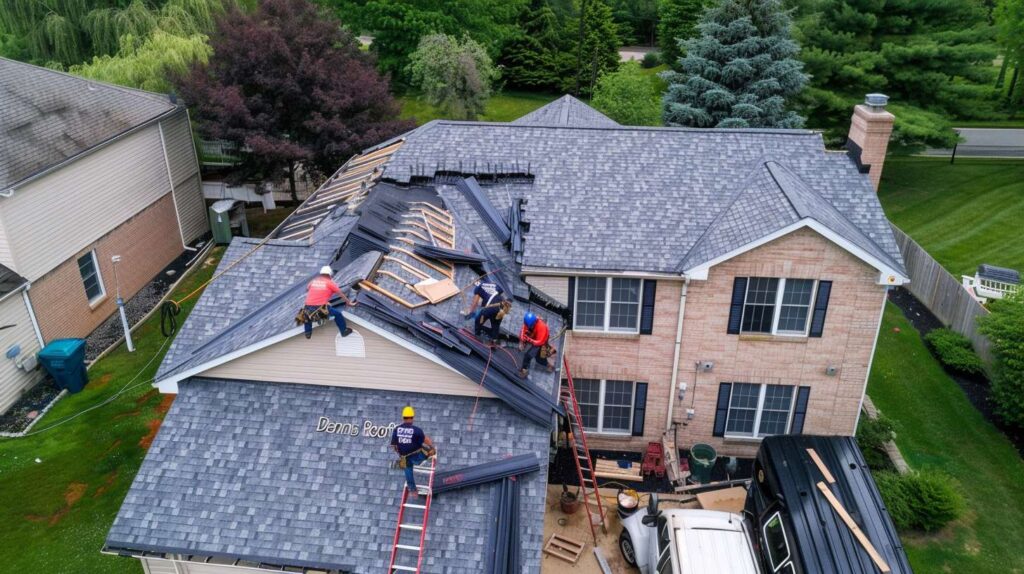
Most people assume that a wet ceiling means the roof directly above it failed. But that’s not the part I’d bet on. Leaks travel – across insulation layers, along metal decking, down wall cavities – and they surface where the building gives them the easiest exit. Coping joints, flashing transitions, HVAC curbs, skylight perimeters, wall tie-ins, and drain zones are where commercial roofs actually give way first. And I’ll say this plainly: commercial roofing and residential roofing have completely different failure patterns, even when both need roof repair or roof replacement. Treating a commercial flat roof like a bigger version of a house roof is one of the most reliable ways to misdiagnose the problem from the start.
Bridge Plaza Commercial Roofing – Quick Facts
Primary Concern
Identifying actual leak source vs. visible interior stain – they are rarely in the same place.
Common Roof Types Here
Flat roof, metal roofing, modified bitumen roofing, TPO roofing – often mixed on the same building.
High-Risk Details
Flashing, parapet edges, skylight tie-ins, and drain zones – small areas, outsized failure rates.
Best First Step
Roof inspection before any repair pricing – guessing at scope without diagnosis runs up cost fast.
| What Owners Assume | What Inspection Usually Shows |
|---|---|
| If water shows in the middle of the ceiling, the middle of the roof is leaking. | Water travels along decking and insulation layers, often appearing 10-20 feet from the actual entry point. The stain is a symptom, not a map. |
| A patched flat roof can always be repaired again. | Once patch areas become saturated or the underlying insulation holds moisture, further patches lose adhesion. The system has crossed into replacement territory. |
| Skylight leaks mean the skylight unit itself failed. | The skylight is usually fine. The failure is nearly always in the waterproofing and flashing detail around the curb tie-in – not the glass or frame. |
| Roof coating options can fix an active leak. | Roof coating and roof sealing are maintenance tools. Applied over wet insulation or open seams, they trap moisture and accelerate failure. The leak has to be fixed first. |
| Commercial roofing problems are just bigger versions of residential roofing problems. | The systems are fundamentally different – low-slope drainage, rooftop mechanical equipment, and multi-layer assemblies require different diagnosis and different repair approaches entirely. |
Leak Paths Around Bridge Plaza Rarely Behave the Way People Expect
Where Water Gets In
At 7 a.m. in Bridge Plaza, you can tell what kind of roof day it’s going to be by the sound of box trucks below. The buildings in this corridor deal with constant vibration from delivery traffic, rooftop equipment running around the clock, and wind funneling off the bridge approach in ways that behave nothing like open-sky wind. I’m Marcus Webb, and I’ve spent 19 years diagnosing exactly these kinds of leaks – the ones that happen where loading dock vibration meets an aging flat roof, where an HVAC curb tie-in is the last line of defense against a northeast rain event, and where nobody’s thought about the parapet flashing since the second-to-last tenant moved in. Mixed-use buildings along this stretch carry all of that at once.
Where Water Finally Shows Up
I remember being on a commercial roof near the bridge plaza at 6:10 in the morning, delivery trucks already backing into the service alley below on Flatbush Avenue Extension, trying to trace a leak that only appeared when wind pushed rain sideways. The property manager was certain it was the membrane – reasonable guess, and wrong. The real entry point was a metal coping joint on the parapet edge that had opened just wide enough to pass wind-driven rain straight down into the wall cavity. Three contractors before us had looked at the membrane. Nobody had run a hand along the coping seam. The flashing had been the culprit the whole time.
That story is worth telling because it shows how roof leak detection changes the scope of the job. If you skip straight to roof leak repair based on where the stain appears indoors, you’re treating a symptom. Water moves across insulation batts, tracks along metal decking ribs, migrates down masonry walls, and pools at the lowest structural point it can find before it ever makes contact with a ceiling tile. Roof inspection first isn’t a delay tactic – it’s what keeps you from paying twice for the same leak on a building that has four more failure points nobody checked.
Typical Commercial Leak Sources – Bridge Plaza Buildings
| Problem Area | What Owners Notice Indoors | What Inspection Often Finds | Likely Service |
|---|---|---|---|
| Coping / Flashing Separation | Water at interior wall top or ceiling perimeter | Opened seam or cap flashing pulled off substrate by wind | Flashing Repair / Roof Inspection |
| HVAC Curb Tie-In Failure | Drip near ceiling vent or mechanical closet | Cracked mastic, open curb flange, membrane pulled by vibration | Roof Repair / Roof Sealing |
| Drain Backup Area | Widespread ceiling staining after heavy rain | Ponding, blocked drain collar, membrane degradation at bowl | Emergency Roof Repair / Inspection |
| Skylight Perimeter Waterproofing | Drip around frame, not through glass | Failed waterproofing at curb tie-in, not the skylight unit | Skylight Repair / Roof Waterproofing |
| Parapet Wall Crack / Flashing Split | Intermittent leak that worsens in wind-driven rain | Cracked masonry at parapet, base flashing pulled away | Chimney Flashing Repair / Replacement Eval |
| Old Patch Field Seams | Recurring drip in the same general zone | Lap seams from prior patches lifting, saturated insulation beneath | Replacement Evaluation |
Follow the water, not the stain
Wind-Driven Rain at Edges
Bridge Plaza’s position near the bridge approach means wind doesn’t always arrive vertically. Rain driven horizontally at 25-35 mph pushes under coping caps, into flashing laps, and behind counter-flashing in ways a standard rainfall test won’t replicate. That’s why leaks that appear only during certain storms often trace to edge metal and parapet details rather than the membrane field.
Water Moving Under Flat Roofing Layers
On flat roofing systems – EPDM, TPO, modified bitumen – water that breaches the membrane doesn’t fall straight down. It spreads laterally across the insulation layer, sometimes traveling several feet before finding a path through the deck. This is why the wet insulation zone found during inspection is often much larger than the active drip point below.
Why Stains Appear Far from the Entry Point
Ceiling stains aren’t geography – they’re arrival points. Water traveling along a steel deck rib for eight feet will stain the ceiling directly below where it finally drips, not where it entered the building envelope. Fixing the stain’s location without tracing the path backward is one of the most common reasons commercial roof leak repair gets done twice.
Repair, Replace, or Stabilize the Roof You Have
Here’s the part building owners usually don’t love hearing. One July afternoon, the roof surface was so hot my tape measure felt like it’d been sitting on a grill, and I was walking a flat roof over a wholesale building on the Brooklyn side where half the patched areas were literally older than the owner’s last three tenants combined. Every patch was somebody’s reasonable decision at the time – a seam repair here, a flashing fix there, roof sealing applied over a section that had started to blister. But standing on that roof, the sum of it was clear: this wasn’t another roof repair job. This was a roof replacement conversation, because the system had become a map of old decisions with no coherent base left to repair to. Roof coating and spot sealing have a place, but that place isn’t on top of saturated insulation and thirty-year-old modified bitumen that’s given up its granules entirely.
Here’s the insider rule I use on every commercial roof assessment: count the categories of failure, not just the number of leaks. One leak from one flashing seam is a repair. But if you’re dealing with failed seams, lifting flashing, ponding at three drain zones, and prior patches that are themselves starting to lift – those are four categories of failure. That’s a replacement conversation, not a repair budget. EPDM roofing, TPO roofing, modified bitumen roofing, tar and gravel roof systems, and metal roof sections all have different lifespans and different signals. Knowing which system you’re on and how many failure categories it’s showing tells you far more than a leak count ever will.
A leak stain is a clue, not a map.
Choosing the Right Next Step for a Commercial Roof Issue
YES →
↓ Then ask: Is the membrane or flashing failure isolated?
YES
Targeted commercial roof repair at isolated failure point
NO
Full replacement evaluation – multiple failure categories present
NO →
↓ Then ask: Multiple failing details or repeated leak history?
YES
Capital planning discussion – new roof scope and timeline
NO
Maintenance or defined repair scope – roof maintenance plan
Storm Calls, Skylights, and the Jobs That Cannot Wait Until Monday
What Counts as Urgent
I got a call during a Saturday storm from a business owner whose top-floor space had water dripping through a skylight frame directly onto boxed inventory the staff had moved there two days earlier – “just temporarily.” By the time I got up there with wind still moving hard off the water, the issue wasn’t the skylight unit at all. The glass was fine. What had failed was the waterproofing at the curb tie-in and sloppy flashing work around the perimeter that had clearly been rushed during a prior installation. Water was tracking down the inside of the curb wall and exiting at the lowest point of the frame. The lesson, and I’ve seen this version of it more than once: emergency roof repair, skylight repair, chimney flashing repair, roof waterproofing, and storm damage repair all require quick triage based on one question – is interior inventory, electrical equipment, or a structural assembly actively exposed right now? If yes, the job moves to the front of the line. Not because of drama, but because the cost of letting it sit through a weekend is almost always higher than the call-out cost.
What Still Needs Quick Scheduling
⚠ Warning – When Temporary Fixes Become Expensive Mistakes
- Caulk-only patching around skylights – caulk doesn’t address failed waterproofing or an open curb tie-in. It delays the real fix and traps moisture.
- Ignoring wind-lifted edge metal – loose coping or drip edge after a storm isn’t cosmetic. It’s an open door for the next rain event to enter at volume.
- Delaying storm damage documentation – for insurance claim roofing purposes, photos of the damage in context (weather date, visible failure points) taken immediately are far more useful than photos taken two weeks later after tarps have moved things around.
- Moving inventory under an active leak instead of protecting the roof opening – that inventory is now a liability, and the roof problem is still running. The right move is stabilizing the roof entry point first.
Before You Approve Any Roofing Scope, Get the Building Story Straight
Blunt truth: commercial roof repair gets expensive the minute guessing replaces inspection. Before calling Dennis Roofing or any contractor, the single most useful thing a property manager can do is build a short paper trail. When did the leak first appear, and was there a weather event? Where exactly indoors – which room, which wall, ceiling center or perimeter? Do you know the roof age or the last time work was done on it? What type of system is up there – flat roof installation, metal roofing, modified bitumen? Have there been prior repairs, and did they hold? Properties with attached residential sections sometimes bring in asphalt shingle roofing or shingle roof areas adjacent to flat commercial sections, and those transition zones carry their own failure patterns worth flagging. The more you can answer before the first site visit, the faster roof inspection moves from general survey to specific diagnosis – and the less likely you are to get a repair scope that addresses symptoms while the actual source keeps running.
Commercial Roofing Questions – Bridge Plaza
If the Bridge Plaza roof problem in front of you needs a real inspection instead of another round of guessing, call Dennis Roofing – that’s where the diagnosis starts, and it’s the only place the right fix can come from.