
Fiske Terrace Was Designed With Care – Let’s Make Sure the Roofs Still Reflect That
Street-facing beauty can hide roof trouble
Normally, this kind of thing starts subtle. The most visible, well-loved homes on a block can hide roofing failures the longest – not in spite of how cared-for they look, but partly because of it. When a Fiske Terrace property is painted clean, the landscaping is trimmed, and the front steps are swept, a stain near the eave or a draft near the attic ceiling reads as an anomaly, something minor, maybe cosmetic. That’s what the house is trying to say – and it’s worth listening to before the message gets louder.
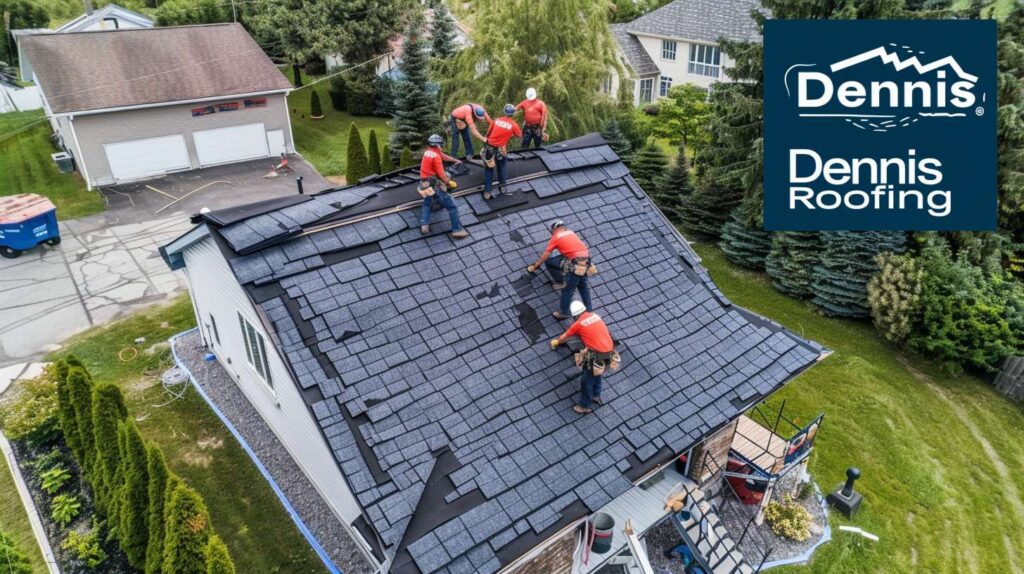
On Rugby Road, I’ve learned to look up before I admire anything else. Here’s my plain opinion: a handsome house can fool people faster than an ugly one. A rougher-looking property gets checked more carefully because people expect trouble. A beautiful one gets the benefit of the doubt – and that’s where the damage compounds quietly. Curb appeal is not evidence of roof health. The redirect here isn’t alarm, it’s inspection.
| ❌ Myth | ✅ Fact |
|---|---|
| If the stain is over the window, the window is leaking | Water travels along rafters, underlayment, and framing before it drops. The stain near your window could originate from flashing or ridge failures six feet away. |
| A neat-looking roof probably just needs minor patching | Appearance doesn’t reflect structural condition. Granule loss, dried-out sealant, and cracked underlayment are invisible from street level and can require full roof replacement without visible surface damage. |
| Flat roofing problems always show obvious standing water | Membrane blisters and seam failures on a flat roof can trap moisture underneath with no visible ponding at all. By the time water shows indoors, decking damage is often already underway. |
| If shingles blew off in one spot, only that spot matters | Wind doesn’t isolate its damage. Nearby tabs, flashing edges, ridge caps, and gutters all absorb stress during a storm. A spot repair without checking surrounding components is an incomplete repair. |
| Older homes should be left alone unless water is pouring in | Preservation-minded service actually means catching failures early. An older home’s flashing, underlayment, and ventilation require regular roof maintenance – waiting for the flood is the most expensive preservation strategy there is. |
Signals that tell you which service fits
Repair symptoms
I remember one wet morning when the ceiling stain was nowhere near the real problem. It was a gray Thursday around 7:15, right after a night of steady spring rain, when a Fiske Terrace homeowner called convinced the leak over her front room window had to be the window itself. By 8:30, crew photos showed failed chimney flashing higher up the slope – water traveling in a neat, deceptive line before dropping inside. That pattern recognition, something Latasha Monroe, after 17 years around Brooklyn roofing offices, crews, and customer care, has learned to treat as a tracing problem before a repair problem, is exactly why a roof leak detection visit tells you so much more than a surface look from the driveway.
Replacement indicators
If you called me today, the first question I’d ask is: when did the roof last get a real inspection? Not a glance from the attic hatch – a proper evaluation by someone on the surface. Repairable conditions include isolated chimney flashing repair, a single failed seam, skylight repair after a weather event, or a localized shingle section with otherwise solid underlayment. The signs that a new roof is the wiser path tend to cluster: multiple past repairs that didn’t hold, shingles losing granules in wide patches, widespread sealant failures, or a flat membrane with soft decking underneath. One fix doesn’t make sense when the whole system is tired.
From the sidewalk, maybe. From the roof, no.
| What You Notice | Likely Issue | Best Service | Urgency |
|---|---|---|---|
| Ceiling stain far from any obvious roof feature | Leak traveling along framing or underlayment | Roof leak detection + targeted roof repair | High – don’t wait |
| Bubbling or soft spots on rear flat roof | Trapped moisture under membrane, possible soft decking | Flat roof inspection + membrane repair or replacement | High – spreads fast in heat |
| Lifted or missing shingles after wind | Wind damage with possible underlayment exposure | Wind damage repair + surrounding shingle check | Urgent – call same day |
| Recurring leak around chimney each rain season | Failed or improperly installed chimney flashing | Chimney flashing repair + roof leak detection | Medium – before next rain |
| Old asphalt shingles with three or more prior patches | System at end of service life | Roof replacement – asphalt shingle roofing or upgrade evaluation | Plan within season |
| Leaking skylight after heavy rain | Flashing or seal failure around skylight frame | Skylight repair + flashing assessment | High – water near framing |
Low-slope sections speak differently than pitched ones
One August afternoon, just after lunch, I spoke with a couple who had been putting off a roof inspection because “it’s only a little bubbling” on their flat roof over the rear extension. The Brooklyn heat that day was the kind that makes every surface push back at you, and when the crew got up there, they found trapped moisture under the membrane and soft decking in a section the owners walked past without ever really looking at. And here’s the thing about Fiske Terrace specifically: a huge number of properties here pair a sloped, historic-looking front with a rear extension added somewhere over the last several decades. That transition point – where the pitched roof meets the flat addition – is one of the most reliably overlooked spots on any Brooklyn property, and it’s exactly where flat roof installation standards and maintenance expectations have to be treated differently from the sloped side of the house.
Blunt truth – roof leaks are rarely courteous enough to drip directly under the damage. When it comes to choosing a system, the material conversation is practical, not overwhelming. EPDM roofing is a durable rubber membrane that handles temperature shifts well and repairs cleanly. TPO roofing offers strong seam performance with good heat-reflective properties. Modified bitumen roofing has a long track record on Brooklyn extensions and handles foot traffic reasonably well. A tar and gravel roof can still make sense on older buildings where the structure expects that load. On the pitched side, asphalt shingle roofing remains the most common choice for value and repairability, while metal roofing suits properties where longevity outweighs upfront cost. Every system has a place – what matters is matching the right one to the right section of the roof.
| System | Pros | Cons |
|---|---|---|
| Asphalt Shingle | Cost-effective, widely repairable, suits historic-look fronts, easy color matching for older homes | Lifespan of 20-30 years, granule loss accelerates in harsh UV; not suitable for low-slope sections |
| Metal Roof | 50+ year lifespan, excellent wind resistance, low maintenance once installed, no granule degradation | Higher upfront cost, fastener exposure on some systems needs periodic checking, noise in heavy rain |
| EPDM Roofing | Proven rubber roof material, handles temperature extremes well, straightforward seam repair, 20-25 year lifespan | Seams are a vulnerability point if not installed carefully; darker membrane absorbs heat on uninsulated extensions |
| TPO Roofing | Heat-welded seams offer strong integrity, reflective white surface reduces heat load, good for flat roof installation on additions | Quality varies widely by brand and installer; thinner membranes can puncture under foot traffic |
| Modified Bitumen | Multi-ply layers offer redundancy, handles moderate foot traffic, proven track record on Brooklyn residential extensions | Seams require careful installation, torch-down application needs experienced crews, not the lightest option on older structures |
Storm aftermath is where wrong guesses get expensive
What counts as urgent
I once helped coordinate an emergency roof repair during a windy Sunday evening after a March storm, when a detached shingle section started shedding debris into a Fiske Terrace side yard just as relatives were arriving for dinner. The owner kept apologizing for sounding flustered – but when shingles start lifting, embarrassment is genuinely the least important thing in the conversation. Storm damage repair is partly about speed and mostly about not guessing wrong, and here’s an insider tip worth writing down: after any wind event, ask for photos of the surrounding components, not just the obvious missing section. Nearby tabs, adjacent flashing, gutter edges, and exposed underlayment almost always tell the fuller story of what that storm actually did to the roof system.
What to document for insurance
After a storm, the practical path through storm damage repair and insurance claim roofing starts with documentation, not patching. A credible claim depends on a clear record of what the weather did and where – and a hasty repair, even a well-intentioned one, can obscure the original damage before an adjuster sees it. Dennis Roofing can help document conditions accurately before any work begins, which protects both the claim and the repair outcome. Wind damage repair done right is thorough, not rushed.
- Note when the leak or damage first appeared – morning after rain, during the storm, or discovered later
- Photograph the interior stain and any visible exterior debris, if it’s safe to do so from the ground
- List the weather event: date, wind, heavy rain, hail, or unusual snow load
- Identify the roof type if you know it – shingle, flat, rubber, metal – and the approximate age
- Note whether the affected area is near a chimney, skylight, gutter, parapet wall, or roof-to-wall junction
- State whether power, ceiling drywall, or structural elements appear to be affected – this changes urgency
Don’t climb up to investigate – wet roofing surfaces are dangerous and you can introduce new damage. Don’t tarp blindly over an area without knowing the full extent of the breach. And don’t file an insurance claim roofing report before the damage is accurately documented. A hasty patch applied over an unexamined area can hide the true source, complicate later roof leak repair, and give an adjuster reason to dispute the full scope of the claim.
Maintenance is how a careful house stays honest
A roof system is a lot like neighborhood etiquette: one neglected detail spreads trouble farther than you expected. The good news is that the maintenance side of this isn’t complicated – it just has to be consistent. Spring inspections after the freeze-thaw cycle, gutter cleaning and gutter repair before summer storms, flat roof seam reviews in August heat, chimney flashing and skylight inspection before fall rains, and a storm damage walkthrough whenever something significant blows through – those touchpoints are how you stay ahead of what the house is trying to say rather than scrambling to translate it after the damage is done. Roof waterproofing, roof sealing, and roof coating treatments extend that window further when a system is still in good shape and just needs protection to last. Roof cleaning removes moss, algae, and debris that quietly hold moisture against the surface. None of it is dramatic. All of it matters.