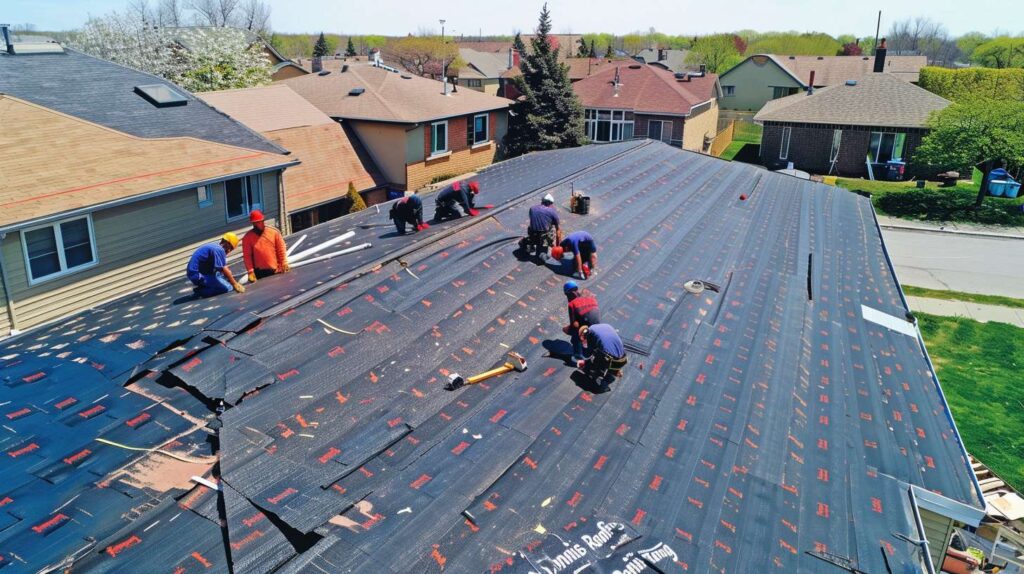
Bed-Stuy Has the Most Brownstones in Brooklyn – and Every One of Them Has a Roof
Diagnosed versus assumed. In Bedford-Stuyvesant, the roof leak people panic over is rarely the oldest part of the roof-it’s almost always the newest patch, the one somebody laid down in a hurry three summers ago, that interrupts how the whole brownstone roof drains and quietly redirects water into the walls. These buildings carry decades of residential roofing decisions stacked on top of commercial roofing instincts, and the mismatch shows up as stains, soft ceilings, and arguments about who fixed what last.
Where Bed-Stuy Roof Leaks Usually Start Is Not Where They Perform
On Halsey, I once counted four different repair materials on one roof before I even reached the bulkhead. That’s not unusual around here-it’s practically a trademark. Water enters like an actor taking a side entrance, waits in the wings under a membrane or behind a parapet, misses its cue twice, and then shows up in the wrong scene entirely: a second-floor bedroom, a rear hallway, a ceiling nobody expected. The stain gets the blame. The actual source keeps going unnoticed.
More patching is not more protection-and I say that as someone who has been doing this for 17 years. I’m Marcus Webb, and I’ve spent most of that time on Bed-Stuy brownstone rooflines where flat roof systems, parapet transitions, skylight repairs, and gutter failures are all tangled into the same complaint. On those roofs, mixed materials on flat roofing surfaces, mismatched roof sealing attempts, and old parapet edge work don’t just coexist-they create new water routes that nobody drew a map for. That’s the real problem, and it’s why roof leak detection on these buildings has to trace the full system, not just the obvious zone.
MYTH VS. FACT: Common Leak Assumptions on Bedford-Stuyvesant Brownstones
| The Myth |
The Real Answer |
| The ceiling stain sits directly under the leak. |
Water travels along joists, decking, and wall cavities before it drops. Roof leak detection often traces entry points several feet-or sections-away from the visible stain. |
| The newest patch is the safest area on the roof. |
New patches often interrupt existing drainage patterns. Where new material meets old flat roofing or modified bitumen, seam edges and transition points become the first place water finds a way through. |
| Flat roofs fail only at the drains. |
Drains are one failure point. Parapets, penetration curbs, seam separations, and chimney flashing repair failures along the edge are just as common-and get missed more often. |
| Gutter problems are separate from roof problems. |
On brownstones, gutter repair and roof system failures are connected. A gutter that can’t drain fast enough causes water to back up under the roof edge, soaking into walls and rear extensions in ways that look like roof failure-because they are. |
| A roof coating fixes mixed-material problems. |
Roof coating and roof sealing work on stable, unified surfaces. Applied over incompatible materials-tar and gravel remnants under EPDM roofing, for example-a coating seals in moisture and hides the real failure until it’s much worse. |
Quick Facts: Bed-Stuy Roofing Realities
Common Roof Types Seen Locally
Flat roof systems dominate-mostly modified bitumen roofing on post-1980s repairs, with older tar and gravel roof remnants still buried underneath. Sloped front or rear sections sometimes carry asphalt shingle roofing.
Most Frequent Hidden Leak Points
Parapet coping joints, chimney flashing repair zones, skylight repair curb edges, and transitions where two different flat roofing materials meet. These fail quietly over months before showing up inside.
Typical Service Call Types
Roof leak repair after heavy rain, emergency roof repair post-storm, chimney flashing repair on buildings with original masonry stacks, gutter repair calls that turn out to be drainage-driven membrane failures.
Why Older Brownstones Fool Owners
Multiple owners over decades means multiple repair vendors, no consistent material choices, and no single map of what’s been done. A roof that looks sealed from the street may have five different systems fighting each other two feet below the surface.
What a Real Diagnosis Looks Like Before Anyone Talks Roof Repair or Roof Replacement
Signs the Problem Is Isolated
Here’s my unpopular opinion: a brownstone roof usually gets in trouble when too many people try to “help” it. I remember being on a Quincy Street brownstone at 6:40 in the morning, fog still hanging low, and the owner kept pointing at a bedroom ceiling stain like that was the whole story. But when I got up on the flat roof, the real problem was chimney flashing repair that had been smeared over three different times-three different materials, three different summers-plus a rear gutter installation setup that never had enough pitch to drain right. The leak showed up in one room and started two roof sections away. That’s Bed-Stuy in a nutshell: rear additions, party walls, shared cornice lines, and brownstones packed so close together that water from one building can migrate into an adjacent one before it ever goes down.
Blunt truth: in Bed-Stuy, age matters, but mismatch matters more. Old doesn’t automatically mean replace-and I’ve seen 60-year-old modified bitumen roofing holding better than a two-year-old patch job. What I walk through instead is the actual condition: some roofs need a targeted roof repair, a roof leak repair at one flashing point, a gutter installation correction, or just a proper chimney flashing repair. Others genuinely need roof replacement because the system is no longer one system-it’s four competing ideas about what a roof should do, and none of them are winning.
Signs the Roof System Has Turned Into a Patchwork Failure
Do You Need Roof Repair, Emergency Roof Repair, or Full Roof Replacement?
START: Interior stain or active drip?
↓
YES → Water entering during storm right now?
YES
→ Emergency Roof Repair
Call now. Tarp may be needed. Don’t wait.
NO
→ Schedule Roof Inspection + Leak Detection
Trace the full water route before any repair.
NO → Visible seam, flashing, or ponding?
YES
→ Targeted Roof Repair / Flat Roof Repair
Isolate and address the specific failure point.
NO
→ Preventive Roof Inspection
Worth doing before the next storm season.
↓
Three or more materials OR repeated patches in one leak path?
If yes → request a full Roof Replacement Consultation. The system is no longer one system.
Service Choice by Roof Condition
| What We Find |
Best-Fit Service |
Why That Choice Makes Sense |
| Isolated chimney or parapet flashing failure |
Chimney Flashing Repair |
One defined failure point with intact surrounding membrane. Targeted repair stops the leak without disturbing the broader flat roof system. |
| Single membrane seam separation |
Roof Leak Repair / Seam Re-seal |
If the rest of the EPDM roofing or TPO roofing surface is in good condition, addressing the seam alone is practical and cost-effective. |
| Widespread saturated flat roof decking |
Full Flat Roof Replacement |
Saturated substrate holds water against the structure regardless of what you put on top. A new flat roof installation is the only fix that lasts. |
| Conflicting tar and gravel + modified bitumen layers |
System Assessment + Likely Roof Replacement |
These materials have incompatible movement rates and adhesion chemistry. Patching over the conflict doesn’t resolve it-it postpones a bigger failure. |
| Storm-torn edge metal or parapet cap |
Storm Damage Repair + Wind Damage Repair |
Exposed parapet edges feed water directly under the membrane. On mixed-use buildings, this can read like a commercial roofing failure-but the fix is surgical if caught early. |
Materials Behave Differently on Bed-Stuy Buildings, Especially When One Roof Has Become Several
A few winters back, I stepped onto a roof so soft near the drain I backed up without finishing my sentence. That sponginess isn’t rot in the dramatic sense-it’s years of water trapped in layers that were never meant to hold it. Hidden saturation is the slowest failure in roofing, and it’s why flat roof installation or outright roof replacement is often the safer call than another round of patching on a compromised substrate. You’re not just buying a new membrane; you’re removing the problem that keeps coming back.
A brownstone roof works a lot like stage lighting-if one angle is off, the mistake shows up somewhere else. One August afternoon, maybe 92 degrees, I was looking at a roof replacement estimate for a landlord who owned two attached brownstones on a block near Jefferson Avenue. He had a tar and gravel roof in front, modified bitumen roofing in the rear, and an ancient skylight installation in the middle that somebody had boxed in with scrap metal. I told him the roof wasn’t one system anymore-it was an argument between five old repairs. And honestly, that’s not unusual around here. The insider tip I always give in situations like that: when multiple materials meet near a skylight, bulkhead, or parapet, ask for roof leak detection that follows those transitions first, not the open field of the flat roof membrane. The field is usually fine. The handshake between materials is where everything goes sideways.
✔ Usually Repairable
- One seam split with intact surrounding membrane
- Single flashing failure at chimney or parapet
- Isolated wind damage at one edge or corner
- One skylight curb issue with dry surrounding deck
- Gutter pitch problem causing edge backup
- Small puncture from debris with no saturation
✖ Usually Replacement Territory
- Recurring leaks across multiple roof zones
- Soft or spongy decking near drains or penetrations
- Three or more incompatible materials layered over each other
- Failed drainage pattern with standing water across membrane
- Membrane fatigue and cracking around multiple penetrations
- Tar and gravel remnants trapping moisture under newer system
How Common Roofing Materials Perform on Brooklyn Row Buildings
▸ Asphalt Shingle Roofing – Sloped Sections
Where it works: Low-slope front faces or rear dormer extensions on brownstones with some pitch.
Where it fails: Any section close to flat-shingles need slope to shed water. Near-flat asphalt shingle roofing gets reverse-capillary moisture under the tabs in heavy rain.
Mismatch risk: When shingle sections meet flat roof membranes at a valley, the transition is almost always the first failure point, especially on older Bed-Stuy buildings with no proper step flashing.
▸ Flat Roofing Membranes (General)
Where it works: The dominant system for Bed-Stuy flat roofs, where proper drainage and unified installation keep the system intact for 15-25 years.
Where it fails: Ponding zones, seam edges under parapet shadows, and anywhere a prior tar and gravel roof layer was left underneath rather than removed. That old tar and gravel layer compresses unevenly over time, causing the new membrane above it to wrinkle, crack, and separate.
Mismatch risk: Combining flat roofing materials from different eras without stripping the old system is the most common compounding mistake we see across attached brownstones.
▸ EPDM Roofing
Where it works: Single-ply EPDM roofing is excellent on clean, unified flat roof decks with minimal penetrations. It handles Brooklyn’s temperature swings well and resists UV degradation longer than older built-up systems.
Where it fails: Around multiple penetrations-skylights, bulkheads, chimneys-where seaming and termination bars are complex. Improperly terminated EPDM roofing edges at parapets are one of the most common calls we get.
Mismatch risk: EPDM roofing does not bond reliably to modified bitumen roofing remnants. If you’re patching into an existing modified bitumen field with EPDM, the seam fails faster than either material would on its own.
▸ TPO Roofing
Where it works: TPO roofing performs well on larger flat surfaces, especially on the mixed-use commercial roofing-style buildings you see on certain Bed-Stuy corridors. Heat-welded seams are stronger than adhesive alternatives when done right.
Where it fails: Smaller residential brownstone footprints with lots of penetrations and parapet angles mean more seaming per square foot, and that increases the failure-point count. Also sensitive to improper installation temperature-winter applications on Bed-Stuy rooftops get this wrong more than you’d think.
Mismatch risk: TPO roofing cannot be torched, so transitioning it into older torch-down modified bitumen zones creates adhesion mismatches at every joint.
▸ Modified Bitumen Roofing
Where it works: Modified bitumen roofing is the workhorse of Bed-Stuy residential roofing. It handles parapet tie-ins, chimney bases, and irregular shapes better than single-ply systems, which is why it’s been the go-to material for decades on these buildings.
Where it fails: Age causes granule loss and brittleness, especially on south-facing sections. Cracked modified bitumen roofing is rarely a full replacement candidate until the substrate is also compromised-but it does need regular roof maintenance and roof inspection to catch blisters before they become splits.
Mismatch risk: When original modified bitumen roofing sits adjacent to newer single-ply or above old tar and gravel remnants, the differential movement between layers creates stress points that split seams from below.
Storm Calls, Insurance Questions, and the Difference Between Noise and Actual Lift
If I asked you where your roof actually ends, would you point to the membrane, the parapet, or the gutter? Most people point at the flat part they can see from the roof hatch, and they’re usually wrong about all three. Storm damage is not just what blew loose and landed on the sidewalk. During a March windstorm, I got called for emergency roof repair on a Macon Street building where pieces of metal roofing from a neighboring structure had landed across a brownstone’s cornice line. The tenant thought the noise meant the whole roof was lifting-and honestly, at 2 a.m. in a windstorm, I get it. But the bigger issue turned out to be roof leak detection around a patched seam on the flat roofing membrane and wind damage repair at the parapet cap. I ended up explaining the whole thing to three generations of one family standing on the stoop in house slippers. The lesson: noise gets credit for disasters that water quietly causes. For insurance claim roofing purposes, storm damage repair documentation needs to separate what the wind moved from what the water found-and those are almost never the same thing.
Noise gets blamed for disasters that water quietly causes.
Storm Roof Situations: What’s Urgent vs. What Can Wait
📞 Call Now – Don’t Wait
- Active dripping or water running inside after storm
- Membrane visibly lifted or peeled at roof edge
- Puncture from fallen debris on flat roofing surface
- Detached metal flashing or parapet cap exposed
- Water entering around a skylight during or after rain
- Ceiling visibly bulging or saturated after wind event
🗓 Schedule an Inspection – No Rush
- Visible granule loss on shingle roof, no active leak
- Gutter noise during storm but no backup or overflow
- Cosmetic dent on metal roofing, no breach
- Ceiling stain present but dry to the touch right now
- Debris on roof but membrane looks intact from hatch
- Parapet discoloration with no interior moisture sign
⚠ Warning: Don’t Tarp Blindly Over Parapets, Drains, or Skylight Curbs
Emergency tarping in the wrong location can trap standing water against the membrane, block the drain that’s supposed to clear the roof, or cover the exact entry point that needs to be documented for emergency roof repair and insurance claim roofing evidence. If you’re not sure where the water is actually entering, covering the whole parapet edge or drain field may make your documentation harder and your damage worse. Call for a proper roof inspection before you lay anything down.
Before You Approve Work, Make the Roofer Show You the Entire Water Route
Here’s what I’d ask for before signing anything-and I say this as someone who has watched owners approve confident guesses with a handshake and a smile. Ask the contractor to trace where the water enters, where it waits between rain events, and where it eventually appears inside the building. Those are three different locations on most Bed-Stuy brownstones, and if the roofer can’t explain all three, they’re not quoting the right repair. Worth doing before any approval: ask for photos of the drains, the seams, the parapet coping, the skylight curb, the chimney flashing, and the gutters together-not individually, and not just the section they plan to charge you for. That’s how you know whether you’re getting roof repair or just a patch over a system that already gave up.
Before You Call a Roofer – Bed-Stuy Homeowner & Landlord Checklist
- Note when the leak happens. Does it show up during rain, hours after, or on dry days? Timing narrows the path between entry and appearance.
- Map every affected room or surface. Multiple rooms or walls often mean a traveling leak-not multiple leaks. List them before the roofer arrives.
- Find out the roof’s approximate age if possible. Previous owner records, permit history, or a super’s memory all count. A 20-year-old flat roof changes the conversation.
- Ask about prior patch history. Who did work, when, and what materials? If you have three different contractors over 10 years, say so upfront.
- Identify what roof materials you can see. Modified bitumen roofing, EPDM roofing, old tar and gravel surface, asphalt shingle section on a rear slope-write down what you observe from the hatch.
- Take photos of the parapet coping and gutters before anyone shows up. Condition before the visit matters, especially for insurance claim roofing documentation after a storm.
- Note whether a skylight or chimney is near the affected area. These are transition points where skylight repair, chimney flashing repair, and drainage issues converge. Your roofer needs to know going in.
- Decide whether this is an emergency. Active dripping during rain = call for emergency roof repair. Dry stain with no current moisture = schedule a proper roof inspection. Know which one you’re dealing with before you dial.
Bed-Stuy Roofing Questions – When the Leak Path Makes No Sense
Q: Why is the interior stain so far from where the water is actually entering?
Water follows the path of least resistance, which on a brownstone means joists, plaster lath lines, and wall cavities. It can travel six feet horizontally before it drops. On buildings with rear additions or shared party walls, it can cross into an adjacent unit’s ceiling. That’s why roof leak detection starts at the roof system-drains, seams, parapet edges-not at the stain.
Q: Can a new roof patch actually create a new leak problem?
Yes, and it happens more often than people expect. A patch laid over an existing drainage path-or with incompatible material at the seam edge-can redirect water under the original membrane instead of sealing it out. That’s why roof waterproofing and roof sealing work best when the full material context is understood first, not just the visible damage area.
Q: Should I repair or replace my flat roof?
If the substrate is dry and the failure is isolated to one zone, flat roof repair makes sense. If you’ve had three or more patches in the same leak path, or if the decking feels soft near the drain, roof replacement is almost always more cost-effective over five years. A proper roof inspection will tell you which category you’re in before you commit to either option.
Q: Do brownstones in Bedford-Stuyvesant need a different kind of roof inspection than other buildings?
They need a more thorough one. Attached row buildings share party walls and thermal loads, rear extensions create drainage complexity, and decades of mixed materials mean the inspection has to map the whole system-not just the membrane field. A standard visual check misses most of what matters on a Bed-Stuy brownstone roof.
Q: Can Dennis Roofing help with emergency roof repair and insurance documentation in Bedford-Stuyvesant?
Yes. Dennis Roofing handles emergency roof repair calls in Bed-Stuy and can document storm damage for insurance claim roofing purposes-separating cosmetic impact from actual water-entry points, which is exactly what adjusters need to process a legitimate wind damage repair or storm damage repair claim. Call us first, before you tarp anything you’re not sure about.
If you want the full leak route explained-where water enters, where it waits, and where it finally shows up-before anyone starts patching, call Dennis Roofing. We handle roof inspection, roof repair, emergency roof repair, and roof replacement for homeowners, landlords, and mixed-use building managers across Bedford-Stuyvesant and the rest of Brooklyn.