
Prospect Park South Has Some of Brooklyn’s Most Beautiful Homes – the Roofs Should Match
Nothing on YouTube helped, and honestly, that’s because the roofing systems protecting some of Brooklyn’s most beautiful homes are far less romantic than the architecture beneath them – which is exactly why they keep those homes livable. What people admire from the sidewalk and what actually holds up during a hard Brooklyn winter, a humid August, or three freeze-thaw swings in one February are two very different conversations.
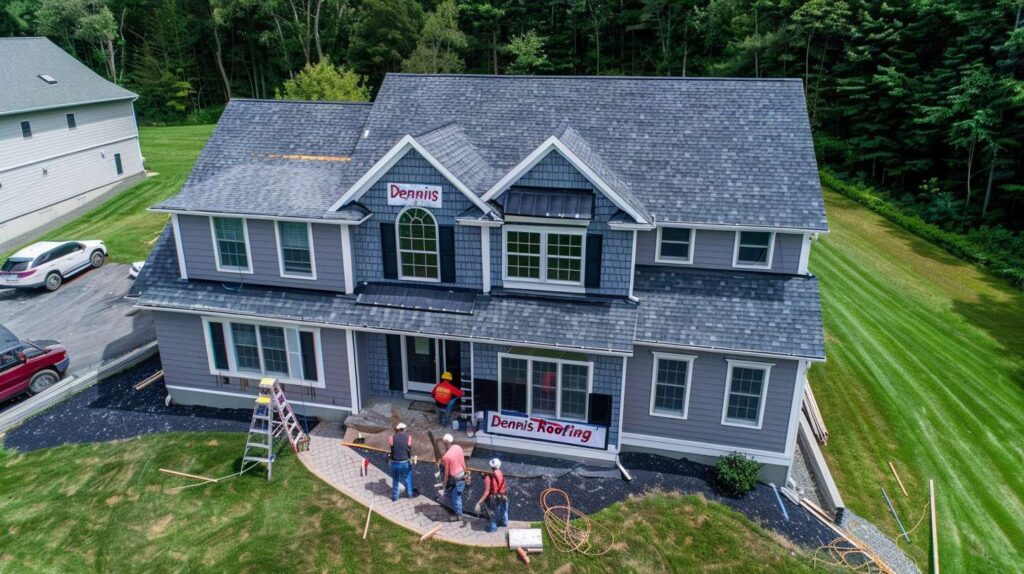
Beautiful exteriors still rely on very unglamorous roofing details
On Marlborough Road, I’ve seen houses that stop foot traffic with their original cornices and wraparound porches, and then I’ve seen the back side of those same roofs – flat sections bubbling up, gutters pulling away at the corners, flashing around a chimney that’s more wishful thinking than waterproofing. The decorative rooflines that give Prospect Park South its character also create complexity: dormers with their own drainage challenges, mixed slopes transitioning to low-pitch rear additions, skylight installations that look original but weren’t sealed when they should’ve been. That layered architecture is exactly what makes a full-system view so important here.
| What the homeowner notices | What it often means underneath | Best service to schedule | Why it matters now |
|---|---|---|---|
| Aging shingles but no active leak | Worn granules, thinning underlayment, reduced protection | Roof inspection + maintenance plan | Sets a repair or replacement timeline before failure begins |
| Leak isolated near chimney or skylight | Failed chimney flashing, cracked skylight curb sealant, or brittle step flashing | Chimney flashing repair / skylight repair | Isolated repairs prevent moisture from reaching structural framing |
| Flat roof holding water after every rain | Drainage failure, membrane depression, or blocked interior drain | Flat roof inspection and repair / EPDM or TPO assessment | Ponding weight and prolonged moisture shorten flat roof membrane life significantly |
| Lifted or missing shingles after a storm | Exposed decking, broken seal strips, possible underlayment breach | Emergency roof repair / storm damage repair | Open decking invites water intrusion within the first rain event |
| Multiple failing areas across an aging roof | End-of-life shingle system with compromised flashing and seals throughout | Full roof replacement / new roof installation | Repeated patch jobs on a worn roof cost more over time than a planned replacement |
| Buyer flagging roof concerns during inspection | Documentation gaps, undisclosed deterioration, rear flat section wear | Pre-sale or pre-purchase roof inspection | Inspection photos protect both buyer and seller during negotiations |
What matters underneath that charm is the roof system working as one piece
Why mixed rooflines need a full-system view
Here’s the blunt version: a house can put on a lovely face for guests while quietly asking the people living under it to tolerate moisture in the ceiling, drafts through failed sealing, or the same corner patch job every two years. And as Latasha Monroe, after 17 years around Brooklyn roofing crews with a specialty in explaining repair-versus-replacement decisions on older homes, has learned – the gap between what a house shows the street and what it’s actually doing to your utility bills, your walls, and your stress level is almost always a roofing system that’s being managed one crisis at a time instead of maintained as a whole.
I remember one call where the homeowner near Albemarle Road kept apologizing for contacting us just after 7 on a wet Sunday morning, while water was moving around a skylight like it was picking its next path. By the time the crew arrived, the skylight glass was fine – what had failed was the flashing and a sealant line that had gone brittle through one too many Brooklyn freeze-thaw stretches. That house looked wonderful from the curb. Nobody from the outside would’ve guessed that one neglected roof detail, something that proper roof waterproofing and chimney flashing repair work could have caught years earlier, was doing that much quiet damage to the interior.
Before you assume replacement, separate maintenance problems from structural ones
If you asked me at your front steps – and I mean honestly, not the version where I tell you what you want to hear – I’d say not every old roof needs a new roof. But repeat leaks, widespread surface wear, moisture working its way into the framing, or a failed flat roofing section behind a beautiful rear extension? Those push the conversation past roof repair territory fast. One August afternoon, during that heavy sticky heat when every flat roof in Brooklyn seems to throw back the sun, I was coordinating an inspection for buyers who had just purchased one of those lovely detached homes in Prospect Park South. They were excited about the porch columns, stained glass, and original trim – all of it worth the excitement – but the inspector’s photos of the rear flat roofing section got dead silence on the phone. I remember saying, “The roof doesn’t care how charming the dining room is,” and walking them through why the rear flat section they hadn’t even thought about was the thing that needed immediate attention. Personally, I believe inspections are most valuable right after you buy and right before leak season – because a beautiful house is one of the better places to hide expensive roof neglect, and you’re the one who pays for it later.
-
1
Leak location – which room, wall, or ceiling area is affected, and how close it is to any roof penetrations. -
2
When it happens – during rain, after snow melt, or periodically without an obvious trigger. -
3
Roof type if known – asphalt shingle, flat roofing section, EPDM, TPO, modified bitumen, or a combination. -
4
Age of last roof work – when the last repair, replacement, or maintenance was done, and by whom if possible. -
5
Photos of visible trouble spots – from ground level or a window if safe. Photos save significant time during the initial evaluation. -
6
Whether gutters, skylights, or the chimney are involved – these are the three most common points where flashing and sealing failures start.
Two cracked seams can do more damage than a dramatic storm
When urgency is real and when it is just uncomfortable
Two cracked seams can do more damage than a dramatic storm. That’s not an exaggeration – it’s the part of flat roofing that homeowners in Prospect Park South consistently underestimate until they’ve lived through it once. A small separation in an EPDM roofing membrane, a lifted edge on a TPO roofing seam, a crack in a modified bitumen roofing surface, or a soft patch on a rubber roof or tar and gravel roof area doesn’t look like a crisis from the outside. But those openings don’t wait for heavy rain to do damage – they let in every light shower, every overnight dew, and every freeze-thaw event Brooklyn can produce between November and March. And here’s the insider reality: leak paths on flat and low-slope transition areas almost always travel horizontally before they show up indoors, so the source and the ceiling stain rarely share the same address.
Water almost never announces itself where it first got in.
A roof is a lot like the part of hosting nobody compliments unless it goes wrong. The table looks beautiful, the food is perfect, and nobody says a word about the fact that the heat worked all evening – until it doesn’t. I dealt with a roof replacement that got pushed into late afternoon on a Prospect Park South job because an earlier emergency roof repair ran long after a wind damage call somewhere else in the neighborhood. The homeowner waiting was frustrated until our crew sent over progress photos from the earlier stop – loose shingle edges, exposed decking, a situation where delaying the storm damage repair by even a few hours would have meant soaked framing. She told me later that seeing those photos was the moment she finally understood why we treat emergency roof repair, wind damage repair, and insurance claim roofing with a different level of seriousness. Inspection photos from the field change the homeowner’s perspective every single time, because seeing what’s under lifted shingles is not the same as hearing about it.
- Don’t climb the roof while it’s wet. Slope and wet membrane are a combination that sends people to the ER – leave access to the crew.
- Don’t smear hardware-store sealant over flashing. It delays a proper repair, traps moisture, and usually makes the underlying problem harder to identify.
- Don’t ignore attic moisture. A damp attic after a rain event is already telling you something – it’s not condensation, and it won’t fix itself.
- Don’t delay photos for insurance documentation. Wind damage repair and insurance claim roofing processes both require timely documentation – photos taken days later carry less weight than photos taken the day of the event.
- Don’t assume the leak source is directly above the stain. On flat roofs and transition areas especially, water travels before it drops – the stain and the entry point are rarely neighbors.
A beautiful house in Prospect Park South deserves a roofing system that’s actually doing its job – and that starts with knowing what you’re working with. Contact Dennis Roofing for a roof inspection, repair plan, or full roof replacement consultation built around the specific demands of your home.