
Prospect Heights Brownstones Don’t Maintain Themselves – Let’s Start With the Roof
Plenty of Prospect Heights owners have called me convinced they had a gutter problem, a plaster problem, or a brick problem-when the roof had been quietly arranging the damage for years. This article is a practical guide to tracing the actual source of water intrusion in older brownstones and choosing the right residential roofing service before you spend money in the wrong place.
Most Interior Damage Starts Upstairs, Not Where You Notice It
A brownstone roof works a lot like backstage rigging: one tired connection and the whole system starts improvising. The visible failure-stained plaster, bubbled paint, a damp corner-is rarely where the mistake started. Water enters through an opening in the membrane or flashing, travels a path you can’t see from the inside, and finally exits somewhere that makes no obvious sense. Owners map the stain. I map the entry point, the travel path, and the failure point. Those are three different locations, and the fix has to match all three.
Here’s my blunt opinion: brownstones are too forgiving for their own good. The thick plaster ceilings, the wide joists, the layers of old patching-they absorb a lot before they give anything away. By the time you see a ceiling bubble or a dark corner, the roof has usually been lying to everybody in the house for a couple of seasons already. That slow drip is not a small roof leak repair situation. It’s a system that’s been failing quietly, and the interior is just where it finally ran out of places to hide.
| What Owners Assume | What the Inspection Usually Finds |
|---|---|
| “Stain under the skylight means skylight repair” | Failing chimney or parapet flashing is driving water toward the skylight curb; the skylight itself is the exit point, not the entry |
| “Overflowing gutter means only gutter repair” | Roof drain or internal scupper is blocked, forcing water to the edge; gutter repair alone won’t fix the membrane ponding above |
| “Moisture in brick means a façade issue first” | Parapet cap flashing has separated; water is traveling down through the masonry from above, not wicking up from the street level |
| “Small ceiling bubble means a minor roof leak repair” | The membrane seam opened up one to two seasons ago; the bubble is just where the insulation finally gave out and released stored water |
| “A coated flat roof is automatically waterproof” | Roof coating covers the surface but doesn’t fix failed seams, lifted flashing, or ponding-it often traps moisture already sitting underneath |
Trace the Water Path Before You Pick a Service
What a brownstone inspection should rule in or rule out
If you were standing next to me at the hatch, I’d ask you one question: where does the water hesitate? A proper roof inspection on an older Prospect Heights building starts at the field membrane-checking the surface for blistering, open seams, and lap failures-then moves to every flashing termination, every drain, every parapet transition, every skylight curb, and every gutter connection. As Mike Donahue, with 17 years in roofing and a specialty in flat roof diagnostics on older Prospect Heights brownstones, I’ll tell you that skipping any one of those checkpoints is how you end up replacing the wrong thing. Roof leak detection isn’t dramatic. It’s methodical, and it usually takes longer than owners expect.
One February morning, right after a wet sleet turned to ice, I was on a brownstone off Vanderbilt before 7 a.m. because the owner was certain the leak was coming from a skylight. It wasn’t. The water had gotten under failing chimney flashing, traveled along a seam in the flat roofing membrane, and finally dripped out two full rooms away. I remember standing there with one glove off, tracing the stain line on the plaster and thinking: this roof is lying to everybody in the house. That’s the nature of roof leak detection on these buildings-the symptom and the source are almost never in the same zip code, so to speak. Chimney flashing repair fixed the entry. The skylight was fine.
Once the inspection is done, the answer sorts itself into a short list. Active water intrusion with saturated materials calls for emergency roof repair right now, not next week. Isolated flashing failure at the chimney or parapet means chimney flashing repair and a membrane patch. A skylight curb that’s lifted on one side is skylight repair territory. Sagging or disconnected gutters that are sending water against the fascia need gutter repair alongside whatever’s happening above. And when the membrane is tired across the whole field-multiple patches, soft decking, widespread seam failure-the honest answer is roof replacement, not another round of band-aids.
Document every stain, bubble, damp spot, and efflorescence mark inside-note which rooms, which walls, and whether symptoms follow rain, snowmelt, or both.
Inspect the membrane surface for blistering, open seams, lap failures, granule loss (on modified bitumen), and any areas of visible prior patching.
Check every chimney flashing, pipe boot, HVAC curb, skylight curb, and parapet termination for separation, rust, cracking, or adhesion failure.
Locate every interior drain and scupper; check for clogs, slow-draining areas, and existing ponding marks that indicate recurring water retention on the flat roof field.
Walk the perimeter: check gutter attachment, parapet cap condition, coping joints, and any edge metal for separation, rust, or wind-driven lift damage.
A written scope with photos showing each failure point-not a verbal estimate. You should know exactly what’s being fixed, why, and what the alternative would cost.
If the stain is the clue, have you actually found the scene of the crime?
| What You See | Likely Hidden Cause | Best Service | Usually Repair or Replacement? |
|---|---|---|---|
| Stain near chimney or chimney stack | Failed lead or step flashing, separated cap flashing | Chimney flashing repair | Repair (unless deck is compromised) |
| Active drip during or after rain | Open membrane seam, lifted flashing, or failed EPDM/TPO lap | Emergency roof repair + inspection | Repair now; assess for replacement |
| No obvious stain but roof is 15-20+ years old | Seam fatigue, hidden flashing failure, aging modified bitumen | Roof inspection | Determines repair or replacement |
| Isolated blister or soft spot on flat roof | Trapped moisture under EPDM or TPO membrane, failed seam nearby | Roof repair / roof leak repair | Repair if isolated; inspect full field |
| Water appears near skylight after rain | Lifted curb flashing or adjacent membrane seam, not the skylight glass | Skylight repair / flashing repair | Repair in most cases |
| Gutters overflowing or pulling from fascia | Blocked roof drains forcing overflow; gutter hanger failure from ice weight | Gutter repair / gutter installation | Repair; check roof drainage too |
| Roof in good shape, minor wear | Early seam movement, minor flashing gaps, surface oxidation | Roof maintenance / roof coating | Neither – preventive |
| Multiple patches, widespread ponding, soft decking | System-level decline; substrate likely saturated under membrane | Flat roof installation / roof replacement | Replacement |
| Sloped rear addition losing granules on shingles | Asphalt shingle roofing past service life; valley flashing likely failing too | Roof replacement / new roof installation | Replacement |
| Damage after a storm-missing material, debris impact | Wind damage to membrane edge, metal roofing panels, or shingle blow-off | Storm damage repair / insurance claim roofing | Repair or replacement depending on scope |
Patching Has a Limit, and Brownstones Reach It Quietly
I got a Sunday call from a couple who had just closed on a Prospect Heights brownstone and were deep into planning a parlor-floor renovation-new plaster, reclaimed oak floors, high-end lighting. Beautiful vision. I went up top before they ordered anything and found ponding water sitting in the low center of the flat roof, patched modified bitumen with at least two generations of repair work under the current surface, and a drain half-choked with maple helicopters. I told them, as gently as I could, that putting money into the interior before addressing the roof was like rehanging velvet curtains while the fire escape was loose. The water sitting on that membrane had nowhere to go but through. Interior renovation before roof work is backward when the roof system is already this far along.
Sealing the obvious spots without a full inspection often makes the situation harder to read and more expensive to fix. Watch for these signals that coating or sealing is masking a deeper problem:
- Trapped moisture already sitting under the membrane-coating locks it in
- Saturated insulation board that won’t dry out regardless of surface treatment
- Recurring ponding that coat-and-seal doesn’t address because it’s a drainage issue
- Blistered membrane indicating moisture vapor pushing up from below
- Failing flashing at chimneys or parapets that coating can’t bridge permanently
- Soft or spongy decking underfoot that signals substrate decay
The honest takeaway: emergency roof repair is sometimes just a more expensive way of delaying roof replacement. If the substrate is compromised, the right answer is replacement-not another layer of sealant.
Then Comes the Choice: Maintain, Restore, or Replace
How owners should think about timelines instead of wishful fixes
There are three lanes here, and picking the right one depends on what the inspection actually shows. A roof with solid substrate, intact seams, and no drainage problems belongs in the maintenance lane-regular roof inspection, seasonal drain clearing, gutter repair as needed, and a roof coating review when the system’s age calls for it. Roof waterproofing and roof sealing are legitimate tools in this lane. They’re not magic, though; roof cleaning and preventive roof maintenance only buy time if the structure underneath deserves more time. When you find a localized failure-a flashing gap, a curb lift, a section of open seam-targeted repair or restoration is the right call. When the whole system is in decline, replacement is the only honest answer, and a fresh flat roof installation is cheaper in the long run than another cycle of patches.
A landlord once called me to “just seal the obvious spots” on a Prospect Heights building during an August heat wave, around 3 in the afternoon when the roof surface felt like a skillet. Three generations of repairs were up there: original tar, a newer coating, and one section of membrane laid directly over trapped moisture. I tapped it with my knuckles and heard that dull, swollen sound-the kind that tells you water’s been sitting there long enough to become part of the roof. And here’s the insider tip I give every property manager in this situation: look for where water slows down or hesitates near drains and transitions. That hesitation point almost always tells you more about the real failure than any interior stain. If water can’t get off the roof, the roof will get into the building-it’s just a question of which path it finds first.
| Task | When | Why It Matters |
|---|---|---|
| Spring Roof Inspection | April-May | Reveals any damage from freeze-thaw cycles, ice load, or winter moisture intrusion before it compounds through summer heat |
| Fall Roof Inspection | October-November | Catches seam movement, flashing gaps, and drainage issues before winter loads arrive; last practical window for membrane repairs |
| Drain Clearing After Leaf Drop | November (post leaf-drop) | Prospect Heights trees-especially the maples on the side streets off Vanderbilt-fill flat roof drains fast; blocked drains cause ponding and accelerate membrane failure |
| Flashing Review After Freeze-Thaw Events | Late February-March | Expansion and contraction work flashing joints loose over winter; this is the most common trigger for spring leak calls in the neighborhood |
| Roof Cleaning | As needed (typically spring) | Removes debris, algae, and pooled sediment that hold moisture against the membrane surface and obscure early failure signs |
| Gutter Installation / Gutter Repair Check | Spring and fall | Disconnected or sagging gutters send water against the fascia and foundation; ice weight over winter commonly pulls hangers loose |
| Roof Coating Review by System Age | Per manufacturer and inspection findings | A coating applied at the right time extends membrane life; applied too late or over failed seams it traps moisture. Timing matters more than frequency. |
| Storm Damage Repair Assessment | Within 48-72 hours after major wind or hail event | Wind damage repair is far less costly when caught quickly; delay allows water intrusion to expand the scope and may affect insurance claim roofing eligibility |
Finally, Know What to Ask Before Any Roofer Starts
A contractor worth hiring should be able to tell you, in plain English, four things: where water entered, which path it traveled, where the failure actually is, and why their proposed fix matches that specific condition. That’s the whole job. Prospect Heights is trickier than it looks from the street-you’ve got brownstones with rear extensions added decades after the main building, rooftop decks that change drainage patterns, parapets in various states of repair, mixed membrane ages on the same building, and tree debris from the side streets that clogs drains faster than most owners realize. Block-by-block, the conditions change. A roofer who treats every flat roof the same isn’t paying attention to what’s actually in front of them.
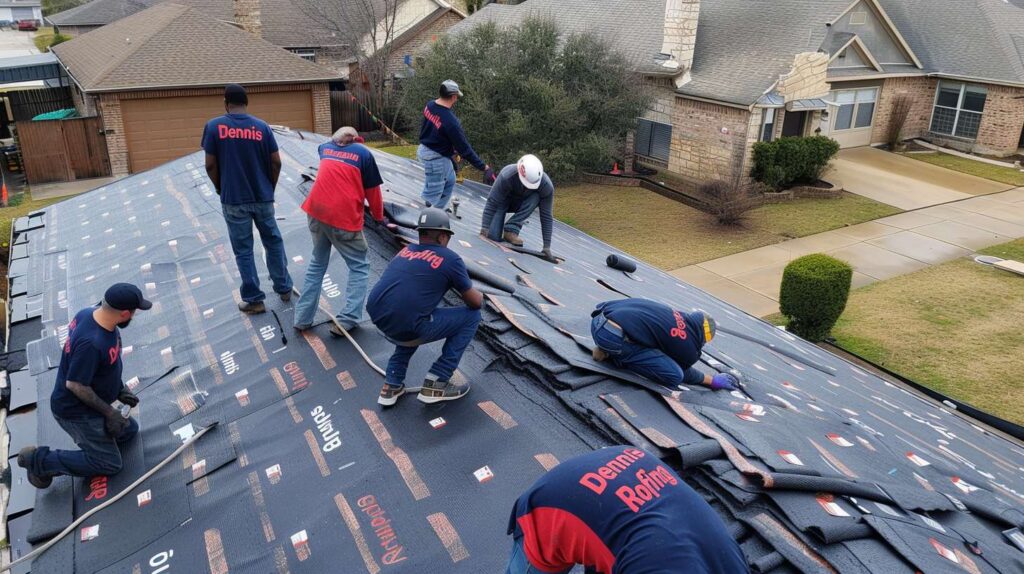
None of this has to be complicated-it just has to be honest. The right next step for most Prospect Heights owners isn’t guessing at which material to buy or which spot to seal. It’s a real roof inspection with someone who’ll walk the whole system, show you the photos, and tell you straight whether you’re looking at a repair, a maintenance program, or a replacement. If that’s what you want, call Dennis Roofing and we’ll trace the problem instead of guessing at it.
If the failure is isolated-one seam, one flashing termination, sound decking everywhere else-repair is legitimate. If you’ve got multiple patches, recurring leaks across different seasons, widespread ponding, or a membrane that’s been coated two or three times already, replacement is almost certainly the cheaper long-term answer. An honest inspection with photos is the only way to know which situation you’re actually in.
Yes-and on brownstones it’s the rule more than the exception. Water enters through a membrane seam or flashing gap, travels along joists or between layers, and exits wherever the path ends. Two rooms away, one floor down-it’s not unusual. Don’t assume the stain marks the source. It marks where water ran out of room.
No. Roof coating treats the surface. Ponding is a drainage and slope problem. Coating over ponding areas can actually trap moisture under the coating and speed up membrane failure. If water sits on your flat roof after rain, the fix is drainage correction-not more product on top of the membrane.
Active water intrusion into a living or occupied space, storm damage that’s left the membrane or flashing open to the elements, or a situation where delay will cause rapid damage to interior finishes, electrical, or structural components. If water is actively moving into the building, that’s emergency territory. Don’t wait for a scheduled appointment-call the same day.
Yes, and it’s worth doing it properly. Wind damage repair and hail damage to membrane systems can qualify for insurance claims if documented promptly. A licensed roofing contractor should perform the inspection and provide a written scope and photos before any repairs start. That documentation is what the claim needs-don’t do temporary patching that erases the evidence before an adjuster can see it.
Licensed and insured – verify both before work starts; don’t accept verbal confirmation
Experience with brownstone flat roofing – membrane systems on older buildings behave differently than new construction
Clear photo documentation – every failure point, every relevant area, before and after
Written scope for any roof repair or roof installation – not just a verbal quote with a number at the bottom
Capable across the full system – flashing, skylight repair, gutter installation, drainage, not just membrane work
Familiarity with Brooklyn NY Prospect Heights conditions – parapet details, rear additions, mixed membrane ages, and local drainage quirks matter
If you want the roof problem traced instead of guessed at, call Dennis Roofing for a roof inspection in Prospect Heights. We’ll show you exactly where the failure is and what it takes to fix it right.