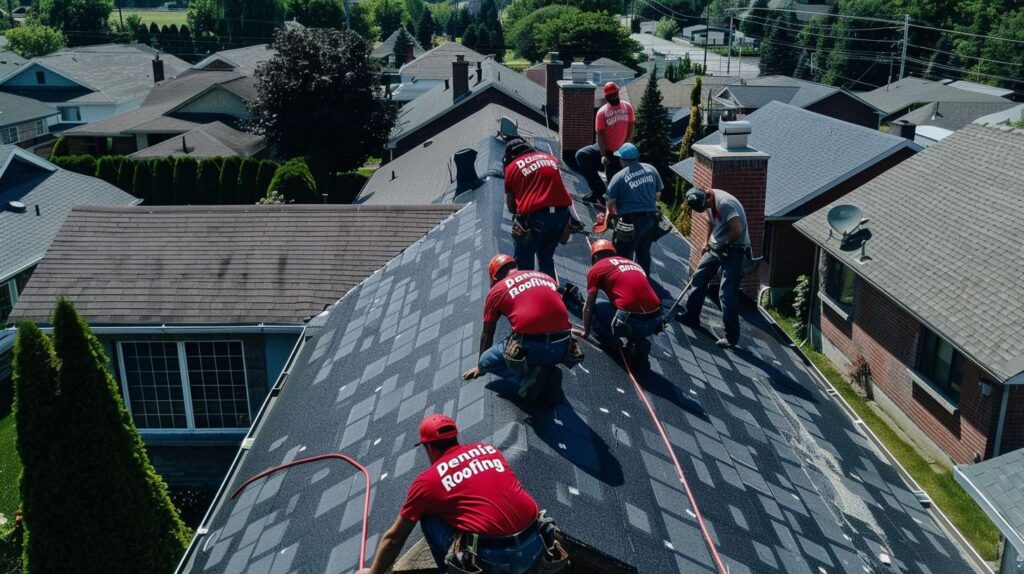
East Williamsburg Still Has the Industrial Bones – Including Plenty of Flat Roofs That Need Work
I’ll say this clearly: what you see is rarely where it starts. East Williamsburg’s toughest-looking buildings-the old brick warehouses, the converted lofts off Morgan Avenue, the mixed-use rows on Bogart Street-carry a visual authority that makes them feel bulletproof. But that’s the audience view. Backstage, behind the parapet walls and under the membrane, hard-used flat roofs are quietly moving water in ways that have nothing to do with how solid the facade looks from the sidewalk. And honestly, visible toughness means very little once seams, drains, and edge conditions start aging out.
Why East Williamsburg Roofs Fool People From the Street
On Graham Avenue last winter, I stood on a roof that looked fine until my boot told me otherwise. The owner had described “a little bubbling near the drain”-which is exactly the kind of description that sounds minor until you’re up there. By 7:15 that morning, after we pulled back a section, I was looking at wet insulation that had probably been holding water since two winters prior. Chris Tobin, after 17 years around roofs, especially flat roof repair and leak tracing, has learned that soft spots usually tell the truth before the eye does. The building looked like it could take a punch. The roof was acting like a sponge under a costume.
MYTH VS. FACT: What East Williamsburg Building Owners Get Wrong About Flat Roofs
| Myth |
What the Roof Is Actually Doing |
| “If the brick looks solid, the roof is probably solid too.” |
Brick facades and roof membranes age on completely different timelines. A structurally sound building can have a roof that’s been failing quietly for years. |
| “A small bubble is cosmetic.” |
Bubbling on a flat roof is trapped moisture or gas beneath the membrane. It signals delamination and active moisture movement-not something to photograph and revisit next spring. |
| “The leak starts right above the stain.” |
Water travels. On a flat or low-slope roof, the entry point can sit several feet-sometimes many feet-from where it shows up indoors. The stain is where it arrived, not where it started. |
| “Old tar and gravel roofs fail all at once.” |
They fail incrementally-a cracked seam here, a lifted flashing there-often giving small warnings for years before any visible interior damage appears. |
| “A skylight is usually the leak source if water shows up nearby.” |
Skylights get blamed constantly. But failed flashing, membrane splits, and aging seams in surrounding sections cause most of those leaks. The skylight is usually the closest opening, not the actual culprit. |
Quick Facts – East Williamsburg Roofing Realities
Most Common Roof Profile
Flat or low-slope – found on the majority of commercial and residential conversions throughout the neighborhood
Frequent Hidden Issue
Trapped moisture beneath the membrane – invisible from the surface, confirmed only by inspection or moisture testing
Common Leak Travel Path
Flashing failure → deck penetration → lateral travel across insulation → interior stain that appears feet away from the source
Best First Service
Roof inspection combined with roof leak detection – before any repair scope is written or replacement budget is discussed
Which Roofing Service Matches the Problem You Actually Have
“If you told me, ‘Chris, the leak is right above the stain,’ I’d ask you one question first: are you sure?” Because leak travel is the thing most owners haven’t accounted for. Water enters at a failed flashing, finds the path of least resistance across the deck, and shows up inside wherever the substrate lets it through-which can be four feet from where it crossed the membrane. I traced one August leak in a converted warehouse space just off Flushing Avenue where the owners were completely certain it was the skylight. Fair guess. But the real problem was a dead-flat section of aging modified bitumen roofing ten feet away, where flashing had failed at a parapet transition and water had been wandering for a season before it showed up indoors. That’s the kind of East Williamsburg problem that repeats itself: old parapets, mixed-use buildings with layered renovations, low-slope sections that were patched rather than replaced, and roof-to-wall transitions that haven’t been touched since the building changed hands. The drip is the actor, not the author.
Once the actual source is located, the service match gets clearer. For localized problems-a split at a seam, a failed flashing detail, storm damage in one area, a loose skylight curb-roof repair is the right call. That includes roof leak repair, chimney flashing repair, skylight repair, gutter repair, roof coating over a membrane that still has structural integrity, roof sealing at vulnerable transitions, and emergency roof repair when water is actively getting inside. These services make sense when the rest of the roof is dry and the damage is genuinely isolated.
When the damage is more systemic-repeated leaks, widespread saturation, a history of patch-over-patch repairs-the conversation shifts toward roof replacement, flat roof installation, or a full new roof. Material options for East Williamsburg’s flat and low-slope buildings typically include EPDM roofing, TPO roofing, and modified bitumen roofing as the most common membrane systems, with rubber roof assemblies for certain applications and metal roofing details at edge conditions or mechanical screens. For the occasional pitched section on a mixed-use row building, asphalt shingle roofing may still be appropriate. The material matters less than the installation quality and the drainage design-but the choice still has to match the building.
Roof Condition → Service Recommendation: East Williamsburg Building Scenarios
| What You Notice |
Likely Roof Issue |
Best First Service |
Possible Long-Term Fix |
| Water stain on ceiling after heavy rain, no active drip now |
Membrane seam failure or failed flashing – water entered and traveled |
Roof inspection + leak detection |
Targeted roof repair or flashing repair |
| Flat roof with visible bubbling or soft spots near the drain |
Trapped moisture beneath membrane; possible wet insulation |
Inspection + moisture assessment |
Partial or full flat roof replacement depending on saturation extent |
| Recurring interior leak – same spot every season, previously patched |
End-of-life membrane or underlying structural moisture issue |
Replacement consultation |
Full roof replacement – EPDM, TPO, or modified bitumen |
| Water near skylight after wind-driven rain |
Likely flashing failure or membrane issue – not necessarily the skylight itself |
Roof inspection + leak detection before any repair is quoted |
Chimney flashing repair, skylight repair, or membrane patch |
| Gutters overflowing, interior dampness along exterior wall |
Blocked drainage causing water to back up under membrane edge |
Gutter repair or gutter installation + roof edge inspection |
Roof waterproofing at wall base; possible membrane edge repair |
| Post-storm: visible gravel displacement, clogged drain, damp parapet |
Storm damage – altered drainage pattern, possible flashing separation |
Emergency roof repair + storm damage inspection |
Wind damage repair, drain clearing, insurance claim documentation |
Repair Makes Sense When…
- Damage is limited to an isolated membrane split or seam
- Flashing failure is the single traceable entry point
- Storm damage is confined to one area, rest of roof is dry
- Insulation beneath the membrane tests dry
- Roof age and overall condition still support years of service
Replacement Is the Smarter Spend When…
- Leaks have recurred in the same or multiple locations
- Widespread insulation saturation is confirmed
- Roof has a visible patch-over-patch history
- Membrane has shrunk or cracked across large areas
- Chronic ponding indicates the drainage design has failed
- System is at or past its rated service life
Do you want a real diagnosis – or just someone’s best guess?
Should You Book an Inspection, Repair, or Replacement Consultation?
Do you have active interior water right now?
↓ YES
Call for Emergency Roof Repair immediately – don’t wait to see if it slows down
↓ NO
Has this leak happened before?
↓ YES
Book inspection now – and bring repair/replacement evaluation into that same visit
↓ NO
Is the roof over 15-20 years old or visibly patched?
YES → Replacement Consultation
NO → Standard Roof Inspection
What Flat Roof Materials Commonly Show Up Here-and How They Age
“Here’s my blunt opinion: flat roofing doesn’t forgive wishful thinking.” East Williamsburg roofs include everything from old-school tar and gravel roof systems to modified bitumen roofing, EPDM roofing, TPO roofing, rubber roof assemblies, and occasional metal roof details at parapets or mechanical enclosures-and each one fails in its own specific pattern. But here’s what I’ve noticed after years of tracing leaks on these buildings: the material choice matters less than the drainage design, the seam quality, the flashing execution at every penetration and edge, and whether anyone has touched it since it went down. A beautifully specified TPO roofing system installed with lazy seams and a clogged drain will fail faster than a twenty-year-old modified bitumen roof that someone actually maintained.
Common Low-Slope Roofing Systems – East Williamsburg Buildings
| System |
Pros |
Cons |
Best Fit Here |
| Modified Bitumen |
Durable, well-understood, excellent for roofs with foot traffic or mechanical equipment |
Seams are a persistent failure point; requires experienced installation to hold long-term |
Good for older loft and warehouse conversions where durability matters more than weight |
| EPDM Roofing |
Long lifespan, flexible in cold temperatures, cost-effective on larger flat surfaces |
Seam adhesive can fail over time; puncture repair requires careful matching |
Strong choice for standard commercial flat roofs with clean deck and good drainage |
| TPO Roofing |
Heat-welded seams are strong; reflective surface helps with heat in summer months |
Quality varies significantly by manufacturer; not all installers weld seams properly |
Well-suited for mixed-use buildings where energy performance is a consideration |
| Tar & Gravel |
Proven track record on old Brooklyn stock; gravel provides UV and impact protection |
Heavy, difficult to inspect under gravel, and hard to repair without disturbing surfacing |
Still in service on many older buildings – best assessed individually before replacing |
| Roof Coating |
Extends life of a recoverable membrane at lower cost; can seal minor surface wear |
Not a fix for wet insulation or failed seams – coating over a failing system delays the real problem |
Appropriate only when inspection confirms the underlying membrane is structurally sound |
How Trouble Builds Before It Turns Into Emergency Roof Repair
Small Warnings Owners Ignore
“The hard truth is that old industrial buildings can hide roof trouble with a straight face.” I remember a windy Sunday after a spring storm – a small commercial owner called for emergency roof repair because gravel had washed toward one corner and clogged drainage. Up on that tar and gravel roof, with the parapet still damp and the air smelling like wet dust and exhaust, you could see exactly how years of patching had changed the slope behavior. Water wasn’t flowing toward the drain anymore. It was pooling where the old patches had created subtle ridges. The roof hadn’t suddenly failed. It had been giving small warnings like a creaky backstage catwalk for a long time, and nobody had gone up to listen. Here’s the insider tip that most owners miss: after wind-driven rain, look not just for visible tears but for displaced surfacing, gravel pushed toward corners, separated flashing at parapet walls, clogged scuppers, and areas where previous repairs may have altered how water moves. Those clues matter as much as any puncture.
But that’s the street view-here’s the roof view: what owners notice from below is a stain, a drip, or a damp wall. What a roofer checks up top after a storm is flashing separation at parapet edges, membrane lifted by wind suction, scupper and drain blockage from displaced surfacing, and open seams at mechanical penetrations that wind-driven water found in minutes. Storm damage repair and wind damage repair often go hand in hand, and the inspection that follows a weather event is the same one that builds the documentation for an insurance claim roofing submission. Roof inspection timing matters-waiting weeks after a storm can make it genuinely harder to establish what the storm caused versus what was already failing. Don’t sit on it.
⚠ Warning: Waiting on a Flat Roof Leak After a Storm
Delaying service after a storm leak isn’t just risky – it’s expensive. What starts as a repairable membrane issue can progress quickly to wet insulation, damaged roof decking, mold risk inside the building envelope, interior finish damage, and a more complicated insurance claim dispute once the damage spreads beyond the original storm-caused entry point. The window between “repairable” and “replace the deck” closes faster than most owners expect.
Urgent vs. Can-Wait: Knowing the Difference
📞 Call Now
- Active interior water – any amount, any location
- Wind-lifted membrane visible from the roofline
- Blocked drain with standing water pooling on the roof
- Flashing pulled loose at parapet or chimney
- Storm damage near electrical conduit or roof penetrations
📅 Book Soon
- No active leak but membrane coating is aging out
- Minor granule loss on a shingle roof section
- Cosmetic staining already confirmed as non-active
- Planned gutter installation on a functioning system
- Routine roof cleaning before the winter season
Before Anyone Prices the Work, Get the Roof Story Straight
“I learned this back when I was building stage platforms-what carries the load isn’t always what gets the attention.” The visible surface of a roof is like the stage deck: it’s what people see. But the story is in the connections. The seams between membrane sections, the transitions where a low-slope section meets a parapet wall, the flashing at every skylight curb and chimney base, the drains and scuppers that have to move water off the deck, the gutter hangers pulling away from a fascia that’s been wet for two seasons. Before Dennis Roofing quotes any scope of work on a Brooklyn building, those details get checked – not just the spot that’s dripping. That’s how you avoid spending money on the wrong repair.
A competent site visit should cover roof leak detection with moisture mapping logic, photo documentation at every problem area, and a clear breakdown of options – not just “you need a new roof” or “we can patch it.” Depending on what’s found, the scope might include roof waterproofing at vulnerable transitions, a roof coating where the membrane is still recoverable, gutter repair or gutter installation where drainage is failing, skylight repair or skylight installation where curbs have failed, chimney flashing repair at parapet intersections, and a roof maintenance plan going forward. Roof cleaning gets recommended when debris accumulation is actively blocking drainage. Roof sealing at penetrations is often part of any repair scope, not a separate service. The goal of that first visit is to give you the full roof story – what’s failing, what’s aging, what’s fine, and what order it needs to happen in. If that story is still unclear after talking to the last contractor, Dennis Roofing is the call to make before anyone starts guessing.
Before You Call: 6 Things Worth Knowing First
Have these answers ready – they help us move straight to diagnosis instead of starting from scratch.
- When does the leak appear? During rain only, after wind-driven rain specifically, or even in dry weather?
- Wind or steady rain? These two patterns point toward different failure types – flashing versus membrane.
- Roof age, if known. Even a rough estimate – “we bought it 12 years ago and it looked old then” – helps narrow the system type.
- Any past patching? If prior repairs were done, where and roughly when – this changes how we read the current condition.
- Do drains or gutters overflow? Overflow during or after rain suggests a drainage problem that may be driving the leak.
- Are skylights, chimneys, or parapet walls nearby? Proximity to penetrations and transitions is the first thing a leak trace considers.
Questions East Williamsburg Owners Ask Before Approving Roofing Work
Do I need roof repair or a full roof replacement?
+
That depends on whether the damage is isolated or systemic. A single failed flashing or a clean membrane split typically supports repair. Repeated leaks, saturated insulation, and a history of patches usually point toward replacement. Inspection – with moisture testing, not just a visual – is the only way to answer that question honestly for your specific building.
Can a flat roof leak far from where the stain appears inside?
+
Yes – and this happens constantly on low-slope roofs. Water enters at a membrane seam or failed flashing, travels horizontally across the insulation layer or deck, and shows up through the ceiling at whatever weak point lets it through. The stain tells you where it arrived. It rarely tells you where it started.
Is TPO roofing better than modified bitumen for my building?
+
Not categorically. TPO roofing offers heat-welded seams and reflectivity, which can help in summer. Modified bitumen roofing is proven on Brooklyn’s older building stock and handles foot traffic well. The right choice depends on your deck condition, drainage setup, roof access, and budget – not a general ranking.
Will insurance cover storm damage repair on my roof?
+
Often yes, if the damage is storm-caused and properly documented. The key is getting a professional inspection done quickly after the event – before the damage spreads and before the insurer can argue the cause. Good photo documentation and a clear scope from your contractor make the claim process significantly smoother.
Can you repair skylight and flashing issues during the same visit?
+
Yes. Skylight repair and chimney flashing repair are often related – they’re both penetration-edge problems – and combining them in one scope saves time and avoids the cost of two separate mobilizations. If the inspection confirms both are contributing to the same leak path, addressing them together is the smarter approach.
Inspection Scope, Not Guesswork – What a Proper Visit Should Include
+
A thorough inspection isn’t a quick walk and a quote. Here’s what it should actually cover:
- Membrane review – surface condition, bubbling, splits, seam integrity across the entire field
- Drain and ponding check – drain flow rate, scupper condition, areas where water pools after rain
- Flashing inspection – every wall-to-roof transition, parapet cap, and base flashing condition
- Parapet edge review – coping condition, edge metal, expansion joint condition
- Penetration check – skylights, HVAC curbs, pipe boots, conduit entry points
- Decking warning signs – soft spots underfoot, visible deflection, signs of long-term moisture exposure
- Moisture clues – staining patterns, efflorescence at parapets, insulation saturation indicators
- Photo documentation – every area of concern captured before any work begins
- Clear recommendation categories – repair now, monitor and re-inspect, or full replacement – with honest reasoning for each