
New Utrecht Is One of Brooklyn’s Historic Six Towns – the Buildings Here Go Back a Long Way
Fed up with unclear diagnoses? In New Utrecht, the roof problem you’re pointing to right now is almost always the newest piece in a much older building story – and treating it like an isolated event is exactly how people end up paying twice. These buildings carry decades of repairs, layer upon layer, and reading what’s happening on your ceiling without reading the roof above it is like opening a book to the last page and thinking you understand the plot.
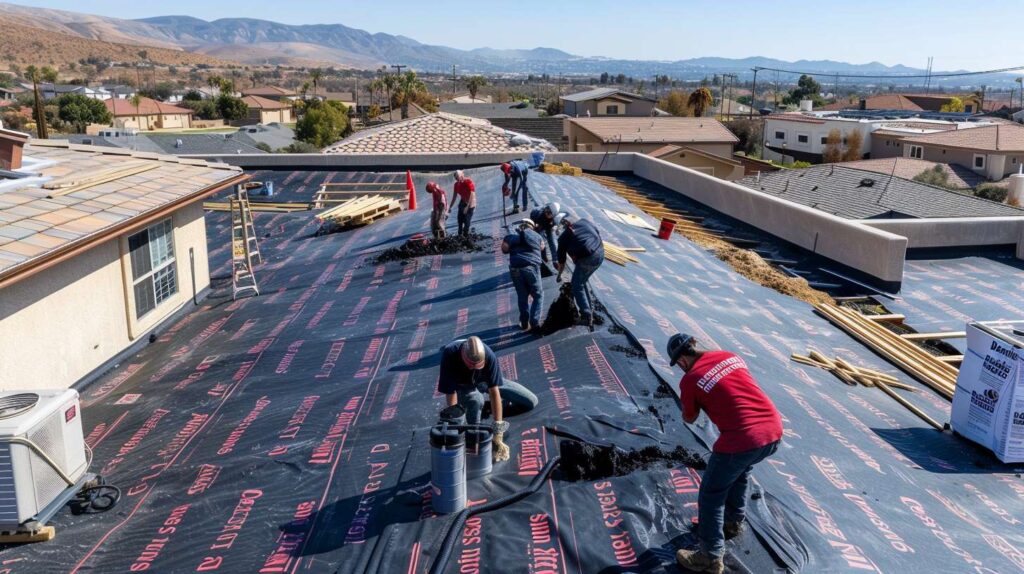
Why the stain you notice is usually the last clue, not the first
Now read that backwards with me – and I mean that literally, not as a figure of speech. The stain on your plaster ceiling didn’t start there. The bubbling paint didn’t originate at the wall. In New Utrecht, where a building might carry original construction from the early 1900s alongside a rear addition from the 1970s and a skylight somebody put in during a kitchen renovation, the visible roof problem is the most recent entry in a very long record. I’ll say this plainly: I don’t trust any roofing diagnosis that jumps straight to full roof replacement before someone has physically traced the water path from where you noticed it indoors all the way back to its real source on top. That’s not caution – that’s basic respect for the building and your budget.
On 79th Street, I’ve seen three roofing eras on one house. The job that really crystallized this for me, though, was on a side street off New Utrecht Avenue at about 7:10 in the morning, coffee still too hot to drink. The owner was absolutely certain the leak came from the skylight – it had rained hard overnight and everyone was staring at the glass. I walked the water marks backward, past the skylight curb, and found the real culprit: chimney flashing buried under two generations of patchwork, each layer telling a different decade’s story. That’s when I understood that Joe Santangelo, with 19 years of experience reading leak paths on older Brooklyn roofs, could save somebody a skylight replacement that would have fixed absolutely nothing.
Active dripping, storm opening, visible missing material, or water near electrical fixtures?
Don’t wait. Contain water damage, protect interior, and call for same-day service.
Seeing a stain, bubbling paint, recurring damp spot, or draft near ceiling?
Is the roof older, layered, or part flat and part shingle?
What a real New Utrecht roof inspection needs to uncover
Layers, transitions, and repairs that hide under the obvious problem
Here’s the blunt part nobody likes hearing: a proper roof inspection on an older New Utrecht property is part diagnosis, part building history – and a contractor who skips the history is going to miss the diagnosis. On the mixed-use storefront blocks along New Utrecht Avenue, on the rowhouses where the rear addition was built thirty years after the original structure, on the buildings where three different owners made three different decisions about what to slap on top of what was already there – you can’t assess a roof the same way you’d assess a five-year-old house in a new development. The roof you’re looking at today is almost never the roof the building started with.
I remember pulling up a patch and finding another patch under it. It was a hot August afternoon near 84th Street, maybe 92 degrees with no breeze to speak of, and I was talking with a homeowner whose grandfather still called the neighborhood by the old town name like it was its own world. We were there to discuss a possible roof replacement. When I peeled back a loose corner of modified bitumen roofing, there was an older tar and gravel roof underneath, and under that, wood decking that had been sistered in so many spots it looked like a family tree. That inspection turned into a building history lesson whether we planned it that way or not. The findings from that kind of look are what determine the honest answer – whether the right move is a targeted roof repair, a roof coating, waterproofing work, or a full roof replacement from the deck up.
| What We Find | What You May Notice Inside | Most Likely Service | Usually Urgent? |
|---|---|---|---|
| Open chimney flashing seams | Stains near interior walls, water at fireplace surround | Chimney flashing repair | Yes |
| Split vent boot on shingle roof | Small recurring stain on ceiling near bathroom or kitchen | Roof leak repair – targeted boot replacement | Yes |
| Ponding on flat roofing | Slow spread of moisture, soft spots on ceiling over time | Drainage correction, roof coating, or flat roof installation | Soon |
| Blistered modified bitumen roofing | No interior sign yet, but failure is imminent | Membrane repair or replacement depending on scope | Soon |
| Exposed seams on EPDM roofing | Damp insulation visible at roofline, ceiling bubbling after rain | Seam repair, roof waterproofing, or EPDM re-seaming | Yes |
| TPO edge failure at parapet | Wall dampness near top floor, especially after wind-driven rain | TPO edge reattachment or commercial roof repair | Yes |
| Rusting metal flashing at skylight curb | Drip at skylight frame, especially on north-facing exposures | Skylight repair or flashing replacement – not always skylight replacement | Soon |
| Gutter overflow backing under shingles | Ice dam staining in winter, eave-line rot and soffit dampness | Gutter repair or gutter installation with drip edge correction | Soon |
When patching still makes sense and when it starts wasting your money
If I were standing in your hallway looking at that ceiling stain, I’d ask this first: is this the first failed detail in an otherwise sound roof, or is it the latest failure in a system that has too many layers and too many stories? A single failed pipe boot on a ten-year-old shingle roof with solid decking – that’s a repair, full stop. A recurring stain in the same corner every winter, with three different patches already visible on the flat section out back, and soft spots when you press the membrane – that’s a different conversation entirely. Don’t let anyone skip that question.
The Risk of Stacking One More Patch onto a Failing Layered Roof
If your roof already has a documented history of repeated leaks, visible buried layers, soft decking underfoot, or a transition between a flat roofing section and a shingle roof that has never been properly addressed – a surface patch is not a repair. It’s a delay.
Patching over saturated insulation, buried flashing failures, or sistered decking does not stabilize what’s underneath. It covers it until the next rain event or wind event finds it – and by then the damage is usually worse and the repair cost is higher. A cheap fix on a compromised layered system is the most expensive decision you can make in slow motion.
Which roofing systems show up here and how they usually fail
Flat sections behind older facades
A hundred-year-old building doesn’t fail all at once; it mutters before it shouts. In New Utrecht, that muttering usually comes from one of several systems: flat roofing using EPDM roofing, TPO roofing, modified bitumen roofing, or the older tar and gravel roof you’ll still find under newer membranes on buildings that haven’t been fully stripped. On the steep-slope side, it’s usually asphalt shingle roofing, sometimes with original wood decking underneath and the occasional metal roof detail at dormers or bay transitions. Rubber roof installations on rear additions are common too – and each of these materials fails differently, on its own timeline, with its own warning signs.
Steep fronts, rear additions, and mixed systems on one property
If your house has a front shingle roof and a rear flat addition, never let anyone diagnose one without physically inspecting the other.
Think of the roof like the top chapter of a much thicker book. I got a call on a windy Sunday evening from a family in exactly this situation – steep shingle roof up front, rear flat roof addition that was clearly from a different era entirely. The son met me outside with a flashlight while his mother stood at the door saying, “This house has been here longer than all of us.” She wasn’t exaggerating by much. When I read the building backwards – from the bubbled paint on the second-floor ceiling, up through soaked insulation in the attic space above the rear addition, to the split around an old vent boot where the two roof systems met – the picture got clear fast. The leak was new. The failing roof system it came from was not. And here’s the insider tip I pass along to every homeowner on a mixed-era property: transitions between materials, slopes, and building eras reveal the real failure faster than the center of any roof field. That junction between the steep shingle section and the flat addition is almost always where the decades catch up with each other first.
How to call for service without getting sold the wrong fix
The more information you have ready before someone gets on your roof, the faster and cleaner the diagnosis tends to go. Know roughly how old the roof is if you can. Know which room shows the stain and whether it appeared after heavy wind-driven rain or a slower soaking storm. Note whether you have skylights, a chimney, parapet walls, gutters, or a rear addition that might be under a separate roof section. Now read that backwards with me: interior stain → which room and wall → which roof section sits above it → what’s on that section and how old is it → where are the transitions, penetrations, and flashings. That backwards walk is what turns a service call into an actual answer.
Good communication between a property owner and their roofer protects your budget by matching the right service to the actual failure. That might turn out to be roof maintenance, a straightforward leak repair, a flat roof installation on a failed rear section, commercial roof repair on a mixed-use storefront, or insurance claim roofing after storm damage. At Dennis Roofing, we’re not going to recommend what earns the most – we’re going to tell you what we found and what it means.
Can you repair just one section of a flat roof?
Yes – and often that’s exactly the right call. If a seam failed, a drain backed up and damaged a specific field area, or a flashing pulled away at one wall, a targeted repair on that section is legitimate. The catch is that we need to confirm the surrounding membrane and decking are actually in sound shape first. Repairing over saturated insulation or failing substrate just delays the next service call.
How do you know if I need roof replacement or roof repair?
The inspection findings determine that – not the size of the ceiling stain. If we find one isolated failing detail on an otherwise sound roof, repair is usually the honest answer. If we find multiple failing components, saturated insulation, or decking damage across a large area, replacement is worth discussing. We’re not going to recommend replacement to make the job bigger.
Do older buildings make leak detection harder?
Honestly, yes. Water travels farther in older structures because framing irregularities, multiple insulation layers, and decades of small repairs create unexpected pathways. The stain you see may be three to six feet from the actual entry point. It’s why roof leak detection on these buildings takes more time and more attention to building history – not less.
Can skylight installation or chimney flashing repair be done without a full new roof?
Absolutely. Chimney flashing repair and skylight repair – or new skylight installation – are standalone services in most cases. They don’t require a full roof replacement unless the surrounding membrane or shingle field is failing independently. Anyone telling you otherwise without inspection evidence to back it up deserves a second opinion.
What should I expect if storm damage repair may involve an insurance claim?
Document everything before anyone touches the roof – photos of interior damage, exterior damage, and any debris. We can provide a written damage assessment that clearly distinguishes storm damage from pre-existing wear, which is what your adjuster needs to process the claim cleanly. We work through the insurance process with property owners regularly, and we don’t inflate scope or pad reports. What we find is what we document.
If you’ve got a stain you can’t explain, a recurring leak that never quite got fixed, or you just want someone to look at your roof and tell you the truth – call Dennis Roofing. We’ll do a proper roof inspection, trace the problem the right way, and tell you whether you need emergency roof repair, a targeted fix, or an honest second opinion on whether a new roof is actually necessary.