
White Sands Roof Replacement & Repair Experts
Here’s something most White Sands homeowners don’t learn until they’re looking at their third roof leak in five years: a roof installed to standard inland specs loses 30-40% of its expected lifespan when it sits two miles from Jamaica Bay. The salt air, the wind shear off the water, the temperature swings between scorching tar-beach summers and frozen January mornings-all of it adds up to roofs that start failing at year twelve instead of year twenty. What that means for your house and your wallet is simple: you’ll face earlier leaks, more frequent roof repair calls, and a tougher decision about whether to patch again or commit to a full roof replacement built to actually survive here.
I’m Carla. I spent seven years as an insurance claims examiner looking at storm-damage photos from every neighborhood along the Brooklyn coast, including plenty from White Sands. Then I left the desk, got trained by a crew that specialized in coastal roof installation, and started doing the work instead of just documenting it afterward. Now when I talk about roof leak repair or a new roof, I’m pulling from both sides-what adjusters approve, what actually holds up when wind speeds hit forty knots, and what homeowners need to know before they sign anything.
Repair or Replace? The Real Decision Framework for White Sands Roofs
The question I hear most often is whether a roof can be patched one more time or if it’s finally time for a full tear-off and roof replacement. The answer depends on four things, and age is only one of them.
Age matters, but not the way you think. A fifteen-year-old asphalt shingle roofing system installed inland might have another decade left. That same roof in White Sands? It’s at the end. The granules are gone on the south-facing slope, the adhesive strips that keep shingles flat have been cooked and frozen through too many cycles, and the next nor’easter is going to start peeling tabs. If your shingle roof is over twelve years old and you’re within a half-mile of the water, budget for replacement, not repair.
Storm history tells the real story. Every time wind lifts a shingle or drives rain under a flashing seam, the decking underneath takes a hit. You might get the leak patched, but the plywood is compromised. I pulled up a section of roof two blocks off the water last spring-homeowner had faithfully called for roof repair after every storm for three years-and found decking so soft I could push my thumb through it. At that point, repair isn’t just ineffective; it’s financial malpractice. You’re spending money to keep a failing system limping along when a roof inspection would show you the substructure is already shot.
Visible damage has a tipping point. If you’re seeing curled shingles in scattered spots, that’s repair territory. If you’re seeing daylight through the attic in multiple places, missing flashing around the chimney, or sagging sections along the ridge, you’re past repair. The rule I use: if the damage covers more than 30% of any single slope or if you’ve got active leaks in three or more places, the cost of proper roof repair starts approaching 60-70% of replacement-and you still end up with an old roof. Do the replacement.
Roof type changes the equation. A flat roof with localized bubbling in the membrane can absolutely be patched if the rest of the system is sound. EPDM roofing, TPO roofing, and modified bitumen roofing are designed for section repair-that’s one of their advantages over tar and gravel roof systems, which are harder to patch invisibly. But if you’ve got a twenty-year-old rubber roof with seams starting to separate and ponding water in multiple low spots, no amount of roof sealing or roof coating will fix the drainage problem. You need new.
Coastal-Grade Roof Installation: What “Built for White Sands” Actually Means
When I say “coastal-grade,” I’m not talking about marketing language. I’m talking about specific installation details that determine whether your new roof survives the next big storm or ends up as a tarp-and-plywood disaster you’re arguing with your insurance company about.
Fastener patterns and wind ratings. Standard shingle roof installation uses four nails per shingle. Coastal spec calls for six, and they’re placed in a tighter pattern that resists uplift. The shingles themselves should be rated for 110-130 mph winds-those ratings are printed right on the packaging, and yes, adjusters check them when you file a claim for wind damage repair. I’ve seen roofs installed with perfectly good shingles fail inspection because the contractor used a standard four-nail pattern. The shingles lifted, the decking got soaked, and the claim was denied because installation didn’t meet coastal building code. That’s a $15,000 mistake.
On a flat roof over a small commercial space on the main strip, we switched from mechanically-attached TPO roofing to a fully-adhered system specifically because the building sits in a wind-tunnel corridor between two taller structures. Mechanically attached is faster and cheaper-you roll out the membrane and screw it down through plates every twelve inches. Fully adhered means you glue the entire membrane to the substrate with contact adhesive. It costs about 20% more and adds a day to the schedule, but it can’t be peeled off by wind. For commercial roofing in exposed locations, that’s not an upgrade-it’s basic survival.
Underlayment and ice-and-water shield. Coastal roofs get a continuous layer of ice-and-water shield (a self-sealing rubberized underlayment) across the entire roof deck, not just in valleys and along eaves. On an inland roof, code requires ice-and-water shield in the bottom three feet; out here, you want full coverage. When wind-driven rain gets under a shingle-and it will-that underlayment is your second line of defense. It’s the difference between a small ceiling stain you can paint over and a full interior flood that takes out drywall, insulation, and fixtures.
Material Choices: Matching Roof Type to White Sands Conditions
Every material has a sweet spot. In White Sands, some are better bets than others.
Asphalt shingles: the default, with caveats. Asphalt shingle roofing is what most residential properties have, and it works-if you install architectural-grade shingles with high wind ratings and proper fastening. I tell homeowners to budget $450-$650 per square (a square is 100 square feet) for a roof replacement using quality materials and coastal installation standards. Three-tab shingles are cheaper but don’t last here; the tabs rip off in wind. Architectural shingles have better granule adhesion, thicker construction, and longer warranties. Expect a lifespan of 15-20 years in White Sands if installed correctly, 10-12 if not.
Metal roofing: the long-game investment. A metal roof installed with concealed fasteners (standing seam) will outlast you. Lifespan is 40-50 years, wind resistance is exceptional, and salt air doesn’t hurt it-aluminum and steel alloys used in metal roofing are designed for coastal exposure. Cost is $800-$1,200 per square installed, roughly double asphalt. The math works if you’re planning to stay in the house more than fifteen years or if you’re tired of dealing with shingle blow-offs every few years. The other advantage: insurance companies love metal roofs. Premiums often drop 15-20% because the fire and wind risk is so much lower.
Flat roofing systems: EPDM, TPO, modified bitumen, and tar-and-gravel. Most commercial properties and a fair number of rowhouse extensions in White Sands have flat roof systems. Let me break down the options:
| Material | Cost Per Square | Lifespan | Best For |
|---|---|---|---|
| EPDM (rubber roof) | $350-$550 | 20-25 years | Residential flat roofs, easy repairs, excellent flexibility |
| TPO roofing | $400-$650 | 15-20 years | Commercial flat roofs, heat-reflective, energy savings |
| Modified bitumen | $375-$600 | 15-20 years | High-traffic roofs, torch-applied or self-adhered |
| Tar and gravel | $425-$700 | 20-30 years | Older buildings, very durable, harder to repair |
EPDM roofing (the black rubber membrane you see on a lot of residential flat roofs) is my go-to for garages, extensions, and small outbuildings. It’s forgiving during installation, handles temperature swings well, and when you need a roof leak repair down the road, patching is straightforward-clean the area, apply EPDM primer and patch, done. The seams are the weak point; make sure your contractor uses proper seam tape and not just adhesive.
TPO roofing is white or light gray, and that reflective surface makes a real difference on commercial buildings with air conditioning loads. A restaurant owner on the commercial strip switched from a dark EPDM to TPO during a commercial roof repair project and saw his summer electric bills drop about $180 a month. The membranes are heat-welded at the seams, which creates a stronger bond than glued EPDM seams, but you need an experienced installer-bad welds fail fast.
Modified bitumen roofing is a rubberized asphalt sheet, usually installed in two layers. It’s tough, it handles foot traffic better than single-ply membranes, and it’s a good middle-ground option for flat roofs that get used-HVAC access, rooftop decks (with proper pavers on top), that sort of thing. Installation is either torch-applied (literally melting the bottom layer with a propane torch as you roll it out) or self-adhered. I prefer self-adhered in White Sands because there’s less fire risk and it’s easier to control quality, but torch-applied is faster.
Tar and gravel roof systems are old-school and still common on pre-war buildings. Layers of hot asphalt with gravel embedded on top. They last forever if maintained-I’ve seen original 1940s tar-and-gravel roofs still doing their job-but when they fail, you’re usually looking at a full tear-off. Roof leak detection is harder because the gravel hides cracks, and repairs are labor-intensive. If you’ve got one and it’s failing, I usually recommend switching to EPDM or TPO during replacement unless there’s a historic preservation reason to stick with tar-and-gravel.
Roof Leak Repair and Waterproofing: Stopping Problems Before They Spread
Most roof leaks I get called for aren’t actually membrane failures-they’re flashing failures. Chimney flashing repair, vent boot replacements, and skylight seals account for about 60% of the roof leak repair work we do in White Sands.
Flashing is where water finds a way in. Any place your roof plane meets a vertical surface-chimney, wall, vent pipe-there’s a piece of metal (or sometimes rubber) flashing that’s supposed to create a watertight seal. Over time, the sealant cracks, the metal corrodes, or fasteners back out, and water starts tracking down the inside of the wall or along the underside of the decking. On a shingle roof two blocks off the water, I traced a leak that had been “fixed” twice by other contractors back to a single piece of counter-flashing around the chimney. The flashing itself was fine, but it wasn’t stepped correctly into the brick-each shingle course should tuck behind a separate piece of flashing, creating a shingle-over-flashing-over-shingle layered barrier. Instead, someone had used one continuous piece of flashing behind all the shingles, and every time it rained, water ran down the face of the flashing and straight under the shingles. Fixing it right took three hours and $420. Fixing it wrong had been done twice, at $250 each time.
Roof waterproofing on a flat roof often means addressing drainage as much as patching holes. Water that sits on a roof for more than 48 hours after rain starts breaking down the membrane. You’ll see it first as surface cracking or bubbling; underneath, the adhesive is failing and water is wicking into the insulation layer. Roof coating products-elastomeric coatings that you roll on like thick paint-can extend the life of a flat roof by five to seven years if applied early, but they don’t fix structural drainage problems. If you’ve got ponding, you need to build up low areas with tapered insulation or add drains. Coating over a ponding problem just delays the inevitable.
Skylights, Gutters, and the Details That Matter
Skylight installation and skylight repair are common requests in White Sands, especially on rowhouse top floors where natural light is limited. Here’s what I tell people: a skylight is a planned weak point in your roof. That’s not a reason not to install one-I have two in my own house-but it is a reason to do it right. Curb-mounted skylights (where the skylight sits on a framed curb that rises above the roof plane) are much more reliable than deck-mounted (where the skylight sits flush with the roof). The curb gives you a solid flashing surface and keeps water from pooling around the glass. Budget $1,200-$2,200 per skylight installed, including flashing, curb, and interior finishing.
Older skylights-anything over fifteen years-are likely leaking or about to. The seals dry out, the flashing corrodes, and the acrylic bubbles or cracks. Skylight repair sometimes works if it’s just a flashing issue, but if the unit itself is failing, replacement is smarter. A patched twenty-year-old skylight will leak again within two years.
Gutter installation and gutter repair don’t get enough respect. Your gutters are the first stage of your roof drainage system, and if they’re clogged, undersized, or sagging, water backs up under the shingles at the eaves. I’ve seen $8,000 worth of interior water damage caused by a $90 gutter repair that the homeowner kept putting off. White Sands properties need gutters that can handle heavy, wind-driven rain-five-inch gutters minimum, six-inch if you’ve got a steep roof or complex valleys. Downspouts should discharge at least six feet from the foundation, and you need enough of them: one downspout per thirty feet of gutter run is the standard, but I go to one per twenty-five in high-drainage areas.
Storm Damage, Insurance Claims, and Emergency Roof Repair
This is where my insurance background actually helps people. When a storm rips through White Sands and you’ve got tarps on three roofs on your block, knowing how to document damage and what your policy actually covers can be the difference between a smooth storm damage repair process and a six-month fight with your carrier.
Emergency roof repair means temporary stabilization-tarping, securing loose shingles, stopping active leaks-so you can assess the full damage once it’s safe to get on the roof. Most policies cover emergency mitigation, but you need receipts. If you pay someone $400 to tarp your roof at 11 p.m. in a rainstorm, get an invoice. Take photos before the tarp goes on (if safe) and after. Note the date, time, and conditions. This is the documentation that adjusters need to process your claim.
Wind damage repair claims hinge on whether the damage is “sudden and accidental” (covered) or “wear and tear” (not covered). An adjuster who sees a ten-year-old roof with worn shingles, missing granules, and curling tabs is going to argue that the wind just finished off a roof that was already failing. An adjuster who sees a three-year-old roof with intact shingles everywhere except one section where wind speeds were highest-and who has your installation receipts showing coastal-grade materials and fastening-is going to approve that claim. The lesson: install your roof right and keep the paperwork.
What adjusters look for during roof inspection: Matching damage patterns (if only south-facing slopes are damaged, that’s wind; if damage is scattered randomly, that’s age). Fastener pull-through (are nails ripping through the shingle, or are shingles intact but blown off?). Underlying deck condition (if the decking is rotted, they’ll argue pre-existing damage). Maintenance records (if you’ve had regular roof maintenance and can show it, your claim is stronger).
I worked a claim last year where the homeowner had paid for an annual roof inspection and roof cleaning every fall for six years. When a nor’easter tore off a section of ridge cap, the adjuster saw the inspection reports showing the roof had been in good condition right up until the storm. Claim approved in eleven days, full replacement covered. Compare that to a neighbor two streets over who couldn’t produce any maintenance records-his claim took four months and got partially denied.
Roof Maintenance, Coating, and Extending Lifespan
Roof maintenance in White Sands isn’t optional-it’s financial planning. An annual roof inspection costs $150-$300 depending on roof size and complexity, and it catches problems when they’re $200 fixes instead of $2,000 emergencies. I do inspections every October, before winter weather hits, and again in April after freeze-thaw cycles are done. What I’m looking for: loose or missing shingles, damaged flashing, clogged gutters, signs of moisture in the attic, and any wear patterns that suggest trouble ahead.
Roof cleaning matters more than people think. Algae and moss growth trap moisture against the shingles and accelerate granule loss. The black streaks you see on roofs aren’t just cosmetic-they’re colonies of Gloeocapsa magma, an algae that literally eats the limestone filler in asphalt shingles. A roof cleaning every two to three years (low-pressure wash with algaecide, never power washing) adds two to four years to shingle lifespan. Cost is typically $350-$600 for an average residential roof.
Roof coating on flat roofing systems is a mid-life intervention. If your EPDM roofing or TPO roofing is ten to twelve years old and starting to show surface wear but the membrane is still intact, a coating can add five to seven years. Elastomeric coatings are thick, rubberized products that seal small cracks, reflect UV, and create a new wear surface. Cost is $1.50-$3.00 per square foot applied, so a 1,000-square-foot flat roof runs $1,500-$3,000 for coating versus $8,000-$12,000 for full replacement. The math is obvious if the roof is a good candidate-but coating over a failing membrane just delays replacement and wastes money. A proper roof inspection before coating is essential.
When to Call Dennis Roofing: Commercial and Residential Services
We handle everything from small roof leak repair calls-$250 to fix a vent boot-to complete commercial roof repair projects on multi-unit buildings. Residential roofing is straightforward: you call, we schedule an inspection, we give you a written estimate with options (repair vs. replace, material choices, timeline), and we do the work when weather permits. Commercial roofing gets more complex because of access, business hours, permits, and often the need for phased work so the building stays operational.
For flat roof installation on commercial properties, we coordinate with property managers to schedule work during slow periods, and we can work in sections so you don’t have to close the whole building. A 5,000-square-foot commercial flat roof replacement typically takes five to seven working days depending on weather and the existing roof condition (if we’re doing a full tear-off versus an overlay).
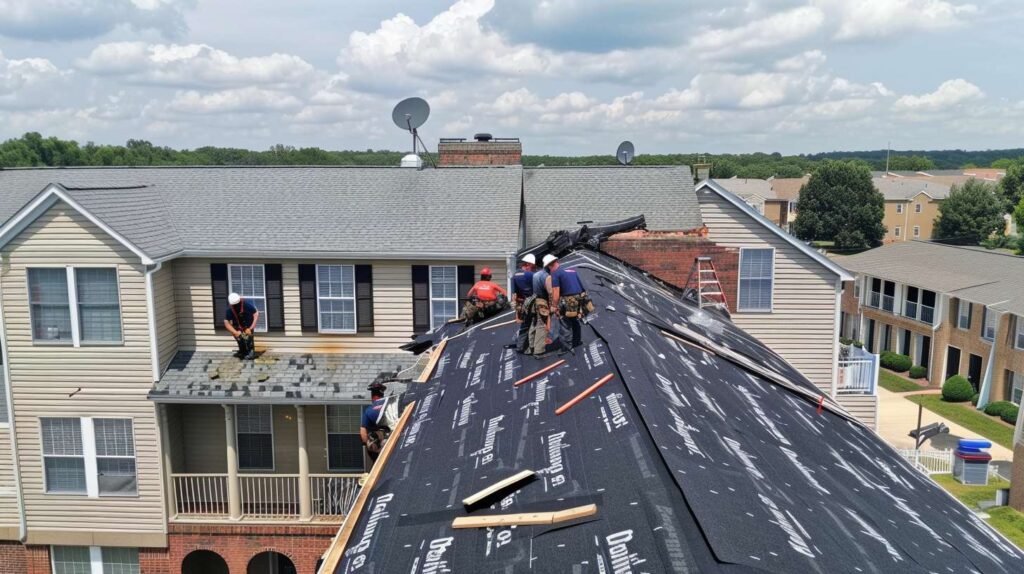
On the residential side, a typical roof replacement on a 1,200-square-foot Cape or rowhouse in White Sands takes two to three days-day one is tear-off and underlayment, day two is shingle or membrane installation, day three is flashing, trim, and cleanup. Larger homes or complex roofs (multiple valleys, dormers, chimneys) add time.
Insurance claim roofing work-where we’re coordinating with your adjuster and working within approved estimates-is something we do regularly. We know what local adjusters expect to see in scope documents, we photograph every stage of the work, and we provide the detailed invoicing that claims departments need. If your claim is approved for $9,500 and the actual cost runs $9,850 because we found rotten decking that wasn’t visible during inspection, we document that, photograph it, and submit a supplemental claim. Most carriers approve reasonable supplements if the documentation is solid.
What Coastal Roofing Really Costs in White Sands
Let me give you real numbers, because “it depends” isn’t helpful when you’re budgeting. These are 2024 costs for quality work with proper materials and coastal installation standards:
Asphalt shingle roof replacement: $6,500-$14,000 for a typical White Sands home (1,200-2,000 square feet of roof area), depending on pitch, complexity, and shingle grade. That includes tear-off, disposal, full ice-and-water shield underlayment, architectural shingles rated for high wind, new flashing, ridge vents, and cleanup.
Metal roof installation: $12,000-$24,000 for the same size house. Standing seam aluminum or steel, concealed fasteners, lifetime warranty. Higher up-front cost, lower lifetime cost.
Flat roof replacement (EPDM, TPO, modified bitumen): $4,500-$9,000 for a 1,000-square-foot flat roof, including tear-off of one existing layer, new insulation board, fully-adhered membrane, and new flashing. Add 20-30% if we’re removing multiple old layers or if there’s extensive deck repair needed.
Roof repair: Small jobs-flashing repair, shingle replacement in one area, sealing a small leak-run $250-$850. Medium repairs-replacing a section of decking, re-flashing a chimney, fixing a skylight-run $800-$2,200. If you’re getting into $3,000+ in repairs on an old roof, replacement becomes the smarter financial move.
Emergency roof repair: After-hours tarping and temporary stabilization runs $350-$700 depending on time of day, weather conditions, and roof access. That’s separate from the permanent repair estimate.
How to Actually Choose a Roofing Contractor in White Sands
References matter, but not the way you think. Anyone can show you three happy customers. What you want to know is: how do they handle problems? Ask for a reference where something went wrong during the job-weather delay, unexpected damage, material backorder-and ask that homeowner how the contractor handled it. That tells you more than ten glowing reviews.
Licensing and insurance are non-negotiable. New York requires home improvement contractors to be licensed, and any crew working on your roof should have general liability insurance ($1 million minimum) and workers’ comp. You can verify this. Ask for certificates, call the insurance company, check the policy dates. If a worker gets hurt on your property and the contractor doesn’t have workers’ comp, you’re liable.
Written estimates should be detailed-not just a total price, but a breakdown of materials (brand, grade, warranty), labor, permits, disposal, and timeline. “We’ll replace your roof for $8,500” tells you nothing. “We’ll remove one layer of existing shingles, repair deck as needed (charged separately if over 10% of deck area), install GAF Timberline HDZ shingles with 15-year labor warranty, full ice-and-water shield, new aluminum drip edge, and ridge vents-total $8,500” tells you what you’re getting.
Warranties come in two pieces: manufacturer’s material warranty (usually 25-50 years, prorated) and contractor’s labor warranty (usually 1-15 years). The labor warranty is what protects you if shingles blow off because of bad installation. A one-year labor warranty is borderline insulting; five to ten years is standard for quality contractors.
And here’s the detail nobody talks about: ask what happens if they find rotten decking or structural damage during tear-off. A good contractor will stop, photograph it, show you the damage, and give you a price to fix it before moving forward. A bad contractor will either ignore it and install new roofing over compromised decking, or “discover” thousands of dollars in unexpected damage and hold your half-torn-off roof hostage until you agree to pay. Get the process for handling unexpected damage in writing before work starts.
Dennis Roofing serves White Sands with the kind of coastal roofing expertise this neighborhood needs-because a roof installed to survive inland conditions won’t cut it two miles from the bay, and the difference between a fifteen-year roof and a twenty-five-year roof is in the details most homeowners never see. When you’re ready for an honest roof inspection, a clear estimate, and work that’s done right the first time, we’re here.