
Weeksville’s Premier Roof Installation Company
I watched a homeowner on Bergen Street pour $35,000 into gut-renovating her top-floor rental unit-new kitchen, bathroom, engineered floors, the works-without touching the 23-year-old tar and gravel roof sitting six inches above all that fresh drywall. Three weeks after her tenant moved in, we had that October nor’easter, and she called me standing in two inches of water in a brand-new bedroom. The emergency roof repair ran $2,800, the interior restoration another $8,400, and she lost two months of rent while we dried everything out and re-did work that was pristine a month earlier. That’s the Weeksville mistake I see most often: treating your roof as separate from your building plans when it’s actually the decision that should come first.
A new roof installation in Weeksville-whether you’re putting EPDM over a flat-roof two-family or replacing 25-year-old shingles on a house near Eastern Parkway-runs $8,500 to $32,000 depending on size, access, material choice, and what we find when we open up the old layers. But here’s what matters more than that range: knowing whether you genuinely need a full roof replacement now, or whether a targeted roof repair plus a three-year replacement plan makes better financial sense for your specific building and your actual plans for it.
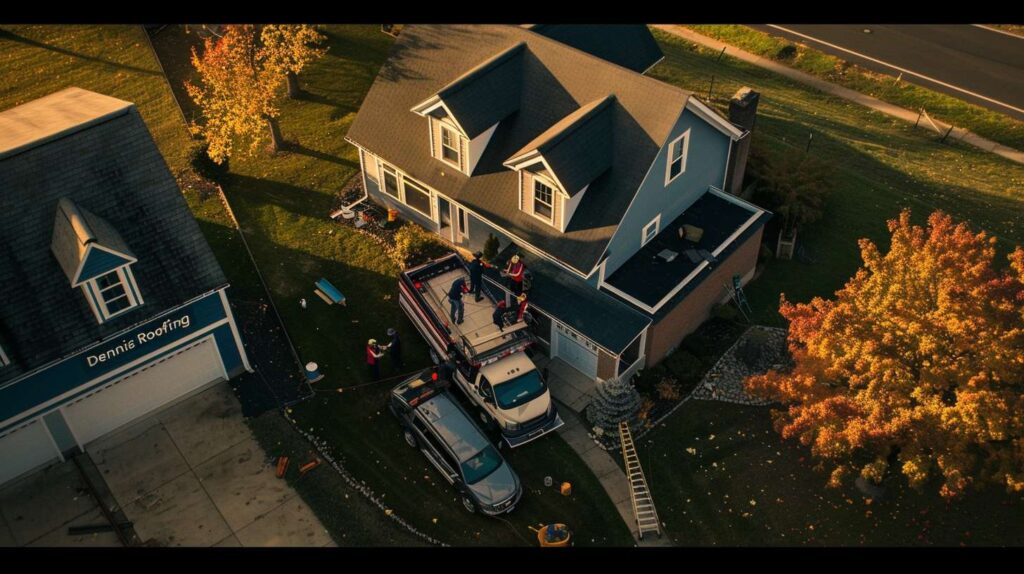
When Weeksville Buildings Need Roof Replacement vs. Repair
The decision framework I walk every owner through starts with four questions: How old is your roof? What material? How many leaks or repairs in the past three years? And-this one surprises people-what are you planning for the building in the next 24 months?
If your flat roof is over 20 years old, you’ve patched it twice in three years, and you’re planning any interior renovation or refinancing, you replace it now before you start that other project. I don’t care if the patches are holding-you don’t build on top of a roof that’s at the end of its service life. On a two-family off Buffalo Avenue last spring, the owner wanted to convert the basement to a legal rental. I told him to spend the $14,200 on a new TPO roof installation first, then do the basement. He pushed back-“but it’s not leaking right now.” I showed him the roof inspection photos: surface cracks across 40% of the membrane, failed seams around both vent pipes, and ponding water near the back parapet that wasn’t draining. Six months into his basement renovation, those seams opened up during a heavy rain, water tracked down inside the brick wall, and he spent $3,100 on emergency roof repair plus another $2,600 fixing wet insulation and framing in his half-finished basement.
For shingle roofs, the math is simpler: if you’re past 22 years on asphalt shingles in Brooklyn weather, or if you’re missing shingles after every moderate wind event, or if you’ve got three or more leaks that aren’t all coming from one obvious problem like chimney flashing, you’re replacing, not repairing. Shingle roofs don’t give you much warning. They go from “a few worn spots” to “active leaks in four places” in one hard winter.
But here’s where it gets more nuanced. A 15-year-old EPDM roof with one leak near a skylight? That’s roof leak repair-maybe $850 to $1,400 depending on whether we’re resealing the curb or replacing flashing-and you’ve bought yourself another 6 to 8 years. A tar and gravel roof that’s 18 years old with surface cracking but no active leaks and no plans to renovate? We can do a roof coating application and roof maintenance plan-$4,200 to $6,800 depending on your square footage-and extend its life three to five years while you save for the replacement. That’s realistic budget planning, not wishful thinking.
Flat Roof Installation: Material Choices for Weeksville Buildings
Most of Weeksville sits on flat roofs or very low-slope roofs over attached brick buildings-two-families, three-families, small mixed-use buildings with a store on the ground floor and apartments above. Your material choice for a new roof installation comes down to budget, building use, and how long you’re planning to own the property.
EPDM roofing (rubber roof) is the most common replacement I install here: $11 to $14 per square foot installed for a fully adhered system with new insulation and properly detailed flashing. It’s durable, handles our freeze-thaw cycles well, and gives you 22 to 28 years of service life with basic roof maintenance. On a typical Weeksville two-family-let’s say 900 square feet of roof-you’re looking at $9,900 to $12,600 all-in. EPDM works especially well when you’ve got HVAC equipment, vent pipes, and skylights to flash around because the membrane is flexible and we can detail penetrations properly without a lot of field-fabricated metal.
TPO roofing costs slightly more-$12.50 to $15.50 per square foot-but it’s become my recommendation for any owner planning to hold the building long-term or looking at energy improvements. TPO’s white surface reflects heat (your top-floor tenants will thank you in July), the heat-welded seams are stronger than EPDM’s glued seams, and you’re looking at 25 to 30 years of life. I put TPO on a three-family near Ralph Avenue two years ago-the owner was 48, planning to retire with rental income, wanted one more roof in his lifetime. We did 1,100 square feet for $16,940 including new tapered insulation to fix ponding issues and all new metal at the parapets.
Modified bitumen roofing is the tough middle option: two or three layers of reinforced asphalt sheets, torch-applied or cold-applied depending on your building’s fire rating and what’s nearby. It’s extremely puncture-resistant (matters if you’ve got HVAC techs walking around or if tree branches come down), costs $10 to $13 per square foot, and lasts 20 to 25 years. I use it most often on mixed-use buildings where there’s commercial equipment on the roof or frequent service access.
Old tar and gravel roofs almost never get replaced with new tar and gravel anymore-the labor cost has gotten prohibitive and the performance doesn’t justify it when EPDM and TPO exist. When I’m doing roof replacement on a building that has tar and gravel, we’re tearing off down to the deck, checking the structure, adding new insulation, and going with EPDM or TPO. That tear-off adds $2.80 to $4.20 per square foot to your project cost, but it also means we can inspect the decking and make sure you’re not building a new roof over rotten plywood or failing joists.
Shingle and Metal Roofing: When Weeksville Houses Need Different Solutions
Not every building in Weeksville is flat. The smaller single-families and some older row houses off Eastern Parkway have pitched roofs, and the material logic changes completely.
Asphalt shingle roofing on a Weeksville house costs $5.50 to $8.20 per square foot for architectural shingles (the thicker, dimensional ones that actually look good and last), which translates to $7,400 to $11,800 for a typical 1,400-square-foot roof including tear-off of one old layer, new underlayment, ridge vent, and all new flashing. You’re getting 25 to 30 years of life if the roof is installed correctly-and that “correctly” part matters more than most homeowners realize. I’ve torn off 8-year-old shingle roofs that were failing because the original crew didn’t use enough nails, didn’t stagger the shingles properly, or skipped the starter course. A shingle roof is only as good as the details.
Metal roofing-standing seam steel or aluminum-costs significantly more ($11 to $16 per square foot installed) but it’s the last roof you’ll put on a house. Fifty-plus years of service life, virtually no maintenance, and it handles wind better than anything else. I installed a metal roof on a single-family near Howard Avenue last year after the owner had wind damage from a storm rip off a section of his old shingles for the third time in six years. That house sits on a corner with zero wind block, and shingles just weren’t holding. The metal roof ran $18,600 for 1,250 square feet, and he’ll never call me about wind damage repair again.
Metal also makes sense when you’re adding skylight installation to bring light into a top floor or attic conversion-the clean lines look better, and flashing a skylight into metal roofing creates a more reliable waterproof seal than trying to integrate it into shingles.
Roof Leak Repair and Detection: What’s Fixable vs. What Signals Replacement
Most calls I get start with “I have a leak.” What that actually means varies wildly, and the difference between a $680 repair and a $15,000 replacement often comes down to where the water is coming from and what’s happening around it.
Roof leak detection on a flat roof starts with the visible problem-the wet spot on your ceiling-and works backward. Water doesn’t fall straight down through a roof; it travels along the underside of the membrane or deck, sometimes 10 or 15 feet from where it’s entering, until it finds a seam or a gap and drips through. I use a combination of visual inspection (looking for surface cracks, failed seams, deteriorated flashing), water testing (we literally flood sections and watch where it goes), and sometimes infrared scanning on larger commercial buildings to map out trapped moisture in the insulation.
The leaks I can repair reliably: isolated damage around a vent pipe, failed flashing at a parapet wall, a puncture from a fallen branch, separated seams in EPDM that haven’t spread across multiple sections, or chimney flashing failure. Chimney flashing repair is probably the single most common roof leak repair I do in Weeksville-the metal flashing where the brick chimney meets the roof deteriorates from weather and brick movement, water gets behind it, and suddenly you’ve got a leak in your top-floor bedroom closet. Proper chimney flashing repair costs $750 to $1,450 depending on chimney size and how much of the surrounding roof membrane needs attention, and it should solve the problem permanently if the chimney itself isn’t failing.
The leaks that signal replacement: multiple active leaks across different areas of the roof, widespread surface cracking with water infiltration, failed seams in more than 30% of a membrane roof, or any situation where the leak is caused by general age-related deterioration rather than one specific failure point. On a three-family near Atlantic Avenue last fall, the owner called about “a small leak” in the second-floor bathroom. When I got up there, I found an 18-year-old EPDM roof with cracking across most of the field, three separate areas of active seam failure, and ponding water in two low spots that was sitting there because the original installer hadn’t sloped the insulation. I could patch the three worst spots for $1,900, and they’d hold for maybe six months until something else failed. Or we could do the roof replacement properly for $13,400 and solve it for the next 25 years. He patched it. I came back seven months later to replace the whole roof after two more leaks opened up, and by then he’d also spent $2,100 on interior ceiling and paint repairs that wouldn’t have been necessary if he’d addressed it the first time.
Roof Waterproofing, Coating, and Preventive Systems
Roof waterproofing on a flat roof isn’t one thing-it’s the combination of proper flashing details, correctly sealed seams and penetrations, adequate slope for drainage, and sometimes additional protective layers. When I talk about waterproofing during a roof installation, I’m talking about the full system: ice and water shield at all the vulnerable transitions, properly fabricated metal flashing at walls and parapets, cant strips at all the 90-degree corners so the membrane doesn’t crack from thermal movement, and boot seals at every pipe that are mechanically attached and sealed, not just caulked.
Roof coating is a different animal-it’s a liquid-applied membrane (usually acrylic or silicone) that we roll or spray over an existing roof to extend its life. It only works on roofs that have structural integrity left; you can’t coat a failing roof and expect it to hold. But on a modified bitumen roof that’s 15 years old with minor surface wear or a tar and gravel roof that’s lost some of its gravel but isn’t cracking yet, a roof coating can buy you four to six additional years for $4,200 to $6,800 on a typical Weeksville two-family. The coating fills surface cracks, creates a new waterproof layer, and in the case of white coatings, adds reflectivity that reduces your cooling costs. I don’t sell coating as an alternative to replacement when replacement is what you need-I sell it as a planned delay when you need time to budget properly.
Roof sealing and roof maintenance are the ongoing work that actually gets you to the end of your roof’s service life instead of limping along with repairs for the last five years. Twice-yearly maintenance-spring and fall-means I’m up there clearing your drains and gutters, checking all the flashing and seals, looking for early signs of problems, and handling small issues (a lifted shingle, a partially separated seam, a clogged drain) before they become leaks. Maintenance contracts for Weeksville residential buildings run $425 to $680 per year depending on roof size and complexity, and they typically cut your emergency repair costs by 60% to 70% over the life of the roof.
Gutters, Skylights, and the Components That Protect Your Roof Investment
Your roof doesn’t work in isolation. The gutters that move water away from it and the skylights that penetrate through it are part of the same weather-protection system.
Gutter installation on a Weeksville row house or small multi-family costs $8.50 to $14 per linear foot for aluminum gutters with proper hangers and downspouts that actually discharge away from your foundation. Most buildings here need 60 to 120 linear feet of gutter, so figure $950 to $1,680 for a complete system. But here’s what matters more than the cost: properly sized gutters that can handle the water volume coming off your specific roof, and downspouts that route water to the street or a drywell-not just onto the sidewalk or against your foundation wall. I see constant foundation and basement moisture problems in Weeksville that track back to gutters that dump water right at the base of the building.
Gutter repair-reattaching sagging sections, sealing leaking seams, replacing damaged downspouts-runs $180 to $520 depending on what’s failed. Tree debris is the main killer of gutters in Weeksville; those side streets with mature trees drop leaves and seed pods that clog gutters, trap water, freeze in winter, and pull the whole system away from the fascia. If you’ve got trees near your building, gutter cleaning twice a year isn’t optional.
Skylight installation is part of probably 30% of the roof projects I do now-everyone wants natural light in top-floor spaces, and a properly flashed skylight transforms a dark bedroom or hallway. Skylight installation costs $1,800 to $3,400 per unit depending on size and whether we’re cutting a new opening or replacing an existing skylight. The key-and the part that separates a skylight that works from one that leaks every spring-is the flashing kit and the integration with your roof membrane or shingles. On flat roofs, we build a curb (a raised frame), flash it into the membrane, then mount and seal the skylight to the curb. On shingle roofs, we use a step-flashing system that weaves into the shingles and channels water around the skylight. Done right, a skylight never leaks. Done quickly by a crew that doesn’t understand flashing details, it’s a permanent problem.
Skylight repair-usually replacing failed seals, repairing flashing, or replacing cracked acrylic-costs $450 to $980 and solves 90% of skylight leaks as long as the original installation was structurally sound.
Commercial Roofing and Larger Weeksville Buildings
Commercial roofing in Weeksville usually means mixed-use buildings-retail on the ground floor, apartments above-or small apartment buildings with four to twelve units. The material choices are similar to residential (EPDM, TPO, modified bitumen), but the scale, access challenges, and building-code requirements are different.
A flat roof installation on a commercial building requires more engineering: we’re often dealing with multiple HVAC units, commercial exhaust systems, parapet walls that need proper counterflashing, and roof areas large enough that we need tapered insulation systems to create positive drainage to multiple drain points. Commercial roof replacement on a small Weeksville mixed-use building (3,000 to 5,000 square feet of roof) runs $33,000 to $68,000 depending on existing conditions, required tear-off, insulation upgrades, and equipment we need to work around.
Commercial roof repair is often emergency work-a restaurant can’t close because of an active leak, or an apartment building has water coming into a tenant’s unit and needs immediate attention. Emergency roof repair response costs $275 to $425 just to get a crew out after hours or on weekends, plus the actual repair work ($650 to $2,400 for temporary or permanent fixes depending on the problem). But that emergency call is almost always cheaper than the business interruption, tenant displacement, or interior damage that happens if you wait.
Storm Damage, Insurance Claims, and Emergency Response
Brooklyn weather hits Weeksville roofs hard-wind events that lift shingles or peel back membrane edges, heavy rain that finds every weak point in your flashing, and occasional ice damming on the shingle roofs when we get the right combination of snow and temperature swings.
Storm damage repair after wind or falling tree limbs typically costs $850 to $3,200 depending on the extent of damage. Wind damage usually means lifted or missing shingles, separated seams on membrane roofs, or damaged flashing. We can tarp or temporarily seal the affected area same-day to prevent water intrusion, then schedule the permanent repair within a few days.
Insurance claim roofing work requires documentation that will satisfy your insurance adjuster: detailed photos of the damage, a written scope of necessary repairs, and an estimate that separates storm damage from pre-existing wear. I’ve worked with enough insurance claims in Weeksville to know what carriers will cover and what they’ll fight-they’ll pay for wind damage to a roof that was otherwise in decent condition; they won’t pay to replace a roof that was already at the end of its life and just happened to fail during a storm. When I do your initial roof inspection after storm damage, I’m documenting the acute damage separately from general condition so you have a realistic expectation of what insurance will handle.
Emergency roof repair means I’m getting someone on your roof within 4 to 8 hours to stop active water intrusion-tarping, temporary sealing, sometimes cutting out a damaged section and patching it with new material. The goal is to protect your interior and buy time for the proper permanent repair. Emergency service calls run $385 to $890 for the response plus materials for temporary protection, and that cost usually gets credited toward your permanent repair if you schedule it with us.
Building a Roof Plan That Matches Real Budgets
The conversation I have most often goes like this: the owner knows the roof needs work, but they’re also planning to renovate an apartment, or they need to replace the boiler, or they’re trying to save for a down payment on a second property. Everything’s competing for the same limited capital.
Here’s the framework I use: urgent problems (active leaks causing interior damage, structural issues, failing flashing that’s letting water into your walls) get handled immediately even if it means financing or pulling from reserves. Important-but-not-urgent problems (a roof that’s near the end of its life but not actively leaking, aging gutters, worn flashing that will fail in the next year or two) get scheduled in a priority order based on your building plans and available cash flow. And maintenance and upgrades (roof coating to extend life, adding skylights, upgrading to better materials) happen when the budget allows or when they’re part of a larger project.
On that two-family off Buffalo where the owner needed both a new roof and a basement conversion, we ultimately did the roof first ($14,200 for TPO), he saved for nine months, then did the basement renovation knowing his building was protected top to bottom. It took longer than he originally wanted, but he didn’t end up with ruined renovation work or emergency repairs eating his rental income.
| Roof Type | Service Life | Cost per Sq Ft (Installed) | Best For |
|---|---|---|---|
| EPDM (Rubber) | 22-28 years | $11.00-$14.00 | Standard residential flat roofs, good all-around choice |
| TPO | 25-30 years | $12.50-$15.50 | Long-term holds, energy efficiency, heat-welded seams |
| Modified Bitumen | 20-25 years | $10.00-$13.00 | High traffic, equipment on roof, puncture resistance |
| Asphalt Shingles | 25-30 years | $5.50-$8.20 | Pitched roofs, residential houses, traditional look |
| Metal (Standing Seam) | 50+ years | $11.00-$16.00 | Last roof you’ll install, high-wind areas, modern aesthetic |
| Roof Coating (existing roof) | 4-6 years added | $4.20-$6.80 total job | Extending life of aging roof, buying time to budget |
Working with Dennis Roofing in Weeksville
When you call Dennis Roofing for a roof inspection-whether you’re dealing with an active leak, planning a new roof installation, or just want to know where you stand-you’re getting a detailed photo-documented report of your current roof condition, a realistic assessment of remaining service life, and a clear breakdown of your options with actual numbers. I don’t sell everyone a new roof. Some buildings need full roof replacement now; others need targeted roof repair and a three-year plan; some need maintenance and monitoring. What you need depends on your specific roof, your building, and your actual plans.
We handle all roof types common to Weeksville: flat roof installation and replacement (EPDM, TPO, modified bitumen), asphalt shingle roofing, metal roofing, roof leak repair and roof waterproofing, chimney flashing repair, skylight installation and repair, gutter installation and repair, commercial roofing, and emergency roof repair when storms or sudden failures demand immediate response. Every project includes proper flashing details, attention to drainage, and the kind of installation quality that gets you to the end of your roof’s expected service life instead of needing repairs halfway through.
The goal isn’t just to replace your roof-it’s to protect your building and match the solution to your real budget and timeline. That Bergen Street homeowner who flooded her new renovation? We replaced her roof three months later with EPDM over new tapered insulation ($12,800 for 850 square feet), and I built her a maintenance plan so she’d never ignore a roof again. Two years later, no leaks, no emergency calls, and she just closed on a second property three blocks away. That’s what proper roof planning looks like.