
Spring Creek Roof Installation & Repair Experts
The biggest mistake I see Spring Creek homeowners make? Ignoring that water stain on the bedroom ceiling-telling themselves it’s just a small spot-until we get one of those sideways rainstorms off the Belt Parkway and suddenly they’re dealing with water streaming down the wall, soaked insulation, and an emergency roof repair that costs three times what a planned roof replacement would’ve run six months earlier. I’ve responded to enough 11 PM calls from panicked homeowners in Starrett City and the blocks around Gateway Center to know the pattern: a “minor” leak that seemed manageable becomes a crisis the moment heavy rain and wind hit at the same angle. By then, you’re not just paying for roof leak repair-you’re paying for interior damage, emergency rates, and the stress of scrambling for a crew during storm season.
I’m Jordan, and I’ve spent the last decade working on Spring Creek roofs, first as a building maintenance tech patching flat roofs on townhomes off Louisiana Avenue, then learning proper roof installation and waterproofing systems with professional crews before joining Dennis Roofing. What I’ve learned is this: Spring Creek properties-whether you’re in a row house near Flatlands Avenue or managing a small commercial building by the Gateway Mall-need roofs that can handle our specific reality. Wind-driven rain. Flat roofs and low-slope shingle roofs that pond water. Older tar and gravel systems on community buildings that were solid in 1985 but are now forty years into a thirty-year lifespan. And homeowners who need straight answers about whether they’re looking at a $1,200 roof repair or a $14,000 roof replacement, because those are very different conversations.
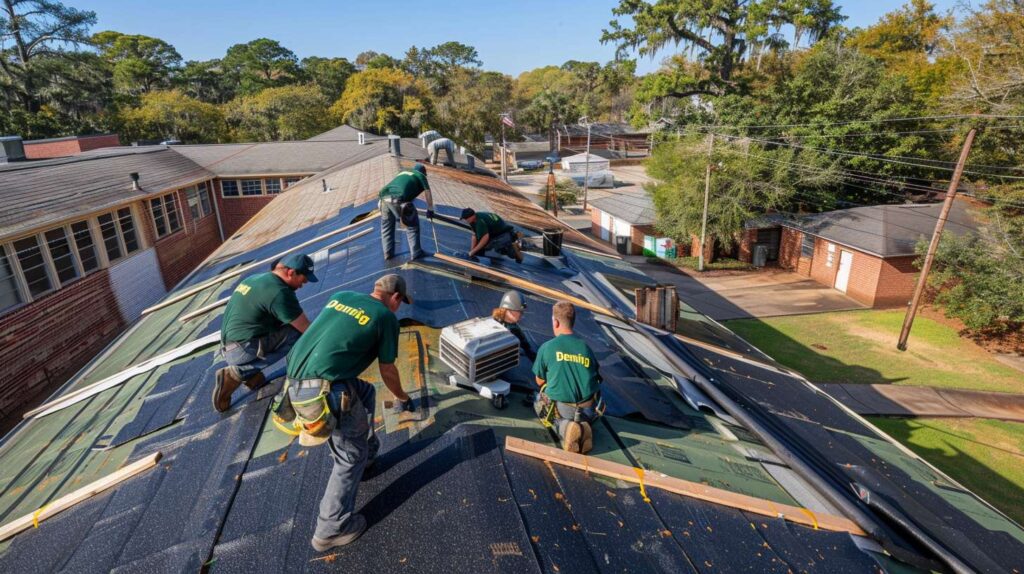
When Spring Creek Homes Need Roof Replacement vs. Targeted Repair
On a townhouse near Pennsylvania Avenue last spring, the owner called about a leak over the back bedroom. Small stain. No active dripping. When I climbed up to the flat roof, I found what I expected: a twenty-two-year-old EPDM rubber roof with seams that had started pulling apart, membrane that was brittle in spots, and three separate areas where water was clearly getting under the surface during heavy rain. The homeowner wanted a patch. I explained that patching one seam wouldn’t stop the other problem areas, and within eighteen months they’d likely be calling again-and again-each time paying $800 to $1,500 for emergency roof repair, with no guarantee the patches would hold through the next big storm. The smarter play: a full flat roof installation with new TPO roofing, proper flashing around the parapet walls, and a ten-year warranty. Total cost was $11,800. They haven’t had a leak since, and they’re not worried every time the forecast shows rain.
That decision framework-repair versus replacement-comes down to four factors for most Spring Creek properties:
- Roof age and system type: Asphalt shingle roofs typically last 20-25 years here; EPDM and TPO flat roofing runs 15-25 years depending on installation quality and maintenance; modified bitumen and tar and gravel roofs on older commercial buildings often hit their limit around 20-30 years. If your roof is within five years of its expected lifespan and showing multiple leak points, roof replacement almost always makes more financial sense than repeated repairs.
- Leak history: One isolated leak from storm damage-a lifted shingle, damaged chimney flashing-is a repair. Three leaks over two years in different spots? That’s a failing system telling you it’s time for a new roof.
- Scope of damage: Surface issues-cracked shingles, small punctures in rubber roofing, loose flashing-are repair territory. But if a roof inspection reveals deteriorated decking, widespread membrane failure, or compromised insulation from long-term water intrusion, you’re into replacement range because you can’t build a lasting roof on top of rotted structure.
- Your timeline: Planning to sell in two years? A quality roof repair with documented roof waterproofing and a maintenance plan might carry you through. Staying long-term or managing a rental property? Investing in roof installation now eliminates the leak-patch-leak cycle and gives you predictable costs.
For Spring Creek specifically, I always factor in our weather exposure. Homes near the waterfront or open lots catch more wind. Flat roofs on townhomes pond water if drainage isn’t perfect. That means a borderline roof in a sheltered Brooklyn neighborhood might give you another three years; the same roof in Spring Creek might fail next winter.
Flat Roofing Systems: What Works for Spring Creek Townhomes and Row Houses
Most residential properties in Spring Creek have flat roofs or very low-slope roofs, and the material choice matters more than homeowners realize. I’ve seen plenty of new roof installations fail early because someone picked the cheapest option without thinking about how the roof actually drains, how much foot traffic it gets (even just for maintenance), or what happens when we get three inches of rain in two hours and the scuppers can’t keep up.
TPO roofing has become my go-to recommendation for Spring Creek flat roof installation projects. It’s a single-ply membrane-white or light gray-that’s heat-welded at the seams, creating watertight bonds that hold up better than glued or mechanically fastened systems. Cost typically runs $8.50 to $13.00 per square foot installed, depending on roof size and complexity. On a standard 1,200-square-foot townhouse flat roof, you’re looking at $10,200 to $15,600 for a complete roof replacement including tear-off, new insulation if needed, TPO membrane, flashing, and edge details. The advantages: excellent UV resistance (important for our summer sun exposure), strong seam integrity, and a clean look that reflects heat and can lower cooling costs. I installed TPO on a row house off Vandalia Avenue three years ago; the owner had chronic leaks with her old tar and gravel roof, and she hasn’t called once since we finished.
EPDM roofing-black rubber membrane-is the workhorse of residential flat roofing. It’s been around longer than TPO, costs slightly less ($7.00 to $11.00 per square foot installed), and is extremely durable if installed correctly. The seams are typically glued or taped, which is the weak point: over time, especially with ponding water and temperature swings, those seams can separate. But on a well-drained roof with proper maintenance, EPDM rubber roof systems easily hit 20-25 years. I still see EPDM roofs from the early 2000s performing well on Spring Creek properties where the installation was done right and the homeowner had occasional roof inspections to catch small issues before they spread.
Modified bitumen roofing is a multi-layer system-think of it as an upgraded version of old tar and gravel. It’s torch-applied or cold-adhered, creating a thick, robust surface that handles foot traffic well and stands up to punctures. Cost is similar to EPDM, around $7.50 to $12.00 per square foot. I see it most often on small commercial roofs-stores, community buildings-where people need to access the roof for HVAC maintenance. It’s tougher than single-ply membranes but heavier and requires more skill to install properly. On residential properties, I generally recommend TPO or EPDM unless there’s a specific reason you need the extra durability.
Tar and gravel roofs are the old standard, still sitting on top of thousands of Spring Creek buildings. Built-up layers of asphalt and felt with gravel on top for UV protection. They’re heavy, labor-intensive to install, and increasingly hard to find experienced crews for. If you have an existing tar and gravel roof that’s failing, I almost always recommend switching to TPO or EPDM during roof replacement. The performance is better, the weight is less (important for older structures), and future roof repair and maintenance are simpler.
| Flat Roofing System | Typical Lifespan | Cost per Sq Ft (Installed) | Best For |
|---|---|---|---|
| TPO Roofing | 20-25 years | $8.50-$13.00 | Residential flat roofs, energy efficiency, strong seams |
| EPDM (Rubber Roof) | 20-25 years | $7.00-$11.00 | Cost-effective residential, proven durability |
| Modified Bitumen | 15-20 years | $7.50-$12.00 | Commercial, high foot traffic, puncture resistance |
| Tar and Gravel | 20-30 years | $9.00-$14.00 | Older systems, rarely installed new |
Shingle Roofs in Spring Creek: Asphalt and Metal Options
Not every Spring Creek property has a flat roof. Plenty of single-family homes, especially closer to the neighborhoods bordering East New York, have sloped roofs with asphalt shingle roofing or, increasingly, metal roofing. The decision tree is different but the same principle applies: match the roof system to how the building lives and what weather it faces.
Asphalt shingle roofing remains the most common choice for residential sloped roofs. Architectural shingles-thicker, dimensional, better-looking than the old three-tab style-cost $4.50 to $7.50 per square foot installed. On a typical 1,800-square-foot shingle roof (measuring the actual roof surface, not the home’s footprint), you’re looking at $8,100 to $13,500 for complete roof replacement including tear-off, underlayment, new shingles, ridge venting, and flashing. Lifespan runs 22-28 years with decent installation and occasional maintenance. The key for Spring Creek: make sure your roofer uses proper wind-rated shingles (we get gusts off the water) and seals every edge and penetration. I’ve done too many roof leak repair calls where the original installer skimped on flashing around chimneys or didn’t seal the valley properly, and three years later the homeowner’s dealing with leaks that never should’ve happened.
Metal roofing-standing seam or metal shingles-costs more upfront, typically $10.00 to $16.00 per square foot installed, but lasts 40-50 years and requires almost no maintenance. I installed a standing seam metal roof on a house near Hendrickson Street two years ago; the homeowner was tired of replacing asphalt shingles every twenty years and wanted something that would outlast him. The math works if you’re staying long-term: two asphalt shingle roof replacements over fifty years costs roughly the same as one metal roof installation, but the metal roof means zero re-roofing projects, no worries about storm damage repair from lifted shingles, and better energy efficiency because metal reflects summer heat.
Roof Leak Repair and Emergency Response: What Actually Stops Leaks
On a commercial building near Louisiana Avenue last November, the property manager called on a Friday afternoon-water pouring through the ceiling into their main office space, storm forecast to continue through the weekend. I got up on the flat roof and found a split seam in the modified bitumen roofing where two sections met near a drain. The immediate fix: clean and dry the area as much as possible, apply emergency roof waterproofing membrane and sealant, weight it down, and tarp the section. That stopped the active leak. But I was clear with the manager: this is a temporary emergency roof repair to get you through the weekend and give us time to schedule a proper permanent repair, which meant cutting out the damaged section, patching in new membrane, and heat-welding it to the existing roof. Total emergency response cost was $950; permanent repair the following week added another $1,400.
Real roof leak repair works in stages. Roof leak detection comes first-finding the actual entry point, which is often not directly above the interior water stain because water travels along rafters, through insulation, and down walls. On flat roofs, I use a combination of visual inspection, moisture meters, and sometimes infrared scanning for larger commercial roofing projects. On shingle roofs, I’m looking for missing or damaged shingles, failed chimney flashing repair, cracked boots around vent pipes, or deteriorated valley flashing. Once I’ve located the problem, the repair approach depends on the damage scope and roof condition. Small puncture in a rubber roof? Clean patch with EPDM adhesive. Lifted shingles? Replace the damaged pieces and reseal. Failed flashing? Remove and reinstall properly with new materials and roof waterproofing at the seams.
For Spring Creek properties, the most common leak sources I see:
- Flat roof seams and edges: Where membrane sections join, where the roof meets parapet walls, around roof drains-anywhere two materials meet is a potential weak point, especially as rubber roofing or TPO ages and loses flexibility.
- Chimney flashing: The metal flashing around chimneys takes a beating from temperature swings and often fails before the surrounding shingle roof. Proper chimney flashing repair means removing shingles around the base, installing new step flashing and counter flashing, and sealing everything with high-quality roof waterproofing compound.
- Skylights: Older skylight installation on flat or sloped roofs often used inadequate flashing. I’ve pulled out skylights where the original installer just caulked around the frame-no proper flashing kit, no waterproof membrane. Those leak within five years. Quality skylight repair or replacement means treating the skylight as a roof penetration with proper curbs, flashing, and integration into the overall roof waterproofing system.
- Storm damage: Wind lifts shingles or tears membrane seams; hail punctures flat roofing; debris impacts during severe weather. Insurance claim roofing and wind damage repair are their own process-I document everything with photos, provide detailed estimates showing storm-related damage versus pre-existing wear, and work with adjusters to make sure homeowners get fair settlements for necessary roof repair or replacement.
One Spring Creek reality I always mention: don’t wait for “better weather” to address a leak. Our winter and spring storms are when most damage happens, and a small leak in October becomes a major problem by March if you ignore it. I’ve seen ceilings collapse, insulation completely soaked, mold growth behind walls-all because someone thought they’d “deal with it in the spring.”
Roof Waterproofing, Coating, and Maintenance: Extending Roof Life
A row house owner off Schenck Avenue called me about replacing her fourteen-year-old EPDM rubber roof. She’d had a couple of small leaks, patched them herself with hardware store sealant, and figured the roof was near the end. I did a thorough roof inspection and found something different: the membrane itself was still in good shape-no major brittleness, no widespread cracking-but the seams were starting to separate and there were a few spots where foot traffic (probably HVAC techs accessing rooftop units) had worn the surface. Instead of $12,000 for full roof replacement, I recommended roof coating with an elastomeric system, resealing all seams, and fixing the worn spots. Total cost: $3,200. That was three years ago, and the roof is still solid.
Roof coating-liquid-applied acrylic or silicone coatings over existing flat roofing-can add 5-10 years to a roof’s life if the underlying structure is sound. It creates a seamless, waterproof layer that fills small cracks, protects against UV damage, and reflects heat (the white coating can drop summer roof temperatures by 20-30 degrees). Cost typically runs $2.50 to $4.50 per square foot for professional application including surface prep and two coats. It’s not a magic fix for a roof with major failures-you can’t coat over rotted decking or severely damaged membrane-but for aging flat roofs that still have structural integrity, it’s the most cost-effective way to extend lifespan and improve roof waterproofing.
Roof sealing and roof maintenance should be routine, not emergency responses. On flat roofs, that means:
- Annual roof inspection-spring or fall-to catch small problems before they become leaks
- Clearing drains and scuppers so water doesn’t pond
- Checking and resealing seams, especially after harsh winters
- Inspecting and repairing flashing around penetrations
- Removing debris that can puncture membrane or trap moisture
On shingle roofs, maintenance includes checking for lifted or missing shingles after storms, cleaning gutters (clogged gutters cause water to back up under shingles and into the roof deck), and inspecting chimney flashing and valley areas where leaks most often start. I offer maintenance contracts for commercial roofing clients-quarterly inspections, minor repairs included, priority emergency response-but even homeowners benefit from having a professional roof inspection every two to three years. The cost is usually $200-$350, and it catches $500 problems before they become $5,000 emergencies.
Gutters, Skylights, and Roof Accessories: Integration Matters
A homeowner near Flatlands Avenue had a beautiful new asphalt shingle roof installed by another contractor. Six months later, she called me about water damage along her front wall. The roof wasn’t leaking-the problem was her gutters. The original installer never addressed the old, sagging gutter system, so rainwater was overshooting the gutters and running down the fascia into the wall. We did gutter installation-new seamless aluminum gutters with proper slope and downspouts-and solved the problem for $1,800. Point being: roof installation, gutter systems, and drainage work together. You can have a perfect roof and still get water damage if gutters aren’t doing their job.
Gutter repair and gutter installation are part of most roof replacement projects I handle. Seamless aluminum gutters cost $8-$14 per linear foot installed depending on size and configuration. For a typical Spring Creek home with 120 linear feet of gutter and four downspouts, that’s $960 to $1,680. The investment pays off immediately in preventing water from undermining your foundation, eroding landscaping, and-most importantly-protecting the roof edge and fascia from rot.
Skylight installation and skylight repair come up often on Spring Creek flat roofs where homeowners want more natural light. Done right, skylights are excellent additions. Done wrong, they’re permanent leak sources. Proper skylight installation on a flat roof means building a curb (a raised frame) that lifts the skylight above the roof surface so water drains around it, then integrating that curb into the roof waterproofing system with flashing and membrane that tie into the main roof. I always recommend curb-mounted skylights with insulated, impact-rated glass-Spring Creek weather is too unpredictable for cheap, deck-mounted units that sit flush with the roof. Cost for professional skylight installation typically runs $1,800 to $3,500 per unit depending on size and complexity.
Commercial Roofing and Larger Projects
Spring Creek has its share of small commercial buildings-retail strips, community centers, apartment buildings-that need commercial roofing solutions beyond typical residential systems. The principles are the same-proper waterproofing, quality materials, installation that matches the building’s use-but the scale and complexity increase.
On a small commercial roof by the Gateway Center last year, we replaced a failing twenty-six-year-old tar and gravel system with TPO roofing over new insulation. The building is 4,200 square feet with multiple HVAC units, vents, and a service access hatch. Full commercial roof repair versus flat roof installation decision came down to the condition of the deck and insulation: both were compromised by years of leaks. We removed everything down to the deck, repaired damaged sections, installed new polyiso insulation, mechanically fastened TPO membrane, properly flashed all penetrations and roof edges, and set the owner up with a maintenance plan. Total project cost was $38,500-roughly $9.15 per square foot-and came with a fifteen-year manufacturer warranty. That building went from chronic leaks and emergency roof repair calls to zero problems over the past eighteen months.
Commercial roofing in Spring Creek often involves coordination with tenants, working around business hours, and faster project timelines because businesses can’t afford extended closures. I always build in contingency plans for weather delays and maintain constant communication so building managers know exactly where we are in the process.
Storm Damage and Insurance Claims: Getting What You’re Owed
After a severe windstorm two springs ago, I got fifteen calls in three days from Spring Creek homeowners dealing with wind damage-lifted shingles, torn membrane edges, damaged flashing. Storm damage repair and insurance claim roofing follow a specific process, and knowing the steps protects you from both unscrupulous contractors and insurance adjusters trying to minimize payouts.
First: document everything immediately with photos and videos. Get on the roof if it’s safe, or hire a professional for roof inspection, and photograph all visible damage-torn shingles, lifted membrane, dented flashing, damaged gutters. Second: contact your insurance company and file a claim, but don’t wait for the adjuster to assess damage before getting temporary repairs if you have active leaks. Emergency roof repair to prevent further damage-tarps, temporary sealing-is almost always covered. Third: get a detailed estimate from a reputable contractor (that’s where Dennis Roofing comes in) that separates storm damage from pre-existing wear. Adjusters will try to deny claims by saying damage was “pre-existing”; a professional estimate with clear photo documentation of storm-related damage makes your case.
For wind damage repair, insurers typically cover the cost of matching existing materials-same shingle type, same membrane system. If the damage is extensive enough that you need full roof replacement, they’ll cover that (minus your deductible). What they won’t cover: upgrades beyond matching existing, pre-existing wear, or damage from lack of maintenance. That’s why roof maintenance records help during insurance claims-they show you were taking care of the roof, which strengthens your position that damage was storm-related, not neglect.
Choosing Materials and Contractors: What Spring Creek Homeowners Should Demand
You’re going to get quotes from multiple roofing contractors. Some will come in low, promising quick work and cheap materials. Others will be higher but vague about what’s included. Here’s what a real quote for roof installation or roof replacement should include:
- Detailed material specifications-not just “TPO roofing” but thickness, manufacturer, color, and warranty type
- Scope of work broken down by phase: tear-off and disposal, deck inspection and repair, insulation if applicable, membrane or shingle installation, flashing details, edge metal, and cleanup
- Timeline with weather contingencies
- Warranty information: manufacturer warranty on materials and contractor warranty on labor (I provide a five-year labor warranty; manufacturer warranties on TPO and EPDM typically run 15-20 years)
- Proof of insurance and licensing-New York requires roofing contractors to carry liability insurance and workers’ comp; ask to see certificates
For Spring Creek specifically, demand that your contractor understand flat roof drainage, wind exposure, and building code requirements for this area. A contractor who mostly does suburban sloped roofs isn’t prepared for the challenges of Spring Creek flat roofing on attached row houses where one roof mistake can affect multiple units.
The lowest bid isn’t the best value if it means you’re getting thin membrane, inadequate flashing, or a crew that cuts corners. I’ve been called to fix failed “bargain” roof installations more times than I can count, and the homeowner always ends up paying more in the long run-sometimes needing full roof replacement within five years of a supposedly “new roof” because the original work was substandard.
On the other hand, the highest bid isn’t automatically better either. What matters is the combination of materials appropriate to your roof type, installation done right, clear communication, and a contractor who stands behind their work. Dennis Roofing has been serving Spring Creek for years because we show up when we say we will, we explain what we’re doing and why, and when we install a new roof or complete a repair, it lasts.
If you’re dealing with roof leaks, planning a new roof installation, or just want an honest roof inspection to know where you stand, reach out. I’ll walk you through what your roof looks like now, what options make sense for your situation and budget, and give you a clear timeline and cost. No pressure, no vague answers, just the information you need to make the right call for your Spring Creek home or building. Because roofs shouldn’t be a source of constant stress-they should be the one part of your property you don’t have to worry about.