
Park Slope’s Trusted Roof Repair & Installation
I’ve seen it too many times: a Park Slope homeowner spends $180,000 gutting and renovating their top floor-custom millwork, restored original moldings, a nursery with hand-painted walls-and then calls me six months later with water stains spreading across that new ceiling. The culprit? A 28-year-old flat roof over the rear extension that nobody thought to replace during the renovation. One storm pushing in from Prospect Park, and suddenly we’re talking about emergency roof repair, damaged interiors, and the kind of regret that comes from doing things in the wrong order.
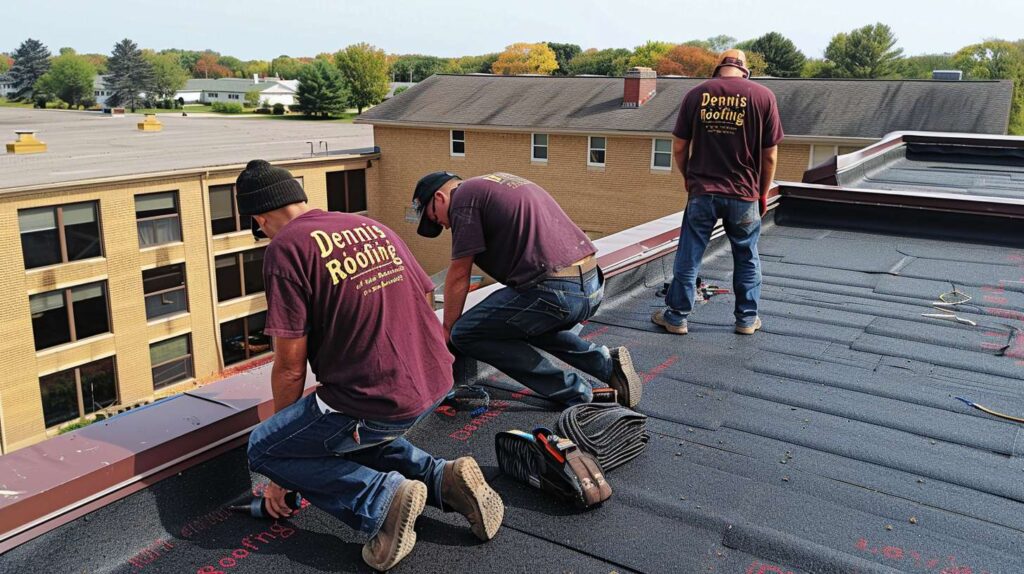
That’s the conversation I have most often in this neighborhood: Do I need roof repair, or do I need a full roof replacement? And when homeowners ask that question, they’re really asking something deeper-how do I protect this building I love without wasting money, and how do I make sure this doesn’t happen again?
When Roof Repair Makes Sense (And When It Doesn’t)
Roof repair works beautifully when the problem is localized and the roof system itself still has years left. On a 7th Avenue brownstone last spring, we found water coming in around the chimney flashing-the roof itself was a 12-year-old EPDM membrane in excellent condition, but the metal flashing had pulled away during a winter freeze-thaw cycle. We replaced the chimney flashing, resealed the joints, and that homeowner got another decade out of their flat roof for $1,850 instead of replacing the entire membrane for $18,000.
That’s targeted roof repair: fixing the weak point while the rest of the system is sound.
But here’s where it gets complicated. On a 3rd Street walk-up two months later, I found three separate leak points-one at the parapet wall, one where a skylight had been poorly installed five years earlier, and one at a low spot where water was ponding. The EPDM was 22 years old, showing surface cracks, and losing its flexibility. We could patch those three spots for $3,200, but I told the owner honestly: you’re spending money on a roof that’s at the end of its lifespan, and in two years we’ll be back fixing new leaks until you eventually do the full roof replacement anyway.
She replaced the whole thing. Sometimes roof repair isn’t the smart play.
How to Know If You Need a New Roof
Age is the simplest indicator, but it’s not the only one. Here’s how different roofing materials age in Park Slope’s specific conditions-wet winters, summer heat reflecting off adjoining buildings, tree debris from those beautiful London planes on streets like Carroll and Berkeley:
| Roofing Material | Expected Lifespan | Park Slope Reality | Replacement Cost (typical brownstone) |
|---|---|---|---|
| EPDM rubber roof | 20-25 years | 22-24 years with maintenance | $8,500-$14,000 |
| TPO roofing (white membrane) | 20-30 years | Still proving itself; earliest installs hitting 18-20 | $9,200-$15,500 |
| Modified bitumen roofing | 15-20 years | 16-18 years if torch-applied properly | $7,800-$13,200 |
| Tar and gravel roof (built-up) | 20-30 years | Many originals from 1990s still functioning but heavy | $12,000-$19,000 |
| Asphalt shingle roof (front slope) | 20-30 years | 20-25 years; wind off park accelerates wear | $11,000-$18,000 |
| Metal roofing (standing seam) | 40-50 years | Excellent for steep slopes; premium choice | $18,000-$28,000 |
But age alone doesn’t tell the story. I look at five things during every roof inspection:
Leak history. One leak five years ago that was fixed and never returned? That’s different from three leaks in the past 18 months, each in a different spot. Multiple leaks signal systemic failure-the membrane is breaking down everywhere, and you’re playing whack-a-mole with roof leak repair until you commit to roof replacement.
Surface condition. On flat roofs, I’m looking for cracks, blistering, ponding water that sits for more than 48 hours after rain, and seams that are pulling apart. On shingle roofs, I check for granule loss (those dark patches where the protective coating has worn away), curling edges, and missing shingles after windstorms. On a Berkeley Place brownstone last fall, the homeowner thought the asphalt shingle roofing was fine because it “looked okay from the street,” but when I got up there, 40% of the shingles had lost their granules and several were cracked straight through. That roof had maybe one winter left.
Penetrations and flashing. Chimneys, skylights, vent pipes, parapet walls-every place where something sticks through or meets the roof is a potential weak point. Chimney flashing repair is one of the most common roof repairs I do, because the metal expands and contracts with temperature changes and eventually pulls away from the masonry or the roof membrane. But when I’m replacing flashing on a roof that’s already 20+ years old, I’m also having the “this is a temporary fix” conversation.
Interior evidence. Water stains on top-floor ceilings, musty smells in closets under the roof, paint peeling near corners-these tell me water is getting in even if the owner hasn’t seen an active leak. Sometimes it’s getting in during wind-driven rain and running along rafters before dripping somewhere unexpected. Roof leak detection isn’t always straightforward; I’ve traced leaks that appeared in a third-floor bedroom back to a failed skylight seal two rooms away.
Building plans. This is the piece most contractors skip, but it matters enormously in Park Slope. If you’re planning a gut renovation in two years, or thinking about adding a skylight installation, or considering converting your top floor into a primary bedroom suite, then spending $4,000 on roof repairs now might be throwing away money. Better to coordinate the new roof installation with the renovation so we can integrate new skylights, upgrade insulation in one shot, and avoid tearing into fresh work later.
Flat Roofing Over Park Slope Brownstones
Most Park Slope buildings have flat roofs over their rear extensions-those one- or two-story additions stretching back toward the gardens. These roofs are typically 15×25 feet, mostly hidden from street view, and they fail in predictable ways.
The most common flat roof materials I install are EPDM roofing (black rubber membrane), TPO roofing (white heat-welded membrane), and modified bitumen roofing (torch-applied or self-adhering). Each has specific advantages for different situations.
EPDM is reliable, proven, and affordable. It’s a single-ply membrane that we fully adhere to the roof deck, then seal all seams with tape and liquid adhesive. It handles temperature swings well, doesn’t crack easily, and repairs are straightforward when needed. The downside? It’s black, so it absorbs heat-your top floor will be warmer in summer. But for a standard rear extension where nobody’s walking on the roof and you want 22-24 years of worry-free performance for $8,500-$12,000, EPDM makes sense.
TPO roofing has become more popular because it’s white and reflective, which keeps top floors cooler and can lower AC costs. We heat-weld the seams instead of taping them, creating a more permanent bond. TPO is slightly more expensive than EPDM ($9,200-$13,500 for the same roof), and the early generations had problems with seam failures, but the newer formulations from manufacturers like GAF and Firestone are performing well. I typically recommend TPO when the homeowner has concerns about summer heat or wants the energy efficiency benefits.
Modified bitumen roofing is the middle ground-a multi-layer system that’s more forgiving during installation and can be torch-applied (using a propane torch to melt the adhesive backing) or installed with cold adhesive. It’s slightly thicker than EPDM or TPO, which makes it more puncture-resistant if you’re dealing with heavy tree debris. The surface comes in smooth, granulated, or reflective coatings. Cost is comparable to EPDM, maybe $500-$800 more, and it performs beautifully on Park Slope’s flat roofs.
The older flat roof system I still see regularly is tar and gravel-built-up roofing with multiple layers of tar and reinforcing fabric, topped with gravel. Many of these roofs were installed in the 1990s or early 2000s and are still functioning, but they’re heavy (important for brownstones with older framing), harder to repair, and eventually develop leaks where the layers separate. When I replace a tar and gravel roof, we strip everything down to the deck, inspect the structure underneath (sometimes finding rot that’s been hidden for years), and install a modern single-ply membrane that’s lighter and easier to maintain.
Steep Slope Roofing: The Visible Front Roofs
The front of most Park Slope brownstones features a steep slate or asphalt shingle roof that faces the street. These roofs get more wind exposure, especially on blocks near Prospect Park where storms push in from the west, and they age differently than flat roofs.
When I’m evaluating a shingle roof for roof replacement, I climb up and check the ridge caps first-they’re the most vulnerable to wind damage and usually fail before the field shingles. Then I look at valleys where two roof planes meet (common on buildings with bay windows or dormers) because water concentrates there and wears through the shingles faster. Finally, I check the edges along gutters where ice dams can form in winter and force water under the shingles.
Most asphalt shingle roofing in Park Slope uses architectural shingles-thicker, dimensional shingles that look better than the old three-tab style and last longer (25-30 years versus 18-22 years). A typical brownstone front roof runs $11,000-$16,000 for quality architectural shingles fully installed, including new underlayment, ice and water shield at the eaves, proper ridge venting, and replacement of any damaged sheathing we find underneath.
For homeowners who want their roof to last 50+ years and match the historic character of the neighborhood, metal roofing is the premium choice. Standing seam metal roofs-where the panels interlock with raised seams-are increasingly common on Park Slope brownstones, especially after renovations where the owner is thinking long-term. Metal handles our weather beautifully (no rot, no algae, sheds snow), comes in colors that work with brownstone and brick, and effectively never needs roof replacement during your ownership. The cost is $18,000-$28,000 for a typical front slope, roughly double asphalt shingles, but when you factor in doing shingles twice over 50 years, the numbers get closer.
I also still work on original slate roofs, though most of the repair work these days is replacing individual broken slates rather than doing full roof replacement. Slate lasts 80-100 years if the copper flashing is maintained, but many Park Slope slate roofs are 90-110 years old now, and the slates are starting to delaminate. Replacing a slate roof properly costs $40,000-$65,000-it’s a specialized craft requiring different skills than asphalt or metal-so most homeowners who face that decision end up switching to architectural shingles or metal.
Roof Waterproofing, Flashing, and the Details That Matter
Most roof leaks don’t happen in the middle of the roof membrane. They happen where different materials meet: where the roof meets a brick parapet wall, where a chimney comes through the roof, where we’ve cut an opening for skylight installation, or where dormers create valleys and angles.
Chimney flashing repair is probably the single most common roof repair I perform. Traditional chimney flashing has two parts: base flashing that sits on the roof and extends up the chimney, and counter-flashing (also called cap flashing) that’s embedded into the brick mortar joints and overlaps the base flashing to shed water. Over time, the mortar deteriorates, the counter-flashing pulls out, and water runs down the chimney-roof junction straight into your top floor. Proper chimney flashing repair means removing the old counter-flashing, cutting new pieces from copper or coated steel, setting them into repointed mortar joints, and sealing everything with high-quality sealant. Cost is typically $1,400-$2,400 depending on chimney size and brick condition.
Skylight installation and skylight repair come up constantly in Park Slope because everyone wants more light on their top floors. I install Velux skylights most often-they’re reliable, well-designed, and come with proper flashing kits that integrate with whatever roofing material we’re working with. A new skylight fully installed runs $2,800-$4,200 depending on size and whether we’re cutting through a flat roof or a sloped roof. The key is setting the skylight slightly raised on a curb (for flat roofs) and ensuring the flashing extends far enough under the surrounding roofing material that water can’t possibly get in. Amateur skylight installation is one of the top causes of roof leaks I’m called to fix-someone cuts a hole, drops in a skylight, slaps some tar around it, and wonders why it leaks during the first big rain.
Existing skylight repair usually means replacing the flashing or the glass seal rather than the entire unit. If the skylight is less than 15 years old and the frame is sound, we can often replace failed seals, fix condensation issues, or upgrade to better glass for $800-$1,500. But skylights older than 20 years typically need full replacement because the frames have deteriorated and parts aren’t available.
Roof waterproofing extends beyond just the primary roofing material. On flat roofs, we use multiple layers of protection: the roof membrane itself, but also liquid-applied waterproofing at seams and penetrations, fabric reinforcement at corners and stress points, and sometimes a full roof coating over everything to extend the life of the system. On a mixed-use building near 5th Avenue last year, we installed a new TPO roof over the commercial space, then applied a reflective roof coating that added UV protection and dropped the cooling load enough that the owner saw lower electric bills within the first summer.
Gutters, Drainage, and Why Your Roof Might Be Fine But Water Still Gets In
I can install a perfect roof-flawless membrane, properly flashed skylights and chimneys, every detail correct-and you’ll still get water damage if your gutters are clogged or broken. On Park Slope’s tree-lined streets, gutter installation and gutter repair are critical parts of keeping buildings dry.
Most brownstones have gutters along the front roof edge that collect water and channel it to downspouts. When those gutters fill with leaves (and they will, especially in fall when the London planes drop everything at once), water overflows and runs down the facade, getting into window lintels, soaking brick, and eventually finding its way inside. I’ve seen $25,000 masonry repairs that could have been prevented with $140 gutter cleaning twice a year.
Gutter installation on a typical brownstone front runs $1,800-$3,200 for seamless aluminum gutters with properly sized downspouts and leaf guards. We pitch the gutters slightly toward the downspouts (1/4 inch per 10 feet) so water doesn’t pond, and we use hidden hangers every 24 inches for strength. Copper gutters, which match beautifully with historic buildings, run $4,500-$7,500 but last 60+ years versus 20-25 for aluminum.
For flat roofs, drainage is even more critical. These roofs need interior drains or scuppers (openings through the parapet wall) to remove water. When drains get clogged with debris, water ponds on the roof, accelerating membrane deterioration and eventually causing leaks. Part of our roof maintenance service is clearing drains and checking that water flows off the roof properly after rain.
Emergency Roof Repair and Storm Damage
When a storm rolls through Park Slope-and we get hit with everything from nor’easters to the occasional tropical system pushing up the coast-roofs can fail suddenly. Wind tears off shingles, blows debris into skylights, or peels back sections of flat roof membrane. Tree branches punch through roofing. Heavy rain finds weaknesses we didn’t know existed.
Emergency roof repair is about stopping the water immediately, then assessing what needs permanent fixing. We’ll tarp damaged areas, seal openings, sometimes install temporary plywood if a skylight is broken, whatever it takes to prevent more water from getting in while we wait for insurance adjusters and plan the real repair. Cost varies wildly-if I’m tarping a small section at 9 PM in the rain, you might pay $650-$900 for emergency service plus materials. If I’m coordinating a larger temporary roof over a building that’s lost significant roofing, we’re talking several thousand dollars.
Storm damage repair tied to insurance claim roofing is a specific process. I document everything with photos and measurements, write a detailed scope of damage, and work with your insurance adjuster to make sure all necessary repairs are covered. Most homeowners insurance policies cover sudden storm damage-wind tearing off shingles, hail damage, falling trees-but not gradual deterioration from age. That means if your roof was already 25 years old and failing, and a storm causes a leak, the insurance company might argue it wasn’t really the storm, it was the old roof. Having documentation of roof condition before storms helps.
Wind damage repair is common on exposed Park Slope blocks. Wind gets under loose shingles or old roof edges and peels back sections. The repair usually means replacing damaged shingles plus reinforcing edges with new starter strips and extra adhesive. We also check flashing and ridge caps because wind hits those hardest.
Commercial Roofing in Park Slope
Park Slope has plenty of mixed-use buildings-retail on the ground floor, apartments above-and larger multifamily buildings that need commercial roofing solutions. The scale is bigger, the roof systems are more complex, and the stakes are higher because you’re protecting multiple tenants.
Commercial roof repair and flat roof installation on these buildings typically involves TPO or modified bitumen because these materials meet commercial building codes and perform well on larger roof areas. A 3,500-square-foot flat roof over a mixed-use building might run $28,000-$42,000 for a complete roof replacement with new insulation, proper drainage improvements, and upgraded parapets.
We also handle roof maintenance contracts for commercial building owners and co-op boards-scheduled inspections, drain cleaning, minor repairs, and roof coating application to extend the life of existing systems. A typical maintenance contract runs $1,200-$2,400 annually depending on roof size and includes two inspections plus emergency service priority.
When to Schedule a Roof Inspection
Don’t wait for a leak. A professional roof inspection every 3-4 years lets you catch small problems before they become expensive emergencies. I charge $275-$385 for a thorough inspection that includes photos, a written report on roof condition, an estimate of remaining lifespan, and prioritized recommendations for any repairs.
You should also schedule inspections after major storms, before listing your home for sale, when you’re planning renovations, and definitely when you’re buying a Park Slope property. I’ve done dozens of pre-purchase inspections where we discovered the roof needed replacement within 2-3 years-information that changed negotiation positions and sometimes saved buyers from inheriting a $15,000 roof replacement six months after closing.
Roof Coating, Sealing, and Maintenance That Extends Life
Near the end of a roof’s life, roof coating can sometimes buy you 5-7 additional years for a fraction of replacement cost. We use elastomeric coatings (thick, rubber-like material) or acrylic coatings (more UV-resistant, good for reflectivity) applied over existing flat roof membranes that are still structurally sound but showing surface wear.
A roof coating application runs $2,800-$4,800 for a typical brownstone flat roof. We clean the surface thoroughly, make minor repairs to any cracks or damaged areas, then apply the coating in multiple passes until we have a uniform, thick membrane that seals everything and adds years of protection. This works best on roofs that are 15-20 years old with no major failures-you’re essentially giving the roof a new protective skin.
Roof sealing is more targeted: we’re sealing specific seams, flashing joints, or penetrations with high-quality sealants designed for roofing. This is part of regular roof maintenance and should happen every few years as old sealant dries out and cracks.
Roof cleaning is sometimes necessary when algae, moss, or debris accumulates. On shingle roofs, dark streaks are usually algae growth that holds moisture and accelerates shingle deterioration. We use gentle cleaning solutions (never pressure washing, which damages shingles) and sometimes install zinc or copper strips at the ridge that release metal ions when it rains, preventing future algae growth. Cost is typically $850-$1,400 for a standard brownstone roof.
What Dennis Roofing Actually Does Differently
After fifteen years of working on Park Slope roofs, I know exactly how these buildings age, where they leak, and what solutions actually hold up. When you call Dennis Roofing, you’re getting someone who started in architecture, understands how these buildings were built, and can explain what’s happening with your roof in clear language backed by photos from your actual roof.
We do thorough roof inspections before recommending anything. We give you options with honest cost-benefit analysis. If your roof can be repaired properly for $2,400 and you’ll get four more years, I’ll tell you that. If that same roof is going to need replacement in 18 months anyway and you’re planning a renovation, I’ll tell you to skip the repair and coordinate the new roof installation with your renovation timeline.
We specialize in the roof types that dominate Park Slope: EPDM and TPO flat roofing over brownstone rear extensions, architectural shingle and metal roofing on front slopes, skylight installation integrated properly with both systems, detailed roof waterproofing around chimneys and parapet walls, and roof leak detection when water is getting in but the source isn’t obvious.
We also handle gutters, flashing, emergency repairs, and maintenance-everything that keeps your Park Slope building dry and protected. Because that’s ultimately what this is about: making sure the building you love, on streets you chose specifically for their beauty and community, stays dry and sound for another generation. That 28-year-old flat roof sitting above your renovated top floor? Let’s take a look at it before the next big storm comes through.