
Quality Roofing Services Along Ocean Parkway
Here’s something most property owners along Ocean Parkway don’t realize: the wind funneling down this wide corridor between six-story buildings can reduce your roof’s effective lifespan by 3-5 years if it’s not installed and fastened to the proper specification. I’ve replaced roofs that were only twelve years old-systems that should’ve lasted twenty-five-simply because the original contractor used standard fastening patterns that work fine in sheltered neighborhoods but fail when exposed to the steady wind pressure that hits buildings facing the parkway. Add in the heavy tree canopy dropping leaves and branches, the salt air drifting in from Coney Island, and the constant dust kicked up by traffic, and you’ve got conditions that demand more than “good enough” roofing.
I’m Adam, and I’ve spent twenty years working on roofs along Ocean Parkway and the side streets that branch off it-Avenue P, Kings Highway, Quentin Road, all the way down to Brighton Beach Avenue. What I’ve learned is that roofing here isn’t just about slapping down shingles or rolling out rubber membrane. It’s about understanding how wind moves around parapet walls, how decades-old tar and gravel roofs behave when you need emergency roof repair in February, and why that “minor leak” in your top-floor unit is actually telling you something important about flashing around your chimney or skylight.
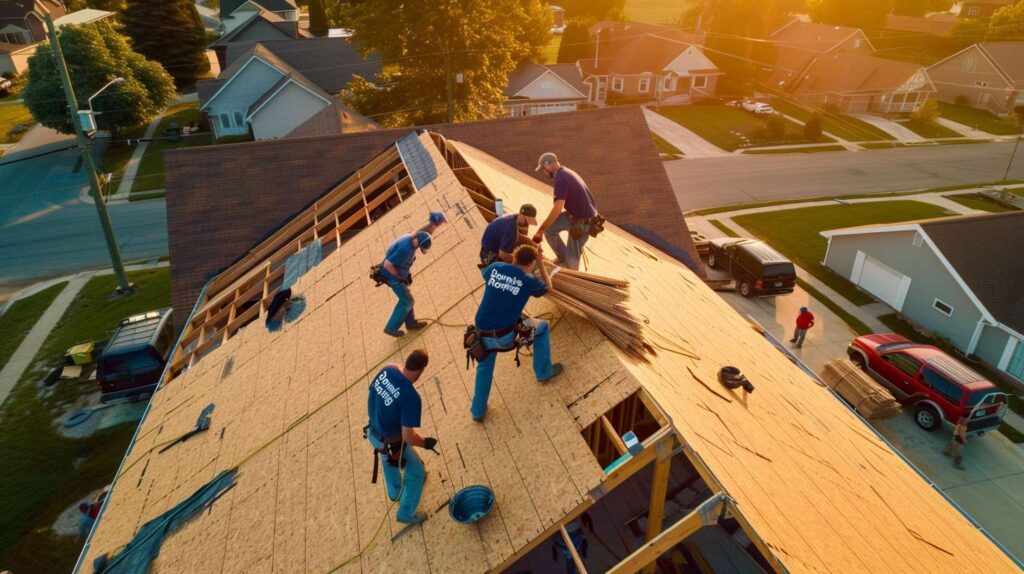
When Roof Repair Makes Sense (And When It Doesn’t)
The most common question I hear from building owners along Ocean Parkway is whether they can get away with roof repair or if they truly need a full roof replacement. The honest answer depends on three things: the age of your current roof, how much of the surface is compromised, and what your actual goal is-buying two more years or solving the problem for the next two decades.
On a six-story co-op I inspected last spring near Avenue M, the board called me out for what they described as “a couple of leaks in the northwest corner.” When I got up there, I found a twenty-eight-year-old modified bitumen roof that had been patched seventeen times over the years-you could see the layers of tar and fabric creating little hills across the surface. Yes, I could’ve patched those two new trouble spots for $1,200. But the entire field of the roof was brittle, the seams were separating in a dozen places that weren’t leaking yet, and we were one bad winter away from water damage that would cost ten times more than a new roof. That’s the calculus: roof repair makes financial sense when you’re dealing with localized damage on a roof that’s still within its expected lifespan and the rest of the membrane or shingles are in good condition.
I typically recommend repair over replacement when:
- Your flat roof is less than twelve years old and the damage is from a recent storm or debris impact
- Your shingle roof has lost a section due to wind but the rest of the field shows minimal granule loss
- You’ve had proper roof leak detection showing the problem is truly isolated-a bad skylight seal, damaged chimney flashing, or one failed seam-not symptomatic of system-wide aging
- You’re planning to sell within 2-3 years and need to stop active leaks without making a major capital investment
But when more than 30% of your roof surface shows problems, or when the substrate itself (the plywood decking on a shingle roof or the insulation layer under a flat roof) has been compromised by water, repair becomes expensive wishful thinking.
Understanding Roof Replacement Along the Parkway
A proper roof replacement along Ocean Parkway starts before any material comes off the truck. I walk every inch of the existing roof with photos, measure for wind uplift based on your building height and exposure, check the condition of parapets and flashing, look at how water currently drains, and-this is critical-inspect from inside the top floor for any signs that water has already damaged the deck or structure.
For flat roofing over multi-family buildings, which make up most of Ocean Parkway’s housing stock, you’re typically choosing between four proven systems: EPDM roofing (rubber membrane), TPO roofing (white thermoplastic), modified bitumen roofing (torch-down or cold-applied), and occasionally still tar and gravel roof systems, though I usually recommend against new tar and gravel installations given the weight and maintenance requirements.
| Roofing System | Expected Lifespan | Best For | Ocean Parkway Considerations |
|---|---|---|---|
| EPDM (Rubber) | 20-25 years | Budget-conscious projects, buildings with minimal foot traffic | Excellent wind resistance when fully adhered; black surface absorbs heat in summer |
| TPO | 15-20 years | Energy efficiency, buildings with HVAC equipment on roof | White surface reflects heat; mechanically fastened systems handle wind well |
| Modified Bitumen | 15-20 years | High-traffic roofs, complex details, retrofit over existing tar and gravel | Multiple layers provide redundancy; excellent for detailed flashing work around parapets |
| Built-Up (Tar & Gravel) | 20-30 years | Traditional buildings, owners who want proven long-term performance | Heavy (requires structural capacity); gravel protects from UV and tree debris but complicates leak detection |
On residential homes along the side streets-the brick two- and three-families on East 2nd through East 8th-you’re usually looking at pitched roofs where asphalt shingle roofing or metal roofing makes sense. I installed a metal roof on a Victorian-style house just off Avenue P three years ago, and the owner hasn’t had a single issue despite the heavy branch fall we get from the mature oak trees in that block. Metal handles wind better than shingles, lasts 40-50 years instead of 20-25, and if a tree limb does land on it, you’re typically looking at a dent rather than torn-off material and water intrusion.
For new roof installations on additions or new construction, the process includes confirming your building permit, coordinating with the DOB for any required inspections, making sure the new system ties properly into existing walls and flashing, and-something often overlooked-verifying that your drainage capacity matches the new roof area and material. A common mistake I see is contractors who replace a roof without checking whether the existing gutters and downspouts can handle the water volume, which leads to overflow problems the first heavy rain after the installation is complete.
The Reality of Emergency Roof Repair in Brooklyn
When you call for emergency roof repair along Ocean Parkway, you’re usually dealing with one of three scenarios: active water coming through your ceiling, wind damage from a storm that just passed, or ice dam problems after heavy snow. The challenge with emergency work is that a real fix often isn’t possible in the middle of a rainstorm-what we’re doing is stopping the immediate water intrusion with tarps, quick-set sealants, or temporary patches, then scheduling a proper repair once conditions allow.
I got called out to a four-story building near Kings Highway during a nor’easter two winters ago-water was pouring into a third-floor apartment through a ceiling fixture. When I got to the roof in 40 mph winds, I found that a section of the parapet coping had pulled loose and wind-driven rain was getting behind the metal and running down inside the wall. There was no way to permanently fix that flashing in those conditions, but I was able to seal the opening with a combination of peel-and-stick membrane and mechanical fasteners that stopped the immediate leak. We came back four days later, in dry weather, pulled the entire coping section, rebuilt the flashing properly, and reinstalled everything to spec.
That’s what emergency roof repair actually looks like-stabilizing the situation so no more damage occurs, then doing the real work when you can do it correctly. If a contractor tells you they can permanently fix complex flashing or install a new roof section in the rain, you’re dealing with someone who either doesn’t understand roofing or doesn’t care about doing it right.
Why Roof Inspection Matters More Than You Think
A professional roof inspection isn’t a guy standing on your roof for ten minutes and telling you everything looks fine. When I inspect a roof along Ocean Parkway, I’m spending 45-90 minutes depending on the building size, and I’m looking at things most property owners never think about: the condition of the membrane or shingles, obviously, but also fastener patterns, seam integrity, flashing details around every penetration, the slope and drainage patterns, signs of ponding water, the condition of parapets and copings, whether expansion joints are functioning, how gutters are attached and draining, and evidence of past repairs that might indicate recurring problems.
On a three-family building I inspected near Ocean Parkway and Avenue U, the owner was convinced his roof was fine-it was only nine years old, he’d had no leaks, and from the street it looked perfect. But when I got up there, I found that the installer had used the wrong fastener spacing for the building height, and wind had been slowly working several seams loose. Within another year or two, he would’ve started getting leaks. We were able to add fasteners and reseal those seams for $2,800-far less than the $35,000 a full replacement would’ve cost if we’d waited until water damage forced the issue.
I recommend roof inspection every 3-5 years for buildings along Ocean Parkway, annually for roofs over fifteen years old, and immediately after any major storm. The inspection should include an interior check of your top floor or attic space looking for water stains, mold, or insulation damage that indicates hidden leaks.
Flat Roof Systems and Ocean Parkway Buildings
The majority of buildings along Ocean Parkway have flat roof systems-or more accurately, low-slope roofs, since no roof should ever be completely flat. Water needs somewhere to go. The classic flat roofing problems I see here are ponding water, failed seams, and deteriorated flashing around parapets and roof-mounted equipment.
When I talk about flat roof installation, the single most important factor is creating positive drainage. On a corner mixed-use building I worked on last year near Kings Highway, the previous roof had been installed without adequate slope, and water was sitting in broad shallow pools across 40% of the surface. Constant standing water destroys any roofing membrane-it accelerates UV breakdown, freezes and expands in winter, and creates perfect conditions for biological growth that further degrades the material. We stripped that roof down to the deck, installed tapered insulation to create proper slope toward the drains, then installed a new TPO roofing system. Five years from now, that roof will still be performing like new, while a flat installation would already be showing problems.
For rubber roof or EPDM roofing installations, the attachment method matters enormously in our wind conditions. Ballasted systems-where the membrane is held down by stone or pavers-work fine in sheltered locations but can be problematic along exposed sections of Ocean Parkway where wind can get under loose edges. I prefer fully-adhered EPDM for most applications here, where the entire membrane is glued to the substrate, eliminating any possibility of wind getting underneath and lifting the material.
Roof Leak Repair and Waterproofing
Most roof leak repair isn’t about the roof membrane itself-it’s about the details. The flashing around your chimney, the seal around skylights, the transition where the roof meets a parapet wall, the boot around plumbing vents, the edge termination at copings-those are where 80% of leaks originate, especially on buildings that face the constant wind and weather exposure of Ocean Parkway.
Chimney flashing repair is particularly common on the older two- and three-family homes along the side streets. The problem is that chimneys move independently from the roof-thermal expansion, settlement, and seasonal freeze-thaw cycles create tiny movements that eventually tear or separate the flashing. I see a lot of chimneys where someone has tried to fix leaks with caulk or roof cement, which might hold for a season or two but isn’t a real solution. Proper flashing uses a two-part system: step flashing that’s woven into the shingles and base flashing that’s embedded into the chimney mortar joints, with a flexible sealed connection between them that accommodates movement.
For comprehensive roof waterproofing, I often recommend a multi-layer approach on flat roofs that includes the membrane system, a protective cover layer or coating, proper flashing at all terminations, and sealed penetrations at every pipe, vent, or equipment support. On buildings where parapet walls are a concern-and they often are on Ocean Parkway, where brick parapets are common and aging mortar allows water infiltration-I’ll install through-wall flashing that directs any water that gets into the wall back out to the roof surface rather than letting it run down inside the building.
Skylights, Gutters, and Roof Penetrations
Skylight installation and skylight repair deserve special attention because a skylight is essentially a planned weak point in your roof-a place where you’ve intentionally created an opening that needs to remain watertight despite wind, rain, snow, and thermal movement. On flat roofs, I use curb-mounted skylights that sit on a raised frame, which keeps them above the general roof surface and any water flow. The flashing detail around that curb is critical: it needs to integrate with the roof membrane in a way that sheds water away from the skylight while accommodating the different expansion rates of the skylight frame, the curb, and the roof membrane.
I replaced three skylights on a converted townhouse near Ocean Parkway and Avenue J last fall, and the original installer had made a classic mistake-they’d sealed everything with caulk and called it done. Caulk fails. It dries out, cracks, and separates, usually within 3-5 years. The proper method uses a combination of mechanical flashing, membrane integration, and limited sealant only where it serves as a secondary backup, not the primary waterproofing.
Gutter installation and gutter repair might seem like minor concerns compared to roof replacement, but along Ocean Parkway, gutters are working overtime. The mature plane trees and oaks drop massive amounts of leaves, seed pods, and twigs. When gutters clog, water overflows and runs down your facade, getting behind window frames and door trim, or it backs up under your roof edge and causes rot in the fascia and soffit.
For gutter installation on multi-family buildings, I prefer 6-inch commercial gutters rather than standard 5-inch residential sizes-the extra capacity handles our heavy rainfall and gives you a bit more time before leaf accumulation causes overflow. Downspouts should be large enough and numerous enough to drain your roof area in heavy rain; the calculation is roughly one square inch of downspout area per 100 square feet of roof. And I always recommend gutter guards or screens in this area-yes, they add cost, but the reduction in maintenance and overflow problems usually pays for itself within two years.
Roof Maintenance, Coatings, and Long-Term Care
A roof maintenance program makes the difference between a roof that reaches its expected lifespan and one that fails early. For buildings along Ocean Parkway, I recommend a maintenance program that includes spring and fall inspections, cleaning of all drains and gutters, removal of debris, resealing of any opened seams or separated flashing, and documentation of the roof’s condition over time.
Roof cleaning here isn’t optional-it’s essential. The dust from traffic, the organic material from trees, and the biological growth from our humid coastal climate all degrade roofing materials. For flat roofs, a gentle cleaning with low-pressure water and mild detergent removes this material without damaging the membrane. For shingle roofs, I’m more cautious-aggressive power washing can strip granules and shorten the roof’s life, so I use chemical treatments for algae and moss rather than high-pressure water.
Roof coating and roof sealing can extend the life of an aging but still-functional roof. On EPDM or modified bitumen roofs that are showing surface aging but have no leaks and remain structurally sound, a quality elastomeric coating adds a protective layer that reflects UV radiation, seals minor surface cracks, and can add 5-10 years of service life. I coated a modified bitumen roof on a six-story building near Brighton Beach Avenue three years ago-the roof was seventeen years old, showing surface checking and some minor granule loss, but the membrane itself was still sound. That coating cost $8,400 for a 3,500-square-foot roof; a full replacement would’ve been $42,000. The owner got a roof that looks new, performs well, and should easily make it another seven to ten years before replacement becomes necessary.
Commercial Roofing and Multi-Family Buildings
Most of my work along Ocean Parkway falls into commercial roofing-multi-family buildings, mixed-use properties, small retail buildings. Commercial roof repair on occupied buildings requires coordination, communication, and minimal disruption. When I’m working on a co-op or apartment building, I notify all residents in advance, explain what will happen and when, coordinate material deliveries to avoid blocking parking or access, and make sure we’re not creating noise issues during early morning or evening hours.
The other aspect of commercial roofing is understanding building codes and co-op/condo board requirements. A board isn’t just buying a roof-they’re making a capital investment that needs to be documented, often requires multiple bids, must meet specific warranty requirements, and needs to integrate with the building’s long-term capital plan. I provide detailed specifications, breakdowns of material and labor costs, clear timelines, and proper licensing and insurance documentation. For buildings that need financing, I work with the board’s engineer or architect to provide the technical documentation their lender requires.
Storm Damage, Insurance Claims, and Wind Damage
Storm damage repair along Ocean Parkway typically involves wind damage-lifted shingles, torn membrane sections, damaged flashing-and occasionally falling tree limbs. For insurance claim roofing, documentation is everything. I photograph all damage from multiple angles, note the date and type of storm, document pre-existing conditions separately from new damage, and provide detailed estimates that break out what’s storm-related versus normal wear.
Insurance companies want to pay for damage, not deferred maintenance. If your roof was already twenty years old and near the end of its life, don’t expect them to cover a full replacement because a storm tore off a few shingles. But if you have a relatively new roof with clear storm damage, proper documentation makes the claim process straightforward. I’ve worked with property owners through dozens of insurance claims, and the ones that go smoothly are those where we can clearly show: here’s what the roof looked like before the storm, here’s the specific damage the storm caused, and here’s what it will cost to restore the roof to its pre-storm condition.
Wind damage repair needs to happen quickly to prevent water intrusion, but it also needs to be done correctly so the repair lasts. I’ve seen too many “quick fix” repairs where a contractor threw some tar and a patch over wind damage without addressing why that section failed-inadequate fastening, wrong material for the exposure, poor edge detail. Six months later, the same spot fails again.
Shingle and Metal Roof Systems for Residential Properties
For the houses and small multi-families on the residential streets near Ocean Parkway, shingle roof installation remains the most common and cost-effective option. A quality asphalt shingle roofing installation, using architectural shingles rated for high wind, properly installed with the correct nailing pattern and starter strips, will last 22-28 years in our climate.
The key is proper installation. I see failed shingle roofs all the time that are only ten or twelve years old, and when I tear them off, I find four or five nails per shingle instead of six, no ice-and-water shield in valleys, improperly overlapped felt paper that allowed water to get under the shingles. None of those mistakes show up for years-the roof looks fine from the ground-but they cut the roof’s lifespan in half.
Metal roofing costs more upfront-typically $14-$18 per square foot installed versus $6-$9 for architectural shingles-but the longevity and performance often justify it. Metal is nearly fireproof, handles wind and impact better than any other residential roofing, requires virtually no maintenance, and on houses with mature trees overhead, falling branches that would tear through shingles just dent metal without penetrating.
I installed a standing-seam metal roof on a house on East 5th Street four years ago, and it still looks exactly as it did the day we finished. Compare that to the asphalt shingle roofs on either side, which are already showing granule loss and algae staining. In twenty years, that metal roof will still be performing; the shingle roofs will need replacement.
Working with Dennis Roofing Along Ocean Parkway
When you call Dennis Roofing, you’re getting a crew that understands this specific area-the wind, the trees, the building types, the common problems. We provide free roof inspections that include a written report with photos, clear explanations of any issues we find, and straightforward good-better-best options for addressing them.
For roof replacement projects, we give you a detailed scope of work, a timeline, and a fixed price-no surprises or change orders unless you choose to add something. We handle all permits and inspections, coordinate material deliveries to minimize disruption, protect your property and landscaping during the work, and clean up completely when we’re done. Every installation includes a workmanship warranty and manufacturer’s material warranty, both clearly explained in writing.
Whether you need emergency roof repair after a storm, a comprehensive roof inspection before making a purchase decision, or a full roof replacement on your apartment building, we approach every project the same way: figure out what’s actually wrong, explain your options clearly, do the work correctly, and stand behind it. That’s what twenty years of working along Ocean Parkway has taught me-there are no shortcuts in roofing, and property owners here deserve contractors who understand that.