
Mill Basin Roof Repair & Replacement Specialists
It’s 11 p.m., middle of a nor’easter, and the wind coming hard off Jamaica Bay has been hammering your shingle roof for six straight hours-gusts at 55 mph, rain blowing sideways, and somewhere above your second-floor bedroom you hear the first drip hit the ceiling. In Mill Basin, this is how marginal roofs fail: not from a single leak in calm weather, but from wind-driven rain pushed up under weathered shingles, through brittle flashing, and past a twenty-year-old underlayment that dissolved three summers ago in the UV and salt air. A properly replaced roof with modern waterproofing and coastal-grade materials would have shed that same storm without a drop inside. A patched roof-even one that looked fine from the street last week-becomes a liability the moment that bay wind picks up.
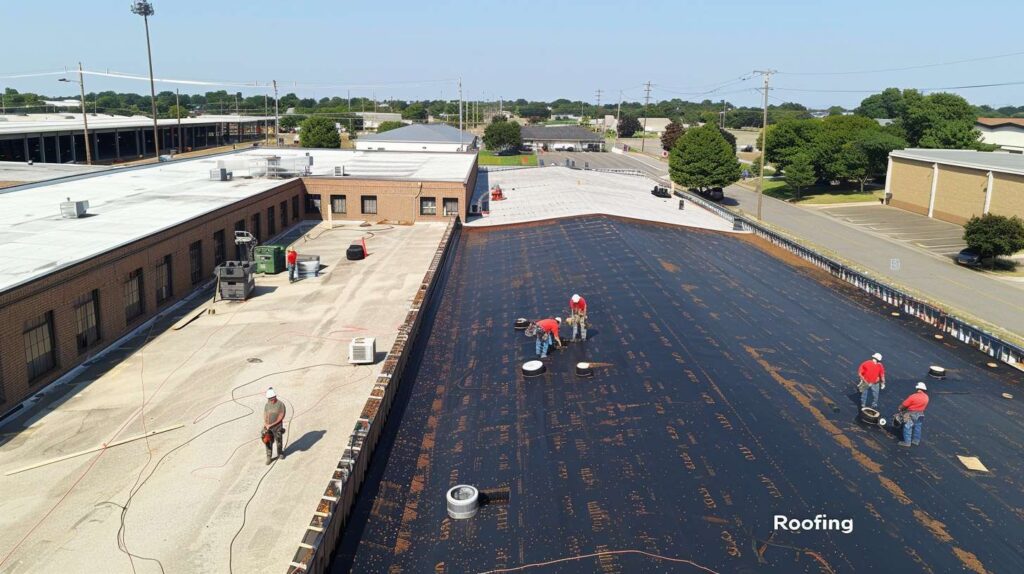
I’m Dana, and I’ve spent seventeen years installing and repairing roofs in Brooklyn’s waterfront neighborhoods, with most of my work concentrated in Mill Basin, Bergen Beach, and along the Marine Parkway corridor. What I’ve learned on hundreds of these homes-brick colonials near Strickland Avenue, low ranches set back from the water, two-family houses with complex rooflines along Avenue U-is that Mill Basin roofs fail differently than inland Brooklyn roofs. The salt air accelerates shingle granule loss. UV exposure is relentless on flat roofs over garages and rear additions. Wind doesn’t just blow; it lifts, pries, and drives water into seams that would stay dry five miles north. And that means the decision between roof repair and full roof replacement isn’t just about age or cost-it’s about understanding what’s actually happening to your roof in this specific environment, right now, and what will happen over the next decade if you choose wrong.
Roof Repair vs. Roof Replacement: The Mill Basin Calculation
On a waterfront home off Strickland Avenue last spring, I found a twenty-three-year-old asphalt shingle roof with decent-looking coverage from the street. The homeowner called for what he assumed would be a simple roof leak repair-water staining in the master bedroom after heavy rain. When I climbed up, the reality was different: granules mostly gone across the south slope, shingle edges curling and brittle from UV, three layers of old roof underneath (which meant the deck had never been inspected), and flashing around the brick chimney that had been “repaired” twice with roofing tar that was now cracked and pulling away. The leak wasn’t one problem. It was the roof telling us it was done.
Here’s the framework I use for every roof repair versus replacement decision in Mill Basin:
Repair makes sense when: The roof is under twelve years old, damage is localized (storm damage repair from a specific event, isolated wind damage repair, one section of compromised flashing), the rest of the system shows good integrity, and you’re planning to sell within three to five years. A quality roof leak repair with proper flashing work and targeted shingle replacement will cost $850-$2,400 depending on scope and access, and it buys you time without the full investment.
Replacement is the right call when: The roof is over eighteen years old in Mill Basin’s coastal environment, you’re seeing granule loss across multiple slopes, leaks are appearing in more than one location, prior repairs haven’t held, or a roof inspection reveals compromised underlayment or deck damage. A full residential roof replacement on a typical Mill Basin home-1,800 to 2,400 square feet, architectural shingles, proper ventilation, new flashing-runs $9,800-$16,500 depending on complexity, access, and material choices. That’s not a small number, but it’s also a roof system designed to handle fifteen to twenty-five years of bay wind, salt, and sun, with a warranty that actually means something and an underlayment that won’t disintegrate the first summer.
The homeowner on Strickland chose replacement. We stripped three old layers, found and replaced eight sections of rotted decking near the eaves (where wind-driven rain had been wicking under for years), installed a high-quality synthetic underlayment rated for coastal exposure, added ice-and-water barrier across all valleys and edges, rebuilt the chimney flashing with through-wall counterflashing, and topped it with impact-resistant architectural shingles in a dark bronze that looked sharp against his brick. Two nor’easters and three years later, that roof hasn’t leaked once. The repair would have bought him six months.
What a Real Coastal Roof Inspection Should Include
Most roof inspection services in Mill Basin involve someone walking the roof for fifteen minutes, taking a few photos, and giving you a vague “looks okay for now” or “needs replacement soon.” That’s not enough data to make a $12,000 decision. Here’s what I check on every inspection, and what you should expect from any contractor before you commit to repair or replacement:
- Shingle condition across all slopes: Granule loss (I run my hand across and look for bare spots), edge curling, cracking, missing tabs, and overall flexibility-brittle shingles that don’t bend are done, regardless of age.
- Flashing integrity at every penetration: Chimneys, soil stacks, vents, skylights. I’m looking for rust, gaps, tar patches (which fail), and whether the flashing is actually integrated with the shingle layers or just sitting on top.
- Underlayment condition: This requires lifting a few shingles at the ridge or valley to inspect what’s underneath-if the felt is crumbling or gone, your waterproofing is compromised no matter how the shingles look.
- Deck condition from below and above: I check attic spaces for water staining, daylight, and soft spots; from the roof I’m probing for spongy areas that indicate rot.
- Ventilation system: Inadequate attic ventilation accelerates shingle aging and creates condensation problems-I measure intake and exhaust to ensure proper airflow.
- Gutters and drainage: Clogged or damaged gutters dump water at the roofline, causing ice dams in winter and accelerating fascia rot-part of every inspection.
On a two-story brick house near the marine parkway, the homeowner had been quoted $14,000 for a new roof based on age alone-the roof was nineteen years old. My roof inspection showed excellent shingle condition (north-facing slopes, shaded by mature trees, minimal granule loss), solid flashing, and good underlayment. But I also found a small skylight leak that had been dripping into the wall cavity for months, creating concealed mold and wood damage. We handled the skylight repair with new flashing and counterflashing ($720), repaired the interior damage, and gave him a realistic assessment: the roof had six to eight good years left, and he should budget for replacement around year twenty-five, not today. That inspection saved him $13,000 in unnecessary work and caught a real problem he didn’t know existed.
Roof Waterproofing and Salt-Air Durability: Why Materials Matter Here
Mill Basin isn’t Midwood. The salt-laden breeze off the basin, the UV exposure on south-facing slopes, and the wind-driven rain during coastal storms create a roofing environment that punishes cheap materials and shortcuts. I’ve seen five-year-old roofs with significant granule loss because the contractor used builder-grade three-tab shingles with no UV resistance. I’ve seen flat roofs over garages failing at year seven because the EPDM rubber roof was installed without proper seam adhesive and the seams peeled apart in the heat. Material choice isn’t about brand loyalty-it’s about matching the product to the environment.
For asphalt shingle roofing: I spec architectural (dimensional) shingles rated for high wind and impact resistance-these have a heavier base, better granule adhesion, and longer warranties. In Mill Basin, I’m installing shingles rated for 110+ mph wind and looking for products with algae-resistant granules (the north slopes near the water grow algae faster). A quality architectural shingle roof with proper underlayment will give you twenty to twenty-five years here. The cheap three-tab option might last twelve to fifteen, and you’ll be dealing with wind damage repair and early replacement.
For flat roofing systems: Mill Basin has hundreds of flat roofs-over garages, rear additions, and the back sections of raised ranches. These roofs take a beating from standing water, UV, and temperature extremes. Here’s how the common flat roof materials perform in this environment:
| Flat Roof System | Typical Lifespan (Mill Basin) | Best Application | Cost per Sq Ft Installed |
|---|---|---|---|
| EPDM roofing (rubber roof) | 18-25 years | Garage roofs, simple flat areas, budget-conscious projects | $4.80-$7.20 |
| TPO roofing | 20-30 years | Larger flat roofs, commercial roofing, high UV exposure areas | $5.50-$8.80 |
| Modified bitumen roofing | 15-20 years | Torch-down applications, small flat roofs, overlay situations | $4.20-$6.50 |
| Tar and gravel roof | 20-25 years | Old-style systems, replacement for existing tar roofs, very durable | $5.80-$8.40 |
On a raised ranch near Avenue U, the homeowner had a fifteen-year-old modified bitumen roof over his garage that was blistering and cracking. He wanted the cheapest fix. I walked him through the options: patch the worst areas for around $900 and expect to replace it in two to three years, or invest in a full TPO roofing replacement at $3,200 (small garage, about 400 square feet) that would outlast his ownership of the house. He chose TPO. The white membrane reflects heat (his garage stays cooler in summer), the seams are heat-welded (not glued), and the warranty is thirty years. That roof will still be solid when his kids inherit the house.
Roof Leak Detection and Emergency Roof Repair
Not all leaks announce themselves with dramatic ceiling stains. The most expensive leaks I’ve tracked in Mill Basin are the slow ones-water entering through failed chimney flashing, wicking along a rafter for six feet, then dripping onto insulation and soaking the top plate of an interior wall. By the time you see the stain, you’ve got hidden mold and structural damage that turns a $600 flashing repair into a $4,800 repair-and-remediation project.
Professional roof leak detection starts with understanding how water moves. It enters at the highest point of failure-a lifted shingle, a cracked skylight seal, a gap in the flashing-then travels downward and laterally along the underside of the roof deck or down the face of a rafter until it finds a place to drip. The ceiling stain is rarely directly below the roof leak. During a roof inspection or leak investigation, I’m flooding specific areas with a hose (if weather permits), checking attic spaces with a bright light during rain events, and using a moisture meter on decking and framing to map where water is actually traveling.
For emergency roof repair-when a storm has lifted shingles, torn flashing, or punctured a flat roof and water is actively entering-I carry tarps, roofing cement, and temporary patching materials. A proper emergency tarp installation isn’t just throwing a blue tarp over the damage; it’s securing the tarp at the ridge, running it down past the damaged area, and weighting or fastening it so wind can’t get underneath. Emergency roof repair service in Mill Basin typically runs $350-$950 depending on time of day, extent of damage, and temporary materials needed. That buys you a dry interior until permanent repairs can be scheduled, which matters when you’re dealing with a midnight leak during a nor’easter.
Chimney Flashing Repair, Skylight Installation, and Roof Penetrations
Every hole through your roof-chimney, skylight, vent pipe, exhaust fan-is a potential leak point, and in Mill Basin’s wind and rain environment, “potential” becomes “actual” faster than in calmer neighborhoods. Chimney flashing repair is one of the most common calls I get, and it’s almost always the same failure pattern: the original flashing was installed as step flashing tucked under the shingles and bent up against the brick, sealed with a bead of caulk or roofing tar. The tar cracks after three years in the sun. Water runs down the chimney, behind the flashing, and into the house. The fix isn’t more tar-it’s proper counterflashing.
Real chimney flashing repair involves step flashing integrated with each shingle course, and counterflashing (a separate piece of metal) that’s embedded into the chimney mortar joints and laps over the step flashing, creating a two-stage barrier that can flex and move as the house settles without breaking the seal. I cut a narrow groove in the mortar joints, insert the counterflashing, and seal it with high-grade urethane-not tar. This repair typically runs $850-$1,600 depending on chimney size and accessibility. It’s not cheap. It also doesn’t fail.
For skylight installation and skylight repair, the same principles apply. I see a lot of older skylights in Mill Basin-acrylic domes on flat roofs, rectangular glass units on pitched roofs-that were installed with inadequate flashing or flashing that’s deteriorated. Water doesn’t leak through the skylight glass; it leaks around the frame where the flashing has failed. A proper skylight installation includes a full pan flashing system that integrates with the shingle courses and creates a waterproof envelope around the unit. Skylight repair for an existing unit with damaged flashing runs $650-$1,400; full skylight replacement with a modern low-E glass unit and new flashing is $1,800-$3,800 depending on size and roof complexity.
Flat Roof Installation and Commercial Roofing
Flat roof installation in Mill Basin requires attention to drainage, substrate condition, and material selection. True flat roofs are rare-most “flat” roofs have a slight pitch (one-quarter inch per foot minimum) to direct water to drains or scuppers. When I’m installing a new flat roof or replacing an old one, the first question is drainage: where does the water go, is it getting there efficiently, and are the drains or edge details clear and functional?
On a three-family building near the Mill Basin marina, the owner had been dealing with recurring leaks on the top floor for years. The roof was a twelve-year-old tar and gravel roof that looked intact, but water was pooling in two low spots every time it rained-standing water that eventually found its way through the membrane. We stripped the old roof, added tapered rigid insulation to create positive drainage to the existing drains, installed a fully adhered TPO roofing membrane with heat-welded seams, and added overflow scuppers at the parapet walls as a secondary drainage path. Total cost for 1,800 square feet of flat roof: $11,400. That roof hasn’t leaked once in four years, and the pooling water issue is gone.
For commercial roofing projects-small apartment buildings, retail spaces, warehouses near the parkway-I’m typically working with TPO roofing, EPDM rubber roof systems, or modified bitumen roofing depending on budget and roof use. Commercial roof repair follows the same diagnostic process as residential but often involves larger areas and more complex drainage systems. A commercial flat roof inspection should include infrared scanning or core samples to identify saturated insulation-you can’t see wet insulation from the surface, but it destroys R-value and accelerates membrane failure.
Gutter Installation, Gutter Repair, and Roof Drainage
Your gutters aren’t separate from your roof-they’re part of the water management system, and in Mill Basin’s heavy rain events, failed or undersized gutters dump hundreds of gallons of water right at your foundation and fascia boards. I’ve seen $18,000 roofs fail prematurely because the gutters were clogged or broken and water backed up under the first course of shingles for three seasons.
Gutter installation on a typical Mill Basin home-five-inch K-style seamless aluminum gutters with properly sized downspouts and splash blocks-runs $1,400-$2,800 depending on linear feet and number of corners. I’m installing gutters with a slight pitch toward downspouts (one-quarter inch per ten feet), using hidden hangers spaced every twenty-four inches for strength, and ensuring downspouts are large enough (three-by-four-inch rectangular or four-inch round) to handle the roof’s square footage during heavy rain.
Gutter repair is often a matter of rehanging sagging sections, sealing leaking seams, or replacing damaged end caps and downspouts. A typical gutter repair runs $220-$650. But here’s the insight most homeowners miss: if you’re replacing your roof, that’s the ideal time to replace your gutters too. The fascia boards are exposed, the old gutters are off, and you’re already paying for the scaffolding or ladder access. Doing gutters separately six months later costs more in labor and coordination.
Roof Maintenance, Roof Coating, and Long-Term Protection
A quality roof in Mill Basin should last twenty years or more, but not without some attention. Annual roof maintenance-which I recommend every fall before winter weather-includes cleaning debris from valleys and gutters, inspecting flashing and seals, checking for lifted or damaged shingles, and clearing roof drains on flat sections. This service runs $280-$480 and catches small problems before they become leaks.
For flat roofs and aging asphalt shingle roofs, roof coating can extend lifespan significantly. A roof coating is a thick, elastomeric layer applied over the existing roof surface-it seals minor cracks, reflects UV, and adds a waterproofing layer. On flat roofs (EPDM, TPO, modified bitumen), a quality roof coating can add five to eight years of life for a cost of $2.40-$4.20 per square foot. On shingle roofs, roof coating is less common but can be effective on roofs with good structural integrity but surface wear-it’s not a replacement for a failing roof, but it’s a tool to extend a marginal roof while you plan for replacement.
Roof sealing-applying sealant to flashing, vents, and penetrations-is part of routine maintenance and minor repairs. But here’s where I see homeowners make mistakes: they buy a tube of roofing tar at the hardware store and start sealing everything they see. Tar cracks in the sun and fails in cold weather. If you’re sealing roof penetrations, use a high-quality urethane or polyether sealant rated for UV and temperature extremes. Better yet, call a professional before you turn a small issue into a bigger one by trapping water behind a bad seal.
Storm Damage Repair and Insurance Claim Roofing
Mill Basin sees its share of weather-nor’easters that stall over the bay, summer thunderstorms with straight-line winds, and the occasional tropical system that brings sustained high winds and heavy rain. After every major storm, I get calls for storm damage repair and insurance claim roofing assistance. Here’s what you need to know about the process:
Document everything immediately: Take photos of exterior damage (missing shingles, lifted flashing, damaged vents), interior damage (water stains, dripping), and the roof from the ground. Note the date and time. If it’s safe, take close-up photos of specific damage areas.
Get a professional roof inspection before calling your insurance: An experienced contractor can identify all damage-not just the obvious missing shingles-and provide a detailed assessment that supports your claim. I’ve worked with dozens of homeowners on insurance claim roofing, and the claims that get paid are the ones with thorough documentation and professional estimates.
Understand what insurance covers: Most policies cover sudden storm damage (wind damage repair from a specific storm event, hail damage, fallen tree limbs) but not gradual wear or deferred maintenance. If your roof was already twenty-three years old and failing, and a storm finishes it off, the insurance company will argue pre-existing condition. If your roof was in good shape and a 60 mph gust lifted thirty shingles, that’s a covered claim.
Emergency temporary repairs are usually covered: If you need emergency roof repair to prevent further damage-tarping, temporary patching-most policies cover this as part of mitigation, and it doesn’t count against your claim. Get receipts.
On a waterfront home off Strickland after a strong nor’easter two years ago, wind had lifted a twenty-foot section of ridge shingles and torn the aluminum drip edge off one eave. The homeowner called me before calling his insurance. I documented the damage with photos and measurements, provided a detailed repair estimate ($3,400 for shingle replacement, ridge cap, and new drip edge installation), and walked the adjuster through the damage when he arrived. The claim was approved at full value because we had clear documentation showing new damage to an otherwise sound roof. The work was completed in four days, and the homeowner paid only his deductible.
Metal Roofing: Is It Right for Mill Basin?
I get asked about metal roofing fairly regularly-homeowners want to know if a metal roof makes sense in this coastal environment and whether the higher upfront cost is justified. Here’s my take after installing and maintaining metal roofs in Mill Basin for over a decade:
Advantages: Metal roofing is extremely durable in wind (no shingles to lift), highly resistant to salt air and UV, virtually maintenance-free, and long-lasting (forty to fifty years for quality standing-seam systems). It’s also energy-efficient-reflective coatings reduce cooling costs in summer. For a homeowner planning to stay in the house long-term, metal roofing offers the lowest lifetime cost.
Disadvantages: High upfront cost-standing-seam metal roof installation runs $13,500-$26,000 for a typical Mill Basin home, roughly double the cost of architectural shingles. It’s also noisier in rain (though insulation and attic space reduce this), and repairs require specialized tools and matching panels. Aesthetically, metal roofing doesn’t suit every home-it looks sharp on modern designs and certain traditional styles, but out of place on brick colonials and Mediterranean-style homes common in Mill Basin.
Best applications: Contemporary homes, waterfront properties with aggressive salt exposure, flat or low-slope sections where standing-seam metal provides excellent waterproofing, and homes where the owner values longevity over initial cost.
On a modern raised ranch near the water, the owner chose a dark gray standing-seam metal roof after his third shingle roof in thirty years. Installation cost $19,200, but he’ll never replace that roof again, it handles the bay wind without issue, and his cooling costs dropped about 15% the first summer. For his situation-waterfront exposure, long-term ownership, contemporary aesthetic-metal roofing was the right call.
Choosing the Right Roofing Contractor in Mill Basin
You’re trusting someone with a $12,000 to $20,000 investment and the waterproof integrity of your home. The wrong contractor leaves you with leaks, code violations, voided warranties, and costly repairs within a few years. Here’s how to choose:
Look for local, long-term contractors: Someone who has worked in Mill Basin for years understands coastal roofing challenges, knows local building codes, and has a reputation to protect. Ask for local references and drive by completed projects in the neighborhood.
Verify licensing and insurance: In New York, roofing contractors should carry general liability insurance and workers’ compensation. Ask for certificates and verify them directly with the insurance company. If someone gets hurt on your roof and they’re not covered, you’re liable.
Get detailed written estimates: Not a one-page number, but a breakdown showing materials (brand, type, warranty), labor, removal and disposal, flashing details, ventilation work, and any structural repairs. Compare apples to apples-a $9,000 bid with three-tab shingles and no underlayment upgrade is not the same as a $14,000 bid with architectural shingles and synthetic underlayment.
Understand warranties: Material warranties (from the shingle or membrane manufacturer) cover defects but not installation errors. Workmanship warranties (from the contractor) cover leaks due to installation problems. A quality contractor offers both and explains what’s covered. I provide a ten-year workmanship warranty on all new roof installations, and I’m still here to honor it.
Don’t choose based solely on price: The lowest bid is often low for a reason-inferior materials, shortcuts, inexperienced crews, or a contractor who will disappear when problems arise. The highest bid isn’t always the best either. Look for a detailed estimate, clear communication, local reputation, and a contractor who takes time to inspect and explain what your roof actually needs.
Dennis Roofing has been serving Mill Basin with honest roof repair, roof replacement, and emergency roof services for years, and we’ve built our reputation on roofs that last and communication that’s clear. When you call us for a roof inspection or estimate, you’re getting someone who will walk your roof, show you what’s happening, explain your options with real costs and lifespans, and help you make the right decision for your home and budget-not the decision that maximizes our profit. That’s how we’ve stayed busy in this neighborhood, and it’s how we’ll approach your roof: with respect for your investment and a focus on work that actually performs in Mill Basin’s coastal environment, season after season, storm after storm.