
Top Roofing Company Serving Midwood Brooklyn
A complete roof replacement in Midwood typically runs $8,500-$14,000 for a standard flat roof on a two-family home, $12,000-$22,000 for a shingle roof on a detached single-family, and $18,000-$45,000+ for mixed-use commercial buildings along Avenue J or Kings Highway. But here’s the mistake I see every month: a homeowner keeps patching the same leak over a top-floor bedroom or rear extension every winter-$450 here, $650 there-believing “it’s not that bad,” until one heavy storm finally soaks the insulation, ruins a new closet full of clothing, and forces a full tear-out that costs $3,200 more than a planned roof replacement would have cost two years earlier.
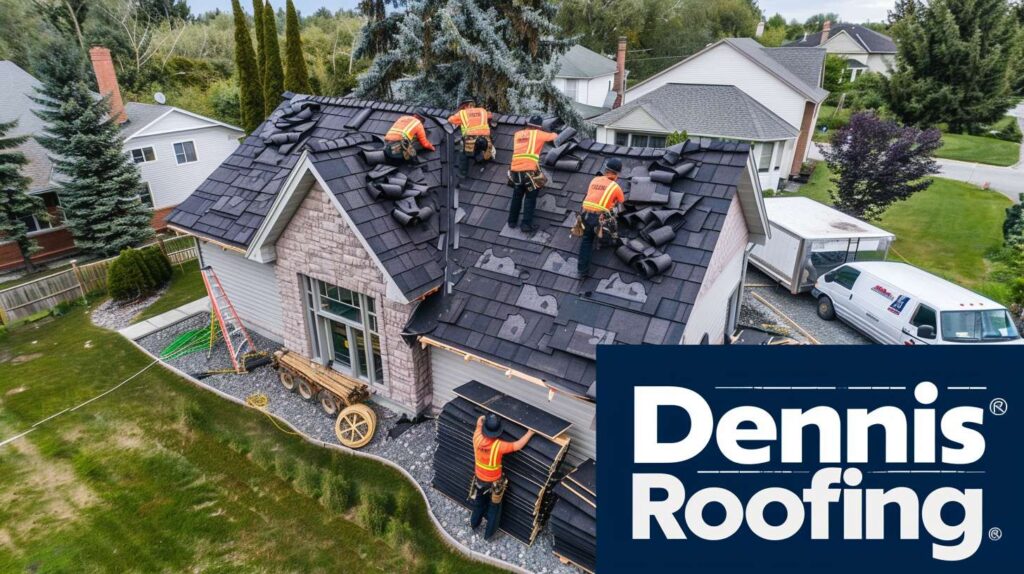
I’m Miriam, and I’ve spent sixteen years managing and installing roofs across Midwood. I started by handling repairs on a small portfolio of local two- and three-family homes, then trained with a seasoned Brooklyn roofer who taught me everything from old tar and gravel flat roofs to modern TPO and architectural asphalt shingles. At Dennis Roofing, I walk property owners through photos from their own roof, a clear diagnosis, and side-by-side “repair vs. replace” options with real timelines and budgets-because the biggest challenge you face isn’t finding someone to patch a leak; it’s figuring out whether your roof is still worth repairing or if it’s time for a full roof replacement.
Repair or Replace: A Simple Decision Framework for Midwood Roofs
Start with four numbers: your roof’s age, the number of leaks you’ve fixed in the past three years, the type of roof system you have, and any renovation plans in the next five years. If your flat roof is older than 18 years and you’ve patched three or more leaks, replacement almost always makes financial sense. If your asphalt shingle roof is 22+ years old and you’re planning a dormer addition or third-floor conversion, fold the new roof into that project. If your commercial flat roof is 12 years old but you’ve had zero leaks and good maintenance, a professional roof inspection plus a coating system can buy you another 8-10 years for $2,800-$5,200 instead of $28,000.
On an East 19th Street semi-detached last fall, the owner called me for a “small leak” above the second-floor bathroom. The flat roof over the rear kitchen extension was 21 years old, original tar and gravel, and I counted seven patches-some fresh, some cracking again. I pulled back one patch and found the underlayment was brittle, the insulation was damp in two spots, and the deck had soft spots near the parapet. Repair estimate: $1,850 to re-flash the parapet, patch the soft deck, and add a 6×8 EPDM section. Replacement estimate: $9,400 for a complete TPO roof with new insulation, flashing, and a fifteen-year warranty. The owner chose replacement because she was about to renovate the kitchen below, and she didn’t want a roof failure mid-project. That’s the lesson: repair makes sense when the roof system is fundamentally sound and you’re buying a few targeted years; replacement makes sense when the substrate is compromised, leaks are multiplying, or you’re investing in the building anyway.
What a Real Roof Inspection Should Tell You
A genuine roof inspection isn’t a guy standing on the sidewalk with binoculars. I’m on your roof with a moisture meter, a probe, a camera, and a checklist that covers membrane condition, flashing integrity, drainage, fastener pull-out, insulation moisture, and every penetration-chimneys, skylights, vents, HVAC curbs. On flat roofs, I check for ponding water (anything that sits longer than 48 hours after rain), blistering, splitting seams, and loose gravel that’s migrated into valleys. On shingle roofs, I look for missing granules, curling tabs, exposed nails, damaged flashing around chimneys and skylights, and ventilation problems in the attic that can cook your shingles from below.
You should receive a written report with photos, not a verbal “yeah, it’s old.” I document every issue, assign it a priority (immediate, one year, three years, monitor), and estimate repair costs so you can budget. On a Flatbush Avenue mixed-use building with a flat roof last spring, my inspection found the TPO membrane in good shape but the chimney flashing was separating, two skylight curbs had cracked sealant, and the scuppers were half-blocked with leaves and silt. Total repair: $2,150. If the owner had waited another winter, water would have tracked down the chimney into the top-floor tenant’s ceiling, and we’d be talking emergency roof repair plus interior restoration.
Roof leak detection is part of every inspection when you’ve had water intrusion. I use moisture scanning to map wet insulation and trace the entry point, because the stain on your ceiling is rarely directly below the roof failure-water travels along rafters, down walls, and across membranes. On Midwood’s attached brick homes, I’ve traced leaks from a parapet wall crack fifteen feet away from the interior damage.
Flat Roofing Systems: TPO, EPDM, Modified Bitumen, and When to Use Each
Flat roofs dominate Midwood-over rear extensions, row houses, small commercial buildings, and mixed-use properties. Your main choices today are TPO, EPDM (rubber), modified bitumen, and in a few older buildings, tar and gravel. Here’s how I guide the decision:
| Material | Best For | Lifespan | Cost per Sq Ft (Installed) | Key Advantage |
|---|---|---|---|---|
| TPO | Residential flat roofs, light commercial, high sun exposure | 20-25 years | $8.50-$12.00 | Heat-welded seams, white reflective surface, strong wind resistance |
| EPDM (Rubber) | Budget projects, low-slope roofs, owner-occupied homes | 18-24 years | $7.00-$10.00 | Lower cost, flexible, proven performance |
| Modified Bitumen | Heavy foot traffic, commercial roofs, mechanical equipment | 15-20 years | $9.00-$13.50 | Tough surface, easy repairs, good for ponding |
| Tar and Gravel | Rarely installed new; maintained on historic buildings | 20-30 years (with maintenance) | $10.00-$15.00 | Durable, fire-resistant, but labor-intensive |
TPO has become my go-to for flat roof installation on Midwood’s two- and three-family homes because the heat-welded seams hold up better in our wind-driven rain-especially when storms barrel down Ocean Parkway and funnel between buildings. EPDM is reliable and budget-friendly, but the seams are glued or taped, and over fifteen years I’ve seen more seam failures with EPDM than TPO. Modified bitumen is excellent when you have HVAC units, roof access for mechanicals, or a yeshiva roof off Avenue J where maintenance staff walk the roof quarterly.
On a small commercial building on Avenue M, the owner had an old tar and gravel roof that was still performing but needed $6,800 in repairs to re-pitch a low spot and replace deteriorated flashing. I gave him two options: spend the $6,800 and plan for full replacement in three years, or replace now with TPO for $24,500 and close the book for two decades. He replaced, and that’s typical for commercial owners who want predictable expenses and can capitalize the investment.
Shingle Roofing: Asphalt, Architectural, and Metal Options
Detached and semi-detached homes on the tree-lined streets off Coney Island Avenue, East 16th, and Avenue M typically have sloped roofs with asphalt shingles. Standard three-tab shingles last 18-22 years in Brooklyn’s climate; architectural (dimensional) shingles last 25-30 years and look significantly better. Metal roofing-standing seam steel or aluminum-lasts 40-50 years but costs nearly double: $14-$18 per square foot installed vs. $6.50-$9.50 for architectural shingles.
I recommend architectural asphalt shingles for most Midwood homeowners because they balance cost, longevity, and curb appeal. A typical 1,800-square-foot shingle roof replacement runs $11,500-$16,200 including tear-off, new underlayment, drip edge, ridge venting, and flashing around chimneys and skylights. Metal roofing makes sense if you’re planning to stay in the house 20+ years, want zero maintenance, or love the clean modern look-but budget $22,000-$28,000 for that same roof.
Roof ventilation is critical and almost always inadequate in older Midwood homes. I see attics that hit 140°F in July, cooking the shingles from below and cutting their lifespan by 30%. Every shingle roof replacement I do includes a ventilation audit: soffit intake vents, ridge exhaust vents, and sometimes powered attic fans. Proper ventilation also prevents ice dams in winter when snow melt refreezes at the eaves.
Emergency Roof Repair and Storm Damage
When a limb from one of Midwood’s big maples punches through your shingle roof during a nor’easter, or wind peels back a section of TPO membrane, you need emergency roof repair within hours, not days. I keep a truck stocked with tarps, fasteners, mastic, and EPDM patch material, and I can typically secure a roof-stop active water intrusion-for $650-$1,450 depending on access and damage extent. That’s a temporary fix. The permanent repair might be $2,800 to replace damaged decking, underlayment, and shingles over a 120-square-foot area, plus any interior ceiling work.
Storm damage repair and insurance claim roofing go hand in hand. I document everything with photos, write a detailed scope, and provide a line-item estimate that matches your carrier’s Xactimate format. Most insurance policies cover sudden wind damage, hail damage, and falling objects but exclude wear-and-tear and poor maintenance. If your roof was already 22 years old and leaking before the storm, the carrier will pay to fix the new hole but not to replace the whole roof-that’s why I always separate storm damage from pre-existing conditions in my report.
On a Kings Highway mixed-use building last winter, high winds tore off a 15×20 section of modified bitumen during a snowstorm. I tarped it that night, pulled permits the next morning, and had the section replaced within four days before the next weather system arrived. The owner’s commercial policy covered the repair minus a $2,500 deductible, and because I’d done a roof inspection six months earlier documenting that the rest of the roof was sound, the carrier didn’t push for full replacement.
Roof Waterproofing: Chimneys, Skylights, and Parapet Walls
Most Midwood roof leaks I investigate trace back to flashing failures, not membrane failures. Chimney flashing repair is a constant need because the metal step flashing and counter-flashing separate as the brick chimney settles and expands. Proper chimney flashing uses a two-part system: step flashing woven into the shingles or membrane, and counter-flashing embedded into the chimney mortar joints. When I see caulk smeared over a gap, I know it’s a band-aid that will fail within two years. Real repair costs $850-$1,650 depending on chimney size and access, and includes removing old flashing, re-cutting mortar joints, installing new copper or aluminum step and counter-flashing, and sealing with polyurethane or rubberized mastic-not caulk.
Skylight installation and skylight repair require roof waterproofing around the curb, and I’ve torn out dozens of leaking skylights that were poorly flashed. A quality skylight installation involves building or repairing the curb, wrapping it with self-adhering waterproof membrane, then layering metal flashing that sheds water down and away from the glass. On flat roofs, the curb must be raised at least four inches above the membrane, with a crickett on the upslope side if the skylight is larger than 30 inches. Cost: $1,800-$3,200 per skylight including flashing and interior trim. Repair of an existing leaking skylight often runs $650-$1,150 if the curb is sound and we’re replacing gaskets and flashing only.
Parapet walls-those low brick walls around flat roofs-are leak factories if the coping stones are cracked or the through-wall flashing is missing. I’ve seen water soak down through the parapet, saturate the top-floor walls, and cause interior damage three floors below the roof. Roof waterproofing of parapets involves installing or replacing through-wall flashing at the top of the wall, rebuilding coping stones or adding metal coping caps, and sealing the junction between the parapet and the roof membrane with a cant strip and extended flashing. Budget $120-$220 per linear foot for comprehensive parapet waterproofing.
Gutters, Downspouts, and Drainage
Clogged gutters and inadequate drainage destroy roofs. On Midwood’s tree-heavy blocks, gutters fill with maple seeds in spring and leaves in fall, water overflows and backs up under the shingle edges, and you get rot along the fascia and eaves. Gutter installation on a typical two-family home runs $1,400-$2,600 for seamless aluminum gutters with hidden hangers and properly sized downspouts. I spec 6-inch gutters instead of the standard 5-inch on homes with large roof areas or under big trees, because the extra capacity prevents overflow during heavy rain.
Gutter repair-resealing joints, rehanging sagging sections, replacing rusted elbows-usually costs $280-$650. But if your gutters are original to a 35-year-old home and patched in four places, replacement is smarter. I’ve also added gutter guards (mesh or perforated covers) on dozens of Midwood homes; they cost $8-$14 per linear foot installed and cut cleaning frequency from twice a year to once every two years.
On flat roofs, drainage happens through scuppers (openings in the parapet) or interior drains, and both must stay clear. A blocked scupper can cause ponding water that stresses the membrane and leaks through seams. I check and clear all drains during every inspection and roof maintenance visit.
Roof Maintenance, Coatings, and Extending Roof Life
A $450 annual roof maintenance visit can add five years to your roof’s life. I clean drains and gutters, remove debris, check and re-seal flashing, inspect seams, and document conditions with photos so you can track changes year over year. On commercial buildings and rental properties, I recommend spring and fall visits-$375 each-timed before and after the heavy weather seasons.
Roof coating is one of the best investments for an aging but intact flat roof. A white acrylic or silicone coating applied over TPO, EPDM, or modified bitumen costs $2.75-$4.50 per square foot and can extend roof life by 8-12 years. The coating seals small cracks, reflects heat (dropping cooling costs 10-18%), and provides a uniform waterproof layer over seams and fasteners. I’ve coated flat roofs on Avenue J commercial buildings that were 14 years old, and they’re still performing eight years later with no leaks.
Roof sealing with mastic or caulk around penetrations is part of every maintenance visit, but it’s not a substitute for real flashing repair. I use polyurethane or rubberized sealants that stay flexible through freeze-thaw cycles, not cheap latex caulk that cracks in two winters.
Roof cleaning-removing moss, algae, and black streaks from shingle roofs-improves appearance and prevents granule loss. I soft-wash (low-pressure rinse with algaecide) rather than power-wash, because high pressure dislodges granules and shortens shingle life. Cost: $425-$750 for a typical Midwood home, and the results last 3-5 years.
Commercial Roofing and Larger Buildings
Commercial roofing and commercial roof repair in Midwood involve bigger buildings, more complex systems, and stricter code requirements. A 12,000-square-foot flat roof on a mixed-use building along Kings Highway might have multiple HVAC units, exhaust vents, a water tower, roof access stairs, and parapet walls on all four sides. Installation cost: $85,000-$140,000 depending on membrane choice, insulation upgrades, and whether we’re doing a tear-off or a recover (installing new membrane over old). A recover saves $18,000-$28,000 in disposal and labor but is only allowed if the existing roof has one layer and the deck is sound.
I handle commercial projects differently than residential: more detailed specifications, performance bonds, phased construction to keep tenants comfortable, and coordination with property managers and building supers. Permits are required for all commercial roofing work in Brooklyn, and inspections by the Department of Buildings happen at deck stage, insulation stage, and final. Timeline: 2-4 weeks for a typical mid-size commercial flat roof replacement, weather permitting.
Choosing the Right Roofing Contractor in Midwood
You want a contractor who listens, explains options with real numbers, and doesn’t pressure you into same-day decisions. I provide written estimates with material specs, labor breakdowns, timeline, payment schedule, and warranty terms-manufacturer’s warranty on materials (10-30 years depending on product) and workmanship warranty from Dennis Roofing (typically 5-10 years). Check licensing (NYC Department of Consumer Affairs Home Improvement Contractor license), insurance (general liability and workers’ comp), and references from recent Midwood projects.
A quality roof replacement in Midwood isn’t the cheapest bid. I’ve followed behind contractors who installed TPO with inadequate fasteners, skipped the cant strips at parapet walls, and left gaps in the flashing-and the owner called me two years later with leaks that cost more to fix than the original job. Pay a fair price for skilled labor, quality materials, proper permits, and a contractor who’ll answer the phone when you have a question three years from now.
If you’re weighing repair vs. replacement, schedule a professional roof inspection-not a sales pitch, but a real assessment with photos, priority rankings, and budget options. I’ve walked property owners through that decision hundreds of times, and the answer is almost always clear once you see the actual roof conditions and run the numbers. Whether you need a simple roof leak repair, a full flat roof installation, new asphalt shingles, or a comprehensive maintenance plan, the key is making the decision on your timeline, with full information, before the next storm makes it for you.