
Homecrest Roof Repair & Replacement Specialists
Here’s the trap I see Homecrest homeowners fall into every week: you pay $350 to patch the same flat roof leak over your rear kitchen extension three times in two years, thinking you’re being smart with money. Then a November storm lifts twelve shingles on the main roof and tears a six-foot seam in that flat section, and suddenly you’re looking at water damage to a $40,000 kitchen renovation and a $14,500 emergency roof replacement instead of the $7,200 planned replacement you could have scheduled in August. The math stops working when you’re paying for the same problem over and over-at some point, temporary fixes cost more than permanent solutions, and that point usually arrives quietly on a Tuesday morning when you’re not watching.
I’m Sal, and I’ve been working on these Homecrest brick and stucco two-families since I was seventeen, hauling bundles of shingles up ladders for my cousins’ crew. Twenty-one years later, Dennis Roofing handles everything from basic roof leak repair on Avenue S semi-detached homes to complete commercial roofing overhauls on Coney Island Avenue storefronts. The question I answer most often isn’t “how much does it cost?”-it’s “should I fix this or replace the whole thing?” That’s what this guide is about: giving you enough straight information about roof repair, roof replacement, inspection, materials, and maintenance so you can make that call yourself without pressure.
When Roof Repair Makes Sense (And When It’s Just Delaying the Inevitable)
On an East 19th Street brick two-family last spring, the owner called about water stains on a second-floor bedroom ceiling. Roof was a twelve-year-old asphalt shingle roof, mostly solid, but the chimney flashing repair had failed-probably during installation, honestly-and twelve winters of freeze-thaw had opened it up. We pulled the old step flashing, installed new aluminum with Ice & Water Shield underlayment, sealed it properly, and charged $875. That roof will run another eight to ten years easily. That’s a smart repair: isolated problem, sound roof, fix costs less than ten percent of replacement.
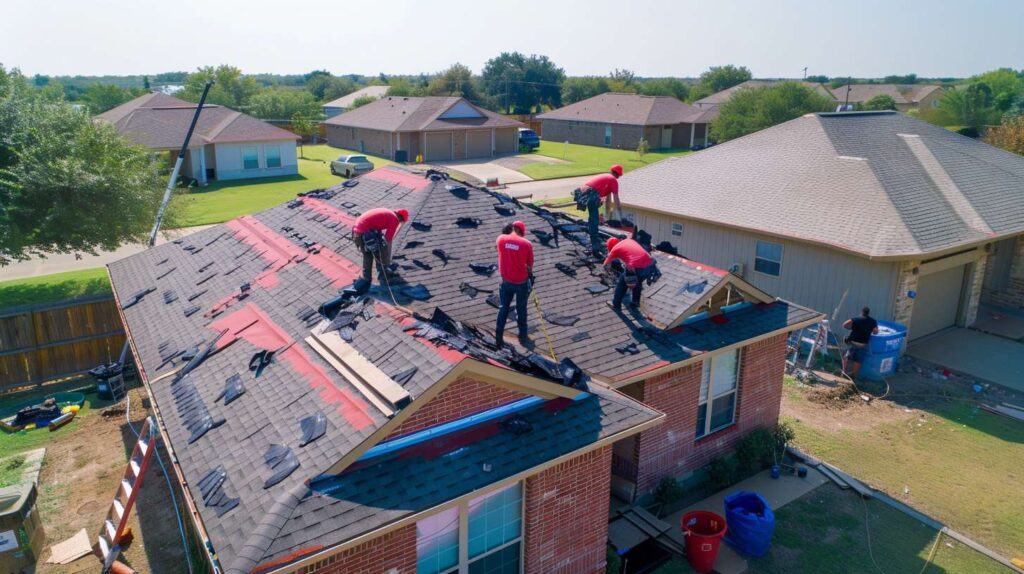
Two blocks over on Avenue T, different story: twenty-three-year-old three-tab shingles, curling at the edges, granules washing into gutters, three separate leak spots-chimney, bathroom vent, and rear slope. Owner wanted all three patched. I could have done it, charged $1,400, and bought maybe eighteen months before the next call. Instead I walked him through the roof inspection findings: shingles past manufacturer’s 20-year lifespan, decking soft in two spots from old leaks, flashing brittle. Full roof replacement ran $8,900 for architectural shingles with proper ventilation and new flashing throughout. He went with replacement, and he’ll get 25-30 years out of it instead of throwing money at a roof that was already finished.
The line between repair and replacement comes down to three factors: age of the roof, extent of damage, and cost ratio. If your roof is past 75% of its expected lifespan, if you’re seeing multiple problem areas, or if repair costs add up to more than 25-30% of replacement cost, you’re usually better off replacing. A single roof leak repair on a ten-year-old roof? Absolutely fix it. Four leaks on a nineteen-year-old roof? Time to replace.
What a Real Roof Inspection Should Cover (Not Just a Guy on a Ladder)
A proper roof inspection in Homecrest takes forty-five minutes to an hour because we’re looking at multiple roof sections-most homes here have a pitched shingle roof over the main house and a flat roof over the rear extension, garage, or enclosed porch-plus chimneys, skylights, gutters, and vents. I take photos of everything because you’re not climbing up there, and decisions made from the ground without seeing the actual conditions usually end up costing extra money.
On the asphalt shingle roofing, I’m checking granule loss (bare spots mean the shingles are cooked), curling or cupping edges (sign of age and poor ventilation), missing or damaged shingles from wind, and the condition of ridge caps. I pull back a few shingles to check the underlayment and look for soft decking, which tells me there’s been water intrusion. Around penetrations-chimneys, plumbing vents, bathroom exhaust-I check flashing for rust, gaps, or failed sealant. Most leaks in Homecrest homes happen at these transition points, not in the middle of an open roof section.
On flat roofing-whether it’s EPDM roofing (rubber), TPO roofing, modified bitumen roofing, or old tar and gravel roof systems-I’m looking for ponding water (low spots where water sits more than 48 hours after rain), seam separation, blistering, cracking, and edge deterioration where the membrane meets the parapet or ties into the main roof. Flat roofs in this neighborhood take a beating because they catch all the wind coming off Ocean Parkway and all the thermal stress from our temperature swings. A fifteen-year-old rubber roof that’s been maintained might have another five years; one that’s been ignored might need replacement now.
I also check gutter installation and function-clogged or sagging gutters dump water right at the roof edge and foundation, creating problems that look like roof leaks but aren’t-and look at attic ventilation if accessible. Poor ventilation shortens shingle life and causes ice damming in winter. The inspection ends with photos, a written summary of conditions, and a clear recommendation: repair these specific items, plan for replacement in X years, or replace now if the roof is past saving.
Choosing the Right Roofing Material for Your Homecrest Home
For pitched roofs on Homecrest’s detached and semi-detached homes, asphalt shingle roofing remains the most common choice-specifically architectural (dimensional) shingles rather than the old three-tab style. An architectural shingle roof costs $6,800-$11,500 for a typical 1,800-2,200 square foot roof, carries a 25-30 year lifespan with proper installation and ventilation, and handles our weather well. They’re available in a range of colors to match brick, stucco, or vinyl siding, and most manufacturers offer good wind ratings (110-130 mph) which matters when storms roll through. We install CertainTeed Landmark or Owens Corning Duration most often-solid products, available locally, good warranty support.
Metal roofing is gaining ground in Homecrest, particularly standing-seam systems on contemporary renovations and metal shingle profiles on traditional homes. A metal roof runs $12,500-$22,000 depending on profile and material (painted steel, aluminum, or copper for high-end projects), but you’re looking at 40-60 year lifespan, zero maintenance, excellent wind and fire resistance, and energy efficiency in summer. The upfront cost stops most people, but if you’re planning to stay in the house long-term, the math works-you’ll never roof it again. We did a standing-seam aluminum roof on a renovated East 17th Street home last year, charcoal gray, looks fantastic and the owner will forget he even has a roof for the next fifty years.
For the flat sections-extensions, garages, low-slope porches-you’ve got several solid options. EPDM roofing (rubber membrane) costs $4,200-$7,800 for a typical 400-600 square foot flat roof, lasts 20-25 years, and handles temperature extremes well. It’s black, which means it absorbs heat, but it’s durable and relatively inexpensive to repair if damaged. TPO roofing (white thermoplastic membrane) runs slightly higher at $4,800-$8,500 for the same area, reflects heat better (lower cooling costs in summer), and is heat-welded at the seams for superior waterproofing-my first choice for most flat roof installations now. Modified bitumen roofing is the modern version of old tar-and-gravel systems, torch-applied or self-adhered, costs $4,500-$8,200, very tough and puncture-resistant, good for high-traffic flat roofs or areas where you might need to walk regularly.
If you’ve got an old tar and gravel roof over your garage or rear extension, built-up roofing that’s been there since 1985, it’s probably at end-of-life by now. These systems last 15-25 years; the ones still functioning are often held together by layers of patch and roof coating. Replacement typically means tearing off the old built-up roof (heavy, messy work) and installing a modern single-ply membrane. The jump in performance and longevity is significant.
| Roofing Material | Cost Range (Homecrest) | Lifespan | Best Application |
|---|---|---|---|
| Architectural Asphalt Shingles | $6,800-$11,500 | 25-30 years | Pitched roofs, main house |
| Metal Roofing (standing seam) | $12,500-$22,000 | 40-60 years | Long-term investment, contemporary homes |
| EPDM Rubber (flat roof) | $4,200-$7,800 | 20-25 years | Flat extensions, garages, budget-friendly |
| TPO Membrane (flat roof) | $4,800-$8,500 | 20-25 years | Flat roofs, energy efficiency, best seam strength |
| Modified Bitumen (flat roof) | $4,500-$8,200 | 15-20 years | High-traffic flat roofs, extreme durability |
Stopping Leaks Before They Start: Waterproofing, Flashing, and Critical Details
Most Homecrest roof leaks I chase down aren’t caused by failed shingles or torn membrane-they’re caused by failed details. The chimney-to-roof transition. The skylight curb. The valley where the garage roof meets the main house. The plumbing vent boot. These spots move, expand, contract, and take concentrated water flow, and if they weren’t detailed properly during installation or if they’ve aged out, they leak.
Chimney flashing repair is the single most common fix I do on older roofs. Proper chimney flashing involves step flashing woven into the shingles up the sides, counter-flashing embedded in the chimney mortar joints, and careful sealing-but a lot of older installations just used roof cement and aluminum, which cracks and fails. We remove the old flashing, grind out mortar joints if necessary, install new step and counter flashing with high-quality sealant and Ice & Water Shield underneath, and tuck-point the masonry. Done right, it lasts as long as the roof. Cost runs $720-$1,350 depending on chimney size and brick condition. If your chimney leaks every heavy rain, this is the fix.
Skylight installation and skylight repair follow the same principle-it’s all about the curb and flashing. We install Velux skylights most often, with factory flashing kits designed for shingle or flat roofs, Ice & Water Shield around the entire opening, and proper integration with the roofing system. A new skylight with installation runs $1,800-$3,200 depending on size and roof complexity. If you’ve got an old skylight that leaks, sometimes we can re-flash it ($450-$850), but if the unit itself is failing-condensation between panes, cracked acrylic, broken operator-replacement is the better call.
Roof waterproofing on flat sections often involves more than just the membrane. We use roof coating-acrylic or silicone-based-to extend the life of aging EPDM or modified bitumen roofs, sealing small cracks and providing an extra layer of UV protection. A quality coating application costs $1,400-$2,800 for a typical flat roof and can add 5-8 years to a roof that’s worn but not yet leaking. It’s a smart mid-life intervention if the membrane is still intact but showing age. We also handle roof sealing around penetrations, re-sealing pipe boots, vent caps, and HVAC curbs with professional-grade sealants that stay flexible through temperature swings-not the hardware store tube of black goop that cracks in two years.
Emergency Roof Repair and Storm Damage: What to Do When It Can’t Wait
Dennis Roofing handles emergency roof repair calls year-round, but the surge comes during and after storms-particularly the nor’easters that rake through Homecrest in late fall and winter. Wind damage repair is the most common issue: shingles blown off, flashing lifted, tree branches punching through, or edge metal peeling back. If you’ve got active water coming in, the priority is stopping it now and scheduling proper repair when conditions allow.
For storm damage repair, we’ll get a tarp or temporary patch in place within hours if you’re leaking-that’s the emergency response. Permanent repair gets scheduled once we can safely get on the roof and assess the full extent of damage. If you’re filing an insurance claim roofing case, document everything with photos before we tarp it (insurance wants to see the damage), save all our invoices and reports, and understand that insurance typically covers sudden storm damage but not wear-and-tear or maintenance issues. We’ve worked with every major carrier on Homecrest claims; we’ll provide detailed estimates and work directly with adjusters, but the contract is between you and your insurance company-we can’t guarantee what they’ll cover.
On a small commercial building off Coney Island Avenue during last February’s storm, wind lifted an entire section of TPO membrane on the flat roof, folded it back like a bedspread, and dumped rain into the office below. We had a crew there within ninety minutes with tarps and sandbags, then came back three days later when wind dropped to pull the damaged section, dry out the insulation, and install new TPO. The commercial roof repair ran $6,400; insurance covered $5,800 after deductible. That’s how it’s supposed to work-fast temporary protection, then proper permanent fix.
Gutters, Maintenance, and Making Your Roof Last
Gutter installation and gutter repair matter more than most Homecrest homeowners realize. Gutters move thousands of gallons of water away from your roof edge, fascia, and foundation every year-when they fail, that water causes rot, leaks, and basement flooding. We install seamless aluminum gutters ($8-$14 per linear foot installed) with proper pitch, hidden hangers every 24 inches, and oversized downspouts on sections that handle high volume. If your gutters overflow in heavy rain, they’re either clogged, undersized, or pitched wrong. We see a lot of older homes with 4-inch gutters that should have 5-inch, or downspouts spaced too far apart.
Roof maintenance extends lifespan and catches small problems before they become expensive ones. For shingle roofs, that means annual inspection (we offer these for $150-$225), keeping gutters clean, trimming overhanging branches, and replacing any damaged shingles promptly. For flat roofs, add clearing drains, checking seams and edges, and addressing ponding water. A maintenance visit costs $175-$400 depending on scope, but it’s the difference between a 20-year roof that lasts 20 years and one that lasts 14 because small issues were ignored.
Roof cleaning in Homecrest is sometimes necessary-particularly removing moss, algae, or debris buildup-but it has to be done carefully. We use low-pressure methods and roof-safe cleaning solutions, never pressure washing that can damage shingles or force water under the roofing system. Cost runs $380-$720 for a typical home. Zinc or copper strips installed at the ridge can prevent future algae growth on shingle roofs, a one-time upgrade that costs $240-$480 and works for years.
The Dennis Roofing Approach: Straight Talk, Clear Options, No Pressure
Here’s how we work: you call about a leak, a storm damage issue, or because your roof looks tired and you’re wondering what to do. We schedule a roof inspection-usually within two to three days, faster for emergencies-and I come out personally or send one of our lead guys who’s been with us for years. We get on the roof, document conditions with photos, and spend twenty minutes walking you through what we found. You get a written summary the same day or next morning: specific problems, repair options with costs, replacement recommendation if applicable, and realistic timeline for how long the roof will last with or without work.
If it’s a straightforward new roof replacement or flat roof installation, we provide a detailed estimate breaking out materials, labor, permits, and timeline. Most Homecrest residential projects take two to four days depending on size and complexity; commercial roofing varies based on building size and access. We pull permits when required, handle inspections, and leave the property cleaner than we found it-which matters because we’re working over your home and your landscaping.
For roof repair, leak detection, flashing work, or skylight jobs, we typically schedule within a week unless it’s emergency work. We don’t upsell-if your roof can be repaired sensibly, we’ll tell you that and give you a fair price for the repair. If it needs replacement and you’re not ready, we’ll tell you what to watch for and give you a realistic window before the decision gets made for you by the next storm. This is a relationship business in a neighborhood where everyone knows everyone; we’ve been doing roofs here for two decades because we treat people straight and do the work right.
Whether it’s roof leak detection on a tricky hidden leak, complete roof installation on a new addition, or roof replacement on your family’s home, Dennis Roofing brings the same approach: experienced crews, quality materials, attention to detail, and clear communication from estimate to cleanup. Call us when you’re ready to stop wondering about your roof and start knowing exactly what you’re dealing with-and what it’ll take to fix it right.