
Gravesend’s Trusted Roof Replacement & Repair
I’ve watched homeowners on East 2nd Street throw away $800, $1,200, sometimes $2,400 patching the same leak over their kitchen extension-three different “roofers” with buckets of tar, rolls of membrane, promises it’s “fixed this time”-until one March nor’easter peels back a two-foot section and floods the cabinets they just refinished. That’s when they call, furious or defeated, asking why nobody told them the truth: the flat roof was 23 years old, brittle as crackers, and every patch was just buying six more months of anxiety. In Gravesend, where brick two-families have layered shingle roofs and rear extensions wear flat membrane systems installed when Reagan was president, the biggest question isn’t whether you need work-it’s whether you’re looking at a $950 roof repair or a $8,500-$14,000 roof replacement, and who’s going to give you a straight answer.
I’m Anthony. I’ve spent 24 years on roofs across Gravesend-Avenue U storefronts, semi-detached houses off West 7th, stucco homes near the Bay, garage conversions with rubber roofing that’s seen better decades. My father ran a three-man crew here in the late ’90s; I carried hot tar buckets and learned to read a roof the way you read a used car: what’s original, what’s been patched, what’s about to fail, and what you can squeeze another few years from if you treat it right. This guide walks through roof inspection, the real difference between repair and replacement, how each roof type (shingle, flat membrane, metal, tar and gravel) shows end-of-life signs, and where services like roof leak repair, roof waterproofing, chimney flashing repair, skylight installation, and gutter installation fit into a smart plan that doesn’t waste your money.
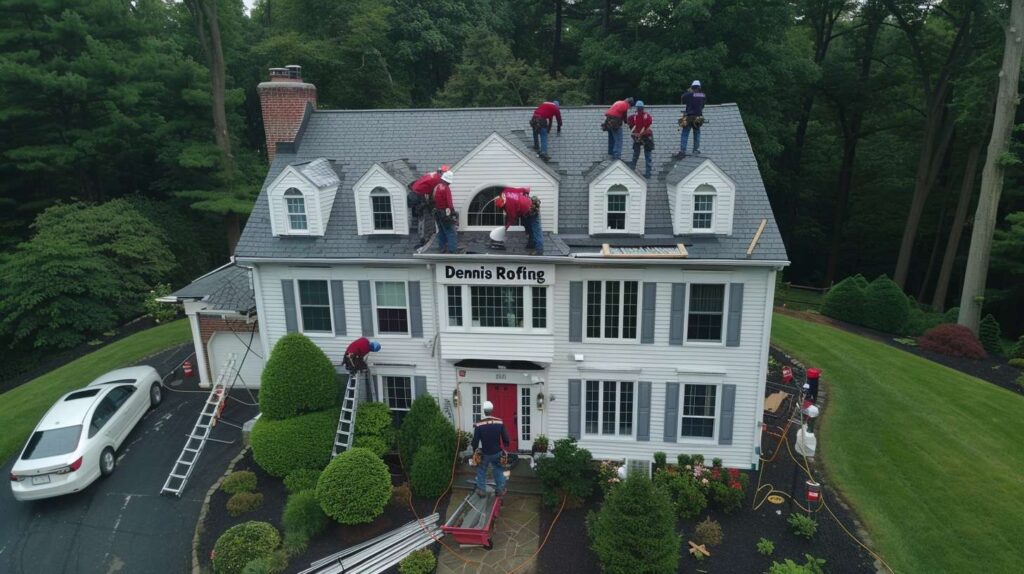
When a Roof Repair Makes Sense-and When It’s Just Expensive Denial
Roof repair works beautifully when the underlying system still has life. A torn shingle from wind, a punctured membrane from an HVAC guy’s boot, a rusted chimney flashing that’s letting water track down into the attic-these are discrete failures on an otherwise sound roof, and a focused repair costs $350-$1,100 depending on access and materials. I replaced flashing around a brick chimney on a house near Avenue T last fall: $680, two hours, problem solved for the next decade because the 12-year-old asphalt shingle roof around it was still tight and flexible.
But repair becomes expensive denial when the whole roof is aging out. On a Stillwell Avenue mixed-use building, the owner had paid for three separate flat roof leak repairs over four years-$950, $1,200, $875-each time a different seam opened or a blister cracked. The underlying modified bitumen roofing was 26 years old, hardened by sun, covered with patches that themselves were failing. We showed him photos of the alligatored surface, the raised ridges where water pooled, the brittle edges. The choice was clear: keep paying $800-$1,400 every 14 months, or invest $11,200 in a new two-ply modified system with a 15-year warranty and stop the cycle. He chose replacement. Three years later, zero leaks, zero callbacks, and he’s told me twice he wishes he’d done it sooner.
Repair makes sense when: The roof is under 15 years old (shingle) or 12 years old (flat membrane), damage is localized (storm, puncture, flashing), and the surrounding material is still pliable and intact. Replacement makes sense when: You’re patching the same area repeatedly, the roof is beyond two-thirds of its expected lifespan, granules are washing off shingles into gutters, or flat membrane shows widespread cracking and loss of flexibility.
What a Real Roof Inspection Uncovers in Gravesend
A legitimate roof inspection isn’t a guy glancing from a ladder. It’s a methodical walk across every section-shingle slopes, flat extensions, parapets, penetrations-looking for the specific failure modes each roof type exhibits as it ages. On shingle roofs, I check for curling edges (especially on south-facing slopes that bake all summer), missing granules that expose the asphalt mat, lifted tabs from wind off Gravesend Bay, and soft spots where plywood decking has rotted under a slow leak. I photograph everything and show you on my phone: “See how these shingles are cupping? That’s UV damage and age. See this dark stain under the ridge vent? That’s moisture tracking along the decking.”
On flat roofs-EPDM, TPO, modified bitumen, old tar and gravel-the inspection focuses on seams, fastener plates, drains, and ponding areas. EPDM rubber roofs can last 20-25 years, but seams often fail earlier if they weren’t heat-welded properly; I probe every seam with a blunt tool to see if it’s delaminating. TPO roofing is popular on newer commercial installs-white membrane, heat-welded seams, good reflectivity-but cheap TPO from the early 2010s sometimes cracks after 10 years; I look for spiderweb stress patterns. Modified bitumen and tar and gravel roofs tell their age through surface alligatoring, exposed felt, and gravel displacement; if I can push my thumb into the surface and it stays dented, the bitumen has lost its elasticity and it’s time.
Every inspection includes flashing around chimneys, soil stacks, skylights, and parapet walls-these are where 60% of leaks originate even when the field membrane looks okay. I check gutters for granule accumulation (a shingle roof shedding granules is dying) and downspout flow (clogged gutters cause ice dams and edge rot in winter). You get a written report with photos, a condition rating for each roof section, and a clear recommendation: patch and monitor, plan replacement within 18-24 months, or replace now before the next storm creates an emergency. Cost: $225-$375 for a thorough inspection on a typical two-family; free if you hire us for the work.
Roof Replacement: How It Works and What It Costs in Gravesend
Roof replacement means tearing off the old system down to the deck, inspecting and repairing structural wood, installing new underlayment and membrane or shingles, replacing flashing, and sealing every penetration. It’s the permanent fix, the reset button, the thing that stops the leak-patch-leak cycle and gives you 15-30 years of peace depending on material choice. In Gravesend, costs vary by roof type, access (narrow side alleys, tight parking), and the amount of rotted decking we find once the old roof is off.
| Roof Type | Typical Lifespan | Cost per Sq Ft (Installed) | Best Use Case |
|---|---|---|---|
| Asphalt Shingle | 18-25 years | $4.80-$7.20 | Pitched roofs on main house, dormers; good for traditional Gravesend homes |
| EPDM Rubber | 20-25 years | $5.10-$7.80 | Flat roofs, extensions; affordable, reliable if seams are done right |
| TPO Roofing | 15-20 years | $5.60-$8.50 | Commercial flat roofs; white reflective surface cuts cooling costs |
| Modified Bitumen | 15-20 years | $6.20-$9.10 | Two-ply torch-down or cold-applied; very durable for flat roofs with foot traffic |
| Metal Roofing | 35-50 years | $9.50-$14.00 | Standing seam or corrugated; long lifespan, modern look, premium cost |
| Tar and Gravel | 20-25 years | $6.80-$9.50 | Old-school built-up roof; less common now, good for large flat commercial |
A typical Gravesend two-family with 1,400 square feet of asphalt shingle roofing on the main house and 600 square feet of EPDM flat roofing on the rear extension runs $9,800-$13,500 total for both sections replaced, including all labor, materials, permits, dump fees, and new aluminum drip edge and ridge vents. If we find rotted plywood-common under old leaks or around chimneys-figure $85-$110 per 4×8 sheet replaced. Metal roofing is premium but makes sense if you’re planning to stay 20+ years; I installed standing seam steel on a renovated house off Avenue U last spring, and the owner loves the look and the fact he’ll never reroof again. Commercial roofing on storefronts and small mixed-use buildings typically uses TPO or modified bitumen; a 3,200-square-foot flat roof replacement with new parapet flashing and tapered insulation for drainage runs $18,500-$26,000 depending on existing conditions and code upgrades.
Emergency Roof Repair and Storm Damage: What to Do When It’s 2 AM and Raining Indoors
Emergency roof repair is about stopping active water intrusion fast, then assessing real damage in daylight. I’ve gotten calls at midnight from panicked homeowners on West 5th watching water pour through a ceiling fixture-shingles torn off by wind, a tree branch punched through, an old skylight finally gave up. The immediate move: get a tarp over the breach from outside if it’s safe (never climb a wet roof in the dark), or contain the leak from inside with buckets and plastic sheeting, then call a roofer who actually answers. We aim to be on-site within 90 minutes for true emergencies in Gravesend, tarp the opening or apply temporary membrane, and return the next day for permanent repair or insurance claim roofing documentation.
Storm damage repair and wind damage repair require careful documentation if you’re filing insurance. Take photos of the damage immediately, of any debris (tree limbs, satellite dish, etc.), of water intrusion inside, and of the roof condition before temporary repairs. Most policies cover sudden storm damage but exclude “wear and tear” or deferred maintenance, so if your 28-year-old shingles blew off, the adjuster may argue the roof was end-of-life anyway. That’s where having a detailed roof inspection report from before the storm helps-or hiring a contractor who knows how to document wind-related failure versus age-related failure and can advocate with the adjuster. We’ve handled dozens of insurance jobs; a clear written estimate, annotated photos, and persistence usually get the claim approved if the damage is legitimate.
Flat Roofing Systems: EPDM, TPO, Modified Bitumen, and Which One Fits Your Building
Gravesend has thousands of flat roofs-kitchen extensions, garages, rear additions, commercial storefronts-and the membrane you choose matters more than most owners realize. EPDM roofing (black rubber membrane) is the workhorse: affordable, flexible, UV-resistant, and forgiving of installer mistakes if you use proper adhesive and seam tape. A well-installed EPDM roof lasts 22-25 years; the seams are the weak point, so I insist on 6-inch-wide seam tape properly primed and rolled. Cost for a 600-square-foot flat roof with fully adhered EPDM, new wood cant strips, and aluminum drip edge: $3,200-$4,100.
TPO roofing is white or tan, heat-welded at seams, and reflects more sunlight-great for reducing cooling costs on commercial buildings with HVAC on the roof. The seams are actually stronger than EPDM when welded correctly (we use a hot-air gun, not a torch), but cheap TPO membranes from certain manufacturers had a bad run about ten years ago with premature cracking. I only install Firestone, GAF, or Carlisle TPO now, 60-mil thickness minimum. Cost: $3,600-$4,800 for the same 600 square feet. TPO makes sense if you want the white reflective surface and plan to stay long-term; if you’re selling soon, EPDM is more cost-effective.
Modified bitumen roofing is my pick for flat roofs that see foot traffic-HVAC guys, guys with leaf blowers in fall, someone who wants to set up a rooftop deck someday. It’s a two-ply torch-down system (base sheet mechanically fastened, cap sheet torch-welded) or cold-applied with adhesive; the result is tough, puncture-resistant, and self-sealing around fasteners. It costs more-$4,100-$5,600 for that 600-square-foot roof-but on a Gravesend commercial building where people are constantly up there, it pays off in durability. Tar and gravel roofs are the old-school built-up system, layer after layer of hot tar and felt topped with gravel; they last 22-25 years but are messy to install and heavy. We still do them occasionally on larger commercial jobs where the owner wants traditional, proven technology, but most residential jobs have moved to membrane systems.
Shingle Roofs and Metal Roofing: Pitched Roof Options That Last
The main house on most Gravesend two-families wears a pitched shingle roof, and asphalt shingle roofing remains the most common choice: architectural shingles rated for 25-30 years, Class A fire rating, good wind resistance (110-130 mph rated), and a range of colors to match brick or stucco. A quality job means proper underlayment (synthetic felt, not old tar paper), drip edge at eaves and rakes, ridge vents for attic airflow, and careful flashing around chimneys and valleys. On a typical 1,400-square-foot pitched roof in Gravesend-gable or hip style, moderate pitch-expect $6,700-$10,100 installed with GAF Timberline HDZ or Owens Corning Duration shingles. We install ice-and-water shield along eaves and in valleys because winter ice dams can force water under shingles; it’s code in many areas now and cheap insurance.
Metal roofing is the upgrade play: standing seam steel or aluminum panels that interlock, run vertically, and shed water and snow beautifully. Metal roofs last 40-50 years, never need replacement if installed correctly, and look sharp on modern renovations or historic homes going for a crisp, clean profile. Downsides: higher upfront cost ($13,300-$19,600 for that same 1,400 square feet) and noise during heavy rain unless you add sound-dampening underlayment. I installed metal roofing on a renovated semi-detached house off Avenue U two summers ago-factory-finished dark gray panels, concealed fasteners-and the owner gets compliments every week. If you’re planning to age in place or pass the house to your kids, metal is a genuine one-time investment.
Roof Leak Repair and Roof Leak Detection: Finding the Real Source
Roof leak repair is only as good as your diagnosis. Water enters at one point-a cracked flashing, a lifted shingle, a seam failure-then travels along rafters or decking before dripping into your living space, sometimes 10 feet away from the actual breach. I’ve seen homeowners patch the ceiling stain over and over, never touching the roof, then wonder why it leaks again after the next rain. Roof leak detection starts with the stain: I go into the attic (if there is one), look for watermarks on the underside of the deck, trace the path uphill toward the ridge, then get on the roof and examine every penetration, seam, and flashing in that zone.
On a West 3rd Street house, the owner swore the leak was above the bathroom. Attic inspection showed water tracking along a rafter from 8 feet away; on the roof, a rusty old soil-stack flashing had separated from the shingle, letting water in every rain. Fixed the flashing, resealed with polyurethane and a new rubber boot: $420, problem solved. On flat roofs, ponding water is often the giveaway-if water sits for 48+ hours after rain, that’s where the membrane will fail first. I use a core sample or cut a small inspection window to check if water has infiltrated the insulation layers below; if it has, you’re looking at a bigger job. Simple leak repairs-flashing, small membrane patch, resealing a skylight-run $350-$950. Complex leak detection requiring multiple test cuts, infrared scanning, or water testing can add $200-$400 to diagnostic costs, but it’s worth it to fix the right thing once instead of guessing three times.
Roof Waterproofing, Roof Coating, and Roof Sealing: Extending Lifespan
Roof waterproofing isn’t a standalone miracle-it’s part of a system. On flat roofs nearing end-of-life, a high-quality elastomeric or silicone roof coating can buy 5-8 additional years if the underlying membrane is still structurally sound. We clean the roof thoroughly, repair any blisters or open seams, then roll or spray a thick white coating (80-100 mils dry thickness) that seals the surface, reflects UV, and stops minor water intrusion. Cost for a 1,000-square-foot flat roof: $1,800-$2,900 including prep and two coats. It’s a smart move if your budget won’t stretch to full replacement this year but you need to stop active leaks and extend life until you can finance a new roof.
Roof sealing around penetrations-chimneys, skylights, HVAC curbs, soil stacks-is routine maintenance I recommend every 5-7 years. Sealants dry out, crack, and lose adhesion; a $180 service call to reseal all your roof penetrations with polyurethane or butyl caulk can prevent $2,000 in leak damage inside. On shingle roofs, coating isn’t common-shingles are designed to shed water as-is-but roof cleaning to remove moss and algae (common on north-facing slopes in shaded areas) keeps shingles from lifting and extends their lifespan. We use a low-pressure wash with zinc or copper treatment: $380-$650 for a typical house, done carefully so we don’t blast off granules.
Chimney Flashing Repair and Skylight Installation: Details That Make or Break a Roof
Chimney flashing repair is one of the most common calls I get. Old step flashing rusts out, counter-flashing pulls away from the brick, and water runs down inside the walls. Proper chimney flashing has two layers: step flashing woven into the shingles as you go up the chimney side, and counter-flashing embedded into the mortar joints and bent down over the step flashing to shed water. When I see a chimney leak, I often find someone just gooped tar around the base-that lasts maybe two seasons before it cracks. Real repair means removing the old flashing, cutting a reglet or grinding out mortar joints, installing new copper or aluminum flashing (copper lasts 50+ years, aluminum is fine for 20-25), and repointing the joints. Cost: $620-$1,100 depending on chimney size and access.
Skylight installation is popular in renovated Gravesend homes-bringing light into dark center rooms or hallways. A quality skylight (Velux, Fakro) with proper flashing kit costs $950-$1,650 installed, including cutting the roof opening, framing, insulated curb, and flashing that integrates with your shingles. Skylight repair-replacing cracked acrylic, resealing the curb, fixing flashing leaks-runs $320-$680. I always recommend fixed skylights over operable (openable) ones unless you really need ventilation; fewer moving parts, fewer leak points. And if your skylight is 20+ years old and the acrylic is yellowed or crazed, replacement is smarter than trying to patch leaks-old skylights leak, period.
Gutter Installation, Gutter Repair, and Why They Matter to Your Roof
Gutters aren’t technically part of the roof, but they protect your roof edges, fascia, and foundation from water damage. Clogged gutters cause water to back up under shingles, rot fascia boards, and create ice dams in winter that tear off shingle tabs. Gutter installation in Gravesend typically means 5-inch or 6-inch K-style aluminum gutters, seamless runs custom-formed on-site, hung with hidden hangers every 24 inches, and pitched 1/4-inch per 10 feet toward downspouts. Cost: $8-$13 per linear foot installed, so a typical house with 140 feet of gutter runs $1,120-$1,820.
Gutter repair-rehanging sagging sections, sealing leaky miters, replacing end caps-costs $180-$420 for a typical service call. I recommend gutter cleaning twice a year (spring and late fall after leaves drop); clogged gutters full of shingle granules and organic debris are the number-one cause of fascia rot I see. If you’ve got big trees-maples, oaks-on your block, consider gutter guards (mesh screens or solid covers); they cost $5-$9 per foot installed but pay for themselves in avoided cleanings and prevented water damage.
Roof Maintenance Plans: Stop Small Problems Before They Cost Thousands
A roof maintenance plan is the unglamorous thing that actually saves money. Twice a year-spring and fall-we inspect the roof, clear debris from valleys and flat-roof drains, check and reseal penetrations, trim back overhanging branches, clean gutters, and document condition with photos. Cost: $280-$420 per visit, or $525-$780 annually if you sign up for both. It sounds like an expense, but I’ve seen it catch a lifted flashing before it became a $3,200 interior leak repair, spot a cracked EPDM seam before the next storm opened it wide, and identify a clogged drain that would’ve ponded water and rotted the roof deck.
For commercial clients-small retail, mixed-use buildings-we offer annual contracts that include two inspections, emergency priority response, gutter cleaning, and a 10% discount on any repairs needed. It keeps your roof in warranty compliance (most manufacturers require periodic inspection) and gives you a paper trail if you ever need to file an insurance claim or prove maintenance to a buyer.
Choosing a Roofing Contractor in Gravesend: What to Look For
Every neighborhood has a guy with a truck who’ll patch your roof for cash. Some are fine. Many are gone when the leak comes back. A legitimate roofing contractor in Gravesend should carry general liability insurance (minimum $1 million) and workers’ comp (so you’re not liable if someone falls off your house), pull permits for major work (required for full roof replacement and new roof installs), and offer a written warranty on labor (typically 5-10 years) in addition to the manufacturer’s material warranty.
Ask to see photos of recent local projects-not stock photos, but actual jobs on streets you recognize. Ask how they handle unexpected rot or code upgrades discovered mid-job (good contractors include a contingency or discuss it upfront; bad ones hit you with surprise charges). And trust your gut: if someone pressures you to sign today, offers a price way below others without explaining why, or dismisses your questions, walk away. A roof is a 15-30 year investment; hire someone who’ll still be around to honor the warranty and who treats your home like it matters.
Dennis Roofing has served Gravesend for over two decades. We’re here when you call, we show up when we say we will, and we explain what’s really happening on your roof in plain language with photos you can understand. Whether you need emergency roof repair tonight, a roof inspection to plan next year’s budget, or a full residential or commercial roofing replacement, we’ll give you an honest assessment, a fair price, and work that lasts. That’s the deal. That’s what I’d want if it were my house.