
Professional Roofing Contractors for Fulton Ferry
Last January, during a nor’easter that turned the East River into a horizontal rain machine, I watched a single drop of water find a hairline crack in a parapet wall on Front Street, slide under a metal cap flashing, seep beneath fifteen-year-old EPDM roofing membrane, travel along the deck seam, and drip straight through the ceiling of a $2.3 million condo. That one drop became a ten-thousand-dollar repair job. In Fulton Ferry, your roof doesn’t just sit on your building-it stands between you and some of the harshest waterfront conditions in Brooklyn, where wind funnels under the bridges, salt air corrodes flashing details, and every weak point gets tested about eight times a winter.
I’m Olivia, and I’ve been fixing these roofs for thirteen years. Started as a project coordinator on waterfront conversions, spent enough time watching leaks happen to realize I’d rather prevent them, and now I spend most of my days on Fulton Ferry roofs-historic brick buildings turned condos, mixed-use spaces over restaurants, low-slope commercial roofs facing the water. The neighborhood’s unique. You’ve got landmarked facades that limit exterior work, old tar and gravel roofs under rooftop decks, parapet walls that weren’t designed for modern waterproofing, and restaurant exhaust eating through membrane systems. Every roof repair, roof replacement, and new roof installation here has to account for preservation rules, waterfront weather, and construction details from three different centuries.
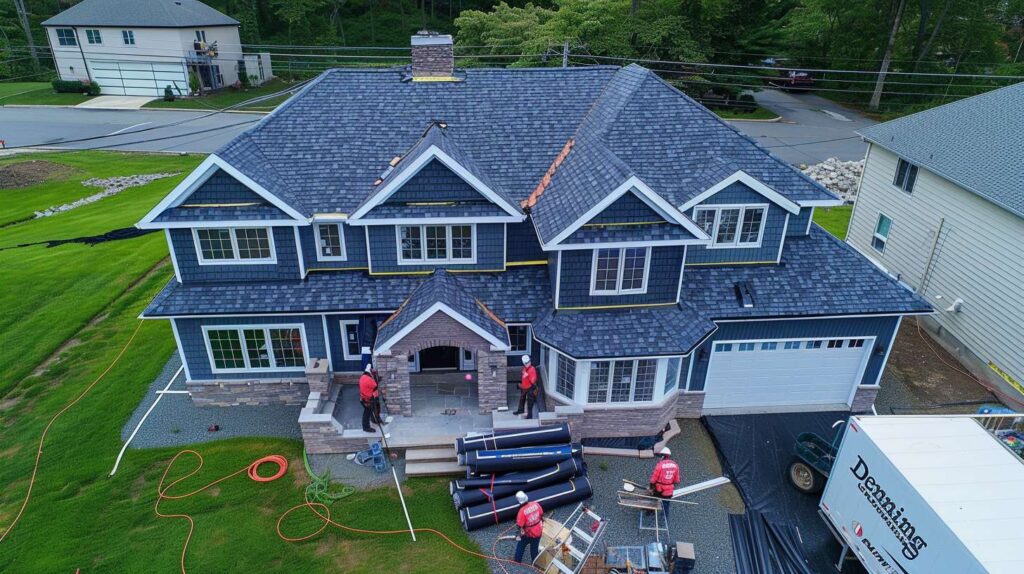
When Repair Makes Sense and When You Need a Full Roof Replacement
The biggest question I get: patch or replace? Here’s the honest breakdown. On a converted warehouse facing the river last spring, the owner called about a leak near the chimney. I found localized damage-flashing had pulled away during winter expansion-contraction cycles, let water under the membrane for maybe two seasons. The EPDM itself was eight years old, still pliable, no widespread cracking. We did a roof leak repair: removed a six-foot section, rebuilt the chimney cricket with proper sloping, installed new EPDM roofing with fully adhered details, and added a storm collar. Cost $1,850. That roof will give another decade of service.
Three blocks away, different story. Mixed-use building off Water Street, twenty-three-year-old modified bitumen over a restaurant. Multiple patches already visible, membrane brittleness across seventy percent of the surface, and here’s the key detail-every time it rained, the leak moved. That’s your warning sign. When water finds multiple entry points or travels unpredictably beneath the surface, spot repairs become expensive guesswork. We did a complete roof replacement with TPO roofing: tore off down to deck, confirmed structural soundness, installed new insulation with tapered system for positive drainage (critical on flat roofs near the water), mechanically attached 60-mil TPO, detailed every penetration, and added a ten-year labor-and-materials warranty. Project cost $18,400 for 1,850 square feet. That’s $9.95 per square foot, which reflects waterfront access challenges and disposal costs in this neighborhood.
The decision matrix I use: roof repair works when damage is localized (under twenty percent of surface), the existing system is under fifteen years old and still performing, and the leak source is identifiable and fixable without compromising surrounding areas. Full roof replacement makes sense when you’re seeing widespread deterioration, the system is past its design life, you’re doing repeat repairs in different locations, or you’re planning other building improvements where staging and access costs can be shared.
What a Real Roof Inspection Covers in Fulton Ferry
A legitimate roof inspection here isn’t a guy with binoculars on the sidewalk. I’m on the roof, on my knees at every transition, checking details most people never see. Start with membrane condition-looking for cracks, blistering, seam separation, ponding water areas. On flat roofing systems, water should clear within 48 hours; if you’ve got permanent ponds, your drainage is inadequate and you’re shortening membrane life by years. Then flashing details: every parapet wall cap, every chimney base, every plumbing vent, every HVAC penetration. In this neighborhood, I’m especially checking for salt-air corrosion on metal components and wind-lifted edges where nor’easters get underneath.
On a historic building converted to condos near the Tobacco Warehouse last fall, the roof inspection revealed something the board hadn’t considered: their tar and gravel roof was actually performing fine structurally, but the parapet wall caps-original copper from 1924-had developed gaps at the solder joints. Water wasn’t coming through the roof membrane; it was coming over the parapet, down the brick, and entering through the top course. The fix wasn’t roof replacement but targeted chimney flashing repair techniques applied to the entire parapet perimeter, with custom fabricated caps that respected the landmarked profile while adding a continuous waterproof barrier underneath. That distinction saved them $40,000.
Here’s what a thorough inspection includes: visual membrane assessment, moisture meter readings to detect trapped water in insulation layers, infrared scanning on larger commercial projects, drainage flow testing, flashing integrity check at every transition, fastener pull tests on mechanically attached systems, core samples if age or condition is uncertain, interior ceiling inspection for staining patterns, and documentation with photos and marked-up plans. For commercial properties, I’m also checking rooftop equipment curbs, conduit penetrations, and any modifications made by HVAC or telecom contractors who may not have properly sealed their work.
| Roofing System | Expected Lifespan (Fulton Ferry Conditions) | Best Application | Typical Cost Per Sq Ft |
|---|---|---|---|
| EPDM Roofing (rubber roof) | 18-25 years | Residential flat roofs, simple layouts | $6.50-$8.75 |
| TPO Roofing | 20-28 years | Commercial buildings, high-traffic roofs | $7.25-$10.50 |
| Modified Bitumen Roofing | 15-20 years | Steep slopes, complex details | $6.00-$8.25 |
| Tar and Gravel Roof | 20-30 years | Historic buildings, protected surfaces | $8.50-$12.00 |
| Asphalt Shingle Roofing | 15-22 years | Pitched residential roofs | $5.50-$8.00 |
| Metal Roofing | 35-50+ years | Architectural features, long-term investment | $12.00-$18.00 |
Flat Roofing Systems and What Works on Waterfront Buildings
Most Fulton Ferry buildings have flat roofs-or more accurately, low-slope roofs with minimal pitch. The membrane choice matters more here than in inland neighborhoods because salt air, thermal cycling from river winds, and UV exposure from unobstructed sun are all working against you. I’ve installed every system, and here’s what I’ve learned actually performs.
EPDM roofing-synthetic rubber membrane, usually black, fully adhered or mechanically attached. It’s flexible, handles movement well, and seams are heat-welded or tape-sealed depending on installation method. For straightforward residential flat roofs without heavy foot traffic or rooftop equipment, it’s reliable and cost-effective. The drawback: black surface absorbs heat, which can increase cooling costs and accelerate aging. On a brownstone conversion on Doughty Street, we installed white EPDM specifically to address heat gain on the top-floor unit. Membrane cost jumped from $6.75 to $8.25 per square foot, but the owner’s said his summer cooling bills dropped twenty percent.
TPO roofing has become my default recommendation for commercial roofing applications and buildings with rooftop access. It’s heat-welded at seams-creating stronger bonds than tape or adhesive-and the white surface reflects sunlight instead of absorbing it. More resistant to punctures than EPDM, which matters when you’ve got HVAC contractors walking around with tools. On a mixed-use building with restaurant exhaust fans, TPO holds up better against grease and chemical exposure than rubber systems. Installation requires more skill-bad welds are a common failure point-but done right, it’s the most durable single-ply option for commercial environments.
Modified bitumen roofing is asphalt-based, reinforced with fiberglass or polyester, applied in multiple layers. It’s tough, puncture-resistant, and works well on slopes where single-ply membranes can be tricky. The torch-down application creates fully adhered coverage with no mechanical fasteners to work loose. I use it for complex roof geometries, areas with heavy equipment loads, and transitions between flat and sloped sections. The multi-layer build gives you redundancy-if the top layer gets damaged, you’ve still got protection underneath. Slightly shorter lifespan than TPO in direct salt-air exposure, but excellent for protected roofs and challenging details.
Traditional tar and gravel roof systems-built-up roofing with multiple felt layers, hot asphalt, and gravel surface-are still common on historic Fulton Ferry buildings. That gravel protects the membrane from UV and provides ballast against wind uplift. When these systems fail, it’s usually at flashing points or from trapped moisture between layers. Many times, especially on landmarked buildings where you can’t change the roofline, the best approach is removing the gravel, repairing or replacing felt layers as needed, and reinstalling gravel over a new flood coat. This preserves the historic appearance while extending performance another twenty years. It’s labor-intensive-gravel removal alone runs $1.50-$2.00 per square foot-but often required by Landmarks Preservation Commission guidelines.
Roof Waterproofing Beyond the Membrane
The membrane is only half the story. Roof waterproofing in Fulton Ferry means controlling water at every vulnerable point-and there are dozens. Parapet walls are the biggest challenge. These vertical walls extend above the roof surface, and the joint where roof meets wall is a constant weak point. Water runs down the brick, pools at the base, and finds any gap in the flashing. Proper detailing means removing old flashing, cleaning and priming the substrate, installing a continuous base flashing that runs up the wall at least eight inches, covering it with metal counter-flashing embedded in brick joints, and sealing everything with compatible sealants that remain flexible through temperature swings.
Chimney flashing repair is similar in principle but more complex in execution. You’ve got four angles where chimney meets roof, each requiring custom-fit step flashing that weaves under shingles or membrane and tucks into mortar joints. On flat roofs, I build a cricket-a small peaked structure on the upslope side of the chimney-to divert water around instead of letting it dam against the masonry. Counter-flashing goes into repointed joints, not surface-mounted with caulk like I see on bad patch jobs. The chimney itself gets a storm collar around the flue and a properly fitted cap. On a townhouse off Old Fulton Street, persistent leaking that three other contractors couldn’t solve turned out to be brick spalling behind the counter-flashing, invisible from above. We had to remove flashing, repoint four courses of brick, rebuild the cricket with proper slope, and reinstall everything as an integrated system.
Skylight installation and skylight repair require thinking about water management in three dimensions. A skylight isn’t just a hole in your roof-it’s a curb that interrupts drainage patterns and creates multiple flashing transitions. New installations get a prefabricated curb when possible, because job-built curbs are common leak points years later. The curb gets fully integrated into the roofing system before the skylight unit goes on-not shimmed and sealed as an afterthought. For repairs, I’m checking the curb flashing first, glazing seals second, and the unit itself third, because most skylight leaks aren’t the skylight. On condos with river views, fixed skylights perform better than operable units in this wind environment. The fewer moving parts and seals, the fewer ways water finds entry.
Emergency Roof Repair and Storm Damage Response
When you need emergency roof repair, you need it now-usually because wind lifted a section of membrane, a tree branch punctured your roof, or a nor’easter found that weak flashing and turned it into a waterfall into your building. I keep materials staged for common emergency scenarios because by the time you’re calling, water is already inside.
Immediate response means temporary stabilization: tarping the affected area, securing loose materials, stopping active water entry. But here’s what matters-that temporary fix needs to last until permanent repair is possible, which might be days or weeks depending on weather, material availability, and access scheduling. I use reinforced tarps, not hardware-store blue poly. Anchor points go into sound substrate, not compromised decking. Edges get sealed to prevent wind from getting underneath. And I document everything with photos and notes because if this is insurance claim roofing, you’ll need evidence of what happened, what was done immediately, and what permanent work is required.
Storm damage repair often reveals pre-existing conditions that contributed to failure. Wind doesn’t randomly rip off a well-installed membrane; it finds edges that weren’t properly adhered, fasteners that were under-driven, or details that were already compromised. On a commercial building after a winter storm, wind had peeled back a fifteen-foot section of TPO along the parapet. Investigation showed the edge termination bar had missing fasteners and the membrane hadn’t been fully welded to the metal. The storm was the trigger, but inadequate installation was the cause. That distinction mattered for the insurance claim-storm damage was covered, installation defects weren’t. We ended up redoing the entire perimeter detail to code, with the insurance covering materials and the building owner covering the labor delta between patch and proper installation.
Wind damage repair and roof leak detection go hand in hand after storms. Sometimes damage is obvious-missing shingles, lifted membrane, displaced flashing. Other times, wind drives water into places it normally wouldn’t reach, and leaks appear far from the actual damage point. I use moisture meters, infrared cameras when needed, and systematic water testing to trace the path. On an asphalt shingle roof near the Brooklyn Bridge, post-storm leaks in the back bedroom didn’t correlate to any visible roof damage. Turned out wind had driven rain up under the shingle edges-a condition called wind-driven rain infiltration-and water tracked along the underlayment to the leak point. The fix was installing a stronger starter course, improving edge sealing, and upgrading to higher wind-rated shingles for the next roof replacement.
Pitched Roof Systems: Shingle and Metal Options
Not every Fulton Ferry building has a flat roof. Townhouses, some conversions, and newer construction have pitched roofs where asphalt shingle roofing and metal roofing are the primary options. Shingle roof installations here face wind and salt exposure that inland roofs don’t see. Standard three-tab shingles don’t hold up-architectural shingles with higher wind ratings are minimum, and I prefer products rated for 130+ mph winds given how nor’easters funnel through this area.
Proper asphalt shingle roofing means more than nailing shingles to felt. It’s an integrated system: ice and water shield along eaves and valleys, synthetic underlayment across the field (better than felt in this humidity), drip edge at every perimeter, valley flashing where roof planes meet, and six-nail pattern on perimeter and high-wind zones. Ridge venting for attic airflow, because trapped heat shortens shingle life. Step flashing at chimneys and walls, integrated with water management. I see too many quick jobs where contractors skip these details-no drip edge, minimal underlayment, four nails per shingle-and the roof fails early. Done right, architectural shingles run $5.50-$8.00 per square foot installed and give you 18-22 years in this environment.
Metal roofing is the premium option-standing seam panels, concealed fasteners, forty to fifty-year lifespan. It’s common on historic buildings where you’re matching existing profiles, and increasingly popular on high-end residential projects for its durability and aesthetics. Metal roof installations cost more up front-$12.00-$18.00 per square foot-but the math works when you factor in longevity and virtually zero maintenance. Copper, zinc, and Galvalume all perform well in salt air if detailed properly. The key is isolation from dissimilar metals (prevents galvanic corrosion), adequate expansion joints (metal moves significantly with temperature), and proper underlayment (some membranes aren’t compatible with metal).
On a Brooklyn Heights townhouse visible from the Promenade, we installed a copper standing seam metal roof to match the historic district character. The existing slate had failed, replacement slate was cost-prohibitive and weight-excessive for the structure, and the Landmarks Commission approved copper as an appropriate alternative. Detailing included custom fabricated valleys, soldered seams at hips and ridges, and concealed snow guards to prevent ice slides. Twenty years from now, that roof will look better than the day we installed it-copper patinas beautifully in this waterfront environment.
Gutters, Drainage, and Water Management Systems
Roofs don’t fail because they get wet-they fail because water doesn’t leave fast enough or goes where it shouldn’t. Gutter installation and gutter repair are critical parts of roof performance, especially on buildings where drainage runs through internal leaders or where neighboring structures create complicated runoff patterns.
On flat roofs, interior drains and scuppers handle primary drainage. I always recommend redundant systems-if your primary drain clogs (and they will, especially near trees or where HVAC equipment sheds debris), you need overflow scuppers that prevent ponding. Scuppers should discharge away from the building, not down the facade where they stain brick and create moisture problems. On a warehouse conversion with rooftop deck, we added secondary scuppers after the primary drains repeatedly clogged with debris from potted plants and foot traffic. Simple addition, $850 per scupper installed, eliminated recurring water ponding issues.
For pitched roofs, gutter installation means properly sized gutters-most residential installations use five-inch K-style gutters, but on large roof planes or high-rainfall areas, six-inch systems move water more effectively. Downspouts should be one per 35-40 feet of gutter, minimum, and they need to discharge at least six feet from the foundation. I see too many installations where downspouts dump right at the building base, creating foundation moisture problems while the roof stays dry. Gutter guards make sense if you’re near street trees-they prevent clogging and reduce maintenance, though they need to be removable for periodic cleaning of the underlying gutter.
Gutter repair is often about fixing poor installation rather than worn-out materials. Gutters that sag or pull away from the fascia weren’t installed with adequate hangers-should be every 24 inches, not 36 or 48 like I commonly find. Leaking seams mean inadequate sealant or thermal expansion issues. End caps that blow off during storms weren’t mechanically fastened, just caulked. On a townhouse off Front Street, the “gutter problem” turned out to be undersized downspouts creating backups that overflowed the gutters during heavy rain. We added a second downspout and upsized from three-inch to four-inch diameter, solving overflow without touching the gutters themselves.
Maintaining Your Investment: Coatings, Cleaning, and Preventive Care
Roof maintenance shouldn’t be an afterthought-it’s how you get design life from your system instead of premature failure. On commercial properties, I recommend biannual inspections with minor repairs addressed immediately, drain and gutter cleaning quarterly if you’re near trees, and a maintenance log that tracks every issue and repair. That documentation becomes valuable when you’re planning the next roof replacement or dealing with warranty claims.
Roof coating systems can extend membrane life on aging but structurally sound roofs. Acrylic, silicone, and polyurethane coatings each have specific applications. For EPDM and modified bitumen showing surface aging but no structural failure, a reflective coating adds 5-8 years of performance while improving energy efficiency. On a commercial building with twelve-year-old EPDM that was brittle but not failing, we applied a silicone roof coating system-cleaned surface, repaired all seams and penetrations, applied primer, then two coats of silicone at manufacturer-specified thickness. Total cost $4.25 per square foot versus $9.50 for full replacement. The owner got eight more years of warrantied performance and reduced cooling costs from the white reflective surface.
Roof sealing is ongoing, not one-time. Sealants around penetrations, at terminations, and in certain flashing applications degrade from UV exposure and temperature cycling. On my inspection checklist, I’m checking every caulk line, every mastic seal, every boot around a pipe. Most need replacement every 5-7 years. It’s a $300-$600 service call that prevents $5,000 leak repairs. I use compatible sealants-not all products work with all membrane types, and using the wrong one can cause more problems than it solves.
Roof cleaning isn’t just aesthetics. Organic growth-moss, algae, lichen-holds moisture against your roofing surface and accelerates deterioration. On asphalt shingles, the dark streaks you see are algae eating the limestone filler in the shingles. Left untreated, it shortens shingle life. Cleaning should be low-pressure with appropriate biocides, never power washing that damages granules or membrane surfaces. On a shingle roof overlooking the park, we do annual soft-wash cleaning with zinc-based treatment that prevents regrowth. The $425 annual service has extended that roof’s life past the twenty-year mark with no replacement plans yet.
Working With Insurance Claims and Choosing the Right Contractor
When storm damage happens, insurance claim roofing has its own process. Document everything before temporary repairs if possible-photos from multiple angles, close-ups of damage, wide shots showing extent. Your insurance adjuster will assess whether damage is covered, but their initial evaluation isn’t always complete. I’ve worked with property owners where the adjuster’s scope missed secondary damage or underestimated repair costs. Getting an independent assessment from a contractor who isn’t trying to win the job-just document actual conditions-provides leverage when negotiating the claim.
The challenge with insurance work is that coverage might pay for minimal repair when comprehensive work is needed. If wind damaged twenty percent of your roof but the other eighty percent is near end-of-life anyway, insurance covers the twenty percent. You’re stuck deciding whether to patch an aging roof or invest your own money to complete a full replacement while you’ve got staging and access already set up. There’s no right answer-it depends on your budget and plans-but understand the decision before work starts, not after when you’ve got a partially new roof that still has old problems in other areas.
Choosing a roofing contractor in Fulton Ferry means finding someone who understands both the technical work and the local constraints-Landmarks requirements, access challenges in dense blocks, disposal logistics, and waterfront conditions that affect performance. Check licensing (NYC requires home improvement contractor license for residential work), verify insurance (both liability and workers comp), and ask for local references you can drive by and see. The lowest bid usually means cut corners-missing underlayment, inadequate fasteners, cheap materials-that you’ll pay for in premature failure.
We’ve been keeping water out of Fulton Ferry buildings long enough to know what works in this specific environment and what fails. Every roof installation, repair, and inspection gets the same attention to detail because that’s what waterfront construction demands. Your building deserves a roof system designed for where it actually sits-not generic solutions, but specific answers to the wind, salt, weather, and structural realities of this neighborhood. When you’re ready to talk about your roof-repair, replacement, or just understanding what you’ve got and what it needs-we’re here to walk through it with you.