
Fiske Terrace’s Premier Roofing Company
Last spring, a homeowner three blocks from Avenue H invested $18,000 in exterior work-cedar trim repair, fresh paint in historically accurate colors, and new double-hung windows to match the originals. But they left the 22-year-old asphalt shingle roof in place, patched twice but “still holding.” One June thunderstorm with sideways rain sent water behind the fascia, into the attic framing, and down two interior walls, peeling paint off plaster that had been perfect three weeks earlier. The roof repair alone cost $3,400; the interior restoration added another $6,200. That’s the expensive lesson about roofing in Fiske Terrace: your roof isn’t just another maintenance item-it’s the structural umbrella that protects every other investment you make in these large, detail-rich homes.
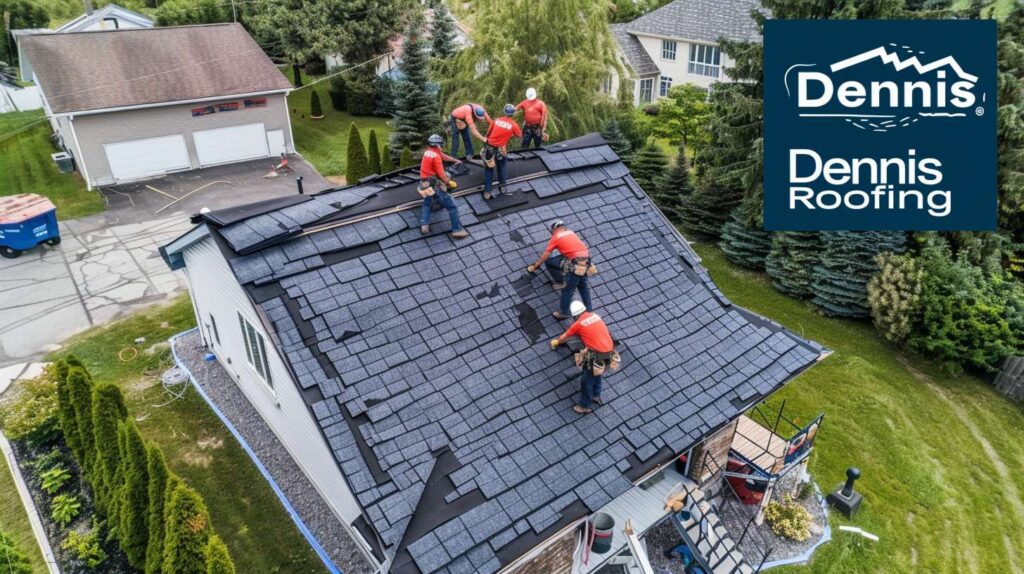
I’m Helen with Dennis Roofing, and I’ve spent the past several years working on roofs across Victorian Flatbush, with concentrated focus on the steep gables, complex valleys, and mature-tree canopies that define Fiske Terrace. What I’ve learned is that roof replacement decisions here aren’t simple-the architecture demands more than commodity thinking, and the stakes are higher when you’re protecting 2,800 square feet of original millwork, plaster, and hardwood underneath.
The Real Decision: Repair, Replacement, or New Roof Installation
Most Fiske Terrace homeowners call when they’re not sure which path makes sense. You’ve got a leak, or a neighbor just replaced their roof, or your home inspector flagged “remaining life” as a concern. The framework I use with clients starts with three questions that actually matter:
How old is the roof, and what shape is the decking underneath? Standard asphalt shingle roofing lasts 22-28 years here-shorter on south-facing slopes with full sun exposure, longer under the big oaks and maples that shade so many blocks. If your roof is past 20 years and you’re addressing one issue, you’re often six months from addressing three more. But age alone doesn’t decide it. When I inspect, I’m pulling up shingles at valleys and checking the plywood or board decking. If the substrate is solid, a roof replacement makes sense. If I find soft spots, water staining, or previous leak damage that compromised structure, we’re into new roof installation territory-tear-off, decking repair or replacement, upgraded underlayment, the full sequence.
Are you planning other exterior work in the next 2-3 years? This one saves people real money. If you’re thinking about a dormer addition, a rear sunroom, new skylights, or even serious gutter and fascia upgrades, roof timing matters. I worked on a home near Glenwood Road where the owners replaced the roof, then 18 months later added a second-floor bathroom dormer. We had to cut into a roof that was barely two years old, patch around new framing, and match shingles that had already weathered differently than the packaged stock. Coordinating roof installation with planned renovations means one scaffold rental, one permit process, and roofing details that tie into new construction cleanly.
What’s the scope of current damage? Targeted roof repair makes sense when the problem is isolated-chimney flashing that’s pulled away from masonry, a valley that’s funneling water under shingles, or storm damage on one slope. Roof leak repair runs $425-$950 for straightforward fixes; chimney flashing repair typically lands between $680-$1,400 depending on access and masonry condition. But when I see multiple leak points, curled shingles across several sections, granule loss that’s exposed the mat, or previous patch-over-patch repairs, I’m honest: you’re spending money to buy time, not to solve the underlying issue. At that point, roof replacement is the structural answer.
Material Choices That Match Fiske Terrace Architecture
The roofing systems I install most often here fall into three categories, each suited to different parts of these homes and different owner priorities.
Asphalt shingle roofing remains the primary choice for steep-pitched main roofs-the big, visible slopes that define curb appeal. I work primarily with architectural-grade shingles (also called dimensional shingles): thicker than three-tab, better wind resistance, and a depth that reads well on these tall roofs when you’re looking up from the street. Installed cost runs $8,200-$14,500 for a typical Fiske Terrace home, depending on roof size, pitch, complexity, and the number of valleys, hips, and dormers. These roofs aren’t simple rectangles-you’re often covering 2,200-3,400 square feet with six or eight slope transitions, and every transition is a place where water concentrates and installation quality matters. Color choice is more important here than in some neighborhoods; I walk clients through how different shades interact with brick color, trim paint, and surrounding tree canopy. A medium gray or weathered wood tone tends to anchor these homes without fighting the original palette.
Metal roofing works beautifully as an accent or on secondary structures-standing seam panels on a bay window roof, metal ridges over dormers, or full metal roof installations on detached garages. I also spec it for low-slope sections where shingles would be marginal. The longevity is real (40-55 years), the wind performance is excellent near the open rail corridor, and it adds a clean, linear detail that complements rather than mimics historic materials. Cost is higher-$14,500-$24,000 for a full roof-but when amortized over lifespan, metal roofing makes financial sense if you plan to stay in the home long-term or want to remove roofing from your maintenance concerns for decades.
Flat roofing systems cover the rear additions, enclosed porches, sunrooms, and single-story extensions that many of these homes have gained over the years. The four systems I install most are TPO roofing (white membrane, heat-welded seams, excellent UV resistance), EPDM roofing (black rubber, very durable, lower cost), modified bitumen roofing (torch-down or cold-applied, good for small areas with detail work), and occasionally tar and gravel roof systems when matching an existing historic application. Each has trade-offs. TPO reflects heat and stays cooler, which matters on a sunroom roof in July. EPDM is tough, proven, and costs $1,800-$3,200 less on an average installation. Modified bitumen handles penetrations and transitions well-I use it around roof hatches, HVAC curbs, and complex parapet conditions. Flat roof installation cost for a typical 450-square-foot section runs $3,400-$6,200 installed, with lifespan in the 18-25 year range depending on system and maintenance.
Roof Inspection and the Details That Prevent Bigger Problems
I do roof inspections two ways: pre-purchase (when buyers need to understand condition and remaining life before closing) and maintenance-focused (when homeowners want to catch small issues before they become leak calls). Both involve getting onto the roof, not just looking from a ladder. On a steep Fiske Terrace roof, that means proper equipment, fall protection, and enough time to check the places where problems actually start.
The inspection covers shingle condition across all slopes, but the real value is in the details. I’m checking every chimney-how the flashing ties into masonry, whether the counterflashing is still embedded in mortar joints, if there’s any step-flashing failure where the chimney meets the slope. Chimney flashing repair is one of the most common roof leak sources I see, and it’s almost always fixable for $680-$1,150 before it turns into interior water damage. I’m walking every valley, looking for granule accumulation, shingle erosion, or underlayment exposure. Valleys handle huge water volume, and when they fail, they send water straight into the attic at the most structurally critical part of the roof frame.
Ventilation gets checked-soffit intake, ridge exhaust, gable vents-because inadequate attic airflow shortens shingle life, promotes ice damming in winter, and creates moisture issues that rot decking from below. And I’m looking at all the penetrations: plumbing vents, kitchen and bath exhaust terminations, old antenna mounts. Every hole in the roof is a potential entry point, and the rubber boots and flashing collars that seal them don’t last as long as the surrounding shingles. A $240 roof maintenance visit that replaces four worn pipe boots saves you from a $1,400 roof leak repair and drywall restoration later.
When Skylight Installation Makes Sense (And When It Doesn’t)
I get asked about skylights regularly, especially in homes where the second floor feels dark under that deep roof and mature tree cover. Skylight installation is absolutely doable-I’ve added them to primary bathrooms, hallways, and stairwells where they transform spaces. Installed cost runs $2,100-$3,800 per unit including flashing, interior finishing, and shade options. But I’m careful about placement.
Skylights perform best on north-facing or east-facing slopes where you get consistent light without the heat load of western summer sun. They need to be located away from valleys where water and debris concentrate. And they require flashing details that integrate with your roof system-cutting into an existing asphalt shingle roof for skylight installation means disturbing the surrounding shingles, adding new flashing, and creating transitions that need to be perfect because water will test them every rain. On homes where I’m already doing a roof replacement, adding skylights is straightforward; the flashing ties into new underlayment and shingles in one continuous installation. On roofs that still have 8-12 years of life, I sometimes recommend waiting unless the light issue is urgent, because you’ll be cutting into that roof again when replacement comes.
Skylight repair is a different conversation. Leaking skylights are often a flashing issue, not a skylight failure-the unit is fine, but the metal and membrane that ties it into the roof has separated or degraded. That repair runs $580-$1,150 depending on access and how much surrounding roofing material needs to be lifted. Occasionally the skylight itself has failed-cracked acrylic, broken seal on a double-glazed unit, damaged operator on an operable model-and then you’re looking at skylight replacement, which costs nearly as much as new installation because the labor is identical.
Gutters, Downspouts, and Water Management Under Tree Canopy
Fiske Terrace roofs shed a lot of water into gutters that work harder than average because of the tree cover. Those beautiful mature oaks and maples drop leaves, seed pods, twigs, and organic debris that clogs gutters and downspouts multiple times per year. I’ve seen functional roofs cause foundation problems because the gutter system couldn’t handle the volume or became so clogged that water overflowed behind the fascia.
Gutter installation here means planning for capacity and maintenance access. I install 6-inch gutters as standard (not 5-inch) because the roof area and tree load demand it. Downspouts get sized and positioned to move water away from foundations-on many of these homes, that means underground drains that carry runoff to the street or rear yard drains, not just splash blocks at grade. Gutter guards or screen systems make sense if you’re not going to commit to twice-annual cleaning; they don’t eliminate maintenance, but they reduce frequency and prevent the complete blockages that cause overflow damage. Installed cost for full gutter replacement on a typical home runs $2,400-$4,200 depending on linear footage, number of downspouts, and underground drain work.
Gutter repair is often about reattaching sections that have pulled away from the fascia (common after ice loading or when brackets fail), replacing end caps and outlets that have cracked, or re-sloping sections that have sagged and now pond water. Those repairs run $280-$680 for typical issues. But if I’m looking at gutters that are dented, seam-split in multiple places, or original to a 40-year-old roof, I usually recommend replacement rather than incremental repair-you’ll spend half the replacement cost over three years of patching, and you’ll still have old gutters.
Emergency Roof Repair and Storm Damage
Storm damage repair calls come after high winds, heavy snow load, falling branches, or the occasional full tree failure. Wind damage repair is most common-lifted shingles, blown-off ridge caps, or entire sections compromised when wind gets under a starter course or at a rake edge. Emergency roof repair means temporary tarping and securing, then permanent repair once weather allows and materials arrive.
What homeowners need to know: document everything before you touch anything (if it’s safe to do so). Photograph the damage from multiple angles, photograph the surrounding context, and photograph any interior water intrusion. Your insurance claim depends on clear evidence of what happened and what needs repair. I work with adjusters regularly, and the claims that process smoothly are the ones where the homeowner has good documentation and gets a detailed estimate that separates storm damage from pre-existing wear.
Insurance claim roofing can be straightforward or complicated depending on your carrier, your policy terms, and the age of your roof. Some policies cover full replacement cost; others depreciate based on age and only cover actual cash value until the work is complete. I provide estimates that break out storm damage repairs separately from any underlying roof issues we discover-that clarity helps adjusters understand what’s claim-related and what’s deferred maintenance. For significant damage, roof replacement through insurance often makes more sense than patching a compromised roof, but that’s a decision that involves your adjuster, your policy language, and an honest assessment of remaining roof life.
Commercial Roofing for Mixed-Use and Small Buildings
While most of my Fiske Terrace work is residential, I also handle commercial roofing for the small apartment buildings and mixed-use properties scattered through the neighborhood. Commercial roof repair and flat roof installation on these buildings follows different standards-more stringent code requirements, different warranty structures, and materials chosen for longevity and low maintenance rather than aesthetics.
TPO roofing and EPDM are the primary systems I install on commercial flat roofs. Both offer 15-20 year warranties when installed to manufacturer specs, both handle foot traffic for HVAC maintenance, and both are repairable if you get localized damage. Commercial roof repair often involves infrared scanning for moisture in the roof assembly, core cuts to check insulation condition, and targeted removal of wet sections before installing new membrane. Cost runs higher per square foot than residential-$7.50-$12.50 installed depending on system, insulation requirements, and parapet/flashing complexity-but the installations are engineered, permitted, and documented differently because building departments and insurance carriers require it.
Roof Maintenance, Coating, and Extending Lifespan
Roof maintenance is the service that saves money over time but gets skipped because it’s not urgent until something breaks. I recommend annual or biannual inspections depending on roof age and tree cover. A maintenance visit includes debris removal (especially in valleys and behind chimneys), minor sealant repairs, checking and resealing pipe boot collars, clearing gutters, and documenting condition so you can track changes year to year.
Roof coating makes sense on certain flat roof systems as they age. A coating system-typically acrylic or silicone applied over cleaned, prepped EPDM or modified bitumen-can add 5-8 years of service life to a roof that’s functionally sound but showing surface wear. Cost runs $2.80-$4.50 per square foot depending on coating type and prep work required. It’s not a fix for structural problems, and it doesn’t work on torn or badly degraded membranes, but on a 14-year-old EPDM roof that’s intact but weathered, roof sealing and coating can defer replacement and spread your capital expenses more strategically.
Roof cleaning gets requested occasionally, usually when algae staining (those black streaks on north-facing slopes) becomes noticeable. I use low-pressure methods with algaecide treatment-never high-pressure washing, which damages shingles and voids warranties. Cleaning costs $650-$1,150 for a typical roof and improves appearance, but it doesn’t extend functional life. It’s an aesthetic choice, not a maintenance necessity.
Roof Waterproofing and Leak Detection
Roof leak detection starts with tracing water backward from where it appears inside. Water travels-it enters the roof assembly at one point, runs along rafters or sheathing, and emerges somewhere else entirely. I’ve found leak sources 12 feet upslope from where water dripped into a bedroom. Roof leak repair depends entirely on accurate detection; fixing the wrong spot wastes money and leaves the problem active.
My process combines visual inspection (looking for obvious failures), water testing (running a hose on suspected areas while someone watches inside), and occasionally infrared scanning on flat roofs where moisture is trapped in the assembly but the entry point isn’t obvious. Once identified, roof waterproofing involves repairing the breach and often improving the surrounding details-adding Ice & Water Shield membrane in a problem valley, upgrading flashing at a dormer, or rebuilding a chimney cricket that was undersized and funneling water into the roof-to-wall transition.
Roof waterproofing as a preventive measure means adding protection in vulnerable areas before they leak. On reroof projects, I extend Ice & Water Shield coverage beyond code minimum-full valley coverage, eaves to 3-6 feet inside the wall line (depending on overhang and ice dam history), and around all penetrations. It adds $480-$820 to project cost and prevents 80% of the leak calls I would otherwise get in years 8-15 of the roof’s life.
Cost Summary and Planning Your Roofing Project
| Service | Typical Cost Range | Notes |
|---|---|---|
| Roof Inspection | $200-$425 | Comprehensive; waived if repair/replacement proceeds |
| Roof Leak Repair | $425-$950 | Isolated issues; cost increases with access difficulty |
| Chimney Flashing Repair | $680-$1,400 | Depends on masonry condition and number of chimneys |
| Asphalt Shingle Roof Replacement | $8,200-$14,500 | Typical Fiske Terrace home; varies with size and complexity |
| Metal Roof Installation | $14,500-$24,000 | Standing seam; full roof; includes substrate prep |
| Flat Roof Installation (TPO/EPDM) | $3,400-$6,200 | Typical 400-500 sq ft addition or porch roof |
| Skylight Installation | $2,100-$3,800 | Per unit; includes flashing and interior finish |
| Gutter Installation | $2,400-$4,200 | Full system; 6-inch gutters with underground drains |
| Gutter Repair | $280-$680 | Reattachment, end caps, minor sections |
| Emergency Roof Repair | $550-$1,800 | Temporary securing and weatherproofing; permanent repair separate |
| Roof Coating (flat roofs) | $2.80-$4.50/sq ft | Extends life 5-8 years on sound substrate |
| Roof Maintenance Visit | $240-$420 | Annual/biannual; includes minor repairs and documentation |
Working With Dennis Roofing in Fiske Terrace
Every roofing project here starts the same way: I come out, get on the roof, and give you an honest assessment of what you’re working with and what your options are. No pressure, no scare tactics, just clear information about condition, remaining life, repair costs versus replacement costs, and how different choices play out over 5, 10, and 20 years. You’ll get a written estimate that breaks down materials, labor, and timeline, with options if there are legitimate choices to consider.
The work itself is scheduled around weather, material lead times, and your needs-roof installation disrupts your home less than you’d think (most projects are 2-4 days), but I coordinate timing if you’re doing other work or need to plan around travel. Permits get pulled where required, inspections get scheduled, and you get documentation and warranty information in a folder when we’re done, not six weeks later after you’ve called twice.
What I care about most is that the roof performs-that it keeps water out, lasts as long as the materials and installation should allow, and looks appropriate on your home. These are important houses in a neighborhood that people choose intentionally. The roof is a big part of protecting that investment, and getting it right matters.
If you’re dealing with a leak, planning a replacement, or just want to know where you stand, call Dennis Roofing. We’ll figure it out together.