
Farragut Houses Roof Installation & Repair Services
It’s mid-July, 4 PM on a Thursday, and a fast-moving summer thunderstorm dumps two inches of rain across the Farragut Houses in less than forty minutes. Water sheets across the flat roof of a mid-rise tower, pools in low spots around old drain guards, and finds its way into a hairline crack in the modified bitumen membrane near a vent stack. Twenty minutes later, a resident on the eighth floor watches water drip from her bedroom ceiling, darkening the paint in widening circles. That’s the chain reaction we interrupt at Dennis Roofing: by the time you see water inside, the roof has been failing for weeks or months, and every day without proper roof repair or roof replacement means more damage below.
I’m Corey, and I’ve spent fifteen years in roofing and waterproofing, starting as a maintenance tech on large multifamily complexes much like Farragut Houses. I know the reality of these buildings-massive flat roof systems, shared drainage networks, constant foot traffic from HVAC techs and antenna crews, and the challenge of coordinating work around hundreds of residents who need uninterrupted service. When you’re dealing with roof leak repair or planning a new roof for a tower or low-rise community building here, the approach has to be realistic, not textbook.
The Real Problem: Patched Roofs That Keep Failing
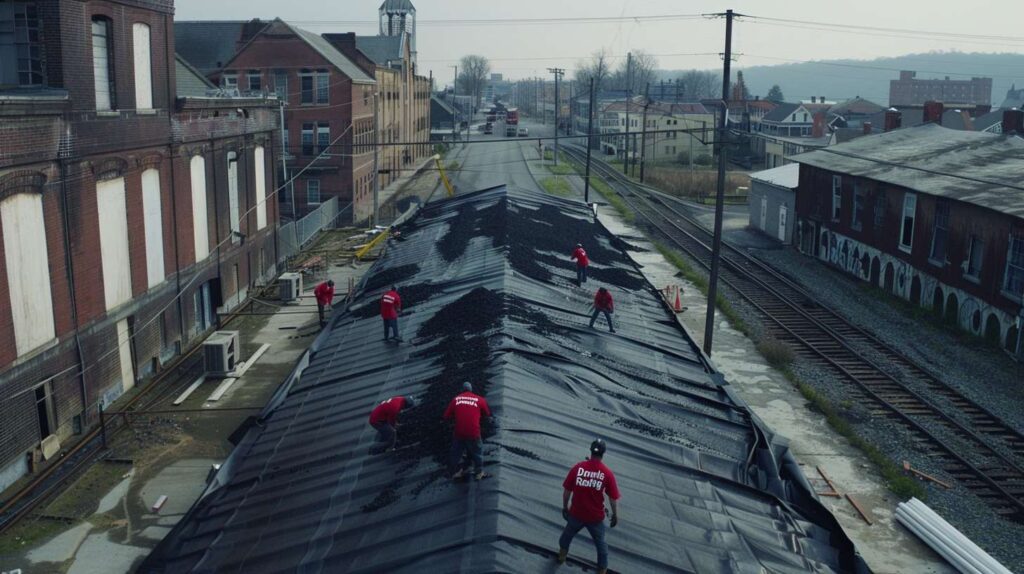
The biggest issue I see on Farragut-scale properties isn’t catastrophic blow-offs or total roof collapse. It’s chronic, recurring leaks on large flat roofs that have been patched repeatedly instead of properly diagnosed and repaired. On one Farragut tower roof I inspected in 2022, the maintenance team had applied fourteen separate patch jobs over three years-tar patches, fabric reinforcements, roof cement slathered around vents-but the leaks kept coming back. The problem wasn’t bad luck. It was that nobody had done a proper roof inspection to find where water was actually entering, how it was traveling under the membrane, and whether the base layers were saturated and failing.
Here’s what happens: water gets under a seam or flashing. It doesn’t drip straight through. It travels horizontally across insulation or substrate, sometimes fifteen or twenty feet, until it finds a penetration or weak spot and drops into the building. You patch where you see the problem, but the entry point is somewhere else entirely. That’s why roof leak detection on flat roofing systems requires walking the entire roof surface, checking every seam, flashing, drain, vent, and transition point, and understanding how water moves across the system during heavy rain.
When Dennis Roofing evaluates a roof at Farragut Houses, we’re looking at several critical factors: membrane condition and age, ponding water areas that don’t drain within 48 hours, flashing integrity around parapets and bulkheads, drainage capacity and blockages, substrate condition under the membrane, and whether previous repairs were done correctly or just masked symptoms. We document everything with photos, measurements, and written notes so property managers and boards can make informed decisions about targeted roof repair versus full roof replacement.
Roof Repair vs. Roof Replacement: Making the Right Call
Not every leaking roof needs total replacement. If the membrane is ten years old, shows isolated damage from a recent storm, and the substrate is dry and sound, targeted roof repair can add five to eight more years of service life. That’s a $12,000 to $18,000 repair on a 4,000-square-foot low-rise building versus $85,000 to $110,000 for complete flat roof installation with new insulation and membrane.
But here’s where property managers get burned: deferring necessary replacement by doing repeated small repairs on a roof that’s fundamentally finished. If the membrane is twenty-plus years old, shows widespread cracking and separation, has ponding water in multiple areas, or the insulation underneath is wet and compressed, patches won’t hold. You’re throwing money at a system that can’t perform anymore. We’ve seen buildings spend $30,000 over three years on emergency roof repair callouts, only to end up replacing the roof anyway-and now the interior damage is worse and more expensive to fix.
The decision framework we use: if repairs would cost more than 35-40% of replacement cost, or if the roof is within three years of its expected service life, replacement is usually the smarter financial move. If the roof is mid-life and damage is localized, repair it properly and plan for replacement in your capital budget for three to five years out.
| Roofing System | Typical Service Life | Best For | Cost Range (per sq ft installed) |
|---|---|---|---|
| Modified Bitumen | 18-22 years | High-traffic roofs, Farragut tower buildings | $6.50-$9.00 |
| EPDM (rubber roof) | 20-25 years | Low-maintenance, cost-effective flat roofs | $5.75-$7.50 |
| TPO Roofing | 20-30 years | Energy efficiency, reflective surface | $7.00-$9.50 |
| Tar and Gravel | 20-25 years | Older Farragut buildings, heavy-duty protection | $7.50-$10.00 |
Flat Roofing Systems at Farragut Houses
Most roofs at the Farragut Houses are flat or low-slope systems, which means they rely on membrane waterproofing rather than gravity drainage like a shingle roof. The most common systems we see and install are modified bitumen roofing, EPDM roofing (rubber), TPO roofing, and older tar and gravel roofs. Each has advantages depending on building use, budget, and long-term plans.
Modified bitumen is my go-to recommendation for high-traffic roofs-buildings where maintenance crews, HVAC contractors, and antenna technicians are constantly accessing the roof. It’s a multi-layer system with a tough, puncture-resistant surface that holds up to foot traffic and equipment placement. We torch-apply or cold-adhesive the layers depending on fire code and building conditions. The seams are heat-welded, creating a fully bonded, watertight system. It’s durable, repairable, and performs well in Brooklyn’s freeze-thaw cycles. Cost typically runs $6.50 to $9.00 per square foot installed, including tear-off of old roofing and new insulation if needed.
EPDM roofing-the black rubber membrane you see on many commercial and multifamily buildings-is cost-effective and reliable. It’s installed in large sheets with seams bonded using tape or liquid adhesive. EPDM is flexible in cold weather, resists UV degradation, and is straightforward to repair if punctured. It’s a solid choice for lower-budget projects or buildings where reflectivity isn’t a priority. We install mechanically fastened or fully adhered systems depending on wind exposure and deck type. Installed cost is typically $5.75 to $7.50 per square foot.
TPO roofing has become increasingly popular for its energy efficiency. The white reflective surface reduces cooling costs in summer, which matters on large buildings with flat roofs absorbing direct sun all day. TPO seams are heat-welded like modified bitumen, creating strong, watertight bonds. It’s more expensive than EPDM but offers better performance in high temperatures and direct sunlight. We’re seeing TPO specified more often in capital improvement projects where energy rebates or LEED considerations are in play. Cost is $7.00 to $9.50 per square foot installed.
Older buildings sometimes still have tar and gravel roofs-built-up roofing (BUR) with multiple layers of asphalt and reinforcing fabric, topped with gravel for UV protection and fire resistance. These roofs are heavy, durable, and long-lasting if properly maintained, but they’re harder to inspect (the gravel hides problems) and more labor-intensive to repair. When a tar and gravel roof reaches the end of its life, we often recommend transitioning to a modern single-ply system unless there are specific reasons to stick with BUR.
Shingle Roofs, Metal Roofing, and Low-Rise Buildings
While most of the Farragut Houses complex consists of flat-roof towers, there are community buildings, offices, and attached low-rise structures with sloped roofs. These typically use asphalt shingle roofing or occasionally metal roofing, and they have different maintenance and replacement needs.
Asphalt shingle roofs last 20 to 30 years depending on quality and exposure. We see failures from wind damage (shingles blown off during storms), granule loss (roof looks bare and weathered), and cracking from age and UV exposure. Shingle roof replacement is more straightforward than flat roofing but still requires careful flashing work around chimneys, vents, and walls to prevent leaks. On a typical 2,000-square-foot community building, expect to pay $8,000 to $14,000 for complete roof replacement with architectural shingles, new underlayment, and updated flashings.
Metal roofing is less common at Farragut but occasionally specified for its longevity (40-50 years) and low maintenance. Standing seam metal roofs shed water and snow efficiently, resist wind and impact damage, and work well on buildings with environmental exposure. They’re more expensive upfront-$12 to $16 per square foot installed-but the lifecycle cost is competitive when you factor in longevity and minimal roof maintenance.
Emergency Roof Repair and Storm Damage
Brooklyn weather is unpredictable. Summer thunderstorms bring heavy rain and wind gusts over 50 mph. Winter nor’easters drop wet, heavy snow that can overload drains and create ice dams. When storm damage repair is needed, response time matters. Water doesn’t wait for a scheduled appointment.
Dennis Roofing provides emergency roof repair service for critical leaks and storm damage. That means temporary waterproofing-tarping damaged areas, clearing blocked drains, sealing opened seams-to stop water intrusion immediately, followed by permanent repairs once conditions allow. On a Farragut tower after a summer storm in 2023, we had a crew on-site within four hours to tarp a section where wind had lifted membrane around a rooftop HVAC unit. The temporary fix kept water out of twelve apartments below while we scheduled the permanent roof repair work the following week.
For wind damage repair, we document everything with photos and measurements because many property managers file insurance claim roofing to cover storm-related damage. We provide detailed reports, material lists, and cost breakdowns to support claims. Insurance adjusters want to see evidence that damage was sudden and accidental, not the result of deferred maintenance, so proper documentation makes a difference in claim approval and payout.
Roof Waterproofing, Flashings, and Penetration Details
Most roof leaks on flat roofing systems don’t happen in the field of the membrane-the big open areas. They happen at transitions, penetrations, and flashings: where the roof meets a parapet wall, around vent pipes, at HVAC curbs, along expansion joints, and where drains pass through the deck. Roof waterproofing is only as good as its details.
Chimney flashing repair is a common issue on low-rise buildings with masonry chimneys. The flashing-metal or membrane pieces that seal the gap between chimney and roof-deteriorates from heat, UV exposure, and movement. When it fails, water runs down inside the building along the chimney. Proper repair involves removing old flashing, cleaning and prepping the masonry and roof surface, and installing new counterflashing that’s mechanically attached and fully sealed. On chimneys still in use, we coordinate with heating contractors to ensure flue clearances and fire code compliance.
Vent pipes, soil stacks, and conduit penetrations need proper boots or flashing collars that seal tightly and flex with building movement. We see a lot of failures where someone used roof cement and a piece of sheet metal instead of the right flashing component-it might last two years, but it’s not a permanent fix.
On flat roofs with parapets (the low walls around the roof edge), the parapet flashing is critical. Water running down the parapet interior needs to be directed back onto the roof surface where it can drain properly. If the flashing is damaged, separated, or improperly installed, water gets into the wall assembly and eventually into the building. We replace parapet flashings as part of most roof replacement projects, using mechanically fastened metal or fully adhered membrane flashings depending on the system.
Skylights, Gutters, and Roof Access Components
Skylight installation and skylight repair come up on community buildings, offices, and residential low-rises where natural light is valued. Skylights are inherently tricky-you’re cutting a hole in the roof and relying on flashing and sealant to keep water out. We see failures from improper flashing, condensation issues, cracked glazing, and deteriorated seals. When installing new skylights, we use curb-mounted units with integrated flashing systems designed for the roof type. For repairs, we evaluate whether re-flashing and sealing will solve the problem or if the unit needs replacement. A leaking twenty-year-old skylight with fogged glazing and cracked plastic is usually not worth repairing-replacement with a modern, energy-efficient unit is the better investment.
Gutter installation and gutter repair matter on sloped-roof buildings and at roof edges where water needs to be directed away from building foundations and entrances. Clogged gutters cause water to back up under shingles or overflow and saturate walls. We clean, repair, or replace gutters as part of roofing projects, ensuring downspouts discharge away from the building and that gutter slope allows proper drainage. On larger buildings, we sometimes install gutter guards to reduce maintenance frequency.
Roof Maintenance, Coatings, and Extending Service Life
A new roof is an investment-$85,000 to $250,000+ for a large building depending on size and system. Protecting that investment with regular roof maintenance makes financial sense. We recommend annual or semi-annual inspections where we walk the roof, clear drains, check flashings, reseal minor gaps, and document conditions. Catching small issues early-a loose seam, a cracked boot, a clogged drain-prevents them from becoming major leaks and expensive repairs.
Roof coating can extend the life of an aging but still-functional roof by five to ten years. We apply elastomeric or acrylic coatings to EPDM, modified bitumen, or metal roofs to restore waterproofing, improve reflectivity, and seal minor cracks and surface deterioration. It’s not a solution for roofs with structural problems, saturated insulation, or major damage-but for a roof at year fifteen of a twenty-year lifespan with minor wear, coating is a cost-effective way to delay replacement and buy time for capital planning. Roof sealing with coating typically costs $2.50 to $4.50 per square foot, far less than replacement.
Roof cleaning is sometimes necessary to remove debris, algae, or biological growth that can degrade membrane surfaces and hold moisture. On flat roofs, we clear drains and sweep surfaces to prevent ponding and premature wear. On shingle roofs, algae staining is mostly cosmetic but can be cleaned if appearance matters.
Commercial Roofing and Complex Project Coordination
Working at the Farragut Houses means understanding commercial roofing logistics-large-scale projects where coordination, safety, and minimal disruption are critical. We’re not replacing a single-family home roof in a day. We’re working on buildings with occupied apartments below, shared mechanical systems, limited crane and material access, and strict safety requirements.
Commercial roof repair and flat roof installation projects require planning: material staging areas where trucks can deliver without blocking access, crane or hoist schedules for lifting materials to the roof, safety barriers and tie-off points for crews, and communication with building management so residents know when work is happening, what to expect for noise and access restrictions, and how long the project will take.
We’ve done multi-phase projects where we replace one section of a tower roof at a time to avoid disrupting HVAC or elevator equipment, keeping systems operational while work proceeds. On one low-rise community building, we coordinated roof replacement around a summer camp program, working weekends and early mornings to avoid disrupting activities. That level of flexibility is standard for Dennis Roofing on occupied buildings-we adapt the work schedule to your operational needs, not the other way around.
Why Roof Leak Detection Matters Before Any Repair
I keep coming back to this because it’s where most roofing problems start: jumping to a solution without proper diagnosis. Roof leak detection isn’t just walking around looking for obvious holes. It’s understanding building construction, water behavior, weather patterns, and roofing systems well enough to trace a leak back to its source even when the visible damage is twenty feet away.
On flat roofs, we use electronic leak detection equipment when necessary-low-voltage systems that can pinpoint breaches in the membrane even under gravel or pavers. We perform flood testing in suspect areas, sealing drains and filling sections with water to see where it penetrates. We inspect from inside the building, looking at ceiling stain patterns and attic spaces to understand water travel paths. And we correlate leak reports with weather events-if leaks only happen during wind-driven rain from a certain direction, that tells us to focus on wall flashings and parapet details on that exposure.
This diagnostic work happens before we quote repair costs or start tearing into the roof. It’s the difference between a $2,500 targeted repair that solves the problem and a $15,000 exploratory project that still leaves you with leaks.
Working with Dennis Roofing at Farragut Houses
When you call Dennis Roofing for service at the Farragut Houses, here’s what happens. We schedule a site visit to inspect the roof, document conditions, and discuss your concerns-active leaks, planned capital projects, insurance claims, whatever brought you to pick up the phone. We provide a written assessment with photos, explaining what we found, what needs immediate attention, what can be deferred, and realistic cost ranges for repair or replacement options. No pressure, no upselling-just clear information so you can make the right decision for your building and budget.
If you move forward with work, we handle permits, coordinate with building management, order materials, and schedule crews. We communicate throughout the project-what’s happening each day, any unexpected conditions we encounter, weather delays, completion timeline. When the work is done, we walk the roof with you to review what was completed, provide warranty documentation, and discuss maintenance recommendations to protect your investment.
That’s how roofing should work on a complex like Farragut Houses: clear communication, realistic planning, quality work, and accountability from start to finish. If your building needs roof inspection, roof repair, roof replacement, or help with a chronic leak that nobody’s been able to solve, we’re ready to figure it out and get it fixed right.