Expert Roofers Serving East Williamsburg
If the next heavy rain hit East Williamsburg tonight, are you confident your roof would keep your tenants, gear, or artwork dry? Most owners of converted lofts, mixed-use buildings, and renovated industrial spaces along Johnson, Grand, and Metropolitan aren’t quite sure-because the flat roofs and patched shingle systems above them have been worked on, covered over, and Band-Aided too many times to count. A reliable roofer who actually understands how older East Williamsburg buildings behave-where water travels on a slightly-pitched flat roof, how party walls trap moisture, what happens when skylights and rooftop decks meet old tar and gravel-is as critical as any contractor you’ll ever hire.
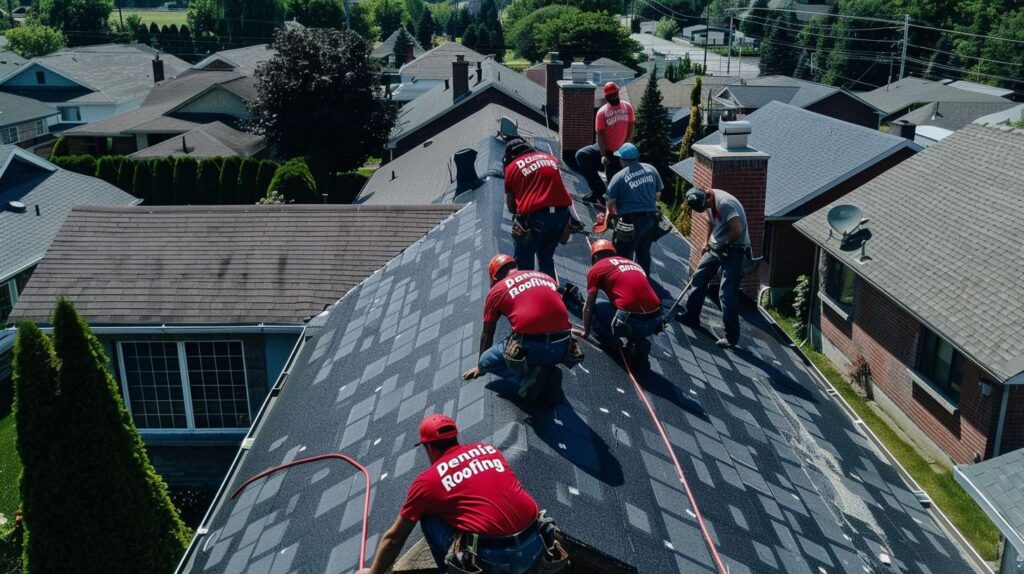
Dennis Roofing has been handling roof repair, roof replacement, and new roof installation across East Williamsburg for over a decade, working on everything from ground-floor shops with apartments above to full warehouse conversions with skylights, rooftop mechanicals, and shared parapets. We specialize in flat roofing systems-EPDM roofing, TPO roofing, modified bitumen roofing, and tar and gravel roof conversions-as well as roof leak detection, roof waterproofing, and the kind of preventive roof maintenance that keeps buildings dry between major projects.
The Biggest Roofing Challenge in East Williamsburg: Aging Flat Roofs on Converted Buildings
East Williamsburg wasn’t built as residential-it was rail-side industrial, warehouse and factory space that’s been converted, subdivided, and re-imagined over the past twenty years. The roofs reflect that history. You’ve got original tar and gravel roofs from the 1960s patched with rubber, hot-mopped modified bitumen laid over failing EPDM, skylights cut into membranes that were never designed for them, and rooftop decks sitting on deteriorating flashing.
On a four-story converted loft building off Johnson Avenue last year, we found three separate roof systems stacked on top of each other-the original tar and gravel, a layer of modified bitumen from the early 2000s, and a peel-and-stick rubber membrane someone applied five years ago that was already bubbling and cracking. Water was traveling sideways under all three layers, leaking into two different apartments and a ground-floor ceramics studio. The owner had paid for “roof repair” twice in three years, but no one had actually pulled back the layers to see what was happening underneath.
That’s the core issue: you can’t make good roofing decisions-whether you need targeted repair, a full roof replacement, or a completely new roof installation-without understanding what you’re actually working with.
How to Decide: Roof Repair vs. Roof Replacement vs. New Roof Installation
The question I hear most often is “Can’t we just patch it?” and the honest answer is: sometimes yes, often no, and it depends entirely on what’s underneath and how long you need the fix to last.
Roof repair makes sense when you have a newer system (under 10 years), a clearly localized problem-a skylight flashing failure, a punctured membrane from rooftop equipment, a seam separation around a parapet-and the surrounding roof material is still in good condition. Emergency roof repair after storm damage or wind damage repair often falls into this category: fix what broke, leave what’s working.
Roof replacement is what you need when the existing membrane or shingle roof is failing broadly-cracking, ponding water, widespread blistering, loss of granules on asphalt shingle roofing, or a flat roof that’s simply reached the end of its 15- to 25-year lifespan. Replacement means removing the old system down to the deck (and sometimes replacing damaged decking), then installing a brand-new membrane or shingle layer with proper insulation, drainage, and flashing.
New roof installation is the term we use for buildings getting their first modern roofing system-a gut-renovated warehouse that never had a proper membrane, an addition being built onto an existing structure, or a situation where you’re changing roof types entirely (say, from a failing tar and gravel roof to a single-ply TPO roofing system with tapered insulation for better drainage).
On a three-story mixed-use building near Graham Avenue, the owner called us for what he thought was a small roof leak repair-water staining in a top-floor bedroom. Our roof inspection revealed the 20-year-old EPDM roofing membrane was shrinking away from every parapet and penetration, the seams were failing in a dozen places, and the plywood decking under two corners was soft with rot. We ended up doing a full roof replacement with new TPO roofing, tapered insulation to eliminate ponding, and rebuilt parapet flashing. Cost was higher than a patch, but that building is now good for another twenty years.
Roof Inspection: The Only Way to Know What You’re Dealing With
A real roof inspection is not someone glancing up from the sidewalk or spending five minutes on the roof with a phone camera. It’s a methodical walk of the entire surface-checking every seam, flashing detail, skylight curb, gutter connection, and parapet cap-combined with an interior check for staining, soft spots, and ventilation issues.
For flat roofing systems in East Williamsburg, we’re specifically looking for:
- Ponding water that sits more than 48 hours after rain (a sign of inadequate slope or sagging decking)
- Membrane shrinkage, cracking, or loss of surface coating
- Open or separated seams (especially on EPDM or TPO roofing)
- Blistering or delamination in modified bitumen roofing
- Deteriorated flashing around chimneys, skylights, vents, and rooftop mechanicals
- Parapet wall and party wall condition-cracked masonry, missing caps, or failed through-wall flashing
- Gutter and scupper function (clogs cause water backup and membrane stress)
- Evidence of previous repairs and whether they’re holding
On shingle roofs-less common in East Williamsburg’s industrial core but standard on nearby townhouses and smaller residential buildings-we’re checking granule loss, curling or cupping shingles, exposed or loose nails, deteriorated valley flashing, and the condition of chimney flashing and ridge vents.
We provide written reports with photos, a condition rating, and a clear recommendation: repair now, plan for replacement in 2-3 years, or replace immediately. No guesswork, no upselling-just what the roof actually needs.
Flat Roofing Systems: EPDM, TPO, Modified Bitumen, and Tar and Gravel
Flat roofs dominate East Williamsburg, and choosing the right system for your building depends on budget, building use, roof access, and how long you plan to own the property.
EPDM roofing (rubber membrane) is durable, cost-effective, and proven-it’s been the workhorse of commercial and residential flat roofing for decades. Installed fully adhered or mechanically fastened, EPDM handles temperature swings well and typically lasts 20-25 years. It’s black, so it absorbs heat (a consideration if you have rooftop outdoor space), and seams are taped or glued rather than heat-welded. Best for straightforward flat roof installations on buildings without a lot of complicated penetrations.
TPO roofing (thermoplastic polyolefin) is lighter in color, reflects more heat, and uses heat-welded seams that are stronger and more reliable than EPDM’s taped seams. It’s become the go-to for new commercial roofing projects and larger flat roof replacement jobs. Slightly higher upfront cost than EPDM, but the energy savings and seam durability often make it the smarter long-term choice, especially on buildings with rooftop decks, mechanicals, or heavy foot traffic.
Modified bitumen roofing is a rubberized asphalt system applied in layers, either torch-applied (using flame to melt and bond the material) or cold-applied with adhesive. It’s tough, puncture-resistant, and handles rooftop equipment well. The surface can be granulated (like shingles) or smooth, and it’s often used in roof repair situations where you’re tying into an existing modified bitumen roof. Lifespan is typically 15-20 years.
Tar and gravel roofs (built-up roofing or BUR) are the original flat roofing system-layers of hot tar and felt with gravel on top for protection and fire resistance. Many older East Williamsburg buildings still have them. They’re heavy, labor-intensive to install, and messy to repair, but incredibly durable if properly maintained. Most tar and gravel roof projects now involve conversion to a modern single-ply system during roof replacement, which reduces weight, improves drainage, and simplifies future maintenance.
| Roofing System | Typical Lifespan | Best For | Relative Cost |
|---|---|---|---|
| EPDM Roofing | 20-25 years | Budget-conscious projects, simple flat roofs | $$ |
| TPO Roofing | 20-30 years | Commercial buildings, high-traffic roofs, energy efficiency | $$-$$$ |
| Modified Bitumen | 15-20 years | Roofs with equipment, repair compatibility, rugged use | $$ |
| Tar and Gravel (BUR) | 25-30+ years | Traditional commercial buildings, heavy-duty applications | $$$ |
| Rubber Roof (seamless) | 20+ years | Complex shapes, minimal seams, liquid-applied | $$$-$$$$ |
Roof Leak Repair and Leak Detection: Finding Water Before It Finds Your Tenants
Water doesn’t always leak straight down. On a flat roof, it can travel ten or fifteen feet along the membrane, under insulation, or through deck seams before it finally drips into a ceiling. That’s why roof leak detection requires experience, not just a flashlight and a guess.
We use a combination of visual inspection, water testing (when weather permits), infrared scanning for trapped moisture, and good old-fashioned detective work-tracing stains, checking flashing details, and understanding how the building is framed and where water is likely to flow.
Common leak sources in East Williamsburg buildings:
- Skylight flashing-improperly installed curbs, cracked glazing, or failed sealant around frames
- Chimney flashing repair needs-deteriorated step flashing, missing counter-flashing, or masonry cracks
- Parapet walls-water entering through coping joints, brick deterioration, or missing through-wall flashing
- Rooftop deck construction-penetrations for railing posts, improper waterproofing under decking, or flashing failures where the deck meets the main roof
- HVAC and vent penetrations-loose or missing pitch pans, cracked pipe boots, or equipment vibration that opens seams
- Scuppers and drains-clogs that cause water backup and membrane stress around the drain flange
On a converted warehouse studio off Metropolitan Avenue, a photographer kept getting ceiling leaks over his shooting area-but only during certain rainstorms, and never in the same spot twice. We discovered the issue wasn’t the main roof at all: water was entering through a badly detailed party wall cap fifteen feet away, running along a steel beam, and dripping wherever the beam sagged slightly. The roof leak repair ended up being masonry and flashing work on a shared wall, not a membrane patch.
Emergency Roof Repair: Storm Damage and Wind Damage Response
When a storm tears up your roof-lifted membrane seams, blown-off shingles, punctures from debris, or wind damage to flashing and parapets-you need emergency roof repair that’s fast, watertight, and safe for temporary protection until full repairs can be completed.
Dennis Roofing responds to emergency calls throughout East Williamsburg, providing tarp coverage, temporary sealing, and immediate leak mitigation. We also document damage thoroughly for insurance claim roofing purposes-photos, measurements, material identification, and written assessments that help you work with your adjuster and get your claim approved.
Storm damage repair often involves replacing sections of membrane, re-securing metal roofing or flashing, rebuilding parapet caps, and addressing any interior water damage that occurred before the roof could be secured. We coordinate with your insurance company and provide detailed estimates that separate emergency temporary work from permanent repairs.
Shingle Roofs and Metal Roofing in East Williamsburg
While flat roofs are dominant, plenty of East Williamsburg townhouses, smaller residential buildings, and pitched additions have shingle roofs or metal roofing.
Asphalt shingle roofing is the standard residential choice-affordable, available in dozens of colors and styles, and relatively straightforward to install and repair. Modern architectural shingles last 20-30 years and handle New York weather well. Common issues we see: wind-lifted tabs, granule loss from age or poor attic ventilation, valley failures, and deteriorated chimney flashing.
Metal roofing-standing seam panels, corrugated steel, or architectural metal-is increasingly popular for its longevity (40-50+ years), fire resistance, and clean modern look. Metal roof installation costs more upfront but requires minimal maintenance and handles snow load and drainage extremely well. We install metal roofs on pitched sections, rooftop additions, and sometimes as accents on mixed-material projects.
For townhouse owners near the Graham Avenue corridor, we often handle roof replacement projects that combine asphalt shingle roofing on the main pitched roof with flat roofing (TPO or EPDM) on a rear extension or rooftop deck area-which requires careful detailing where the two systems meet.
Skylights, Chimneys, and Gutter Systems
Skylight installation and skylight repair are constant requests in East Williamsburg, where natural light is a premium in converted industrial spaces. A properly installed skylight-whether it’s a flat deck-mounted unit, a curbed commercial skylight, or a custom steel-and-glass assembly-requires a watertight curb, proper flashing integrated with the roof membrane, and careful attention to condensation and thermal bridging.
We handle everything from small Velux-style residential skylights to large commercial units that bring daylight into studios and workshops. Skylight repair usually involves re-flashing, replacing deteriorated glazing seals, or addressing condensation issues caused by poor ventilation.
Chimney flashing repair is one of the most common leak sources we’re called to fix-especially on older brick chimneys where the mortar is deteriorating, the counter-flashing has pulled away from the masonry, or the cricket (the small roof structure behind the chimney that diverts water) was never built properly. Proper chimney flashing involves step flashing up the sides, counter-flashing embedded in the masonry joints, and sometimes a full chimney crown rebuild.
Gutter installation and gutter repair matter more than most people realize, especially on mixed-use buildings where water runoff from upper floors can damage storefronts, sidewalks, and neighboring properties. We install and service seamless aluminum gutters, commercial box gutters, and interior gutter systems on buildings where traditional exterior gutters don’t work architecturally. Proper roof waterproofing depends on getting water off the roof and away from the building-gutters, scuppers, downspouts, and proper grading all work together.
Roof Waterproofing, Coating, and Maintenance Programs
Roof waterproofing isn’t just about the membrane-it’s about managing water everywhere it appears: on the surface, at transitions, around penetrations, and where the roof meets walls.
We use a combination of liquid-applied membranes, detail sealants, flashing repairs, and sometimes full roof coating systems to extend the life of existing roofs and address specific waterproofing challenges. Roof coating-whether it’s an elastomeric acrylic, silicone, or rubberized coating-can add 5-10 years to a roof that’s structurally sound but showing surface wear, and it dramatically improves reflectivity and energy performance.
Roof sealing around penetrations, seams, and flashing details is part of every installation and a critical part of ongoing maintenance. We use compatible sealants and detail work to ensure every joint, termination, and transition point is watertight.
Roof maintenance programs-scheduled inspections, minor repairs, drain cleaning, and surface treatment-are the smartest investment a building owner can make. For a few hundred dollars twice a year, you catch small problems before they become emergency leaks, extend the life of your roofing system, and maintain warranty coverage.
On a six-unit apartment building off Johnson Avenue, we’ve been providing biannual roof maintenance for five years-clearing drains, re-sealing a few seams each visit, checking flashing, and keeping an eye on a skylight that gets heavy foot traffic. The TPO roofing we installed is still performing like new, and the owner hasn’t had a single leak call from tenants. That’s what preventive maintenance looks like.
Roof cleaning-removing debris, moss, algae, and accumulated dirt-is part of maintenance, especially on flat roofs with mechanical equipment or tree cover, and on shingle roofs where organic growth can shorten lifespan.
Commercial Roofing and Multi-Tenant Buildings
Commercial roofing in East Williamsburg means handling larger, more complex buildings-multi-tenant properties, retail with apartments above, studio and workshop buildings, and institutional spaces-where downtime, tenant coordination, and budget planning are as important as the roofing work itself.
Commercial roof repair has to be fast and minimally disruptive, especially when tenants are operating businesses or living below the work area. We schedule strategically, communicate clearly, and stage projects to keep buildings functional throughout the process.
Flat roof installation on commercial buildings often involves upgraded insulation (for energy code compliance and tenant comfort), tapered insulation systems for positive drainage, walkway pads around rooftop equipment, and coordination with HVAC contractors, electricians, and sometimes architects or engineers.
For property managers and building owners handling insurance claim roofing projects, we provide detailed documentation, work directly with adjusters, and separate covered damage from pre-existing conditions or recommended upgrades-so you know exactly what insurance will pay for and what additional work makes sense to do while the roof is open.
Why Dennis Roofing for Your East Williamsburg Building
East Williamsburg roofs aren’t generic-they’re layered histories of industrial use, creative conversion, and incremental repairs that don’t always talk to each other. We approach every project with that in mind: understanding what’s already there, what the building needs now, and what will keep it dry for the next twenty years.
Whether you need emergency roof repair after last night’s storm, a thorough roof inspection before you close on a property, a full roof replacement on a building that’s leaked for years, or a new roof installation that integrates skylights, rooftop access, and proper drainage, Dennis Roofing brings the experience, materials knowledge, and neighborhood understanding that East Williamsburg buildings require.
We’re local, we’re licensed and insured, and we stand behind every roof we install or repair. If this were my building, here’s what I’d do-that’s how we talk, and that’s how we work.
Call Dennis Roofing for a free roof inspection and honest assessment. We’ll walk your roof, explain what we find, and give you a clear plan-whether that’s a small repair, a strategic multi-year approach, or a full replacement that finally solves the problem for good.