
Professional Roof Repair & Installation in Dumbo
Here’s something most Dumbo property owners don’t realize: the leaks appearing on your sixth-floor loft ceiling aren’t coming from the “flat” part of your roof-they’re coming from where your skylight meets the concrete deck, where the parapet wall flashing has pulled away after fifteen years of waterfront wind, or where someone cut into the old tar and gravel membrane to install rooftop HVAC without properly sealing it back. I’ve spent twelve years working on converted warehouse and factory buildings in Dumbo, and the pattern is consistent: roof repair in these structures is 80% detail work and 20% membrane, which is exactly why generic patch jobs fail and why professional roof inspection and targeted roof installation solve problems that keep recurring with temporary fixes.
On a Washington Street loft conversion last fall, the owner had called three contractors over two years for repeated leak repairs-each one tarred over the wet spots on the EPDM membrane, collected payment, and left. When I got up there with a drone and moisture meter, the actual problem was a skylight curb that had never been properly flashed during the 2008 gut renovation, allowing water to run under the membrane every time it rained. That’s the reality of roofing in Dumbo: your building might have gone from factory to luxury residential, but unless someone redesigned the roof details to match, you’re living under an industrial roof being asked to perform like a high-end residential system.
Understanding Roof Repair vs. Full Roof Replacement in Converted Buildings
The decision between roof repair and complete roof replacement in Dumbo comes down to three factors: the age and type of your existing membrane, how many detail failures you’re dealing with, and whether your building’s use has changed since the roof was last installed. Most warehouse-to-loft conversions still carry their original commercial flat roofing systems-typically tar and gravel roofs or early modified bitumen roofing-that were designed for occasional maintenance access, not rooftop decks, multiple skylights, and the expectations of residential ownership.
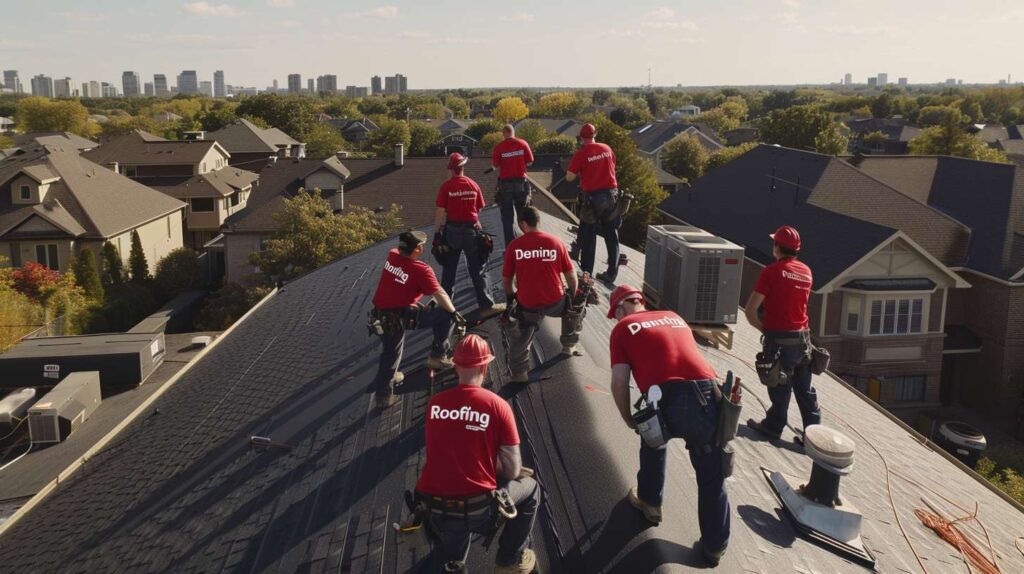
If your roof is under ten years old, the membrane is a modern system like EPDM roofing or TPO roofing, and you’re dealing with one or two isolated issues-a chimney flashing separation, a puncture from rooftop equipment installation, localized storm damage-targeted repair makes sense. I can remove a section, prep the substrate, install new membrane with proper overlap and adhesive or heat-welding, and give you another decade of service for $1,200-$3,800 depending on access and scope.
But when I’m looking at a twenty-five-year-old tar and gravel roof with cracked pitch pans around four skylights, deteriorated parapet flashing on three sides, ponding water in two corners, and a history of patches over patches, that’s not a repair situation-that’s a liability waiting for the next nor’easter. At that point, new roof installation with modern materials, proper drainage design, and code-compliant flashing details costs $18-$28 per square foot installed, but it eliminates the chronic leak cycle and gives you a warranted system that matches how the building is actually being used now.
What a Real Roof Inspection Looks Like on Dumbo Industrial Conversions
A proper roof inspection on a converted Dumbo building isn’t a guy walking around for twenty minutes looking for obvious holes. It’s a systematic evaluation of membrane condition, substrate integrity, drainage function, detail installations, and how all of it interacts with the building’s current use. I use a drone for initial overview, infrared imaging to map moisture intrusion without pulling up membrane, and physical core samples at suspected problem areas to see what’s happening in the layers between your ceiling and the sky.
On a Front Street property last spring-a former rope factory converted to twelve residential units-the condo board called because Unit 6C had ceiling staining that kept spreading despite two “repairs.” The infrared scan showed moisture wasn’t just at the stain location; it had wicked laterally through the old concrete deck insulation across a fifteen-foot radius. When we opened exploratory cuts, we found the original 1960s tar and gravel roof had been covered over with a rubber roof (EPDM) in the 1990s without removing the old system or adding proper drainage, creating a moisture sandwich that had been deteriorating for years. No amount of patching the top membrane would have solved it-the whole assembly needed to come off, the deck needed drying and prep, and a new single-ply system with tapered insulation needed to go down.
That’s what thorough inspection reveals: not just “where is it leaking” but “why is the roof system failing, what’s the extent of damage, and what’s the right scope of work to actually fix it.” For Dumbo properties, that inspection should specifically evaluate:
- Membrane type, age, and overall condition (blistering, cracking, seam separation, punctures)
- Skylight curbs, glazing seals, and perimeter flashing-the number one leak source in converted lofts
- Parapet wall caps, counterflashing, and through-wall terminations where old factory brick meets modern roofing
- Rooftop equipment penetrations (HVAC, plumbing vents, exhaust fans added during conversion)
- Roof deck drainage-is water ponding? Are scuppers and drains functioning or clogged with decades of granules?
- Interior moisture mapping to identify hidden damage in insulation or deck substrate
Cost for a detailed inspection with infrared imaging and written report runs $650-$1,400 depending on building size and access complexity, and it’s the single most valuable investment before deciding on repair scope or replacement.
Flat Roofing Systems: Choosing the Right Material for Your Building
Flat roofing in Dumbo isn’t actually flat-it’s low-slope, typically ¼-inch per foot minimum, and the material choice depends on your building’s structure, exposure, access for maintenance, and whether you’re planning rooftop use beyond mechanical equipment. The converted industrial buildings in this neighborhood present specific challenges: heavy concrete decks that can handle weight but trap moisture, exposed wind conditions from the waterfront, and often limited crane or material access through narrow streets and interior courtyards.
| Roofing System | Best For | Lifespan | Cost per Sq Ft (Installed) | Key Advantages |
|---|---|---|---|---|
| EPDM (Rubber Roof) | Residential conversions, moderate traffic | 20-25 years | $8-$12 | Durable, flexible, easy to repair, handles Dumbo temperature swings |
| TPO (Thermoplastic) | Occupied rooftop decks, high sun exposure | 15-20 years | $9-$14 | Heat-welded seams, highly reflective (energy savings), puncture resistant |
| Modified Bitumen | Heavy equipment areas, high-traffic commercial | 15-20 years | $7-$11 | Tough multi-layer system, excellent for torch-down on concrete decks |
| Built-Up Roof (Tar & Gravel) | Replacement-in-kind for landmarked buildings | 20-30 years | $10-$16 | Proven system, ballasted protection, traditional for older buildings |
For most Dumbo residential conversions, I recommend EPDM roofing or TPO roofing. EPDM is a single-ply rubber membrane that comes in large sheets, minimizes seams, adheres or mechanically fastens to the deck, and tolerates the seasonal temperature extremes we get between summer roof surface temps (140°F+) and winter cold. It’s black, so it absorbs heat, but for buildings with insulated concrete decks and climate-controlled interiors, that’s rarely an issue. TPO is white, reflects more sunlight, and uses heat-welded seams that create a true monolithic surface-ideal if you’re installing a roof deck over the membrane or if the roof is visible from upper-floor windows and aesthetics matter.
On a converted factory near the Brooklyn Bridge Park entrance, the owner wanted a rooftop deck with planters, furniture, and regular entertaining space. We installed a mechanically-fastened TPO system with a protective walkway mat layer underneath the deck pavers, perimeter metal edge details powder-coated to match the building’s window frames, and integrated the deck drainage into new scuppers that tied into the building’s existing storm system. Three years later, zero leaks, and the white membrane keeps the deck cooler on August afternoons than the old tar and gravel ever did.
Roof Leak Repair and Detection: Why Location Matters More Than Speed
Dumbo property owners often call asking for emergency roof repair after a rainstorm reveals a leak, expecting someone to show up, throw some tar on a hole, and solve it immediately. Here’s the reality: roof leak detection on a flat roof requires methodical investigation because water enters at one location-a failed skylight flashing, a cracked pipe boot, a separated seam-then travels along the deck substrate or insulation layer before appearing as a ceiling stain twenty feet away from the actual entry point.
Emergency response for active leaks involves temporary containment-tarp coverage, temporary flashing, interior protection-then systematic diagnosis once conditions allow safe access. I’ve traced leaks that appeared in one corner of a loft back to a roof drain on the opposite side where the clamping ring had corroded and separated, allowing water to seep under the membrane and flow along the deck slope to the lowest point. Sealing the visible wet spot would have accomplished nothing.
Professional roof leak repair follows diagnosis: remove membrane around the failure point, inspect and dry the substrate, address any damaged insulation or deck surface, then install new membrane with proper overlap, adhesive or heat-welding, and detail work that prevents recurrence. For a typical single-point failure-a skylight corner that’s opened up, a penetration boot that’s cracked-this runs $850-$2,200 depending on material type and access. For complex multi-point failures or situations where leak location differs significantly from water entry, full infrared mapping and exploratory cuts add $400-$800 but prevent wasting money on repairs that miss the actual problem.
Skylights, Chimneys, and Penetration Details: Where Flat Roofs Actually Fail
If I had to identify the single most common failure point on Dumbo converted buildings, it’s skylight installation and flashing details. During warehouse-to-residential renovations, contractors punch skylights through concrete decks to bring natural light into deep floor plates, but the flashing and curb details often don’t account for flat roof water behavior-they’re detailed like sloped roof skylights, which allows water to pond against the uphill side and eventually work its way under the membrane.
Proper skylight repair or new installation on a flat roof requires a raised curb (minimum 8 inches above the finished roof surface), a cant strip that transitions the flat membrane up the curb at an angle (preventing the 90-degree stress point where membranes tear), continuous metal counterflashing that sheds water away from the curb base, and membrane that laps up the curb and integrates with the skylight’s own flashing system. On a Water Street penthouse last year, the owner had replaced the skylight glazing three times trying to stop leaks-the glass wasn’t the problem; the original installer had set the skylight directly on the roof membrane with silicone as the only “flashing,” and fifteen years of thermal expansion had cracked that seal in a dozen places.
Chimney flashing repair follows similar principles: the transition from flat roof to vertical masonry is a dynamic joint that moves with temperature changes, and rigid details fail. I use a combination of base flashing (membrane turned up the chimney at least 8 inches), metal counterflashing embedded in mortar joints or surface-mounted with proper sealant, and a crickets (small sloped diversion) on the uphill side of larger chimneys to shed water around rather than letting it pond against the masonry. Cost for proper chimney flashing retrofit runs $1,400-$2,800 depending on chimney size and masonry condition.
Gutters, Drainage, and Roof Waterproofing Systems
Most Dumbo flat roofs drain through interior scuppers or roof drains rather than perimeter gutters, but townhomes with sloped or mansard upper sections, and buildings with parapet walls and deliberate edge drainage, require gutter installation and maintenance. The waterfront wind here clogs gutters faster than sheltered Brooklyn neighborhoods-I’ve cleaned gutters in November that were packed solid with leaves, silt, and organic debris despite being “cleaned” in spring.
For flat roof buildings, proper drainage means ensuring roof drains aren’t clogged, scuppers are clear and correctly sized (minimum 4-inch outlet for every 1,000 square feet of roof), and the roof surface actually slopes toward drainage points rather than creating ponding areas. Roof waterproofing on a flat membrane system isn’t about adding coatings over a functioning membrane-it’s about making sure water moves off the roof quickly and doesn’t sit in low spots where UV exposure and thermal cycling accelerate deterioration.
When ponding is unavoidable due to structural deck design, tapered insulation during roof replacement creates positive slope, or localized drainage improvements (additional drains, scuppers, or modified deck slope) can be integrated. Perimeter gutter repair on townhomes and older brick buildings often involves replacing deteriorated fascia boards, re-securing gutter brackets that have pulled loose from freeze-thaw cycles, and ensuring downspouts discharge away from foundation walls-cost runs $18-$32 per linear foot for full gutter replacement with proper brackets and sealed joints.
Specialized Roofing: Metal, Shingle, and Hybrid Systems in Dumbo
Not every Dumbo building is a flat-roofed warehouse conversion. Townhomes along the side streets, newer infill construction, and penthouse additions use sloped roofs with shingle roof or metal roofing systems that have different performance characteristics and maintenance needs. Asphalt shingle roofing on Dumbo townhomes lasts 18-25 years depending on quality (architectural shingles outlast three-tab significantly), wind exposure, and installation quality-the waterfront wind here is hard on shingles, and improper nailing or inadequate starter courses lead to blow-offs during storms.
Metal roof installation makes sense for higher-end properties, visible roofs where aesthetics matter, and buildings where longevity justifies higher upfront cost. Standing seam metal roofing runs $14-$22 per square foot installed but lasts 40-60 years, requires minimal maintenance, and handles wind and weather better than any other pitched roof system. I’ve installed standing seam copper on a Pearl Street townhouse restoration and aluminum in a dark bronze finish on a new construction penthouse-both integrate with flat roof sections through proper flashing transitions that prevent the metal-to-membrane interface from becoming a leak point.
Hybrid buildings-flat roof main structure with sloped penthouses, or townhomes with both pitched front roofs and flat rear extensions-require contractors who understand both systems and how to detail the transitions. Water behavior changes completely at a slope change, and flashing that works on a flat roof fails on a pitch, and vice versa.
Commercial Roofing for Dumbo’s Retail, Office, and Gallery Spaces
Commercial roofing in Dumbo serves a different use pattern than residential: retail spaces with high-value inventory sensitive to water damage, galleries with irreplaceable artwork, offices with IT infrastructure and business continuity requirements, and restaurants where a roof leak means immediate health department and insurance issues. Commercial roof repair timelines are tighter-a residential leak is an inconvenience; a commercial leak can shut down revenue operations.
I work with commercial property managers on planned roof maintenance schedules: semi-annual inspections before and after winter, immediate clearing of drains and scuppers after storms, and proactive sealing of minor separations before they become leaks. For commercial properties with built-up roofs or modified bitumen systems, periodic roof coating with elastomeric or aluminum coatings extends membrane life by 5-8 years and costs $2.80-$4.50 per square foot-a fraction of replacement cost and sufficient to bridge the gap until a planned capital project.
Flat roof installation on commercial buildings often includes additional considerations: roof access for HVAC maintenance without damaging the membrane (walkway pads or pavers), attachment points for seasonal equipment or signage, and sometimes specific warranty requirements from lenders or insurers. TPO and PVC systems are popular for commercial applications because heat-welded seams create a watertight monolithic surface that meets strict performance standards.
Storm Damage, Insurance Claims, and Emergency Response
Dumbo’s waterfront exposure means storm damage repair is a regular part of roofing here-nor’easters bring sustained wind and driving rain that find every weakness in flashing and seams, and occasional severe weather events cause obvious impact damage from debris or structural stress. Wind damage repair after storms focuses on securing any lifted membrane sections, replacing damaged metal edging or counterflashing, and addressing tree limbs or other impact damage that’s punctured the roof surface.
For insurance claim roofing, proper documentation is critical: photos of damage before temporary repairs, detailed scope of work separating storm damage from pre-existing conditions, and line-item estimates that match insurance adjuster expectations. I work with owners and their adjusters to document what failed due to the storm event versus what was already at end-of-life-insurers cover sudden damage, not deferred maintenance. A comprehensive claim package includes drone footage showing pre-storm condition (if available), post-storm damage documentation, moisture mapping to show extent of water intrusion, and a scope that addresses necessary repairs without padding unnecessary work.
Emergency roof repair after storm damage focuses on immediate containment-tarping exposed areas, temporary flashing over blown-off sections, interior protection for water that’s already entered-then systematic permanent repair once conditions allow. Emergency response during or immediately after a storm runs $350-$800 for temporary measures, then permanent repairs are scoped separately once full assessment is possible.
Long-Term Maintenance and Roof Coatings for Extended Service Life
Roof maintenance on Dumbo flat roofs isn’t optional-it’s the difference between getting full service life from your system and premature failure. A basic maintenance program includes twice-annual inspections (spring and fall), drain and scupper clearing after storms, immediate minor repairs of small separations or punctures before they spread, and documentation of roof condition over time to plan replacement before emergency failures force rushed decisions.
Roof coating and roof sealing can extend the life of aging but structurally sound membranes. Elastomeric coatings applied over EPDM or modified bitumen refresh UV protection, seal minor surface cracks, and improve reflectivity. These coatings cost $2.50-$4.20 per square foot installed and add 5-8 years of service to a membrane that’s otherwise reaching end of life. This isn’t appropriate for heavily damaged or saturated roofs-coating over problems just hides them temporarily-but for roofs at the 15-18 year mark that still have solid substrate and functioning drainage, it’s a cost-effective bridge to planned replacement.
Roof cleaning on Dumbo buildings means removing accumulated silt, organic growth, and debris that clogs drainage and accelerates membrane deterioration. The waterfront environment deposits salt residue that holds moisture against the roof surface, and urban particulates combine with organic material to create a layer that traps water. Annual cleaning runs $0.65-$1.20 per square foot depending on access and level of accumulation, and it’s especially important around drainage points, skylights, and parapet walls where debris concentrates.
Dennis Roofing approaches every Dumbo project-whether it’s targeted roof leak repair, comprehensive new roof installation, or planned maintenance-with the understanding that these converted buildings require roofing expertise that bridges industrial construction and residential expectations. Your loft might have exposed brick and polished concrete floors, but overhead you’ve still got a warehouse roof that needs professional attention to keep performing. After twelve years working on these buildings, I’ve learned that the best roofing solution isn’t always the newest material or the cheapest bid-it’s the approach that honestly evaluates what’s failing, why it’s failing, and what combination of repair, upgrade, and maintenance will keep water where it belongs: on the outside, moving toward drainage, and away from everything you’ve built inside.