
Clinton Hill’s Premier Roof Repair & Replacement
I’ve walked into too many Clinton Hill brownstones where an owner proudly shows me a freshly repainted ceiling, new plaster work, and refinished floors-all done within the last six months. Then I climb up to the roof, lift the hatch, and immediately spot the problem: a deteriorating flat roof with standing water, cracked chimney flashing, and patches that are older than my apprenticeship. One good October storm later, and all that interior work gets undone. Water finds its way through those same vulnerable spots, and we’re back to square one. The real issue was never addressed. This is exactly why choosing the right roofing contractor and making smart decisions about roof repair versus roof replacement early can save Clinton Hill property owners tens of thousands in repeated interior damage and constant Band-Aid fixes.
When Roof Repair Is Enough (And When It’s Not)
On a brownstone off Lafayette Avenue last spring, I met an owner who’d paid three different contractors over two years to “fix” a leak above her third-floor bedroom. Each one applied roof coating or patched a small section of her twenty-year-old EPDM rubber roof. Each fix lasted about four months. When I pulled back the membrane, I found widespread cracking, separation at the seams, and compromised insulation underneath. That wasn’t a roof leak repair situation-it was time for flat roof installation with new materials.
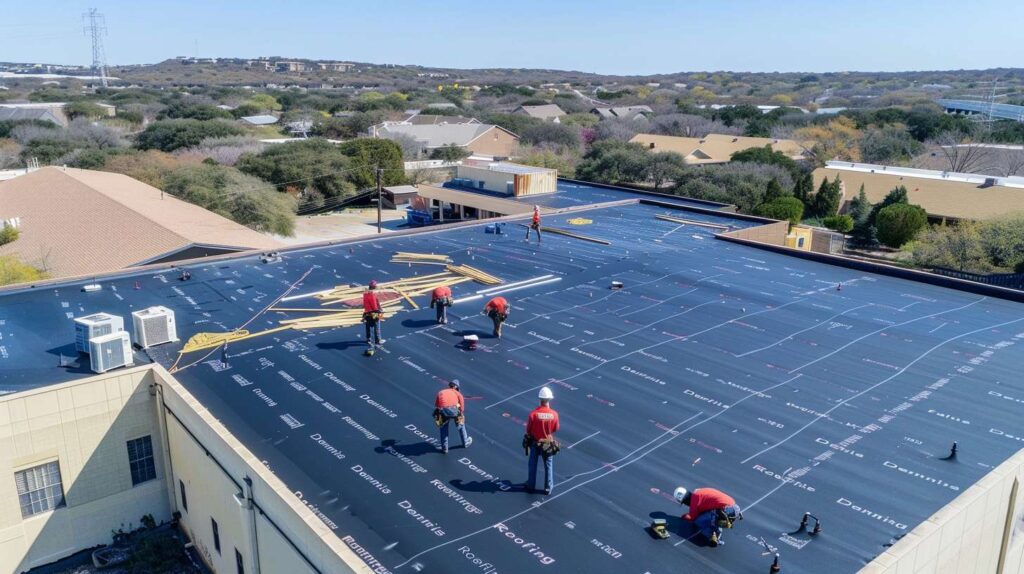
Here’s the practical guideline I use: if your flat roof is under ten years old, has isolated damage (a puncture, a failed seam, storm debris impact), and the rest of the membrane shows good flexibility and adhesion, targeted roof repair makes sense. You’re looking at $850-$1,400 for a quality repair on a typical Clinton Hill brownstone flat section, depending on access and material matching. But if you’re seeing multiple soft spots, widespread surface cracking, constant ponding water that won’t drain, or if the roof is past fifteen years old and you’re calling for the third leak in two years, a full roof replacement is the honest recommendation.
For shingle roofs on pitched sections-common on Clinton Hill’s Queen Anne-style homes and the mansard roofs near Pratt Institute-the math shifts slightly. Asphalt shingles typically give you 20-25 years in Brooklyn’s climate. Isolated wind damage or a few missing shingles after a storm? Absolutely repairable, usually $425-$750 depending on how much we need to blend the new shingles with aged ones. But if I’m seeing curling edges across multiple sections, granule loss exposing the mat underneath, or daylight through the boards when I inspect the attic, that’s the roof telling you it’s finished. A partial repair just becomes next year’s emergency.
What a Real Roof Inspection Should Include
Every roof inspection I do in Clinton Hill follows the same sequence, whether it’s a single-family brownstone or a small commercial building on Myrtle Avenue. I start at the perimeter-checking all flashing points where the roof meets brick parapets, examining chimney bases (these leak more than any other feature), testing skylight seals, and looking at how gutters connect and drain. Then I walk the entire roof surface systematically, probing for soft spots, checking seam integrity on membrane roofs, looking for fastener back-out on metal panels, and documenting any ponding areas where water sits more than 48 hours after rain.
The difference between a quick “visual check” and a proper roof inspection is about forty-five minutes and a moisture meter. I use an infrared scanner on flat roofs to find hidden moisture trapped under the membrane-this shows me where water has already infiltrated even if you haven’t seen interior leaks yet. On shingle roofs, I’m pulling up a few tabs to check the underlayment condition and examining nail patterns from previous installations (sloppy nailing is a major cause of premature shingle failure). For commercial roofing inspections on Clinton Hill’s mixed-use buildings, I add documentation of all roof penetrations, HVAC equipment curbs, and access routes because insurance and building departments want that detail.
A written inspection report should give you three clear pieces of information: current condition with photos, expected remaining lifespan, and a prioritized repair or replacement plan with cost ranges. If someone hands you a one-page estimate without explaining why they’re recommending specific work, get a second opinion.
Flat Roofing Materials for Clinton Hill Buildings
Walk down Clinton or Washington Avenue and you’re looking at flat roofs on ninety percent of the historic brownstones. These roofs have specific demands: they need to handle foot traffic if you’ve got a deck, manage the thermal expansion from our temperature swings, shed the leaf debris from all those beautiful street trees, and do it all while meeting historic district guidelines if you’re in a landmarked zone. Material choice matters enormously.
| Material | Lifespan | Cost per Sq Ft | Best For | Clinton Hill Considerations |
|---|---|---|---|---|
| EPDM (Rubber Roof) | 22-28 years | $5.50-$7.25 | Owner-occupied brownstones, budget-conscious co-ops | Proven performance, moderate cost, good for non-visible roofs |
| TPO Roofing | 20-25 years | $6.75-$9.00 | Commercial buildings, energy-focused owners | Reflective surface lowers cooling costs, heat-welded seams handle wind |
| Modified Bitumen | 18-22 years | $5.25-$7.00 | High-traffic roofs, deck substrates | Excellent durability, torch-down or cold-applied, good for complex details |
| Tar and Gravel | 20-30 years | $7.50-$10.25 | Landmark buildings, traditional brownstones | Historic authenticity, superior UV protection, weight requires structural check |
On a co-op building near Pratt last year, the board was set on replacing their aging tar and gravel roof with the same system-they liked the traditional look and the gravel’s protection from foot traffic to the mechanical equipment. But the building’s joists were original 1890s timber, and the structural engineer’s report showed they were already at capacity. We switched to a modified bitumen roofing system with a granulated cap sheet that gave them the durability and similar appearance at about sixty percent of the weight. That’s the kind of practical adjustment that saves a project while still meeting the building’s real needs.
For EPDM roofing, I typically recommend 60-mil thickness in Clinton Hill rather than 45-mil. The upgrade costs about seventy cents more per square foot but dramatically improves puncture resistance-important when you’ve got HVAC contractors, chimney sweeps, and satellite installers walking around up there. TPO roofing makes particular sense on commercial buildings where the white reflective surface can cut summer cooling costs by 15-20%, and the heat-welded seams create a completely watertight barrier that handles our occasional high winds better than adhesive-based systems.
Pitched Roof Options: Shingle, Metal, and Slate Considerations
The mansard roofs, turrets, and steep-pitched sections on Clinton Hill’s more ornate homes need different thinking than flat sections. These roofs are visible from the street, often fall under historic preservation rules, and handle water differently because gravity is doing most of the drainage work.
Asphalt shingle roofing remains the most cost-effective option at $4.75-$7.50 per square foot installed, and modern architectural shingles can beautifully mimic the dimensional look of original slate or wood shake at a fraction of the cost and weight. I install a lot of GAF Timberline HDZ and Owens Corning Duration in Clinton Hill-both carry strong wind ratings (130 mph) and come with algae-resistant granules that prevent the black streaking you see on older roofs. For a typical 1,800-square-foot pitched roof section, you’re looking at $8,500-$13,500 installed, depending on complexity, pitch, and whether we’re dealing with multiple valleys and dormers.
Metal roofing has grown in popularity on Clinton Hill renovations, especially standing-seam systems in dark bronze or charcoal that complement brownstone masonry. The cost is higher-$10.50-$15.00 per square foot-but the lifespan extends to 45-60 years, they’re virtually maintenance-free, and they handle our winter ice-dam issues better than any other material because the smooth surface sheds snow and the metal conducts heat more evenly. On a Romanesque Revival near the historic district last fall, we installed a standing-seam metal roof on the visible front mansard and used architectural shingles on the rear flat-pitch sections that weren’t street-facing. That kept the budget reasonable while upgrading the prominent architectural feature.
Original slate roofs still crown a handful of Clinton Hill’s grandest homes, and while slate roof restoration falls outside what most contractors handle, it’s worth knowing that a well-maintained slate roof can last 80-120 years. If you’ve got original slate, find a specialist. But if your slate is failing (you’re finding broken pieces in the gutters, seeing widespread cracking) and replacement isn’t in the budget, high-quality architectural shingles designed to mimic slate are a legitimate alternative at about one-fifth the cost.
The Leak Repair and Waterproofing Connection
Most calls I get start with “I have a leak.” The leak is rarely where the water shows up inside. On a townhouse conversion off Gates Avenue, water was dripping into a third-floor closet. The tenant was convinced it was the roof directly above. After inspection, I found the actual source: failed chimney flashing repair fifteen feet away and eight feet higher, where water was running down inside the brick cavity, hitting a steel beam, and traveling along that beam until it found the path of least resistance-right into that closet ceiling.
Roof leak detection requires understanding how water moves. It follows gravity but also capillary action, material seams, and structural pathways. I use a combination of visual inspection, water testing with a hose at suspected areas, and thermal imaging to track moisture patterns. Once we identify the source, proper roof leak repair means addressing not just the immediate breach but the conditions that allowed it-maybe that means adding crickets to redirect water away from the chimney, improving flashing profiles, or correcting a low spot where water ponds.
Roof waterproofing goes beyond just installing a good membrane. It’s a system: proper sloping (minimum 1/4 inch per foot toward drains), quality flashing at all transitions, sealed penetrations, and maintained drainage paths. I see a lot of Clinton Hill flat roofs where the membrane itself is fine, but the drains are clogged with leaves and sediment, creating standing water that accelerates deterioration. A full waterproofing approach includes gutter cleaning and maintenance, drain basket installation, and sometimes adding additional scuppers or drains to improve flow.
Flashing, Chimneys, and Skylights: The Detail Work That Matters
If I had to identify the single biggest source of roof leaks in Clinton Hill, it’s flashing failures-particularly around chimneys. These buildings have large, elaborate masonry chimneys, often unused since converting from coal or oil, and the flashing that seals where the chimney penetrates the roof is exposed to extreme thermal cycling and constant moisture. Chimney flashing repair done right means counter-flashing embedded into the mortar joints, step flashing under each shingle or membrane course, and a cricket (a small peaked structure) on the uphill side of wide chimneys to divert water around rather than letting it dam up.
I recently repaired flashing on a brownstone where the previous contractor had simply caulked the gap between chimney and roof with black sealant. That “repair” lasted about eight months before UV degradation and thermal movement opened it back up. Proper chimney flashing using copper or coated steel, mechanically fastened and integrated with the roof system, costs $850-$1,600 depending on chimney size, but it’s a twenty-year solution instead of a temporary patch.
Skylight installation and skylight repair follow similar principles-it’s all about creating a watertight transition between two different planes and materials. I install a lot of Velux and Fakro skylights on Clinton Hill renovations, particularly on top-floor conversions where bringing natural light into former attic spaces transforms the living experience. A properly installed skylight includes an integrated flashing kit specific to your roof material, ice and water shield around the opening, and careful coordination with the roof’s drainage plane. Cost runs $1,800-$3,200 per skylight installed, including the unit, flashing, and interior finishing.
When I’m doing skylight repair, the issue is usually either failed seals on older acrylic domes (common on 1990s-era installations) or improper flashing on builder-grade installations. Sometimes repair is viable-new gaskets, fresh sealant, flashing adjustment-for $375-$650. But if the skylight itself is cracked, fogged between panes, or the frame is corroded, replacement makes more sense than prolonging the inevitable.
Gutter Systems and Drainage Management
Clinton Hill’s tree-lined streets are beautiful until you’re the one maintaining the gutters. Mature plane trees, oaks, and maples drop leaves, seeds, and debris that turn gutters into planter boxes by November. Clogged gutters mean water overflows, runs down façades, saturates masonry, and often finds its way into basements or causes foundation issues. Gutter installation and gutter repair are critical parts of a functional roof system.
For brownstones and townhouses, I typically install 6-inch K-style gutters in either aluminum (.032 gauge minimum) or copper. Aluminum costs $8-$14 per linear foot installed and will give you 20-25 years with basic maintenance. Copper runs $22-$32 per linear foot but lasts 60+ years and develops that distinctive patina that many owners love on historic buildings. Half-round gutters are more traditional and sometimes required in historic districts-they’re less efficient at water volume but maintain period authenticity.
The downspouts matter as much as the gutters. On a typical three-story brownstone, I’ll run 3×4-inch downspouts, ensuring they discharge at least six feet from the foundation or connect to the building’s drain system if one exists. Gutter repair frequently involves resealing joints that have separated, replacing rotted fascia boards before rehanging gutters, and re-pitching sections that have sagged and hold standing water. A comprehensive gutter system overhaul on a standard Clinton Hill brownstone runs $2,400-$4,200 depending on linear footage and material choice.
Emergency Roof Repair and Storm Damage
When a storm hits-like the severe thunderstorm last June that brought 70-mph wind gusts through Brooklyn-emergency roof repair calls start coming in within hours. Wind lifts shingles, tears membrane seams, sends tree branches through skylights, and turns unsecured roof equipment into projectiles. Dennis Roofing maintains an emergency response capability because a compromised roof in active weather quickly escalates from a roofing problem to an interior disaster.
Emergency roof repair focuses on immediate stabilization: tarping exposed areas, securing loose materials, temporary sealing of breaches, and protecting the interior until proper repairs can happen. Cost for emergency service typically runs $450-$950 for after-hours callout and temporary protection, then you’re looking at the actual repair cost once we can properly assess damage in daylight and dry conditions.
For storm damage repair and wind damage repair, documentation is critical if you’re filing an insurance claim. I photograph everything, note pre-existing conditions versus new damage, and provide detailed estimates that break down what’s storm-related and what’s normal wear. Many Clinton Hill owners don’t realize their insurance covers insurance claim roofing work, including full replacement if damage is extensive enough. A good contractor works with your adjuster, provides the documentation they need, and helps you understand what’s covered versus what’s a pre-existing maintenance issue.
Commercial Roofing for Mixed-Use and Multi-Family Buildings
Commercial roofing in Clinton Hill means everything from the retail strips along Myrtle and Fulton to the converted factory buildings that now house ground-floor businesses with residential above. These projects operate on a different scale than single-family work-larger square footage, stricter code requirements, coordination with building management and tenants, and often more complex roof systems with multiple penetrations, HVAC equipment, and access requirements.
A typical commercial roof repair might address localized damage from equipment installation, failed seams around expansion joints, or deteriorating penetration boots. But when I’m evaluating a commercial property for flat roof installation, I’m also considering things like fire rating requirements (Class A in most cases), traffic loads if maintenance staff access HVAC units regularly, and whether the building would benefit from a reflective coating to reduce cooling costs and potentially qualify for energy rebates.
For a 8,000-square-foot commercial flat roof using TPO membrane with polyiso insulation and proper drainage improvements, you’re looking at $52,000-$74,000 depending on condition of the existing deck, number of penetrations, and whether we’re doing a full tear-off or an overlay system. On larger commercial projects, we often install the roof in phases to minimize business disruption-completing sections during off-hours or coordinating with seasonal slow periods.
Maintenance, Coating, and Long-Term Protection
The most cost-effective roofing investment isn’t a new roof-it’s proper roof maintenance that extends the life of what you already have. I recommend biannual inspections (spring and fall) for all flat roofs, with additional checks after major storms. A maintenance visit includes clearing drains and gutters, checking and resealing any suspect seams or flashing, removing debris, and documenting the roof’s condition so you can track deterioration patterns over time. Annual maintenance typically costs $320-$550 and can add 3-5 years to your roof’s functional life.
Roof coating represents a middle ground between full replacement and basic maintenance for roofs that are aging but still structurally sound. Elastomeric coatings, either acrylic or silicone-based, can be rolled or sprayed onto clean, prepared EPDM, modified bitumen, or metal roofs, creating a new protective layer that seals small cracks, provides UV protection, and improves reflectivity. Quality roof coating application runs $2.75-$4.50 per square foot and can extend roof life by 8-12 years if applied at the right time-meaning before widespread deterioration has occurred.
I applied a silicone coating to a fifteen-year-old EPDM roof on a Clinton Hill co-op two years ago. The membrane was showing age but wasn’t failing-some surface cracks, minor seam separation, but the substrate was solid. Rather than spending $85,000 on full replacement, the board invested $18,500 in professional cleaning, targeted repairs, and a high-quality silicone coating system. So far, it’s performed perfectly, and they’ve budgeted for full replacement in another seven to eight years when the coating cycle ends. That’s smart financial planning.
Roof sealing and roof cleaning often go together. Before any coating application or even just as part of maintenance, professional cleaning removes the organic growth, dirt, and degraded material that holds moisture against the roof surface. For shingle roofs, gentle washing removes the black algae streaks (actually a form of bacteria called Gloeocapsa magma) that feed on the limestone in shingles, accelerating deterioration. Cleaning costs $0.45-$0.85 per square foot and should only be done with proper low-pressure techniques-power washing damages shingles and forces water under the material.
Making the Right Decision for Your Clinton Hill Property
Whether you own a single brownstone on a quiet side street or manage a mixed-use building on a busy commercial avenue, your roofing decisions come down to three factors: current condition, realistic budget, and long-term goals. A proper roof inspection gives you the first piece. An honest contractor helps you with the second and third.
I’ve been doing this work in Clinton Hill long enough to understand that not every building needs the most expensive solution, but every building deserves the right solution. Sometimes that’s strategic repairs that buy you three years to save for replacement. Sometimes it’s a coating system that extends life without the disruption of a full tear-off. And sometimes it’s acknowledging that a roof has reached the end and further repairs are just throwing money at a failing system. The key is having accurate information, understanding your options, and working with someone who’s more interested in solving your problem than maximizing their invoice.
Dennis Roofing has built its reputation in Clinton Hill on straightforward assessments, quality installations, and being available when emergencies happen-because they will. Roofs fail at the worst possible times. If you’re seeing water stains, hearing drips during rain, or if it’s simply been a decade since anyone looked at your roof, now is the time for that inspection. The cost of knowledge is a few hundred dollars. The cost of ignorance can run into tens of thousands once water damage reaches finishes, framing, and building systems.