
Brownsville Roof Repair & Installation Experts
Here’s what I see all the time in Brownsville: a landlord notices a small water stain on a ceiling in a third-floor apartment. Maybe it’s the size of a dinner plate. They figure it’s no big deal-just some minor roof leak that can wait until spring. Six months later, after a couple hard rains and one serious winter freeze-thaw cycle, that same leak has destroyed ceiling joists, ruined two apartments’ worth of sheetrock and paint, and turned a $600 roof repair into a $12,000 disaster that includes emergency roof replacement, structural work, and tenant relocation costs. I’m Darnell, and I’ve been doing roof repair and roof installation in Brownsville for fifteen years-first as a helper patching leaks on Rockaway Avenue walk-ups, now as the lead contractor at Dennis Roofing. And I can tell you that the single biggest mistake property owners make is waiting until water is literally dripping into an apartment or storefront before they call for a roof inspection.
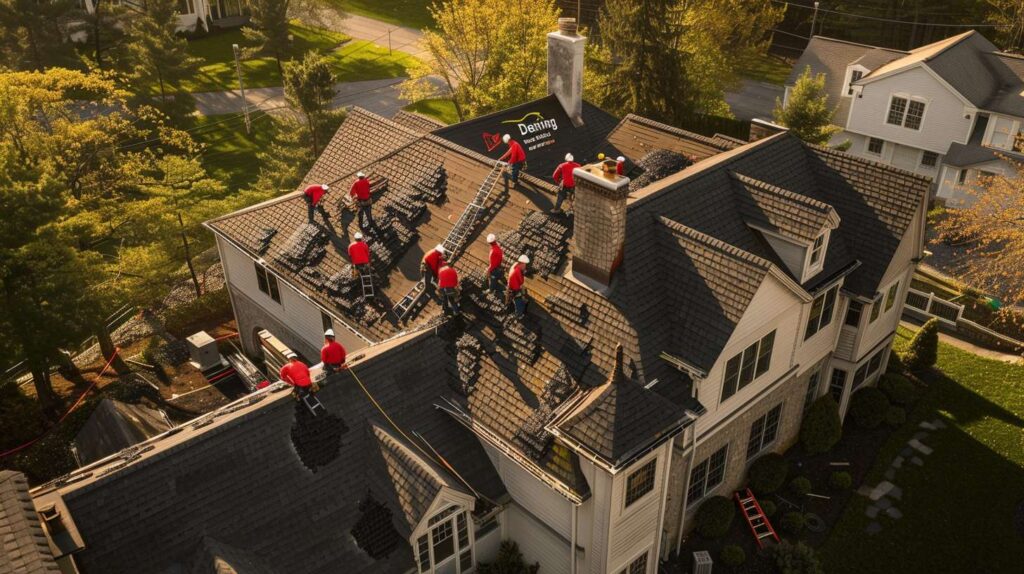
In Brownsville, we’re dealing with a lot of older buildings-brick walk-ups from the 1920s through 1960s, mixed-use buildings with storefronts and apartments above, small churches, and row houses. Most of them have flat roofs, and most of those flat roofs are original or close to it. We’re talking tar and gravel roofs, older modified bitumen roofing, and some early EPDM roofing systems that have been patched more times than anyone can count. These roofs take a beating from our weather-summer heat that bakes the surface, winter freeze-thaw cycles that open up seams and cracks, wind whipping down Pitkin Avenue and Rockaway that lifts edges and corners, and heavy rain that finds every weak spot and pooling area on a flat surface.
What a Real Roof Inspection Should Include
When I do a roof inspection in Brownsville, I’m not just walking around up there for ten minutes and giving you a thumbs-up or thumbs-down. A proper inspection covers the entire roof surface, all penetrations (vents, pipes, HVAC units), every seam and transition, the parapet walls, the drains and scuppers, any skylights, the chimney flashing, and the condition of the underlying structure where I can see it. On a flat roof, I’m looking for ponding water (anywhere water sits for more than 48 hours after rain), blisters and bubbles in the membrane, open seams, cracks in the surface, and any areas where the roof material has pulled away from flashing or parapet walls.
On a three-story over on Sutter Avenue last spring, the owner called me for what he thought was a simple leak over the second-floor front apartment. When I got up on the roof, I found the actual problem: the tar and gravel roof had seven different soft spots where water had been sitting for years, the gravel had worn away in high-traffic areas near the roof hatch, and someone had done a patch job around the main drain using what looked like roofing cement and prayer. The leak he was seeing? That was just the first one to break through. I showed him photos of four other areas that were within six months of leaking into other apartments. We caught them early enough that a targeted roof repair-removing the damaged sections, rebuilding the substrate, and installing new modified bitumen roofing in those areas-cost him $4,200 instead of the $28,000 a full roof replacement would have run.
A detailed roof inspection in Brownsville should cost you $200-$450 depending on building size and roof access, and it should come with a written report, photos of problem areas, and a clear breakdown of what needs to be done now versus what you can plan for down the road. If someone’s offering you a “free inspection,” understand that they’re usually only there to sell you a new roof, not to give you real options.
Roof Repair vs. Roof Replacement: Making the Right Call
The question I get asked most often is whether to repair or replace. Here’s the honest answer: it depends on the age of your roof, the extent of the damage, and what you’re planning to do with the building in the next five to ten years. A flat roof in Brownsville typically lasts 15-25 years depending on the material and maintenance. EPDM roofing (rubber roof) runs 20-25 years. TPO roofing gives you 15-20 years. Modified bitumen roofing lasts 15-20 years. Tar and gravel roofs, if properly maintained, can push 20-25 years, but most of the ones I see are well past that.
If your roof is less than halfway through its expected lifespan and the damage is localized-a bad seam, a torn section, damage around a vent or skylight-then roof repair makes sense. Repair costs in Brownsville typically run $475-$1,800 for small to medium jobs, depending on materials and access. That same repair, if you wait and it spreads or causes interior damage, can balloon to $3,500-$8,000 once you factor in substrate replacement and larger membrane sections.
On the other hand, if your roof is 18-20 years old and you’re patching multiple areas every year or two, you’re throwing good money after bad. I had a landlord on Livonia Avenue with apartments above a corner store who’d been doing $800-$1,200 in repairs every 18 months for about six years. When we finally did a full roof inspection, the rubber roof was shot-seams were failing all over, the membrane was brittle, and the insulation underneath was soaked in multiple areas. He’d spent over $6,000 in repairs trying to nurse that roof along, and he still needed a new roof. We did a complete flat roof installation with new TPO roofing, new insulation, and proper drainage improvements for $18,500. That was three years ago, and he hasn’t had a single leak since.
Common Roof Problems in Brownsville Buildings
Roof leak repair and roof leak detection make up about sixty percent of my service calls in Brownsville. The tricky thing about flat roofs is that water doesn’t always leak straight down-it can travel along joists, under the membrane, or through layers of old roofing before it finally shows up as a stain on someone’s ceiling. I use infrared scanning and flood testing for serious leak detection jobs, because sometimes the entry point is ten or fifteen feet away from where you’re seeing water inside.
The most common leak sources I find are failed seams (especially on older EPDM roofing where the adhesive has degraded), damaged or missing chimney flashing, clogged drains that cause ponding and eventual membrane failure, and penetrations-anywhere a vent pipe, HVAC line, or exhaust stack comes through the roof. On shingle roofs-which you see more on row houses and smaller residential buildings in Brownsville-the usual culprits are missing or damaged shingles after wind events, failed valley flashing, and worn-out pipe boots.
Chimney flashing repair is its own category of problem in this neighborhood. A lot of older buildings have brick chimneys that aren’t even in use anymore, but the flashing around them-the metal or membrane seal where the chimney meets the roof-deteriorates over time. I’ve seen chimney flashing that was installed in the 1970s still “working” in the sense that it wasn’t actively leaking, but it was one hard rain away from failure. Proper chimney flashing repair involves removing the old flashing, preparing the surfaces, installing new counter-flashing embedded in the mortar joints, and sealing everything with the appropriate membrane or metal flashing material. Cost runs $650-$1,400 depending on chimney size and access.
Flat Roofing Options for Brownsville Properties
When it comes to flat roof installation or flat roof replacement, you’ve got several material options, and the right choice depends on your building type, budget, and how long you plan to keep the property. Here’s what I install most often in Brownsville and what each material actually delivers:
| Roofing Material | Typical Lifespan | Cost per Sq Ft (Installed) | Best For |
|---|---|---|---|
| EPDM Roofing (Rubber Roof) | 20-25 years | $4.50-$7.00 | Residential buildings, smaller commercial properties, budget-conscious owners |
| TPO Roofing | 15-20 years | $5.50-$8.50 | Commercial buildings, energy efficiency priority, white reflective surface |
| Modified Bitumen Roofing | 15-20 years | $4.00-$6.50 | High-traffic roofs, excellent durability, proven performance in Brooklyn weather |
| Tar and Gravel Roof | 20-25 years | $5.00-$7.50 | Traditional choice for larger buildings, UV protection, requires proper drainage |
EPDM roofing-the black rubber roof-is still one of the most popular choices in Brownsville because it’s cost-effective, durable, and relatively easy to repair if something does go wrong. The rubber membrane comes in large sheets that we either fully adhere, mechanically attach, or ballast depending on the building and code requirements. It handles temperature extremes well, and seams are heat-welded or taped with proper adhesive. The main downside is that it absorbs heat (that black surface gets hot in summer), and seams can fail over time if they weren’t installed correctly or if the building movement stresses them.
TPO roofing has become increasingly popular over the last decade, especially for commercial roofing projects. The white or light gray surface reflects heat, which can lower cooling costs in summer-a real consideration for buildings with top-floor apartments. TPO seams are heat-welded, which creates a stronger bond than adhesive seams when done right. The material is lighter than some alternatives, which matters on older buildings where structural capacity is a concern. Installation cost is slightly higher than EPDM, but the energy savings and clean appearance make it worthwhile for many owners.
Modified bitumen roofing is my go-to recommendation for buildings with roof access and foot traffic-anywhere tenants, maintenance workers, or HVAC techs are going to be walking around. It’s a tough, multi-layer system that holds up to abuse better than single-ply membranes. We install it with a torch-down method (using heat to bond the layers) or with cold adhesive depending on the situation. On a Rockaway Avenue building with heavy rooftop HVAC equipment and regular service calls, we installed modified bitumen three years back and it still looks nearly new despite constant foot traffic and equipment vibration.
Tar and gravel roofs-also called built-up roofing or BUR-are the traditional flat roof system in Brooklyn. Multiple layers of roofing felt are embedded in hot asphalt, then topped with gravel for UV protection and added durability. They’re heavy, which is fine on older masonry buildings with solid structural capacity, and they last a long time when properly installed. The main drawback is that leak detection is harder because you can’t see the membrane under all that gravel, and repairs require removing gravel, cutting out the damaged section, and rebuilding the layers.
Residential and Commercial Roofing Services
For residential roofing, I work on everything from single-family row houses with shingle roofs to multi-family walk-ups with flat roofing. Asphalt shingle roofing is common on sloped roofs in Brownsville-it’s affordable ($3.50-$5.50 per square foot installed), comes in a range of colors and styles, and lasts 18-25 years depending on quality and exposure. When I do a roof replacement on a shingled roof, I’m stripping off the old shingles (sometimes two or three layers if previous owners just roofed over), inspecting and repairing the decking, installing new underlayment and ice-and-water shield, and then laying the new shingles with proper nailing and sealing. A typical row house shingle roof replacement in Brownsville runs $5,500-$9,500 depending on size, complexity, and shingle grade.
Metal roofing is less common in Brownsville but worth considering for certain applications-especially on commercial buildings, additions, or anywhere you want a 30-40 year roof with minimal maintenance. Standing seam metal roof systems are expensive upfront ($8-$14 per square foot installed), but they’re nearly indestructible, shed water and snow efficiently, and hold up to wind better than any other option. I’ve installed metal roofing on a couple of corner stores and small warehouses where the owners wanted a set-it-and-forget-it solution.
Commercial roofing projects in Brownsville tend to be larger flat roofs on retail buildings, warehouses, churches, and mixed-use properties. The principles are the same as residential flat roofing, but the scale is bigger, the drainage requirements are more complex, and code compliance is more involved. Commercial roof repair often needs to happen on a timeline that doesn’t disrupt business operations-I’ve done plenty of weekend and overnight work so a store doesn’t have to close during roof repairs.
Emergency Roof Repair and Storm Damage
Emergency roof repair calls come in hard and fast after major storms-hurricanes, nor’easters, and those surprise summer thunderstorms with straight-line winds that peel back roof edges and send debris flying. After a significant wind event in Brownsville, I’ll get a dozen calls in a day from property owners dealing with torn membranes, lifted shingles, damaged flashing, and water coming in around parapets and roof penetrations.
For wind damage repair, the first priority is stopping active leaks-tarping, temporary patching, securing loose materials. Then we assess the full extent of damage and work with you on permanent repairs. If you’re filing an insurance claim roofing case, I document everything with photos, measurements, and detailed notes about what failed and why. Most insurance adjusters are reasonable about storm damage repair if you can show them clear evidence of wind or impact damage versus pre-existing wear and tear.
Storm damage repair costs vary wildly depending on what happened. Simple wind damage repair-reattaching a lifted section of membrane or replacing a few dozen shingles-might run $450-$950. More extensive damage where wind has torn large sections of roofing or damaged the substrate can push $3,000-$8,000. After Superstorm Sandy, I spent six months doing nothing but emergency repairs and full replacements on buildings where entire roof sections had blown off or water had saturated everything.
Roof Maintenance, Coating, and Waterproofing
Here’s something most Brownsville property owners don’t do and absolutely should: regular roof maintenance. Twice a year-spring and fall-I recommend a maintenance visit that includes cleaning drains and scuppers, removing debris, checking and resealing any opened seams or fasteners, inspecting flashing and penetrations, and addressing small issues before they become big problems. A maintenance visit costs $175-$350 depending on building size, and it routinely catches problems that would have cost thousands to fix later.
Roof cleaning is part of maintenance, especially on flat roofs where leaves, trash, and sediment accumulate in corners and around drains. Clogged drains are one of the top causes of ponding water and premature roof failure. On tar and gravel roofs, I also check that gravel is evenly distributed-bare spots expose the underlying membrane to UV damage. For shingle roofs, cleaning means removing moss and algae that hold moisture and degrade the shingles.
Roof coating can extend the life of an aging flat roof by five to ten years if applied at the right time. We use elastomeric coatings-thick, rubberized products that seal the existing roof surface, fill minor cracks, and add a reflective layer that reduces heat absorption. Roof coating costs $1.50-$3.50 per square foot, which makes it far cheaper than replacement. But here’s the catch: it only works on roofs that are structurally sound. If your roof is saturated, has major membrane damage, or failing substrate, coating just covers up problems temporarily.
Roof waterproofing goes beyond basic membrane installation-it includes proper flashing details, transition seals, sealants around penetrations, and in some cases liquid-applied waterproofing systems for complex areas like parapet walls and expansion joints. On a complex roof with multiple levels, skylights, and HVAC equipment, comprehensive roof waterproofing is what separates a roof that leaks every few years from one that stays dry for decades.
Skylights, Gutters, and Related Systems
Skylight installation and skylight repair are regular parts of my work in Brownsville, especially on older buildings where original skylights have failed or where owners want to add natural light to top-floor apartments or commercial spaces. A leaking skylight is one of the most common sources of interior water damage I see-the flashing around the skylight frame degrades, the seals fail, or the skylight itself cracks. Skylight repair usually means replacing the flashing, resealing the unit, or in many cases, replacing the entire skylight with a modern, insulated unit. Cost runs $750-$2,200 per skylight depending on size and complexity.
For skylight installation, I always recommend going with a quality unit-cheap skylights leak within a few years. Proper installation means cutting the roof opening, framing it correctly, installing the skylight with manufacturer-specified flashing, integrating it with the roofing membrane or shingles, and sealing everything correctly. A well-installed skylight should last 15-20 years without issues.
Gutter installation and gutter repair matter more than people think, especially on buildings with sloped roofs or parapet walls where water needs to be directed away from the building. Clogged or damaged gutters dump water right next to your foundation, which leads to basement leaks, foundation movement, and exterior wall damage. I install seamless aluminum gutters on most residential jobs-they’re durable, affordable ($6-$12 per linear foot installed), and available in colors that match your trim. Gutter repair typically involves reattaching pulled-away sections, sealing leaking joints, or replacing damaged sections. Cost is usually $150-$450 for typical repairs.
Choosing the Right Roofing Contractor in Brownsville
When you’re looking for someone to handle your roof repair, roof installation, or new roof project in Brownsville, you want a contractor who knows these buildings, understands Brooklyn weather, and has the licensing and insurance to do the work correctly. Check that they’re properly licensed with New York City, carry general liability and workers’ compensation insurance, and can provide recent local references. Ask to see photos of completed projects-not stock photos from a website, but actual jobs they’ve done in Brooklyn.
Get at least three detailed written estimates that break down materials, labor, timeline, and warranty. Be suspicious of bids that are way lower than others-you usually get what you pay for in roofing. And pay attention to how the contractor communicates during the estimate process. If they’re hard to reach, vague about details, or pushy about signing immediately, that’s how they’ll be during the actual project.
At Dennis Roofing, we’ve built our reputation in Brownsville by doing what we say we’re going to do, showing up when we’re supposed to, and standing behind our work. Whether you need a simple roof leak repair, a complex commercial roof replacement, or just an honest roof inspection to know where you stand, we’re here to help you make the smart decision for your building and budget. Call us at your convenience, and let’s take a look at your roof before that small problem becomes an expensive disaster.