
Expert Roofing Contractors for Boerum Hill Properties
A client on Bergen Street just spent $140,000 renovating their brownstone’s top two floors-custom millwork, radiant heating, Italian tile in both baths. Six weeks after the contractor left, a spring rainstorm sent water through the new ceiling, ruining plaster and flooding the renovated master bath. The culprit? A twenty-year-old modified bitumen flat roof that “looked fine” from the skylight but had failed flashing at the rear parapet wall. The repair cost $18,500, plus another $22,000 to redo the damaged interior work. A $1,200 roof inspection and $8,500 roof replacement before the renovation would have protected the entire investment.
That scenario plays out across Boerum Hill every year because flat roofing systems on brownstones and mixed-use buildings don’t show obvious warning signs until they fail. Unlike pitched shingle roofs where you can spot curling or missing pieces from the street, EPDM roofing, TPO roofing, tar and gravel, and modified bitumen systems hide their deterioration under a surface that looks intact. By the time you see interior staining, water has often been infiltrating for months, compromising roof decking, damaging ceiling joists, and creating conditions for mold.
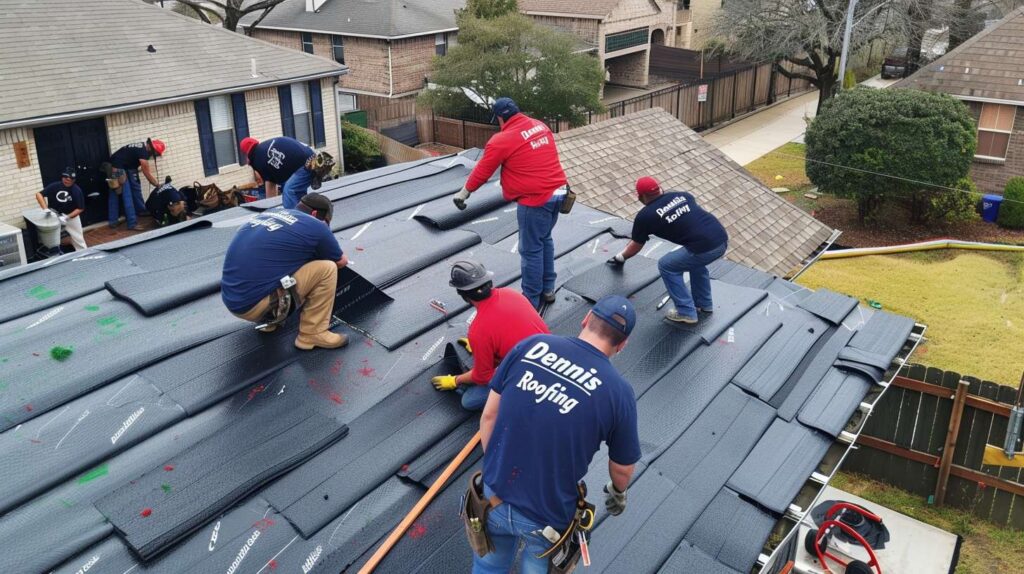
When Boerum Hill Roofs Need Repair Versus Full Replacement
The decision between roof repair and roof replacement depends on four factors I evaluate on every Boerum Hill property: membrane age, the extent of deterioration, drainage performance, and what’s happening at critical junctions-parapets, chimneys, skylights, and HVAC penetrations.
For flat roof systems, you’re looking at realistic service lives of 15-20 years for modified bitumen roofing, 20-25 years for EPDM roofing, and 15-20 years for tar and gravel roofs if they’ve been maintained. TPO roofing runs 15-20 years depending on the specific product and installation quality. When a roof reaches the final third of its expected lifespan and shows signs of widespread deterioration-surface cracking, seam separation, multiple leak points, ponding water that doesn’t drain within 48 hours after rain-you’re usually better off with roof replacement rather than serial roof repair attempts.
On a Dean Street mixed-use building last year, the owner had paid for three separate roof leak repair projects over eighteen months, spending about $6,200 total. Each repair addressed a specific leak: one at the front parapet flashing, one around a skylight curb, one at a plumbing vent penetration. When I did a full roof inspection before the fourth leak developed, the modified bitumen showed extensive alligatoring across 60% of the surface, the base flashings had separated from the parapet walls in multiple locations, and the roof had negative drainage sloping toward the building rather than the scuppers. The membrane was 23 years old. At that point, continued repairs were just delaying an inevitable flat roof installation while risking interior water damage. The building needed a new roof-specifically, a TPO roofing system with tapered insulation to correct the drainage issues that were causing water to pond and accelerate membrane failure.
Here’s how I walk owners through the repair-versus-replacement analysis:
| Roof Condition | Age Range | Typical Recommendation | Boerum Hill Cost Range |
|---|---|---|---|
| Isolated leak at flashing, membrane intact | Any age | Targeted roof repair (flashing, sealing) | $800-$2,400 |
| Multiple small leaks, surface cracking <30% | Under 12 years | Roof repair + roof coating/waterproofing | $3,500-$8,500 |
| Widespread deterioration, ponding issues | 15+ years | Full roof replacement | $12-$18 per sq ft installed |
| Storm damage, isolated section failure | Any age | Section replacement or full, depending on insurance | $4,500-$15,000+ |
Those Boerum Hill costs reflect typical brownstone and small commercial flat roof projects-generally 1,200 to 3,500 square feet. Larger commercial roofing projects on multi-story mixed-use buildings run $10-$15 per square foot for EPDM or TPO, while premium systems like fluid-applied waterproofing or standing-seam metal roofing can reach $18-$28 per square foot depending on substrate conditions and access challenges.
Flat Roofing Systems That Work for Brooklyn Brownstones
Most Boerum Hill brownstones and rowhouses have flat or low-slope roofs-technically anything under a 2:12 pitch, which means the roof rises less than two inches for every twelve inches of horizontal run. These roofs require membrane systems rather than shingle roofing, and the choice of membrane affects performance, longevity, and how the roof handles Brooklyn’s weather patterns: freeze-thaw cycles, summer heat that can push surface temperatures above 160°F, and occasional severe storms that test flashing details and drainage capacity.
Modified bitumen roofing remains popular on older brownstones because it’s been the standard for decades and performs reliably when installed correctly. The system uses asphalt-based sheets with polymer modifiers-either APP (atactic polypropylene) or SBP (styrene-butadiene-styrene)-that are torch-applied or cold-adhered in overlapping layers. Surface granules provide UV protection. The system handles thermal movement well and can be installed in colder weather than some alternatives, which matters for fall and winter roof installation projects. The downside: torch application requires experienced crews and fire-watch protocols. Service life runs 15-20 years with proper roof maintenance.
EPDM roofing-the black rubber roof you see on many Brooklyn buildings-offers excellent durability and weather resistance at a moderate cost. The synthetic rubber membrane comes in large sheets (often 10′ x 100′ rolls) that are mechanically fastened, fully adhered, or ballasted with stone. EPDM handles temperature extremes without brittleness, resists ozone and UV degradation better than older materials, and can last 25+ years. The seams are the critical detail: they’re joined with liquid adhesive or specially formulated tape, and proper seam construction determines whether you get two decades of service or chronic roof leak issues after ten years. I prefer fully-adhered EPDM on brownstones because it performs better in high winds and eliminates the ballast weight that can stress older roof structures.
TPO roofing (thermoplastic polyolefin) has gained market share over the past fifteen years, particularly for commercial roof projects and newer residential buildings. The white or light-gray membrane reflects heat, reducing cooling loads in summer-a real advantage on top-floor apartments and commercial spaces. TPO seams are heat-welded, creating watertight bonds that are generally stronger than EPDM’s adhesive seams. The membrane is lighter than modified bitumen and costs slightly less than premium EPDM products. Longevity depends significantly on formulation quality; early TPO products had inconsistent performance, but current-generation materials from reputable manufacturers typically deliver 18-22 years of service.
Tar and gravel roofs-technically “built-up roofing” or BUR-are the old-school Brooklyn flat roof: alternating layers of asphalt and reinforcing fabric topped with gravel. Many Boerum Hill buildings over fifty years old still have these systems or had them before switching to modern membranes. When well-maintained, tar and gravel roofs last 20-30 years, and the gravel protects the asphalt from UV damage while providing impact resistance and fire rating. The drawbacks: they’re heavy (important on older structures), roof leak detection is difficult because water travels between layers before showing up inside, and repairs are labor-intensive. For historic brownstones where you want to maintain traditional appearance or where co-op rules specify certain roofing types, tar and gravel remains a viable option, though I usually recommend modern alternatives unless there’s a specific reason to stay with BUR.
Metal roofing works beautifully on brownstone additions, rear extensions, and anywhere you have enough slope for water to shed properly. Standing-seam metal roof systems-typically aluminum or steel with concealed fasteners-last 40-50 years, handle snow and ice exceptionally well, and offer clean architectural lines that complement Brooklyn’s historic buildings. They’re also among the most expensive options at $18-$28 per square foot installed. I’ve specified metal roofing for several Boerum Hill projects where the owner wanted a permanent solution and the structure had the pitch to support it. For true flat areas, you’re back to membrane systems.
The Critical Details: Flashing, Penetrations, and Drainage
Ninety percent of roof leak problems I investigate in Boerum Hill aren’t membrane failures-they’re flashing failures. The chimney flashing separates from masonry after years of thermal movement. The skylight curb wasn’t built to proper height. The HVAC unit someone added ten years ago has deteriorated pitch pans that were never maintained. The parapet wall flashing didn’t extend high enough and water is wicking behind it.
Brooklyn building code requires base flashing to extend at least eight inches up vertical surfaces-parapet walls, chimneys, adjoining buildings-and be secured with termination bars and covered by counterflashing embedded in masonry. That detail matters because water doesn’t just sit on a flat roof; wind drives it sideways, and capillary action pulls it into any gap. On a Pacific Street brownstone, I found water entering through parapet flashing that was only five inches high-probably installed thirty years ago under different code requirements. During heavy rain with wind from the south, water was sheeting up the parapet face and getting behind the flashing, then traveling along the roof deck into the building. The roof leak repair required removing the existing base flashing, applying a code-compliant eight-inch system, and repointing the counterflashing into the masonry-about $3,200 for one parapet wall, but it solved leaks that had resisted four previous “quick fix” attempts.
Chimney flashing repair is its own specialty. Most Boerum Hill brownstones have masonry chimneys-often no longer used for heating but still present and penetrating the roof. Proper chimney flashing uses a two-part system: base flashing integrated with the roof membrane, and stepped counterflashing embedded in the chimney mortar joints. As the chimney and building move independently through seasonal cycles, the two-part system accommodates that movement. When contractors take shortcuts-using caulk instead of proper flashing, omitting counterflashing, or failing to embed metal into mortar joints-you get chronic leaks that return every few years. A complete chimney flashing repair on a standard brownstone chimney runs $1,800-$3,500 depending on chimney size, masonry condition, and whether repointing is needed.
Skylight installation and skylight repair require building a proper curb-a framed box that raises the skylight above the roof surface and allows flashing to be integrated with the roofing membrane. Code requires minimum curb height of four inches, but I typically build six-inch curbs because they handle water better during heavy rain and allow snow to shed without building up against the glazing. The flashing must extend up the curb sides, be secured at the top, and integrate with the skylight’s mounting flange. For skylight repair projects where the unit is in good condition but leaking, the problem is usually failed flashing or a deteriorated curb, not the skylight itself. Skylight installation on a flat roof-including curb construction, flashing, and a mid-grade operable unit-typically costs $3,200-$5,800 for a 2’x4′ or 3’x5′ unit.
Drainage might be the most underappreciated aspect of flat roofing. “Flat” roofs aren’t actually flat-they need minimum slope of 1⁄4 inch per foot toward drains or scuppers to prevent ponding water. Water that sits on a roof for more than 48 hours after rain accelerates membrane degradation, creates extra weight load, and promotes leak development as it finds microscopic openings and exploits them through freeze-thaw cycles. On older Boerum Hill buildings, original roof framing sometimes provides inadequate or negative slope-the roof actually slopes toward the building instead of toward drainage points. This happens when floor joists sag over time or when roof decking wasn’t installed with proper slope to begin with.
The solution is tapered insulation: rigid insulation panels manufactured with varying thickness to create slope on an otherwise flat deck. During a roof replacement project, we’ll design a tapered system that directs water toward existing or new drains, eliminates ponding areas, and provides positive drainage across the entire roof. This adds $2.50-$4.50 per square foot to roof installation cost but dramatically improves long-term performance and extends membrane life.
Emergency Roof Repair and Storm Damage
Emergency roof repair calls in Boerum Hill spike during three situations: severe thunderstorms with high winds that damage flashing or lift membrane sections, winter ice dams that force water under roofing at eaves and parapet walls, and the inevitable “we just discovered a leak during a showing/closing/renovation” scenario.
For storm damage repair and wind damage repair, response time matters because water intrusion accelerates once the roof envelope is compromised. We provide temporary weatherproofing-usually heavy-duty tarps mechanically fastened to prevent further water entry-within hours of an emergency call, then return for permanent repairs once weather permits. This is particularly important for insurance claim roofing projects, where documenting the damage sequence and implementing proper emergency measures affects claim outcomes.
Many Boerum Hill property owners don’t realize their insurance covers roof damage from storms, falling objects, or sudden failures, but not damage from deferred roof maintenance or gradual deterioration. If a wind event lifts your TPO roofing membrane at a seam, that’s a covered claim. If your 25-year-old EPDM roof finally develops leaks from age-related cracking, insurance won’t pay for roof replacement. This distinction matters because it affects whether you file a claim or pay out of pocket, and it influences timing-insurance work must be documented and completed according to adjuster requirements.
We handle insurance claim roofing regularly and know how to document damage for adjusters, provide estimates that match insurance company expectations, and work with public adjusters when necessary. Wind damage repair after a severe storm typically involves flashing replacement, membrane section repair, and addressing secondary damage like lifted edges or torn seams. Costs range from $2,500 for minor repairs to $15,000+ if large membrane sections require replacement.
Commercial Roofing for Boerum Hill Mixed-Use Buildings
Commercial roof repair and flat roof installation for Boerum Hill’s mixed-use buildings-the three- to six-story structures with retail below and residential or office above-require additional considerations beyond standard brownstone roofing. Larger roof areas, more complex drainage systems, rooftop HVAC equipment, parapet walls on all four sides, and the need to minimize business disruption all affect project planning and execution.
For commercial roofing projects, we typically work on occupied buildings where retail tenants can’t close during construction. That means staging material deliveries to avoid blocking sidewalks during business hours, using crane lifts or boom trucks instead of carrying materials through tenant spaces, and scheduling noisy work for early mornings or specific days. A 6,000-square-foot commercial roof replacement on a four-story mixed-use building typically takes seven to twelve working days depending on weather, existing conditions, and membrane choice.
Commercial roof repair often focuses on maintenance-intensive areas: HVAC curbs and penetrations, large skylight systems that illuminate interior commercial spaces, and roof access hatches. Regular roof inspection-annually or semi-annually for commercial properties-catches small issues before they become emergency repairs that threaten tenant spaces below.
Roof Maintenance, Coating, and Extending System Life
Proper roof maintenance adds five to eight years to membrane life and prevents 80% of the emergency repairs we respond to. For Boerum Hill property owners, this means annual roof inspection after winter, clearing drains and scuppers before fall, and addressing minor issues-loose flashing, small punctures, seam separations-while they’re still minor.
A professional roof inspection costs $350-$650 for a typical brownstone or small commercial building and includes checking membrane condition, testing all flashing details, verifying drainage function, examining penetrations and skylights, and providing a written condition report with photos. If you’re buying property in Boerum Hill, get a roof inspection before closing-I’ve evaluated dozens of buildings where sellers disclosed “roof in good condition” but inspection revealed systems at end of life or with significant deferred maintenance.
Roof coating and roof sealing can extend life on aging but still-functional membranes. Elastomeric roof coatings-liquid-applied products that cure to form a seamless, waterproof layer-work well on modified bitumen, EPDM, and metal roofing that shows surface aging but has intact structure underneath. The coating refreshes UV protection, seals minor cracks and seams, and can add five to ten years before roof replacement becomes necessary. Roof coating projects cost $3.50-$6.50 per square foot depending on surface preparation requirements, coating type, and how many coats the roof needs. This makes sense when your membrane is 15-18 years old, showing surface wear, but hasn’t reached the point of multiple leaks or structural issues.
Roof waterproofing goes beyond standard coating to address specific problem areas or provide enhanced protection. This might include fluid-applied waterproofing membranes at complex flashing details, penetration sealing around equipment, or full waterproofing systems over problematic substrates. For a Hoyt Street building where the owner wanted to create a roof deck over an existing EPDM roof without replacing the membrane, we installed a pedestrian-rated waterproofing system with proper drainage, creating a usable outdoor space while protecting the roof below.
Gutter Installation and Gutter Repair for Brooklyn Buildings
While many Boerum Hill brownstones have parapet walls and internal drains rather than exposed gutters, buildings with pitched roofs, rear extensions, or specific architectural styles need functioning gutter installation and maintenance. Gutters protect building facades, foundations, and basement spaces by controlling roof runoff.
We install seamless aluminum gutters (most common), copper gutters (for high-end brownstone work or historic accuracy), and steel gutters for commercial applications. Proper installation requires correct slope-minimum 1⁄4 inch per ten feet toward downspouts-adequate hanger spacing (every 24 inches for snow load), and downspouts sized for roof area (minimum 3×4-inch downspouts for every 600-800 square feet of roof).
Gutter repair typically addresses leaking seams, sagging sections from inadequate support, or damaged areas where ice buildup or debris caused failure. Copper gutter repair requires soldering and patina matching-specialized work that costs more than aluminum repair but maintains the appearance and value of premium installations.
Roof Leak Detection and Repair
Finding the source of a roof leak is often harder than fixing it. Water enters at one point-a failed flashing, a membrane crack, a separated seam-then travels along roof decking, insulation layers, or structural members before appearing inside the building, often fifteen or twenty feet from the actual entry point.
Roof leak detection starts with understanding building construction and water movement patterns. During a leak investigation, I’m looking at interior staining patterns, checking for water on structural members during active rain, and working backward from visible damage to likely entry points. On flat roofs, leak detection sometimes requires flood testing-deliberately ponding water on suspected areas while observing from below-or using infrared imaging to identify moisture within the roof assembly.
Once located, roof leak repair must address both the immediate entry point and any secondary damage. A $1,200 flashing repair might also require $800 in roof decking replacement if water damaged the substrate, plus interior repairs that are the owner’s responsibility. This is why early detection through regular roof inspection saves money-you fix a $300 seam separation before it becomes a $3,500 repair-plus-interior-damage situation.
Asphalt Shingle Roofing for Pitched Boerum Hill Roofs
While most Boerum Hill buildings have flat roofs, rear additions, dormers, and some architectural styles incorporate pitched roofs that require shingle roofing. We install asphalt shingle roofing-the most common pitched roof material-as well as architectural shingles, slate, and tile for specific applications.
Standard three-tab asphalt shingles last 18-22 years in Brooklyn’s climate and cost $4.50-$6.50 per square foot installed. Architectural or dimensional shingles-thicker products with varied appearance and better wind resistance-cost $5.50-$8.50 per square foot and last 25-30 years. For a typical brownstone rear addition with 400-600 square feet of pitched roof, roof installation with architectural shingles runs $3,200-$5,800 including tear-off, new underlayment, proper ventilation, and flashing at wall intersections.
New roof installations on pitched surfaces require attention to ventilation-proper intake at soffits and exhaust at ridge-to prevent moisture buildup and premature shingle failure. Many older Brooklyn additions lack adequate ventilation, which shortens shingle life and creates ice dam problems in winter.
Working With Dennis Roofing on Your Boerum Hill Property
Every Boerum Hill roofing project starts with proper assessment. We provide detailed roof inspection reports, explain your options clearly-repair versus replacement, material choices, timing considerations-and design solutions that match both your building’s needs and your budget reality. Whether you’re dealing with an emergency leak, planning a full roof replacement, or setting up preventive roof maintenance, you’ll work with experienced crews who understand Brooklyn buildings and the specific challenges of urban roofing work.
We handle permitting, coordinate with co-op boards when required, maintain job sites properly in dense residential neighborhoods, and complete projects on schedule. Our commercial roofing division works with property managers and building owners on everything from routine maintenance to complete reroofing of mixed-use buildings.
If you’re evaluating your Boerum Hill roof-or dealing with leaks, planning renovations that require roofing work, or simply want to know what condition your roof is actually in-contact us for a professional inspection and honest assessment. The goal isn’t always a new roof; sometimes it’s strategic repairs, sometimes it’s a coating system to extend life, and sometimes it’s acknowledging you have years of service left and just need a maintenance plan. But you need accurate information to make good decisions, and that starts with understanding exactly what’s happening twenty or forty feet above street level, where most property owners never look until there’s a problem.