
Quality Roofing Services for Bay Ridge Homes & Businesses
I’m Dennis, and I’ve spent 27 years working on Bay Ridge roofs, from the pre-war multi-family buildings near Shore Road to the mixed-use commercial properties on Third Avenue. I learned the trade from my dad, sweeping tar and gravel off flat roofs before I could see over the parapet wall. What I’ve learned in nearly three decades is this: the right roofing system, properly installed and maintained, will keep you dry through whatever the harbor throws at you. The wrong system-or the right system badly installed-will cost you thousands in repairs and lost business or ruined belongings.
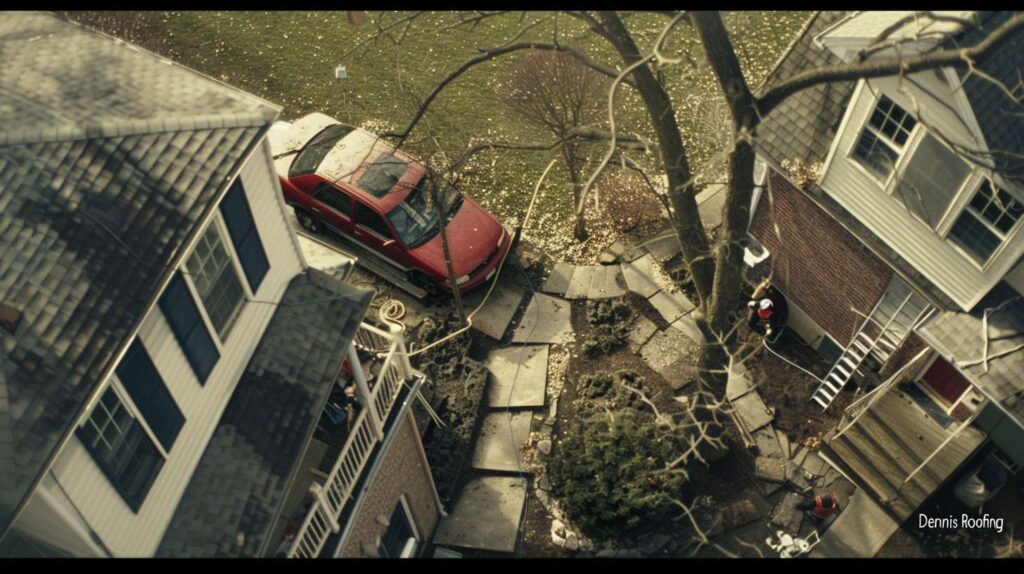
Whether you need roof repair after storm damage, a complete roof replacement on a shingle roof that’s reached the end of its life, or flat roof installation for a commercial building, the decisions you make now determine whether you’re calling a roofer every spring or forgetting your roof exists for the next 20 years.
Roof Leaks and Emergency Repairs: Why Bay Ridge Properties Need Fast Response
When water comes through your ceiling at 2 a.m., you need someone who can tarp the roof safely before dawn and come back with a permanent fix. Emergency roof repair in Bay Ridge isn’t just about speed-it’s about understanding how these buildings are put together.
On a flat roof over a 5th Avenue deli two years ago, the owner called me after water started dripping onto the sandwich counter. Three other contractors had “fixed” the leak over the previous year. Each one sealed what looked like the problem spot, collected their check, and left. The leak kept coming back. When I spent an hour doing proper roof leak detection, I found the actual entry point fifteen feet uphill from where water appeared inside, hidden under rooftop HVAC equipment. Water was traveling along the roof deck, following the slope, before finding its way through the ceiling. That’s the reality of roof leak repair: where you see water inside is rarely where it’s entering the roof.
I use a combination of visual inspection, water testing, and sometimes infrared scanning to find the true source. For residential roofing, leaks around chimneys, skylights, and valleys between roof planes are the usual suspects. For commercial roofing, check anywhere pipes or equipment penetrate the roof membrane, plus all the seams where different roofing materials meet parapet walls.
Storm damage is different. After high winds, I’m looking for lifted shingles, punctures from flying debris, torn membrane edges on flat roofs, and damaged flashing. Wind damage repair needs to happen fast-a small tear in your roof membrane can let water saturate insulation and decking, turning a $400 patch into a $12,000 roof section replacement. If you have property insurance, document everything with photos before any temporary repairs, and call us to help with your insurance claim roofing paperwork. I’ve worked with every major insurer active in Brooklyn, and I know exactly what documentation they require to process storm damage repair claims without delays.
Flat Roofing Systems: The Commercial and Multi-Family Standard
Most commercial buildings in Bay Ridge have flat roofs-or more accurately, low-slope roofs with just enough pitch to drain water. If you own or manage one of these properties, your roofing material choice matters more than almost any other building decision you’ll make.
Here’s how the main flat roofing systems compare for Bay Ridge conditions:
| Roofing System | Typical Lifespan | Cost per Sq Ft (Installed) | Best For | Bay Ridge Considerations |
|---|---|---|---|---|
| EPDM (Rubber Roof) | 20-25 years | $4.50-$7.00 | Simple roof shapes, budget-conscious projects | Excellent durability in salt air; seams are potential weak points in high wind |
| TPO Roofing | 15-20 years | $5.50-$8.50 | Energy efficiency, white reflective surface | Heat-welded seams handle coastal weather; cooler building temps in summer |
| Modified Bitumen | 15-20 years | $5.00-$8.00 | Heavy foot traffic, multiple roof penetrations | Tough and repairable; performs well with rooftop HVAC equipment common here |
| Tar and Gravel | 20-30 years | $6.00-$10.00 | Traditional multi-family buildings, low maintenance | Proven track record on pre-war Bay Ridge buildings; heavy but protective |
EPDM roofing-the black rubber membrane you see on many commercial buildings-remains popular for good reason. It’s durable, relatively affordable, and handles temperature swings without cracking. The material itself can last 25 years or more, but the seams where sheets overlap need proper installation. I use peel-and-stick seam tape on smaller residential flat roofs and fully adhered systems on larger commercial projects. The salt air coming off the Narrows doesn’t bother EPDM at all, which matters when you’re three blocks from the water.
TPO roofing has gained ground over the past decade, especially on commercial buildings where energy efficiency matters. The white reflective surface can cut cooling costs by 15-20% compared to black EPDM. More importantly for longevity, TPO seams are heat-welded together, creating a watertight bond stronger than the membrane itself. On a four-story mixed-use building on Third Avenue, we installed TPO specifically because the owner was tired of seam failures with his old EPDM roof. Five years later, zero leaks, even through some serious coastal storms.
Modified bitumen roofing is my go-to recommendation when you have a lot of rooftop equipment or regular foot traffic. It’s a tough, rubberized asphalt material applied in layers, and it holds up to the abuse that HVAC technicians and building maintenance workers dish out. On flat commercial roofs with multiple condensers, exhaust fans, and satellite dishes, modified bitumen just works. It’s also repairable-if you get a puncture or tear, we can heat-weld a patch that will last as long as the original membrane.
Traditional tar and gravel roofs are still on many of Bay Ridge’s older multi-family buildings, and for good reason. These built-up roofing (BUR) systems have been protecting buildings here since before World War II. Layers of tar alternating with reinforcing fabric, topped with gravel for UV protection and fire resistance. They’re heavy-you need a solid roof deck-but they last. When a tar and gravel roof finally fails, it’s usually because water got under the membrane at a flashing detail, not because the field of the roof wore out.
For any flat roof installation, drainage is everything. Water sitting on a flat roof-what we call ponding-will find its way through eventually, no matter how good your membrane is. I design drain placement and roof slope to get water off within 48 hours of a storm. On retrofit projects where we can’t change the structure, we sometimes build tapered insulation systems that create drainage paths to existing drains.
Shingle Roofing: The Residential Standard
Most Bay Ridge row houses, semi-detached homes, and single-family properties have pitched shingle roofs. When homeowners call about a new roof, they’re usually talking about asphalt shingle roofing, which covers about 80% of the residential roofs I see.
Asphalt shingles come in two basic types. Three-tab shingles are the economy option-flat, uniform, and they’ll give you 15-20 years if properly installed. Architectural (dimensional) shingles cost about 20% more but look better, last longer (25-30 years), and handle wind better because they’re thicker and heavier. In Bay Ridge, where we get regular coastal winds, I steer almost everyone toward architectural shingles. The cost difference on a typical 1,800 square foot roof is maybe $800-$1,200, but you get an extra decade of life and much better wind resistance.
Proper roof installation matters more than shingle quality. I see failed roofs all the time where decent shingles were installed badly-wrong nailing pattern, no ice and water shield in valleys, inadequate ventilation. A good installation includes ice and water barrier along eaves and valleys, proper underlayment over the entire roof deck, correct nailing (four nails per shingle in the nailing zone, not driven too deep or too shallow), and adequate attic ventilation to prevent heat buildup that ages shingles from below.
On a roof replacement last summer on Colonial Road, the existing shingles were only twelve years old but completely shot-curled, cracked, granules gone. The problem wasn’t the shingles. The previous contractor hadn’t installed ridge vents, so the attic hit 140+ degrees every summer day, cooking the shingles from underneath. We stripped everything down to the deck, added proper ridge and soffit ventilation, installed ice and water shield, and put on new architectural shingles rated for high wind. That roof will make it to 2050.
Metal Roofing: Long-Term Value
Metal roofs aren’t common on traditional Bay Ridge row houses, but I install them on contemporary additions, garage roofs, and occasionally full home reroofs when owners want something that’ll outlast them. Metal roofing comes in standing seam panels (the vertical ribs you see on modern buildings) or metal shingles that mimic the look of slate or wood shake.
The advantages are real: 40-50 year lifespan, no maintenance beyond occasional cleaning, excellent in high wind (nothing to blow off), fire resistant, and surprisingly good in our climate because metal doesn’t absorb heat the way asphalt does. The downside is cost-figure $12-$18 per square foot installed, roughly double the cost of quality asphalt shingles. You make that back over time through longevity and eliminated maintenance, but the upfront number stops a lot of homeowners.
I installed standing seam metal on a modern addition near Shore Road Parkway three years ago. The owners wanted something low-maintenance that would complement the contemporary architecture. We used a charcoal gray finish that doesn’t show salt spray residue, and the panel joints are concealed-no exposed fasteners to leak or corrode. It looks sharp, and they’ll never think about that roof again.
Roof Components: Flashing, Skylights, and Gutters
More leaks start at transition points than anywhere else. Chimney flashing repair is one of my most common calls. The flashing-metal pieces that seal the joint between chimney and roof-takes a beating from temperature changes. The brick expands and contracts at a different rate than your roof, and eventually the seal fails. Proper chimney flashing uses a two-part system: step flashing woven into the shingles, and counter flashing embedded in the chimney mortar joints. When I see caulk as the only seal between chimney and roof, I know that’s failing within two years.
Skylight installation and skylight repair come up frequently in Bay Ridge row houses where natural light is precious. A properly installed skylight won’t leak-but most skylight “leaks” I investigate aren’t really skylight problems at all. They’re condensation from temperature differences, or they’re roof leaks near the skylight that get blamed on the skylight because that’s where water appears inside. When I do actual skylight installation, I treat it like chimney flashing-multiple layers of waterproofing, step flashing on the sides, and a small cricket on the uphill side to divert water around the curb.
Gutter installation and gutter repair fall into that category of “not technically roofing but I do it because it matters.” Gutters protect your roof, your siding, your foundation, and your basement. In Bay Ridge, where many row houses sit close together and water needs to be directed deliberately, functional gutters aren’t optional. I install 6-inch gutters as standard now-the old 5-inch size can’t handle the volume during heavy rain, and they overflow, sending water behind the fascia board and into your walls.
Proper gutter pitch is subtle-you shouldn’t see it from the street-but critical. We aim for 1/4 inch drop per 10 feet of run toward downspouts. Too little pitch and water sits in the gutter, breeding mosquitos and eventually rusting through. Too much pitch and it looks terrible. Downspouts should discharge at least 6 feet from the foundation, either to an underground drainage system or to splash blocks that direct water away from the building.
Preventive Care: Inspections, Maintenance, and Coating
A roof inspection every 2-3 years catches small problems before they become expensive ones. I spend about 45 minutes on a typical residential inspection, checking shingle condition, flashing integrity, gutter function, attic ventilation, and any signs of leaks from inside. For commercial roofing clients, I recommend annual inspections, especially before winter. On flat commercial roofs, I’m looking at membrane condition, seam integrity, drain function, flashing, and any rooftop equipment that might have damaged the roof during installation or service.
Roof maintenance is different from repair. It’s the scheduled cleaning, minor adjustments, and preventive work that extends roof life. For flat roofs, that means keeping drains clear, removing debris that holds moisture, and checking that all penetration seals remain intact. For shingle roofs, maintenance includes gutter cleaning (twice a year minimum), removing moss or algae growth, replacing any lifted or damaged shingles, and checking that attic ventilation remains unblocked.
Roof coating can extend the life of certain flat roofing systems by 5-10 years when the membrane is still structurally sound but showing surface wear. I use elastomeric coatings on EPDM, TPO, and modified bitumen roofs that are 15-20 years old and starting to show UV degradation but don’t have widespread failures. The coating restores waterproofing, adds UV protection, and on commercial buildings with white coating, improves energy efficiency. It’s not magic-if your roof has active leaks, structural damage, or widespread membrane failure, coating won’t fix it. But on the right roof at the right time, it’s a cost-effective way to postpone replacement.
Roof sealing and roof waterproofing overlap considerably with coating, but they also include targeted work on specific problem areas. I use high-quality sealants around penetrations, at flashing details, and on seams showing early wear. On parapet walls-common on Bay Ridge’s commercial and multi-family buildings-the coping cap and the joint where roof membrane meets brick are critical waterproofing details that need periodic attention.
Roof Replacement: When Repair Isn’t Enough
Most roofs give you warning before they fail completely. Widespread shingle damage, multiple leak points, visible membrane deterioration, or a roof that’s exceeded its expected lifespan-these are signs that roof replacement makes more financial sense than ongoing repairs.
For residential roofing replacements on shingle roofs, I can usually complete the work in 2-3 days depending on size and complexity. We strip off old shingles (down to the deck if there are multiple layers or damage, over existing if conditions allow and code permits), inspect and repair any deck damage, install new underlayment and ice-and-water barrier, then install new shingles. Ridge vents go in, new pipe boots around any plumbing vents, new step flashing at walls and chimneys. Cleanup is thorough-magnetic sweepers pick up nails, dumpsters are removed promptly.
For commercial roof repair or replacement on flat roofs, the timeline and disruption depend heavily on building use. On a retail building, we often work early mornings or weekends to minimize impact on business operations. On multi-family buildings, we coordinate with tenants and building management to handle the noise and restricted access periods.
A complete flat roof installation on a commercial building involves stripping the old membrane (or in some cases, installing a new membrane over the old if conditions allow), inspecting and replacing any damaged insulation or decking, installing new insulation if we’re upgrading thermal performance, then installing the new membrane system. Flashing gets replaced at all parapet walls, curbs, and penetrations. Drains are reset to the new roof level. If there’s rooftop equipment, we coordinate the reinstallation and ensure all curbs and penetrations are properly flashed.
Working With Insurance After Storm Damage
After major storms, I spend almost as much time on documentation and insurance paperwork as I do on actual repairs. Most property insurance policies cover sudden storm damage-wind, hail, falling trees-but not gradual deterioration or maintenance issues. The key to a successful insurance claim roofing project is clear documentation of what damage was caused by the storm versus what was pre-existing.
I take extensive photos showing wind-lifted shingles, hail impact marks, punctures from debris, torn membrane sections-whatever the storm caused. I document the extent of interior water damage if leaks occurred. I provide detailed estimates separating storm damage repairs from any recommended maintenance or pre-existing issues. Most adjusters are reasonable if you present clear information. Some are difficult. I’ve worked with enough of them to know how to document claims in a way that gets approved without endless back-and-forth.
After the March nor’easter I mentioned earlier, I worked on seventeen insurance claims in Bay Ridge alone. Most were approved within two weeks. A few required supplemental documentation or a second adjuster visit. One required a call from the building owner’s attorney before the insurer moved forward-not because the damage wasn’t real, but because the adjuster was claiming the roof was too old to be covered, even though the policy had no such exclusion. We got it resolved, but it took six weeks instead of two.
Making the Right Choice for Your Bay Ridge Property
Whether you need emergency repair tonight or you’re planning a replacement for next spring, the roofing decisions you make now will affect your property for the next two to three decades. The difference between a roof that protects your investment and one that becomes a recurring headache comes down to three things: appropriate material selection for your building type and location, proper installation by experienced contractors who understand Bay Ridge’s specific challenges, and regular maintenance to catch small problems early.
I’ve seen beautiful roof installations fail within five years because nobody maintained them. I’ve seen budget-grade materials last 25 years because they were perfect for the application and meticulously cared for. The goal isn’t to sell you the most expensive roof system-it’s to match the right solution to your specific building, budget, and long-term plans.
If you’re dealing with an active leak, call us now for emergency roof repair. If you’re planning ahead, let’s schedule a thorough roof inspection so you know exactly what you’re working with. And if you’re somewhere in between-you know your roof is aging but you’re not sure whether to repair or replace-we’ll give you an honest assessment of your options and what each choice means for the next 5, 10, and 20 years.
After 27 years on Bay Ridge roofs, I can tell you this: every building is different, every roof has its own story, and there’s no one-size-fits-all solution. But there is always a right answer for your specific situation, and finding it starts with understanding what you actually need versus what someone’s trying to sell you. That’s what we do.