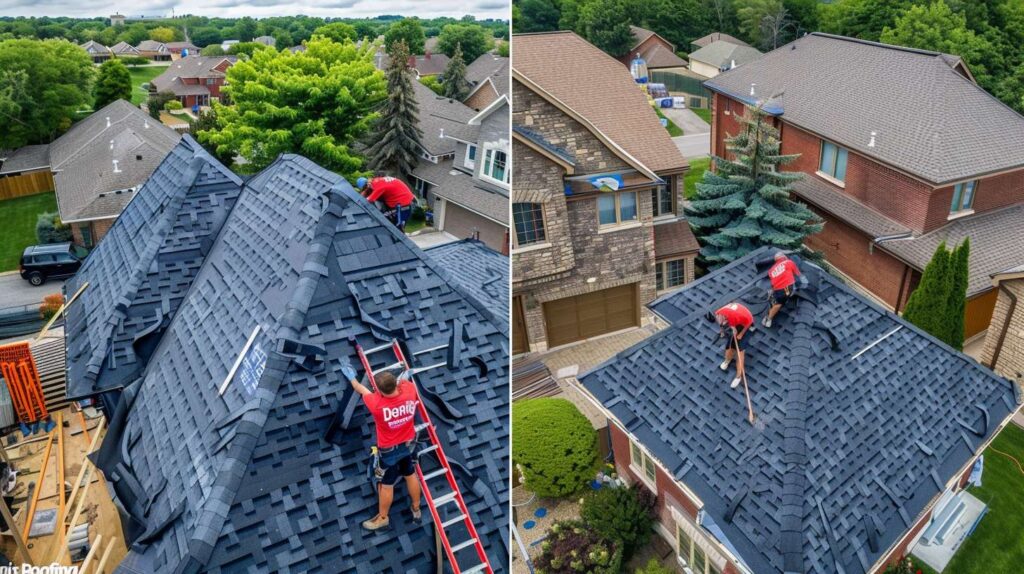
Prospect Lefferts Gardens Was Built to Impress – the Roof Is Part of That
Charm Hides More Roof Trouble Than Most Owners Expect
I’m just being real with you, some of the best-looking homes in Prospect Lefferts Gardens are the easiest to misread from the sidewalk. The decorative cornices, the clean brickwork, the painted wood trim-all of it can pull your eye away from drainage failures, aging flat roof membranes, compromised flashing, and moisture paths that have been moving quietly through the structure for years. What the eye sees is a handsome facade. What the water knows is a completely different story.
On these blocks near Prospect Park, I’ve learned to look up before I look at the front door. Row houses here carry a lot of architectural personality at street level, but the rear flat roofing sections, the parapets, the cornices-as Tyrone Hicks, with 17 years of roofing experience and a specialty in older residential roofing systems, has seen again and again-those areas age on their own schedule, completely independent of how sharp the front facade looks. A cornice can look brand new while the flat roof behind it is holding a season’s worth of trapped moisture.
Myth vs. Fact: What Older Attractive Roofs in Prospect Lefferts Gardens Actually Tell You
| Myth |
What Actually Happens |
| If the front roofline looks straight, the roof is healthy. |
The front slope is often the last area to show damage. Rear flat sections, parapet walls, and drainage points fail first-and none of that is visible from the curb. |
| A small ceiling stain means a small repair. |
Water travels along rafters, sheathing, and membranes before it shows up on a ceiling. The entry point can be several feet-or rooms-away from the stain. |
| Skylights are usually the leak source. |
Skylight curb flashing is commonly blamed, but chimney flashing, parapet base flashing, and failed membrane seams much more frequently steer water toward the skylight opening. |
| Flat roofs fail suddenly with no warning. |
Flat roof failures almost always give signals first: bubbling membrane, slow-draining scuppers, lifted seams at transitions. The problem is those signs go unread for years. |
| A patch is always cheaper than replacement. |
Repeated patching over failed or layered membranes traps moisture beneath each new layer, accelerating deck rot. Three patches on the same section will cost more than one honest roof replacement. |
Quick Facts: What Matters First on These Roofs
Most Deceptive Area
Rear flat roof behind decorative frontage – hidden from the street, first to fail.
Most Overlooked Issue
Chimney and parapet flashing – compromised joints that redirect water invisibly for seasons.
Best First Service
Roof inspection with leak-path tracing – find where the water travels, not where it exits.
Common Result
Repairable if caught before decking softens – but the window closes faster than owners expect.
When a Roof Needs Repair, Replacement, or Immediate Response
Signals that still point to targeted repair
Here’s my blunt opinion: a beautiful house with a neglected roof is just expensive denial. Roof repair, roof replacement, and emergency roof repair aren’t interchangeable options-they’re answers to different questions, and the wrong answer costs real money. I remember a Saturday in late fall when we were doing a roof inspection on a handsome old place near the park, and the homeowner said, “I just need a patch, nothing fancy.” By noon we had peeled back enough of the roof covering to find trapped moisture under layers from at least two old roof replacement jobs, plus soft decking near the parapet. That conversation shifted fast. Targeted repair makes sense when the damage is localized, the deck is still solid, and the failure is isolated to one flashing joint or one membrane section. The moment moisture has moved into the structure below, you’re talking about something bigger.
The truth is, old Brooklyn homes don’t fail all at once-they whisper first. Bubbling membrane on a flat roof section. Granule loss concentrated in one corner of a shingle roof. A chronic dark ring on the plaster ceiling that comes back every spring no matter what you caulk. Lifted seams at parapet base flashing. Soft spots you can feel when you walk the roof. Interior staining that shows up two rooms away from any obvious exterior problem. Drainage that slows down after rain and never fully clears. Each of those is the house saying something out loud-and the homeowners who hear it early are the ones who get a repair bill instead of a replacement conversation.
If water has already found the decking, delay is not thrift-it’s damage.
Red flags that make a new roof the honest answer
Decision Tree: Repair, Replacement, or Emergency Roof Repair?
Active leak during or right after rain?
YES
Emergency Roof Repair
Leak containment + full roof inspection to trace water path. Covers flat roof seams, shingle blow-offs, and flashing-driven leaks.
NO
Localized issue under 20% of roof and deck still sound?
YES
Targeted Roof Repair
Isolated chimney flashing repair, single shingle section, or flat roof seam patch.
NO
Multiple leak areas, trapped moisture, repeated patches, or soft decking?
YES
Roof Replacement / New Roof Consultation
Full system tear-off, deck inspection, and new installation – flat roof, shingle roof, or mixed system.
Service Choice by Roof Condition
| Roof Condition |
What the Eye Sees |
What the Water Knows |
Best Service |
| Isolated chimney flashing leak |
Small ceiling ring near fireplace wall, dry most of the time |
Open joint at flashing step is routing water along the masonry before it exits the ceiling |
Targeted Roof Repair |
| Aging flat roof with seam failure |
Membrane looks intact, maybe some bubbling at edges |
Open seams have allowed water under the membrane for at least one season; substrate may be soft |
Roof Replacement |
| Storm-opened section with interior water |
Missing shingles or lifted membrane visible; active drip inside |
Open deck exposure with live water entry – every hour matters |
Emergency Roof Repair |
| Layered old roof with soft deck |
Surface looks patched and livable, no obvious open holes |
Multiple old layers have trapped moisture against the deck; structural integrity already compromised |
Full Roof Replacement / New Roof |
Details That Decide Whether the House Stays Dry
I remember one copper gutter that looked like jewelry and drained like a clogged bathtub. That’s actually a good way into one August afternoon, around 3:30, when I got called for emergency roof repair after a summer storm rolled through and pushed water into a top-floor ceiling near a skylight. The customer was certain the skylight installation had failed. But when I got up there, the real culprit was chimney flashing repair that had been done sloppy years earlier and was steering water sideways along the underlayment before it pooled near the skylight curb and came through. That’s a job that required roof leak detection before any roof leak repair made sense-tracing the actual path, not just addressing where the stain landed. The skylight itself was fine. Skylight repair would have fixed nothing. The gutter had a pitch problem contributing to overflow, and the chimney flashing was the engine of the whole mess. Until you find the path, you’re just spending money on dry-run patches.
If you asked me on the ladder what matters first, I’d say: where does the water hesitate? On flat roofing systems, water doesn’t always drain-it lingers, and where it lingers is where it eventually finds a way in. That’s why roof waterproofing, roof sealing, and roof coating applied without correcting the underlying drainage logic are short-lived. Gutter installation done right means pitch, downspout placement, and discharge location are all working together-not just a pretty copper run that moves water six inches and drops it against the foundation. And here’s an insider tip worth keeping: the best time to catch seam weakness and moisture clues on a flat roof is early morning or right after a weather shift. The sun dries the evidence fast. If you’re up there at 7 a.m. after an overnight rain, the weak spots show themselves in ways they simply won’t at noon.
What the Eye Sees vs. What the Water Knows
| What the Eye Sees |
What the Water Knows |
| Pretty cornice, clean decorative frontage |
Failing rear flat roof seam quietly saturating the substrate |
| Ceiling stain near the skylight |
Side-driven chimney flashing leak steering water toward the skylight opening |
| Shiny, intact-looking gutter run |
Poor discharge location pooling water against the foundation wall |
| Dry-looking flat roof on a warm afternoon |
Morning dew still clinging to open seam edges, revealing membrane weakness before the sun burns it off |
| Patched membrane surface, looks repaired |
Trapped moisture locked below the patch, degrading the deck from underneath |
| Clean parapet cap, solid-looking top |
Open joint at base flashing letting water run directly behind the membrane at the wall-to-roof transition |
Critical Roof Details to Check on Older Prospect Lefferts Gardens Properties
- ✅ Chimney flashing – step flashing, counter flashing, and top cap seal at every course
- ✅ Skylight curb – curb height, flashing integration, and sealant condition around the frame
- ✅ Parapet base flashing – where the membrane terminates at vertical walls; most commonly overlooked joint on row houses
- ✅ Drains and scuppers – clear openings, correct elevation relative to membrane, no standing water ring
- ✅ Gutter pitch – consistent slope toward downspouts with no sag or reverse pitch collecting debris
- ✅ Membrane seams – lap joints on EPDM, TPO, or modified bitumen checked for separation or bubbling
- ✅ Roof-to-wall transitions – every point where the horizontal roof plane meets a vertical surface, including rear additions and stair bulkheads
Materials Behave Differently on Brooklyn Buildings Like These
Flat systems for row houses and mixed-use buildings
Prospect Lefferts Gardens isn’t a single building type-it’s a mix. Row houses, rear extensions, low-slope additions, and ground-floor commercial spaces under residential units all show up on the same block. That variety matters when you’re choosing a flat roof system. EPDM roofing is a rubber roof membrane that handles temperature swings well and repairs cleanly when you can isolate the problem seam-solid on fully adhered rear flat sections. TPO roofing runs lighter and reflects heat effectively on south-facing low-slope commercial sections, but seam quality during installation is everything. Modified bitumen roofing is a layered system that performs well on complex flat roofs with multiple penetrations and transitions, and it patches more intuitively than single-ply membranes. Tar and gravel roofs are still on plenty of these buildings-heavy, durable when maintained, but difficult to inspect because problems hide under the ballast. Each of these systems has a place; the neighborhood mix just means you can’t default to one answer.
A roof on one of these houses is like a dress shoe with a worn sole: polished up top, trouble underneath. I was on a row house off Maple Street just after 7 in the morning, and the owner kept pointing at this pretty cornice line like it was the whole story. What actually mattered was a tired seam on the flat roof behind it, where overnight dew had made the weak spot show itself before the sun baked it dry. That job stuck with me because the house looked perfect from the sidewalk, but the roof was already telling a different story. That same lesson applies to sloped sections – shingle roof and asphalt shingle roofing on the front pitch might look years younger than the material actually is, because the decorative street-facing side sheds water cleanly while rear sections take more punishment from pooling and wind-driven debris. Metal roofing and metal roof accents on bay windows and dormers are long-lived when the flashing at every termination is maintained, but they’re not self-correcting – a loose cap flashing on a metal bay roof will let water in just as reliably as any other failure, and it’ll do it quietly.
Roofing Materials for Older Prospect Lefferts Gardens Homes & Mixed-Use Properties
| Roofing Type |
Pros |
Cons |
| Asphalt Shingle |
Period-appropriate appearance on sloped fronts; cost-effective; wide repair availability |
Granule loss accelerates on north-facing sections; not suitable for flat or low-slope areas |
| Metal Roofing |
Long lifespan; good on bays and dormers; low maintenance once properly installed |
Higher install cost; flashing terminations require precision; thermal expansion can open joints over time |
| EPDM Roofing |
Flexible in temperature extremes; good seam adhesion when fully adhered; repairable with patches |
Seam count increases complexity on roofs with many penetrations; dark surface absorbs heat |
| TPO Roofing |
Heat-reflective; lighter weight; strong when seams are heat-welded correctly |
Seam failure from improper installation is common; less forgiving on older, uneven decks |
| Modified Bitumen |
Multiple layers add redundancy; handles complex roof shapes with many transitions well; field-repairable |
Heavier system; torch application requires experienced crew; older torch-down layers can become brittle |
| Tar and Gravel |
Durable ballasted surface; UV resistant; long track record on Brooklyn flat roofs |
Heavy; inspection is difficult under gravel; repairs require stripping ballast; not ideal for roof with drainage problems |
Which System Fits Which Part of the Building?
▸ Front Sloped Roof
Where it works: Street-facing pitched sections on row houses and semi-detached homes.
Where it fails: Tried on low-slope rear extensions – asphalt shingles below a 3:12 pitch trap moisture at laps.
Detail that matters most: The drip edge and starter course at the eave. A compromised first course allows water to wick back under the shingle field.
▸ Rear Flat Roof
Where it works: EPDM or modified bitumen on fully flat rear sections with controlled drainage to internal drains or scuppers.
Where it fails: Any system applied over existing layers without removing trapped moisture first – the new membrane traps the problem underneath.
Detail that matters most: Scupper height relative to the finished membrane surface. If the scupper is too high, water ponds against every seam.
▸ Porch / Extension Roof
Where it works: Modified bitumen or TPO on low-slope extensions connected to the main structure.
Where it fails: Where the extension meets the main building wall – that roof-to-wall transition is almost always where water enters first.
Detail that matters most: Counterflashing height and reglet seal at the wall transition. No amount of membrane quality compensates for an open flashing joint here.
▸ Low-Slope Commercial Section
Where it works: TPO for commercial roofing applications requiring heat reflectivity and a clean-looking single-ply finish.
Where it fails: Any system installed without addressing foot traffic from HVAC equipment access – punctures and seam walking are the main failure modes.
Detail that matters most: Walk pads at equipment access routes. Saves the membrane from the one thing that no coating fixes.
▸ Coated Aging Membrane
Where it works: Roof coating applied over a structurally sound existing membrane that has surface weathering but intact seams and dry substrate.
Where it fails: Over any membrane with open seams, soft substrate, or moisture already under the surface – the coating seals the damage in, not out.
Detail that matters most: Substrate moisture test before coating. Coating is maintenance, not repair.
▸ Metal Accent or Bay Roof
Where it works: Standing seam or flat-lock metal on bay tops, dormers, and decorative roof sections where visual character matters.
Where it fails: Where thermal movement opens the cap flashing joint at the wall – common on bay roofs that weren’t designed for metal’s expansion rate.
Detail that matters most: Continuous cleat attachment and lap direction relative to drainage. A reversed lap on a metal roof sheds water straight into the seam.
Before You Call for Roofing Service, Know What to Look For
The more specific you can be before a contractor arrives, the faster a real diagnosis happens. Note when the leak appears – during heavy rain, after wind-driven rain from a particular direction, or the morning after a storm when the roof has had time to drain. Which room and which wall the stain is nearest to matters. Whether your gutters overflow during moderate rain tells me something about drainage load. If you know the roof has had past roof coating applications or multiple layers, say so – that history shapes what we’re likely to find. And if a recent storm event preceded the problem, document it. Storm damage repair and wind damage repair are covered under many homeowners’ insurance policies, and for insurance claim roofing situations, having photos of the stain, the timeline, and any visible exterior damage gives your adjuster something real to work from. Dennis Roofing doesn’t promise claim outcomes, but solid documentation from the start helps the process move on facts rather than guesswork.
Before You Call: What to Note for Roof Inspection or Leak Service
- Leak timing: Does it appear during rain, right after, or hours later?
- Room location: Which room, which wall, how far from the exterior?
- Photo of the stain: Capture it wet if possible – a dried ring tells less than an active stain.
- Recent storm or wind event: Date, direction if you noticed, and intensity.
- Visible exterior overflow: Are gutters overflowing? Downspouts backing up?
- Age of roof if known: Year installed, material, and whether it was a full tear-off or re-cover.
- Prior patches or coatings: Any past roof maintenance, roof sealing, or repair work you’re aware of.
- Whether the issue is active now: Is water entering at this moment, or was the last event days ago?
Urgent vs. Can-Wait: Roofing Situations
📞 Call Right Away
- Active dripping inside the building – live water entry means every hour counts
- Storm-opened membrane or missing shingles – exposed deck deteriorates fast
- Ceiling bulge or sagging drywall – water has accumulated above the ceiling plane
- Flashing torn loose at chimney or parapet – open joint with no protection
- Leak near an electrical fixture – water and wiring is a safety issue, not just a roof issue
🗓 Can Be Scheduled
- Cosmetic granule loss with no active leak – worth monitoring; not an emergency
- Routine roof cleaning – moss, debris, and staining addressed on your schedule
- Planned gutter installation or gutter repair – no urgency if drainage is currently working
- Annual roof maintenance – seasonal check before winter or after storm season
- Non-urgent roof inspection before a property sale – important, but plannable
Common Questions: Roofing Service in Prospect Lefferts Gardens
Can a roof leak start far from the stain?
All the time. Water enters at one point and then travels along rafters, sheathing, or underlayment before it exits through the ceiling. On older Brooklyn row houses, a flashing failure at the chimney can produce a stain two rooms away near a window. Roof leak detection means tracing the path, not patching the stain.
How do I know if I need roof replacement instead of roof repair?
If the issue is localized to one section and the decking underneath is still solid, targeted repair usually makes sense. But if you’ve patched the same area more than once, if moisture has gotten into the deck, or if the system has multiple old layers, repair stops being honest. A real roof inspection should tell you which side of that line you’re on.
Are flat roof leaks harder to find?
Generally, yes. On sloped roofs, water follows gravity and tends to travel predictably. On flat roofing, water spreads laterally and can pond in low spots far from the actual breach. Seam failures, parapet base flashing gaps, and drain surround failures all look similar from below the ceiling and require systematic roof leak detection to isolate.
Can skylight repair solve a leak by itself?
Sometimes, but not usually. Skylights get blamed for a lot of leaks they didn’t cause. If chimney flashing or parapet flashing is steering water toward the skylight opening, repairing the skylight curb does nothing for the actual entry point. Worth doing a full inspection before committing to any single repair.
Will storm damage repair help with an insurance claim roofing process?
Having a documented storm damage repair assessment from a licensed contractor strengthens an insurance claim by providing specific findings – not just a general complaint. Wind damage repair claims especially benefit from a written scope that identifies what failed, when, and how. We can provide that documentation, but the claim outcome depends on your policy terms and adjuster review.
If your Prospect Lefferts Gardens home is worth protecting, the roof has to be the first thing you take seriously – not the last. Contact Dennis Roofing for a thorough roof inspection, honest roof repair, or a straight-talk replacement recommendation from a team that knows these blocks and won’t tell you what you want to hear just to close a job.