
Park Slope Has Some of the Most Beautiful Rooftops in Brooklyn – They Deserve to Stay That Way
I’ve had people tell me they wish they’d called a year earlier. Some of the most striking rooftops in Park Slope are exactly the ones homeowners stop worrying about – because when a building looks that good from the sidewalk, it’s easy to assume the roof is holding up just as well as the cornice. That assumption is where trouble quietly starts, and this guide is here to help you protect both the look and the performance of what’s sitting above your head.
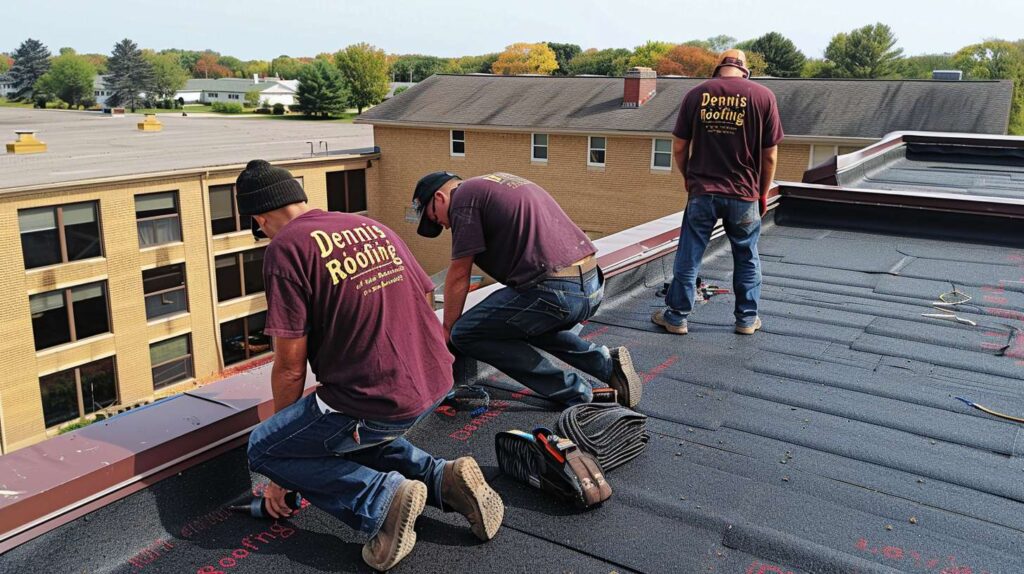
Beauty Can Hide the First Roofing Problem
A Brooklyn roof is a lot like a stage set – beautiful from the house, unforgiving behind the curtain. What you admire from the sidewalk: the neat parapet caps, the clean brownstone facade, the charming dormer lines – that’s the front-of-house view. What actually decides whether water gets in is happening somewhere else entirely. One missed cue in flashing, drainage, or sealing, and the whole performance goes sideways before anyone in the audience notices.
Here’s the part I say more often than people expect: pretty is not protective. I remember standing on a brownstone block just after 7 a.m. on a foggy October morning, looking up at a gorgeous Park Slope roofline while the homeowner kept apologizing for “just a tiny stain” near the nursery window. By noon, our crew had traced it to failed flashing behind a decorative parapet cap. The building was immaculate from the street. The failure point was completely invisible until you knew where to look. The hidden spots to watch in Park Slope – parapets, flashing lines, roof drains, edges, skylights, and gutters – are exactly the places that fail first and show last. That’s why a proper roof inspection should come before any decision on repair or replacement.
| Myth | Fact |
|---|---|
| A clean facade means the roof is sound. | The facade and the roof are separate systems. A freshly pointed brownstone can sit directly below a failing flat roof membrane that hasn’t shown interior damage yet – but will. Residential roofing service starts with looking above the stonework, not at it. |
| No interior leak means no roof issue. | Water can travel several feet from where it enters before it ever shows up on a ceiling. By the time a stain appears, moisture may have already been sitting in insulation or wood decking for weeks. Commercial roofing inspections often find membrane failures with zero interior evidence at the time of discovery. |
| A new gutter fixes ponding water. | Ponding on a flat roof is a drainage and slope problem, not a gutter problem. If water is sitting in the middle of a membrane, new gutters at the edge won’t touch it. The drain, the membrane pitch, and possible sagging all need to be assessed separately. |
| Original brownstone details protect modern roof membranes. | Historic masonry details – decorative cornices, cast-iron coping, ornamental parapets – are architectural, not waterproofing. They were never designed to seal a roof membrane. Modern residential roofing still requires proper flashing, sealants, and transitions regardless of what era the building comes from. |
| A small stain can wait until next season. | Small interior stains mark where water is exiting, not where it entered or how far it traveled. One season of freeze-thaw cycles, or one heavy storm, can turn a localized moisture problem into widespread deck damage. Waiting is rarely cheaper. |
Parapet caps and flashing
Skylight curbs and seals
Drain lines on flat roofing
Gutter edge transitions at cornices
Look at the Roof System, Not Just the Roof Surface
On a Park Slope block with three brownstones in a row, you can spot the tired roof before you ever spot the leak. Step back from any one roofline and look at the full building envelope: the masonry edges, the coping, the drainage path, the flashing lines at every penetration. In Park Slope specifically – where row houses share walls, where rear extensions add low-slope decks behind the main roof, where shaded blocks near Prospect Park West keep debris sitting on drain edges longer than they should – every one of those details affects how the roof system performs as a whole. The building is connected. A weak point anywhere sends water looking for the easiest path in.
For row houses and brownstones
For a Park Slope row house or brownstone, residential roofing service typically starts with a thorough roof inspection before anything else is recommended. That inspection looks at the full surface condition, drainage, flashing, and penetrations. From there, the path forward might be targeted roof repair – maybe chimney flashing repair where the stack meets the membrane, or skylight repair at a curb that’s started to separate. It might mean gutter repair at the fascia transition, or focused roof waterproofing at a vulnerable parapet base. Ongoing roof maintenance – seasonal cleaning, sealing at edge transitions, checking flashing annually – is what keeps small repairs from becoming large ones. The goal is to intervene early, not reactively.
For mixed-use and multi-unit buildings
Low-slope and flat roof systems on mixed-use or multi-unit buildings have their own set of decisions. Commercial roofing service in Park Slope covers the full range of low-slope systems: flat roof assessment and flat roofing repair, flat roof installation when a membrane has reached the end of its useful life, TPO roofing and EPDM roofing for buildings that need durable, long-cycle membranes, modified bitumen roofing on older buildings where it was the original system, and tar and gravel roof evaluation where that original assembly is still in place. Roof coating and roof sealing are sometimes the right answer for a system that’s aging but hasn’t failed – extending life without triggering a full replacement. I’m Gina Ferraro, and with 17 years in roofing operations and a specialty in tracing leaks across decorative Brooklyn rooflines and flat roofing systems, the cases I see most often are ones where a building owner knew something was off but wasn’t sure which system was to blame – and that’s exactly where a methodical inspection pays for itself.
| Roof Type | Common Warning Sign | Best First Service | When Replacement Becomes Likely |
|---|---|---|---|
| Asphalt Shingle Roofing | Granule loss in gutters, curling or missing shingles, dark streaking | Roof inspection + targeted shingle repair or spot replacement | Widespread granule depletion, multiple bare patches, or age past 20 years |
| Metal Roofing | Rust spots, loose fasteners, separated seams, corrosion at flashing transitions | Fastener inspection, seam resealing, flashing repair | Panel corrosion across multiple sections, structural rust, or failed underlayment |
| EPDM Roofing | Membrane shrinkage pulling from perimeter, seam separation, surface cracking | Seam repair, perimeter re-bonding, drain collar resealing | Widespread shrinkage, brittle membrane, or repeated seam failure in multiple zones |
| TPO Roofing | Weld failures at seams, surface chalking, flashing separation at walls | Heat-weld seam repair, flashing reattachment, surface inspection | Membrane at or past 20-year mark, repeated weld failures, saturated insulation board |
| Modified Bitumen Roofing | Surface splitting near drains or walls, blistering, exposed fabric plies | Roof coating application, split repair, drain flashing replacement | Multiple split locations, exposed base sheet, or moisture in insulation beneath membrane |
| Tar and Gravel Roof | Gravel displacement exposing felts, alligatoring surface, ponding at edges | Core sample analysis, drain inspection, targeted ply repair | Full ply delamination, exposed deck, or system age past 25 years without recovery coating |
When Weather Turns, Delay Gets Expensive Fast
I once spent a rainy Tuesday looking at a stain no bigger than a postcard on the ceiling of a top-floor bedroom. The homeowner had been watching it for three months, assuming it was a condensation issue. What we found was a failed flashing seam at a skylight curb, with water traveling across the membrane and entering the decking about four feet from where it finally showed. That small stain represented a much larger moisture path, and by the time we opened it up, the decking around the curb needed replacing too. A tiny symptom, a much longer story.
One August afternoon, right before a thunderstorm rolled in, I was on the phone with a couple who had postponed a roof inspection because they were focused on repainting their top-floor trim. That night they called back needing emergency roof repair after water came in around a skylight, and I can still hear the husband saying, “We spent all this money making it look beautiful from the street.” That’s how fast storm damage repair becomes the priority – and once a wind event or heavy rain exposes a failure point, the scope of work expands fast. Roof leak detection after a storm needs to be thorough, not just a visual pass, and if you’re filing with insurance, photo documentation and a written scope are what make an insurance claim roofing submission defensible. Waiting through another storm doesn’t just delay the fix – it usually changes the price and the scope in the wrong direction.
When the cue is missed at the roofline, the whole house hears it later.
- Don’t rely on caulk-only patching as a permanent fix – it masks the entry point without addressing the failure, and it makes accurate diagnosis harder later.
- Don’t climb onto a wet flat roof to investigate. EPDM and modified bitumen surfaces are slick when wet and can be further damaged by foot traffic in compromised areas.
- Don’t assume the nearest stain is the source. Water travels. The ceiling stain and the actual roof failure can be several feet apart, sometimes in a completely different section of the roof.
- Don’t delay photo documentation after storm damage if an insurance claim may follow – timestamped photos of both interior and exterior damage are what support a successful claim, and conditions change fast.
Choose the Service That Protects the Roofline You Want to Keep
Repair-first situations
If you showed me your cornice line and said, “Doesn’t this still look solid?” I’d ask what’s happening two feet behind it. Targeted roof repair is absolutely the right move when the underlying system is still sound and the failure is specific: a chimney flashing repair where the stack has pulled away from the membrane, an isolated skylight repair at a curb seam, a gutter installation or gutter repair at an edge transition that’s routing water back toward the fascia. Roof sealing and roof coating at vulnerable transitions – parapet bases, drain collars, wall-to-membrane junctions – can add years to a system that isn’t ready for replacement. Roof waterproofing at specific penetration points is often what stands between a stable roof and an expensive interior claim. The repair-first approach works when you’re dealing with one failure, a relatively recent roof installation, and drainage that’s still functioning as designed.
Replacement-level situations
A retired architect once walked me through his Park Slope row house at 5:30 p.m. with original hand-drawn renovation sketches spread across the dining table, pointing out every exterior detail with total pride. What he missed was that his aging modified bitumen roofing had started to split near the drain line, and I had to tell him as gently as possible that a roof can be historically charming and still be two hard rains away from serious roof leak repair – or worse. That’s when I knew replacement was the right conversation. When a roof has a repeated leak history, an end-of-life membrane, widespread seam failure, or layers of previous patchwork that have made the original system unreadable, a new roof isn’t a loss – it’s the smarter long-term call. The material choice matters too: a shingle roof in asphalt shingle roofing might be right for a pitched section, while a metal roof or metal roofing option makes sense where longevity and low maintenance are the priorities, and a rubber roof works well on flat rear extensions where flexibility and drainage are the primary concerns. And honestly, the right comparison isn’t just repair cost versus replacement cost – it’s repair value measured against the building’s age, the leak pattern history, and how much life is realistically left in the current system. I’d rather recommend replacement one season early than watch a homeowner keep funding patchwork on an exhausted system.
Questions Homeowners Ask Before They Commit
Blunt truth: a roof does not care how much the facade renovation cost. The questions Park Slope homeowners ask before calling are usually the right ones – and a contractor worth hiring should be able to answer each one plainly, with photos and scope tied to the actual leak path rather than a general pitch. One insider tip worth carrying with you: ask the contractor to show you the entry point, the water’s travel path, and the exit stain separately. If they only point to the stain and work backward from there, they may be missing the real source entirely – and that’s how expensive repeat repairs happen.
-
✓
Age of the roof, if known – even an approximate year helps establish what system is likely in place and where it sits in its service life. -
✓
Where the leak or stain appears inside – note the room, the wall or ceiling location, and how large the affected area is. -
✓
When the leak happens – during rain, after heavy rain, only in certain wind directions, or all the time regardless of weather. -
✓
Photos of the ceiling or exterior issue – taken from multiple angles if possible, including any visible exterior damage, staining, or displaced materials. -
✓
Whether wind or storm triggered the issue – if a weather event preceded the damage, note the date and what you observed immediately after. -
✓
Whether the building is residential or mixed-use/commercial – this affects which systems and service approaches apply from the first conversation.
If your Park Slope roof looks beautiful from the street but has started giving small warnings behind the curtain – a stain that shows up after rain, a drain that’s slow, a flashing line that moved over the winter – reach out to Dennis Roofing before those details become interior damage. The right time to call is before the next storm, not after it.