
Professional Roofing Contractors for Navy Yard
Here’s something most Navy Yard building owners learn the hard way: a single failed penetration detail around a rooftop HVAC unit or vent can cause more interior water damage-and operational downtime-than a 20-foot tear in the center of your membrane. Why? Because water finds its way through any gap in flashing, then travels laterally along seams and insulation layers before dropping into your workspace or inventory, often 30 feet away from the actual entry point. That’s why the right roofing contractor for Navy Yard properties isn’t the one who can cover the most square footage in a day-it’s the one obsessed with penetration details, termination bars, equipment curbs, and the hundred small decisions that determine whether your flat roof performs for 20 years or fails in five.
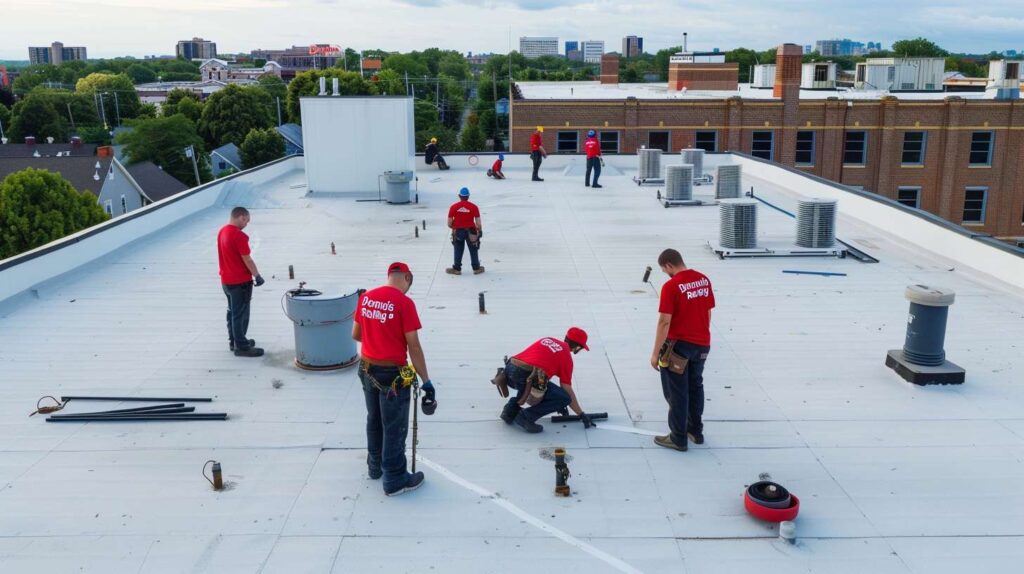
I’m Carla. I’ve spent 12 years on roofs across Brooklyn, starting as a project engineer on large industrial jobs inside the Brooklyn Navy Yard itself before I realized I preferred steel-toe boots on the membrane to spreadsheets in a construction trailer. These days with Dennis Roofing, I manage everything from targeted roof leak repair on converted warehouses to multi-building commercial roofing systems with EPDM, TPO, and modified bitumen membranes supporting heavy rooftop equipment. Navy Yard-area buildings-whether you’re on Flushing Avenue, Navy Street, or inside the Yard proper-present specific challenges: older tar and gravel roof assemblies being converted to modern use, roofs crowded with HVAC and solar installations, salt air off the East River accelerating corrosion, and tight crane access that turns a straightforward roof replacement into a logistics puzzle.
This guide breaks down how to make roofing decisions for Navy Yard properties based on what I’ve learned managing both emergency repairs at 2 a.m. and planned replacements with full engineering specifications.
The Navy Yard Roofing Decision Framework
Before you call for a quote, you need to understand which service category your building actually needs. Most property managers waste time getting bids for roof replacement when targeted repair would solve the problem for five more years, or they patch a roof that’s three years past its useful life and then act surprised when leaks multiply. Here’s the framework I use on initial site visits:
Immediate Repair makes sense when your roof is under 15 years old, the leak is localized (typically around penetrations, transitions, or a damaged section from foot traffic or equipment work), and the rest of the membrane shows no widespread alligatoring, blistering, or loss of granules on shingle sections. On a light industrial building near Navy Street last spring, we traced a persistent leak to failed chimney flashing where an HVAC contractor had cut through the base flashing during a unit swap. The repair took four hours, cost $850, and gave the building another 6-8 years of service on a roof that was otherwise sound. That’s roof leak repair done right-surgical, cost-effective, documented with photos so the owner knows exactly what failed and why.
Strategic Replacement is the call when your roof is 18-25 years old (depending on system type), showing multiple problem areas, requiring frequent repairs that add up to 15-20% of replacement cost annually, or when you’re planning building upgrades that require roof penetrations anyway. A converted warehouse off Flushing Avenue had an aging EPDM system with acceptable overall condition but chronic ponding issues, failing seams near drains, and an owner planning to add rooftop solar within two years. We recommended full flat roof installation with TPO membrane, tapered insulation to eliminate ponding, and properly engineered curbs and pathways for future solar-turning a $28,000 reactive problem into a $52,000 proactive solution that added 25-year warranty coverage and made the solar installation $8,000 cheaper by eliminating remedial work later.
Full New Roof Installation is non-negotiable when your roof has reached the end of its service life (25+ years for most commercial systems), shows systemic failure across multiple zones, has compromised structural deck, or when code changes triggered by other building work require current energy compliance. You can’t patch your way out of a roof that’s fundamentally done.
Flat Roofing Systems for Navy Yard Commercial Buildings
Nearly every building in the Navy Yard area runs a flat or low-slope roof-it’s the architecture of industrial and commercial Brooklyn. Understanding your options matters because the wrong membrane choice costs you $15,000-$40,000 in premature failure or performance problems.
TPO roofing has become my default recommendation for most Navy Yard commercial applications. White TPO membrane reflects heat (dropping cooling costs 12-18% on buildings with significant air conditioning load), heat-welded seams create watertight bonds stronger than the membrane itself, and the material handles thermal cycling well-important when you’ve got dark winter days hitting 20°F and summer membrane surface temps reaching 160°F. On a mixed-use building near the Navy Yard entrance, we installed a 60-mil TPO system over polyiso insulation with a 20-year NDL warranty for $11.50 per square foot including all penetration flashing, new drains, and edge metal. That roof supports two rooftop HVAC units, gets walked regularly by maintenance staff, and after four years shows zero seam issues or surface degradation.
EPDM roofing (rubber membrane) costs slightly less-typically $9.50-$11 per square foot installed-and works well on roofs with minimal foot traffic and simple geometry. The seams are adhesive- or tape-bonded rather than heat-welded, which makes them the weak point long-term, but EPDM’s flexibility handles building movement well and the black membrane can actually help with heating costs in shoulder seasons. I specify EPDM for warehouse roofs, storage buildings, and applications where budget is tight and the owner commits to annual inspections and seam maintenance.
Modified bitumen roofing is what I recommend when you need a tough, puncture-resistant surface that can handle serious rooftop equipment, constant foot traffic, or temporary material storage. The base sheet and cap sheet are torch-applied or cold-adhesive installed, creating a monolithic surface with excellent waterproofing. A fabrication facility inside the Navy Yard runs modified bitumen over their main production building specifically because they stage steel and equipment on the roof during renovations-something that would destroy TPO or EPDM. Cost runs $10-$13 per square foot depending on the number of plies and surface granule type.
Tar and gravel roof systems are what you’ll find on older Navy Yard buildings, and here’s what you need to know: they’re done. If you’ve got an existing built-up roof with gravel surfacing that’s still performing, you can maintain it and squeeze out remaining life with strategic roof coating and patching. But when it’s time for replacement, no experienced contractor recommends installing new tar and gravel-the labor costs are higher, the weight loads your structure unnecessarily, and modern single-ply membranes outperform them in every category except nostalgia.
| Roofing System | Best Use Case | Lifespan | Cost per Sq Ft (Installed) |
|---|---|---|---|
| TPO | Commercial, high-traffic, equipment-heavy roofs | 20-30 years | $11.00-$14.00 |
| EPDM | Warehouse, simple geometry, budget-focused | 18-25 years | $9.50-$11.50 |
| Modified Bitumen | Heavy equipment, material storage, high-abuse | 15-22 years | $10.00-$13.00 |
| PVC | Chemical exposure, restaurant exhaust, grease | 20-30 years | $12.00-$15.50 |
| Spray Polyurethane Foam | Complex geometry, tapered insulation needed | 20-25 years | $8.50-$11.00 |
Residential Roofing: Shingle and Metal Systems
The few residential properties and mixed-use buildings with sloped roofs near Navy Yard typically run asphalt shingle roofing or, increasingly, metal roofing. If you’re on a townhouse near the Yard or managing a small residential building, here’s what matters:
Asphalt shingle roof replacement costs $450-$625 per square (100 square feet) for architectural shingles with proper underlayment, ice-and-water shield, and new flashing. A typical 1,800-square-foot residential roof runs $8,100-$11,250 installed. These roofs last 22-28 years in Brooklyn’s climate with proper attic ventilation-which many older buildings lack, cutting lifespan to 16-20 years as heat buildup degrades the shingles from underneath. During any shingle roof replacement, I insist on inspecting and upgrading ventilation (ridge vents, soffit vents) because it’s the single factor that determines whether you get 20 years or 28 years from your investment.
Metal roof installation costs more upfront-$850-$1,400 per square depending on material (steel vs. aluminum vs. copper) and profile (standing seam vs. metal shingle)-but delivers 40-60 year lifespan with minimal maintenance. I’ve seen standing seam metal roofs in Red Hook and Brooklyn Heights that are 50+ years old and still performing perfectly. For Navy Yard-area properties within two miles of the East River, metal roofing makes particular sense because salt air accelerates asphalt shingle granule loss and metal handles it without degradation. A small mixed-use building near Clinton Hill went with steel standing seam at $32,000 for 2,400 square feet; the owner’s analysis showed breakeven vs. shingles at year 18, with 25+ years of additional service after that.
Roof Leak Detection and Emergency Repair
Here’s what actually happens when you call for emergency roof repair: we show up, you point to the ceiling stain or active drip, and then I tell you the actual leak is probably 15-40 feet away from where water’s coming in. Water enters through a failed detail, travels along the membrane-to-substrate interface or insulation layer, then drops through the first opening it finds-which is rarely near the entry point.
Professional roof leak detection on flat commercial roofs uses a combination of visual inspection (looking for obvious tears, failed seams, deteriorated flashing), moisture meters (detecting saturated insulation under an intact-looking membrane), and occasionally infrared scanning on large roofs where pinpointing the entry saves thousands in exploratory cuts. On a creative studio building off Navy Street, the owner had patched the same “leak” three times in two years. I spent 90 minutes with a moisture meter and found saturated insulation in a 20×30 zone near an old HVAC curb that had been removed years earlier but never properly flashed over. The membrane looked fine from above, but water had been entering through the poorly detailed fill patch for years, traveling under the membrane, and dropping into the studio space 35 feet away. We cut out the saturated section, rebuilt the curb area properly with new insulation and membrane, and charged $2,800 for work that actually solved the problem instead of chasing symptoms.
Emergency roof repair during active weather-heavy rain, snowmelt, or after storm damage-focuses on temporary weatherproofing (tarps, emergency patching with mastic and fabric, temporary sealing) to stop immediate damage, followed by permanent repair once conditions allow proper installation. I keep emergency materials staged during storm season specifically for Navy Yard-area clients because the dense commercial-industrial nature of the neighborhood means a roof leak isn’t just an inconvenience-it’s downtime, damaged inventory, and lost revenue.
Roof Waterproofing, Coating, and Maintenance
The most cost-effective roofing work is often the least dramatic: systematic roof maintenance that extends service life 40-60% beyond what you’d get with install-and-ignore. A commercial roof that might last 18 years with no attention can deliver 28-30 years with annual inspections, minor repairs, and strategic coating.
Roof coating serves two purposes: it restores weatherproofing to aging-but-intact membranes, and it provides reflective surface that reduces cooling costs. On modified bitumen and EPDM roofs that are 12-15 years old showing surface wear but no systemic problems, I recommend acrylic or silicone coating at $2.50-$3.80 per square foot. This adds 8-12 years of service life for about 25% of replacement cost. The key is applying coating before you have widespread leaks-it’s preventive maintenance, not leak repair. A warehouse building near the Yard entrance coated their 15-year-old EPDM roof in 2019 for $14,000; that same roof today (five years later) is still leak-free and the owner’s planning to get another 5-7 years before replacement, turning an 18-year roof into a 27-year roof for a fraction of replacement cost.
Roof sealing and roof waterproofing work focuses on transitions, penetrations, and detail areas where most leaks originate. During maintenance visits, I’m sealing around vent pipes, re-bedding loose flashing, applying mastic to seams showing early separation, and addressing small punctures before they become big problems. This work costs $850-$1,800 annually for a typical 8,000-12,000 square foot commercial roof and catches 90% of problems before they cause interior damage.
Roof cleaning matters more than most owners realize, especially on flat roofs with drainage issues. Debris accumulation around drains causes ponding, which accelerates membrane degradation and adds structural load. Organic growth (moss, algae) on shingle roofs holds moisture against the surface and reduces lifespan. I recommend twice-annual cleaning for Navy Yard commercial roofs, timed for late spring (clearing winter debris before summer storms) and mid-fall (clearing leaves before winter).
Storm Damage, Insurance Claims, and Wind Damage Repair
Storm damage repair in the Navy Yard area typically involves wind-blown debris puncturing membranes, wind uplift tearing sections of roofing loose from substrate, or equipment knocked over by high winds damaging surrounding roof areas. The key to successful insurance claim roofing work is documentation before you touch anything: photos from multiple angles, detailed notes on extent of damage vs. pre-existing conditions, and clear separation between storm damage (covered) and maintenance issues (not covered).
I’ve worked with property owners on dozens of insurance claims, and here’s what makes the difference: calling a roofing contractor who understands insurance requirements before you call the adjuster. We document everything with time-stamped photos, provide detailed scopes of work that separate emergency temporary repairs from permanent restoration, and communicate directly with adjusters in their language (per-square costs, code upgrade requirements, matching materials). On wind damage repair claims, the fight is usually over how much surrounding roof area needs replacement to properly match and tie in repairs-insurance wants to patch 200 square feet while proper roofing practice requires 800-1,200 square feet to maintain warranty and waterproofing integrity.
After major storms, I prioritize roof inspection calls for commercial clients because problems caught in the first 48 hours prevent secondary damage that insurance won’t cover. A small puncture that gets temporary patching immediately costs $400; the same puncture ignored for two weeks until it’s soaked insulation and damaged interior finishes costs $8,000, with insurance covering only the direct roof damage.
Chimneys, Skylights, and Gutters
Chimney flashing repair is the most common roof leak source on older Brooklyn buildings with sloped roofs. The flashing system-step flashing along the sides, counter-flashing embedded in brick, and saddle flashing above the chimney-fails when mortar deteriorates, metal corrodes, or building movement opens gaps. Proper repair requires removing and replacing both the roof-level flashing and the counter-flashing embedded in masonry, with fresh mortar joints and proper overlap sequencing. Cost runs $950-$1,800 depending on chimney size and brick condition. Shortcuts-like caulking over failed flashing-last 4-8 months before the leak returns.
Skylight installation on commercial and residential buildings requires curb-mounted systems with proper flashing integration, structural framing to carry snow loads, and either operable or fixed glazing depending on ventilation needs. We install Velux and Fakro skylights on residential projects ($1,400-$2,800 per unit installed) and custom-curbed polycarbonate or glass systems on commercial buildings ($2,200-$5,500 per unit). Skylight repair typically addresses failed seals on older units (which means replacement, not repair-you can’t rebuild modern sealed glazing) or flashing failures around the curb (which we can repair if the skylight unit itself is sound).
Gutter installation and gutter repair on Navy Yard buildings matters because proper drainage protects not just the roof but foundation, masonry, and below-grade spaces. We install K-style and half-round gutters in aluminum, steel, or copper, sized properly for roof area and rainfall intensity (Brooklyn requires 5-inch gutters as minimum for most residential applications, 6-inch or commercial box gutters for larger buildings). Cost runs $12-$18 per linear foot for aluminum, $22-$35 for copper. Gutter repair-resealing joints, replacing damaged sections, resecuring hangers-costs $350-$850 for typical work. The mistake I see constantly: undersized gutters installed by contractors who don’t calculate capacity, resulting in overflow during heavy rain that defeats the entire purpose of having gutters.
Commercial Roof Repair and Maintenance Planning
Professional commercial roof repair in the Navy Yard area requires understanding that your roof is a working surface under constant stress: HVAC equipment vibrating 24/7, maintenance staff walking traffic patterns that wear specific paths, seasonal thermal cycling that moves the membrane 2-4 inches across large expanses, and rooftop loading from temporary equipment, material staging, or snow accumulation.
The commercial buildings that get 25-30 years from roofs rated for 20 years are the ones running annual inspection and maintenance contracts. Here’s what that looks like: I visit twice per year (spring and fall), spend 2-3 hours walking the entire roof with moisture meter and camera, document condition of membrane, flashing, penetrations, drains, and equipment curbs, make minor repairs on the spot (sealing small separations, clearing drains, re-securing loose items), and provide written report with photos showing what we found and what we addressed. Cost runs $1,200-$2,400 annually depending on roof size and complexity. That investment catches small problems at the $200-$800 repair stage instead of the $6,000-$15,000 emergency stage.
For flat roof installation on commercial projects, I work with property managers and owners on system selection that balances initial cost, expected lifespan, maintenance requirements, and warranty coverage. A 20-year NDL (No Dollar Limit) warranty costs 15-20% more than a 20-year material-only warranty, but it covers labor and materials for any warranty-covered failure-worth it if you’re managing a building with tenants where downtime for leak repairs costs more than the premium. On owner-occupied industrial buildings where the owner has maintenance capability and can accept occasional repair, material-only warranties make more sense and reduce installed cost.
Choosing Dennis Roofing for Navy Yard Projects
Dennis Roofing handles everything from emergency leak repair on a Saturday morning to engineered roof replacement systems on multi-building commercial properties. What makes us effective in the Navy Yard area specifically: we understand the access constraints (narrow streets, active loading docks, limited crane positioning), the building types (converted industrial, modern commercial, mixed-use with occupied spaces below), and the operational reality that roof work has to happen around your business schedule, not despite it.
We maintain liability and workers compensation insurance at levels required for commercial work inside the Navy Yard itself ($2M general liability, $1M workers comp), carry manufacturer certifications for TPO, EPDM, and modified bitumen systems that protect your warranty, and pull permits properly so your roof work doesn’t create problems during future building inspections or sales.
For roof inspection, leak detection, or estimates on repair vs. replacement, call Dennis Roofing. We’ll give you a straight assessment based on what your building actually needs, not what generates the biggest invoice. Sometimes that’s a $900 repair. Sometimes it’s a $60,000 replacement. But you’ll know why, with photos and documentation that let you make the decision with full information-which is exactly how roofing contractors should work.