
Mill Basin Homes Are Well-Kept – Here’s How to Make Sure the Roof Reflects That
I understand why people get this wrong. The cleanest, most carefully tended homes in Mill Basin are often the ones where roofing trouble hides the longest – because when the front steps are swept and the brickwork looks sharp, it’s hard to imagine that water is quietly working its way through a flashing gap somewhere out of sight. Curb appeal doesn’t have an opinion about what’s happening under the shingles.
Why Polished Homes Can Keep Roof Trouble Out of Sight
On a Mill Basin block where every hedge is trimmed and the window boxes are straight, a roof problem doesn’t announce itself – it waits. The trouble is that the same pride homeowners put into the visible parts of a house can actually delay the call to get a roof looked at, because nothing on the surface suggests anything is wrong. That’s not a knock on anyone. It’s just how hidden water damage works.
Follow the water with me for a second. A roof isn’t one flat thing – it’s a system of lanes, merges, and managed flow. Rain hits the surface, moves down slope, passes through valleys, clears penetrations like chimneys and skylights, and finally exits through gutters and downspouts. When every lane is open, water moves fast and nothing backs up. When one lane narrows – a lifted flashing edge, a failed skylight seal, a gutter that’s slowing runoff at the drip edge – water slows down, finds the next available path, and takes it indoors. Water is not, it turns out, impressed by landscaping.
| What Mill Basin Homeowners Assume | What Actually Happens |
|---|---|
| If it looks straight from the curb, it’s probably fine. | Hidden edge and flashing failures often start exactly where no one is looking – rear valleys, back slopes, and roofline transitions. |
| Clean gutters mean the whole roof system is healthy. | Gutters can be spotless while the fascia, drip edge, and roof edge behind them are actively failing. |
| A small stain indoors always starts directly above the stain. | Water travels sideways – sometimes several feet – along rafters and sheathing before it shows up on a ceiling or wall. |
| Only storms cause serious roof damage. | Slow leaks around flashing and low-slope areas can cause more structural damage over time than a single weather event. |
| Newer-looking shingles mean no inspection is needed. | Roof age, prior patchwork, and the condition of penetrations matter far more than how the surface looks from below. |
Quick Facts: Hidden Roof Issues on Mill Basin Homes
Chimney flashing, rear valleys, skylight perimeters, and low-slope-to-pitched-roof transitions.
A professional roof inspection – not guessing from the sidewalk or waiting for a ceiling stain to grow.
Roof repair, roof leak detection, chimney flashing repair, and gutter repair – often resolved without full replacement.
Decking rot and insulation moisture that develop well before the shingles show any visible sign of wear.
Where Water Hesitates, Backs Up, and Sneaks In
Places That Fool Homeowners Most Often
Here’s the blunt part: water rarely needs a wide-open hole to get inside. It needs a weak seam, one lifted flashing edge, a failed seal around a skylight, or a gutter line that’s backing runoff up under the drip edge. That’s it. Joe Santangelo – with 17 years of roofing experience and six years before that restoring theater marquees and copper storefront trim across southern Brooklyn – has learned to read rooflines the way a traffic engineer reads an intersection. Those years working copper details and ornamental metalwork trained him to catch edge failures and flashing movement that most roofers step right over without noticing.
I was on a ladder before breakfast one morning when I pulled up to a Mill Basin house on a gray Tuesday around 7:15 a.m. The front beds were trimmed perfectly, brickwork spotless, and the owner kept saying, “But the roof looks fine from the street” – and honestly, she wasn’t wrong about that. Then I lifted one shingle tab near the rear valley and felt the decking go soft under two fingers. A tiny flashing gap had been routing water into the sheathing for months, maybe longer, and not one drop had made it to the ceiling yet. The house looked sharp. The decking told a different story.
Canal-adjacent homes in Mill Basin deal with a specific combination: humidity that doesn’t fully clear overnight, wind-driven rain that hits rear slopes and side walls at angles standard drainage paths aren’t designed for, and roof edges that take the brunt without much protection when gutters slow or clog. A neat property doesn’t change any of that physics. Appearance is not diagnosis – and that’s not a criticism of how anyone maintains their home. It’s just a fact about how water moves.
| Roof Area | What Usually Starts There | What the Homeowner May Notice | Likely Service |
|---|---|---|---|
| Chimney Base | Step or counter flashing separates from masonry | Stain on ceiling near fireplace wall, often appearing after heavy rain | Chimney flashing repair, roof leak repair |
| Skylight Perimeter | Sealant or flashing curb ages out or was installed with shortcuts | Dripping or streaking around the skylight frame indoors | Skylight repair, roof sealing, roof inspection |
| Rear Valley | Valley flashing lifts or debris builds up, redirecting water flow | Soft decking, musty smell in upper rooms, no visible exterior sign | Roof inspection, roof leak repair |
| Gutter Line / Drip Edge | Missing or corroded drip edge lets water wick behind gutter into fascia | Rotting fascia, peeling paint under eaves, water pooling at foundation | Gutter repair, roof waterproofing |
| Flat Roof Seam | Membrane seam opens under thermal cycling or foot traffic | Bubbling ceiling below flat section, standing water on roof surface | Flat roof repair, roof sealing |
| Roof-to-Wall Transition | Step flashing shifts or siding overlaps improperly seal out water | Moisture at interior wall corners, staining that gets wider over seasons | Roof inspection, roof waterproofing, roof leak repair |
⚠ Don’t Mistake a Cosmetic Issue for a Contained One
A neat stain on a ceiling, a single lifted shingle tab, or one aging patch around a skylight can look minor while moisture has already spread through the decking beneath. Patching the visible spot without tracing where water entered – and where it traveled – can seal the problem inside the roof assembly. That’s when a manageable repair turns into a conversation about full roof replacement.
Choose the Fix by the Traffic Pattern, Not by Panic
If I asked you where rainwater pauses on your roof, could you tell me? Most people can’t, and that’s not a criticism – it’s just that roofs don’t explain themselves. The right service depends on whether water is entering at a single defined point, spreading laterally under roofing materials, or backing up at a transition between a flat section and a pitched slope. Each of those scenarios has a different fix, and matching the service to the actual flow pattern is what separates a repair that holds from one that doesn’t.
And here’s my honest read: most homeowners don’t need a full new roof just because they found one leak. That’s a sales pitch, not a diagnosis. What they do need is a real roof inspection fast enough to separate a repairable problem from a system that’s failing in multiple places. Once you know which one you’re dealing with, the path gets clear – whether that means targeted roof repair, emergency roof repair after a storm, or a legitimate roof replacement and new roof consultation. For wind damage repair, storm damage repair, or insurance claim roofing situations, the same logic applies: start with an honest look at the full picture before committing to anything. That goes for residential roofing and commercial roof repair alike.
A roof leak is rarely random; it usually has a route.
YES →
Is water actively dripping or flowing right now?
YES → Emergency Roof Repair – call now.
NO → Urgent roof inspection within 24-48 hours before moisture spreads further.
NO active interior leak →
Is damage limited to one flashing zone, one roof plane, or one penetration?
YES → Targeted roof repair / roof leak repair – traceable and fixable.
NO → Is the roof near end of life, repeatedly patched, or failing in multiple areas?
YES → Roof replacement / new roof consultation.
FLAT ROOF / COMMERCIAL ROOFING BRANCH →
Is the membrane split, blistered, or ponding in multiple areas?
YES → Flat roof repair evaluation first. If failure is widespread, flat roof installation / replacement may be the right call.
Map Out the Roof Systems Mill Basin Owners Ask About Most
Steep-Slope Materials
Two loose pieces of flashing can do more damage than a storm you actually notice. A shingle roof and asphalt shingle roofing in general lose integrity at tabs first, then valleys, then around penetrations – and by the time that sequence shows up visually from the ground, it’s usually been in progress for a while. Metal roof and metal roofing systems are more durable, but they reveal problems at seams, exposed fasteners, and trim details along the rake and ridge, exactly the kind of edge work that takes a practiced eye to catch early.
Low-Slope and Flat-Roof Materials
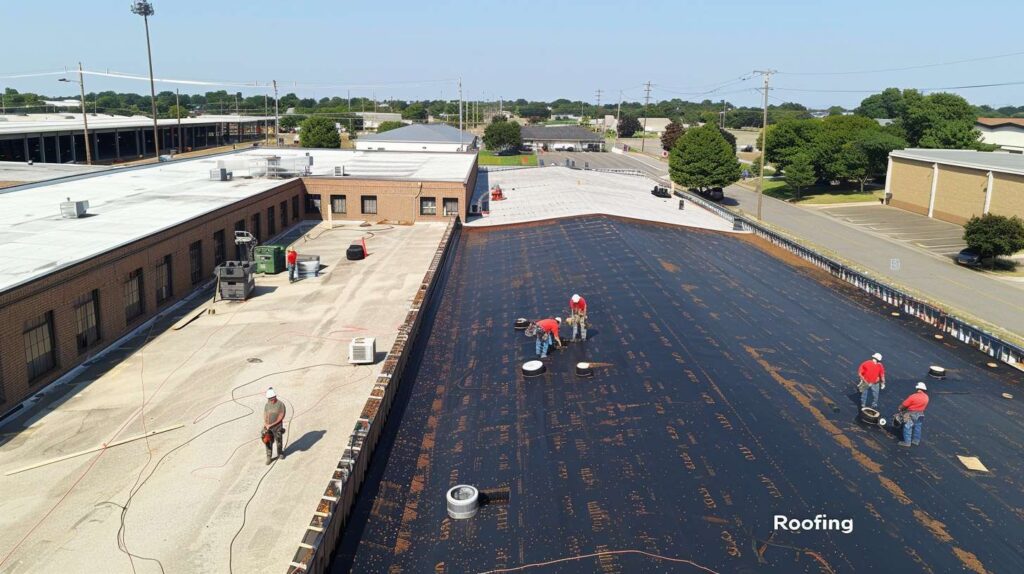
A roof works a lot like Avenue U after school pickup – everything depends on flow, and when one lane backs up, everything behind it slows down. One August afternoon, I was standing on a flat roof behind one of the canals – hot enough that it felt like a griddle through my boot soles – checking a home where everything on the property was immaculate: fresh paint, straight fence, garbage cans lined up square. The problem wasn’t neglect. An older patch around a skylight curb had been done “good enough” years earlier. Sun baked it through the day, evening moisture rolled in off the water, and the seal had been failing in slow motion for two seasons without anyone knowing. That job reminded me that old “good enough” patches around skylights and curb-mounted penetrations deserve extra attention on flat roof systems, whether that’s EPDM roofing, TPO roofing, a rubber roof, modified bitumen roofing, or tar and gravel roof – those details age differently than the field membrane, and they’re the ones that give out first.
▶ Asphalt Shingle Roofing / Shingle Roof
▶ Metal Roofing / Metal Roof
▶ Flat Roof / Flat Roofing
▶ EPDM Roofing / Rubber Roof
▶ TPO Roofing / Modified Bitumen Roofing
▶ Tar and Gravel Roof
| Pros of Inspecting and Repairing Early | Cons Worth Knowing |
|---|---|
| Keeps curb appeal intact – roof problems that get ahead of you show up eventually. | Requires a professional inspection before any symptoms look serious enough to call. |
| Catches hidden moisture in decking and insulation before it spreads into framing. | Occasionally uncovers prior patchwork that wasn’t done right, which means more scope than expected. |
| Reduces emergency calls – fewer 6 a.m. situations after a windy night. | Early inspection may reveal replacement is closer than the homeowner was expecting. |
| Protects gutters, skylights, and chimneys that get damaged when main roof issues go unaddressed. | |
| Clarifies whether insurance claim roofing is relevant before a storm event forces the conversation. |
Prevent the Next Backup Before It Reaches the Living Room Ceiling
I got a call after a windy night from a retired couple who were almost embarrassed to ask for an inspection – they told me straight out, “We take care of this house,” like needing a roofer was some kind of admission. They were right about the house. The yard was perfect, the gutters were clean, and the home had been maintained carefully for years. But near the chimney, the flashing had started lifting just enough to let water track sideways under the roofing – one traffic jam in an otherwise well-running system, and water only needs one bad lane to cause a mess. I showed them what I found, told them it was a simple chimney flashing repair, and that was the end of it. Regular roof maintenance, roof cleaning, gutter installation or repair where needed, and a periodic inspection are what keep that kind of small issue from turning into a full replacement conversation three years from now.
▶ How do I know if I need roof repair or roof replacement?
▶ Can a roof leak start around a chimney or skylight even if shingles look fine?
▶ What should I do after wind damage or storm damage in Mill Basin?
▶ Do flat roof homes need different inspections than shingle homes?
▶ Can Dennis Roofing help with residential roofing and commercial roofing in Brooklyn NY Mill Basin?
Before You Call: What to Note for Your Inspection
Where the stain, drip, or moisture is appearing inside the home – note the room and wall or ceiling location.
Whether the leak is active right now or appeared during a specific rain or wind event.
When the last major storm or significant wind event occurred – even a few days before the stain appeared.
Your roof type if known – shingle, flat, metal, EPDM, or combination – so the inspection can be set up correctly.
Approximate age of the roof or when the last roof installation or roof replacement was done, even a rough estimate helps.
Whether the issue seems to be near a chimney, skylight, gutter line, or where a flat roof section meets a pitched section.
If the roof on your well-kept Mill Basin home looks fine but something feels off – a stain that showed up after the last storm, a gutter that’s not clearing the way it used to, a ceiling that just doesn’t seem right – Dennis Roofing can trace the path water is taking before a small backup turns into a bigger repair. That’s what the inspection is for: not to sell you something, but to show you exactly what the roof is doing out of sight.