
Kensington Is a Working Neighborhood With Hardworking Roofs – Let’s Keep Them That Way
Have you noticed that the roofs giving people the most trouble in Kensington rarely failed because of one bad storm? They wore down slowly – drainage backing up season after season, seams shifting a quarter-inch at a time, flashing fatigue that nobody caught until a ceiling stain showed up three rooms away from the actual problem. That’s the pattern I’ve seen repeat itself across this neighborhood, and it’s the reason early attention almost always costs less than the delayed version.
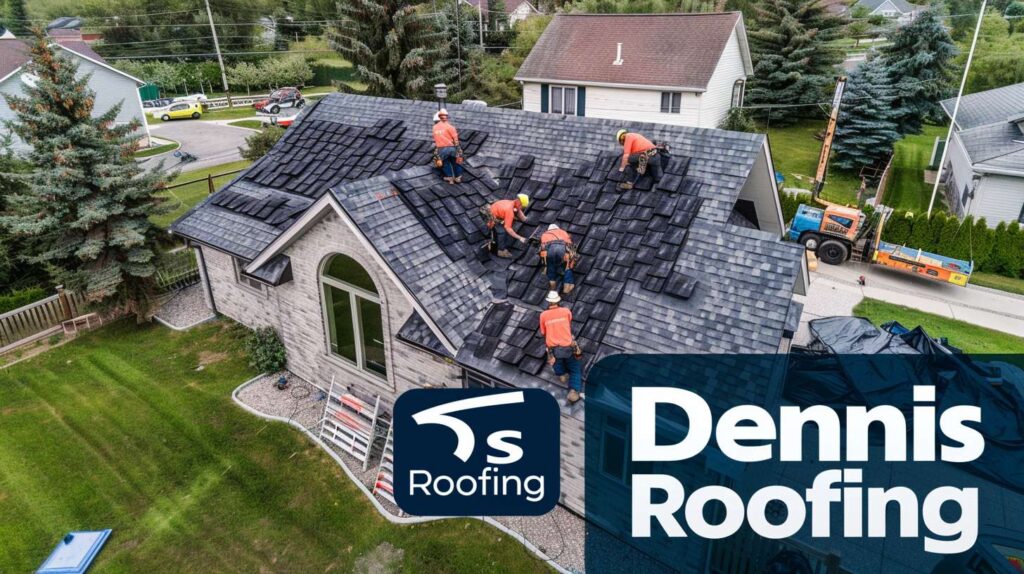
On East 8th, I’ve seen a roof tell on itself before the ceiling ever does. There’s a particular sound a loose membrane edge makes when the wind picks up – a low, irregular flap, almost like a note played just off rhythm – and a draft that moves through an attic in a way that feels wrong before anything looks wrong. Here’s my blunt opinion: a quiet leak is usually the expensive one. The noisy, obvious stuff gets fixed fast. It’s the leak that dries up between rains and leaves no stain that does the real damage, traveling under insulation, behind walls, and into structure before anyone calls.
| Myth | Real Answer |
|---|---|
| If the leak is by the skylight, the skylight is the problem. | Water travels. A skylight near a leak stain is a suspect, not a conviction. The source could be flashing, a membrane seam, or a drain failure several feet away – water follows the path of least resistance under the surface before it shows up inside. |
| A flat roof should always hold some water. | Flat roofs are designed to drain, not pond. Standing water accelerates membrane breakdown, adds load stress, and forces its way through any vulnerability at seams or penetrations. Ponding that lasts more than 48 hours after rain is a drainage problem that needs attention. |
| Missing shingles are the only sign of wind damage. | Lifted shingles that lay back down after a storm often look undisturbed from the ground. But the seal strip underneath is broken. Those shingles are now loose, and the next wind event – or a slow rain – will find that gap. Wind damage repair is often invisible until it isn’t. |
| If the ceiling stain dries up, the roof issue is gone. | A dry stain is a record of a leak, not proof it’s resolved. The entry point is still there, and the insulation between the leak and the ceiling may have retained moisture you can’t see. Recurring leaks almost always had a prior “dry period” that felt like a fix. |
| Gutters are separate from roofing. | Gutters are the first line of drainage off your roof. When they overflow or pull away, water backs up under the drip edge and soaks the fascia, flashing, and roof edge – which is exactly where most residential leaks begin. Gutter repair and roof edge health are the same conversation. |
Read the Clues Before You Choose Repair or Replacement
If I asked you where your water goes after a hard rain, could you answer me without guessing? That question matters more than most people realize, because the drainage path – over parapet walls, through internal drains, off rear additions, or along shared edges between attached buildings – is usually what decides whether a property needs a targeted roof repair, a careful round of roof leak detection, or a full roof replacement conversation. In Kensington, where row houses share walls and rear extensions sit under low-slope sections, water doesn’t always go where you expect it to.
One February morning, just after 7, I was on a flat roof near Church Avenue while the super downstairs kept insisting the leak had to be coming from the top-floor bathroom pipe. The roof looked fine at first glance, but when the wind shifted, I caught this faint flap from a loose edge in the modified bitumen roofing – barely audible, but the roof was telegraphing its problem clearly to anyone who stopped to listen. That tiny opening was driving water sideways under the membrane, and the interior stain showed up ten feet away from the actual source. That’s the kind of thing I’m talking about when I say roof inspection should come before anyone starts guessing. I’m Brett Callahan, and in 17 years of roofing – with most of that time focused on hardworking flat roofing systems over Brooklyn row houses and mixed-use buildings – I’ve learned that the stain and the source almost never share the same address.
A roof system is a lot like a piano – tension in the wrong place throws everything out. An isolated membrane split, a chimney flashing repair, a single skylight repair, or a handful of lifted shingles? Those usually justify a targeted repair, done right, without touching the rest of the roof. But widespread saturation, three leak events in two years, insulation that’s lost its R-value, or seams that keep failing after patching – that math starts pointing toward roof replacement or a new roof as the smarter long-term spend. The decision isn’t dramatic. It’s just honest arithmetic about where the roof is in its life cycle.
| Roofing System | Usually Repairable | Usually Replacement-Leaning | Inspection Focus |
|---|---|---|---|
| Asphalt Shingle Roofing | Lifted or missing shingles in one area, isolated cracking, granule loss on a few courses | Widespread curling, granule loss across the field, 20+ year age, repeated leak history | Seal strips, drip edge, flashing at valleys and penetrations, decking condition |
| Modified Bitumen Roofing | Small splits, open lap seams at edges, isolated punctures or blisters | Alligatoring across membrane surface, saturated insulation layer, structural deck deterioration | Seam adhesion, edge terminations, drain collar condition, membrane thickness and brittleness |
| EPDM Roofing | Seam separation at low-stress areas, small punctures, flashing pulls at walls or curbs | Widespread shrinkage pulling seams apart, membrane hardening, adhesive failure across large sections | Seam integrity, membrane flexibility, lap adhesion, drain area and penetration wraps |
| TPO Roofing | Failed weld seams in isolated runs, punctures from foot traffic, flashing pulls | Consistent seam weld failures across field, membrane cracking from UV exposure, substrate issues | Weld seam strength, penetration details, thermal movement at edges, drain rings |
| Metal Roofing | Isolated fastener corrosion, open seams at panel edges, flashing failures at walls or chimneys | Widespread rust through panels, compromised substrate, structural corrosion at fastener fields | Panel overlap condition, fastener heads and washers, sealant at penetrations, ridge cap integrity |
| Tar and Gravel Roof | Gravel displacement, small blister splits, isolated edge and flashing failures | Widespread felt layer failure, heavy blistering, ponding over failed pitch areas, age over 20 years | Gravel coverage, blister locations, parapet flashing, drain area gravel accumulation |
When a Leak Is Urgent and When It Can Wait a Day
The truth is, roofs in working neighborhoods don’t get weekends off. I remember a Sunday in late August when the heat was sitting on Kensington like a lid and a shop owner called about emergency roof repair over his bakery – the ceiling was dripping right above the proofing racks, and he was ready to blame the skylight repair we’d done months earlier. Turned out the real culprit was backed-up gutters pushing water toward the flashing, and once we cleared the line and handled the chimney flashing repair, everything settled down. Emergency roof repair is about active water entry, business interruption, electrical risk, and fast-spreading saturation – not just the dramatic stuff you can see from the sidewalk.
- Don’t climb onto a wet or storm-exposed roof – the slip risk is real, and you won’t be able to read the surface safely.
- Don’t smear random sealant over ponding areas. It traps moisture underneath and makes leak detection harder later.
- Don’t cut open ceilings before the leak source is traced – it destroys evidence and often isn’t where the problem is.
- Don’t assume a leak near a skylight is a skylight problem. Water travels, and a wrong assumption leads to a second service call.
- Don’t delay documenting storm damage if an insurance claim is in play. Photograph everything before any temporary storm damage repair work starts – your claim depends on it.
Service Mix That Fits Homes, Shops, and Flat Roof Buildings
Residential Roofing Priorities
I remember standing on a tar and gravel roof at sunrise thinking, this building is tired. Not dramatically falling apart – just worn out, the way a working building gets when it’s been carrying more than anyone noticed. That feeling clicked into place the following week when a retired MTA conductor had me out at dusk after a windstorm, insisting his roof was “talking back” to him. That description made perfect sense once I got up there: three asphalt shingles had lifted on the shingle roof, and every gust made them chatter against the course below – the roof was going off-key, telegraphing its own damage in plain sound. We handled the wind damage repair that evening. Residential roofing and commercial roofing look similar from the street, but they need different repair priorities even when both are actively leaking.
Commercial Roofing Priorities
Here’s the insider tip worth remembering: before you agree to any coating or patching, ask what’s happening at the seams, drains, penetrations, gutters, and flashing. Those five spots are where almost every flat roof failure in Kensington begins. Roof waterproofing and roof sealing only perform well on a clean, structurally sound substrate – and roof coating applied over a failing seam is just a delay, not a fix. The full service picture for buildings in this neighborhood includes roof installation and flat roof installation for new builds or full replacements, rubber roof and metal roof work on commercial and mixed-use structures, skylight installation, gutter installation and gutter repair, roof maintenance programs, and shingle roof work on attached homes from the ridge down to the drip edge. Getting the sequence right – assess, drain, seal, then coat – is what separates a durable job from a recurring problem.
Questions Worth Asking Before You Book the Work
A rushed patch on the wrong spot is how a cheap leak becomes a repeat leak.
The smarter move before calling anyone is to gather what you actually know – not what you assume. That means thinking about drainage patterns, when the issue first showed up, and whether there’s been prior work done that might be connected. A clear picture of the problem gets you a more accurate scope, a better conversation about cost, and fewer surprises mid-job. You don’t need to know roofing to ask good questions. You just need to know your building.
Every roof in Kensington has a rhythm – and when that rhythm goes off, it’s telling you something before the ceiling ever does. Reach out to Dennis Roofing for honest roof inspection, targeted roof repair, full roof replacement, or emergency roof repair anywhere in Kensington, Brooklyn. We’ll tell you exactly what we see, and we’ll give you options that respect your building and your budget.