
Homecrest Is a Quiet Corner of Brooklyn – Quiet Enough That Roof Problems Get Overlooked
Over on the calmer residential blocks of Homecrest, some of the most expensive roof repair calls we get come not from dramatic storms but from months of quiet neglect – because people mistake a peaceful street for a problem-free roof. This page helps you read the small signs correctly, match them to the right service, and figure out whether you’re looking at a scheduled repair or something that needs a call today.
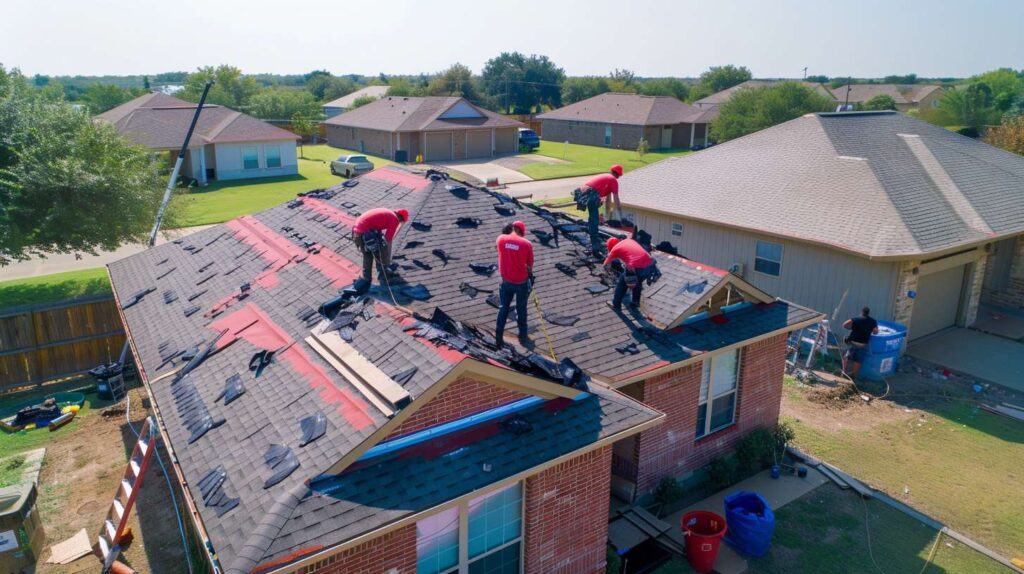
Silence Around the House Is Not a Roof Diagnosis
Over a small brown ceiling stain in a Homecrest home, there’s usually a bigger story that started six to eighteen months earlier. I’ve said this a hundred times: ignoring a ceiling mark or a soft drip the way you ignore a mild headache is exactly how a targeted roof repair turns into a full roof replacement. The roof doesn’t announce what’s wrong. It just quietly gets worse, the way a skipped checkup lets a manageable condition run unchecked until the bill is three times what it would’ve been.
I’ll say this plainly: quiet neighborhoods are terrible at announcing roof problems. A house can look completely fine from the sidewalk – tidy front, clean windows, trimmed hedges – while a rear flat section is holding water and the flashing near the chimney is separating at the seam. Quiet blocks train people to delay roof maintenance longer than they should, and that’s the pattern that keeps turning small jobs into expensive ones. What this page helps you sort out is whether you need a roof inspection, roof leak detection, targeted roof repair, emergency roof repair, or whether it’s time to start planning a roof replacement.
| Myth | What Actually Happens |
|---|---|
| “If the block is quiet, storm damage probably missed us.” | Wind travels unpredictably. A roof inspection after any named storm is the only way to confirm whether shingles lifted, membranes separated, or flashing moved – none of which is visible from the curb. |
| “A small ceiling stain means a small repair.” | Water travels before it drops. A stain two feet wide can originate from a leak entry point eight feet away. Roof leak detection locates the real source; guessing leads to the wrong fix. |
| “If the gutters are draining, the roof is fine.” | Gutters draining normally says nothing about what’s happening six feet back on the roof surface. Flat roof ponding and flashing separation both build silently while water in the downspout moves freely. You may still need gutter repair and a separate roof check. |
| “Flat roof problems are obvious from the ground.” | Not even close. Blistering, seam splits, and standing water are invisible from street level. Flat roof repair cases are often the ones that go the longest without a call because nobody sees the warning from below. |
| “No active drip means it can wait until next season.” | A dry period masks moisture that’s already inside the decking or insulation. By next season, what could have been roof repair is now a roof replacement conversation. Schedule the inspection while the repair window is still open. |
What Those Small Clues Usually Point To in Homecrest
Interior signs that rarely stay interior
Homecrest has a slower residential feel compared to the constant foot traffic along Kings Highway or the commercial activity closer to Coney Island Avenue – and that calm actually works against homeowners. When the street is quiet, attention stays at eye level: the front steps, the façade, the mailbox. Nobody’s craning their neck at the roof line, checking the rear flat section over the back extension, or looking at where the drainage path runs near the parapet edge. That’s exactly how flashing transitions and flat roof edges go unchecked for years.
One rainy Sunday, before most people had coffee, I was already hearing the word “small leak” used too confidently. The homeowner in Homecrest apologized three times before even telling me about the stain, because she said the block was so quiet she figured it couldn’t be serious if nobody else seemed worried. By noon, our crew found water tracking from old flashing near a skylight repair area – and the stain she called “tiny” had already spread behind the paint. That’s the pattern: the entry point is almost never where the stain shows up. Chimney flashing repair, skylight repair, and roof leak repair all get triggered by ceiling marks that look minor until someone actually follows the water backward to its source.
Here’s the blunt truth – residential roofing fails in silence long before it fails dramatically. A discolored patch near a vent pipe probably means cracked flashing, not a roofing emergency – but it’s also not nothing. Granules collecting in the gutter mean your asphalt shingle roofing is past mid-life. A soft spot near a parapet means the flat roof membrane or modified bitumen roofing beneath it has been holding moisture. A small rust line below a metal roofing seam means the seam needs sealing before the deck below it softens. None of these are urgent by themselves. All of them are telling you something.
Exterior trouble spots people stop checking
| What You Notice | Likely Roof Type or Component | Most Likely Service | How Urgent It Is |
|---|---|---|---|
| Ceiling stain near a skylight on the top floor | Skylight frame or surrounding flashing | Skylight repair + roof leak detection | High |
| Moisture or efflorescence along parapet edge on flat roof section | Parapet cap or flat roof edge detail | Flat roof repair + roof waterproofing | High |
| Granules collecting in gutter after rain | Asphalt shingle roofing mid-to-late life | Roof inspection + replacement planning | Schedule Soon |
| Visible seam split or open lap on rubber membrane | EPDM roofing / rubber roof | Rubber roof repair + roof sealing | High |
| Recurring standing water after every rain on flat surface | TPO roofing or modified bitumen roofing | Roof inspection + roof coating or drainage correction | Moderate |
| Water near storefront ceiling in a mixed-use building | Commercial flat roof, edge detail, or parapet | Commercial roof repair + roof leak detection | Urgent |
When Waiting Is Reasonable and When It Starts Costing You
Not every symptom is a five-alarm situation – and I’m not going to pretend otherwise. A dry-season stain that hasn’t moved, cosmetic surface discoloration, or a gutter that’s a little slow doesn’t automatically mean you drop everything. But the moment there’s active water, lifted material, or an indoor drip, the math changes fast. Roof repair at the right moment costs a fraction of what the same problem costs after one more winter. The honest question to ask yourself is: when did I last actually look at the roof – not the ceiling?
If water is already inside, the roof has been talking for a while – you just weren’t hearing it yet.
Overflow, edge staining, and dripping at the fascia can come from four different sources: gutter blockage, roof edge failure, flat roof drainage breakdown, or flashing separation at the wall. Replacing or cleaning the gutters without doing roof leak detection first means you’re fixing the wrong thing. It’s an honest mistake – and an expensive one. If we haven’t confirmed the entry point on the roof system itself, the gutter isn’t the diagnosis.
Services That Make Sense Before a Quiet Problem Turns Loud
For homes
One August afternoon, right after one of those thick Brooklyn days where the air sits heavy and doesn’t move, I – Pam Guerrero, who has spent 17 years sorting out leak calls and scheduling the right kind of roof inspection before panic takes over – called in a crew for a retired couple in Homecrest who’d been putting off a visit because, as they put it, their house looked fine from the sidewalk. The roofer came back with photos of blistering and ponding on a flat roofing section over the rear addition that they’d never seen from ground level. They kept saying “quiet block, quiet house, quiet roof” – and I wrote that down because it’s the most common wrong assumption I hear. Catching that blistering early meant a targeted flat roof repair and roof coating. Waiting another season would have meant a full flat roof installation. That’s the gap that a single roof inspection closes.
For mixed-use and other small commercial buildings
A roof in Homecrest can act like a polite patient: no complaints until it lands you in the expensive part of the problem. I spoke with a small property owner just before dusk while he was standing outside one of his mixed-use buildings near Coney Island Avenue, trying to describe a commercial roof repair issue over the traffic noise. He was convinced it was a gutter issue – that was the only symptom visible from the ground. But the crew found that the edge detail on the flat roof installation had been letting water creep in for months. He told me later that the neighborhood felt so calm compared to his other properties that he stopped looking up as often. Commercial roofing and residential roofing both follow the same delay pattern in quiet neighborhoods. Whether the fix is roof waterproofing, roof sealing, a new roof maintenance plan, or a full roof replacement – and sometimes insurance claim roofing when storm damage is the underlying cause – none of it gets better by waiting.
| Factor | Targeted Roof Repair | Full Roof Replacement |
|---|---|---|
| Cost Control | Lower upfront cost; ideal if the problem is isolated to one section or component | Higher cost, but ends the cycle of recurring repair bills if the system is aged out |
| Lifespan Gained | Extends functional life of an otherwise sound roof – works well on metal roofing, EPDM roofing, and TPO roofing with isolated failures | Resets the lifespan clock; makes sense when the system – asphalt shingle roofing, tar and gravel roof, or modified bitumen roofing – is past 80% of its expected life |
| Hidden Moisture Risk | Risk remains if moisture has already reached the decking – repair without full inspection can miss wet insulation underneath | Replacement exposes decking for full evaluation; damaged sheathing gets replaced before the new system goes down |
| Recurring Leak History | If this is the second or third repair on the same section, repair may be a short-term patch on a long-term problem | Breaks the cycle; worth the cost when recurring roof leak repair calls are adding up |
| Age of Roof | Repair makes strong sense for roofs under 15 years old with localized damage | Replacement is the smarter path for roofs over 20-25 years, especially flat roof systems or shingle roof installations showing widespread wear |
| Roof System Type | EPDM roofing, TPO roofing, and metal roofing respond well to targeted repair – seams and flashings can often be isolated | Aged tar and gravel roof and deteriorated modified bitumen roofing often reach a point where patchwork costs exceed replacement value |
Before You Call, Gather the Details That Save Time
And honestly, if I picked up your call today, the first thing I’d want to know isn’t “how bad is it” – it’s where the water is showing up, whether it happens during rain or in the dry days after, and what’s overhead in that spot. Chimney nearby? Skylight? Is it over a flat rear extension or a pitched front section? Those three pieces of information cut the diagnosis time in half. I’ve taken more calls than I can count where someone says “it just started” and means it sincerely – not realizing the stain has been softly spreading since October. The more specific you can be before you call, the faster we get the right person to the right spot with the right materials.
A quiet Homecrest block doesn’t mean a quiet roof – call Dennis Roofing today for a roof inspection, roof repair, or emergency roof repair before a small problem turns into the expensive kind.