
Greenpoint Has Both Old Polish Rowhouses and New Glass Towers – We Work on Both
Why Greenpoint Roofs Fool People
A few hundred today versus a full rebuild next spring. Old rowhouses and sleek new towers fail for different reasons, but both usually leak at the overlooked details – not the big, obvious field of roof you can see from the street. That’s the part nobody tells you upfront, and it’s the reason so many Greenpoint property owners end up spending five times more than they needed to.
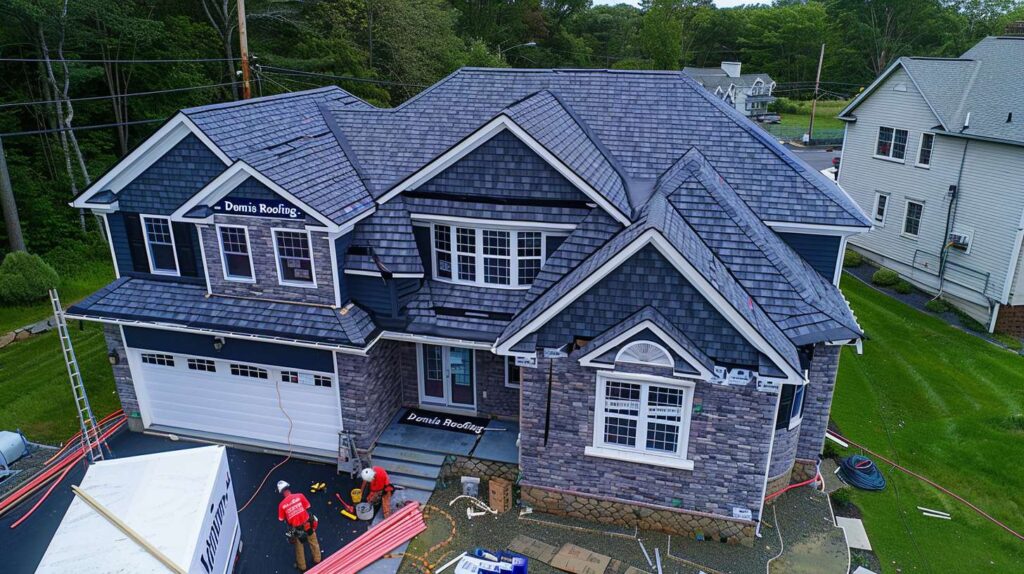
On Manhattan Avenue, I can tell what decade I’m looking at before I even unload the ladder. The older Polish rowhouses hide trouble in the chimney flashing, parapet edges, masonry tie-ins, and aging decking that’s been patched so many times it’s basically a biography of every roofer who came before me. The newer condo towers and mixed-use glass buildings – those tend to fail at membrane seams, curb edges, skylights, drains, or penetrations that were rushed during the build-out. I’m Tyrone Hicks, and with 17 years of roofing experience and a specialty in moving between century-old cornice-line homes and modern flat roofing systems in Greenpoint, I’ve learned to read a roof the way a doctor reads a chart – you don’t start with what hurts loudest. Think of it like a winter coat: the shell might look fine, but it’s the zipper, the cuffs, and the weak seam at the inner layer where cold air actually gets in. Same principle, different zip code.
| Building Type | Common Roof System | Most Likely Failure Point | What Owners Usually Suspect | Best First Service |
|---|---|---|---|---|
| Pre-1940s Polish Rowhouse | Modified bitumen or tar and gravel roof over old wood decking | Chimney flashing, parapet coping, masonry-to-membrane transitions | A blister or crack in the center roof field | Roof leak detection + chimney flashing repair |
| 1970s-90s Brick Mixed-Use | EPDM roofing or built-up tar and gravel | Aging seams, clogged interior drains, parapet edge failures | General roof wear; “it’s just old” | Roof inspection + targeted flat roof repair |
| 2000s-2010s Condo Conversion | TPO roofing or rubber EPDM membrane | Skylight edges, HVAC curb tie-ins, membrane seams near penetrations | Full membrane failure; “the whole roof is bad” | Roof leak detection at penetrations first |
| Post-2015 Glass + Steel New Build | TPO roofing with tapered insulation | Sloppy skylight installation, drain collar gaps, rushed edge details | Defective materials or manufacturer issue | Detailed roof inspection + skylight repair or re-flash |
| Storefront + Apartment Above | Layered modified bitumen over flat roof with shingle sections at rear | Era transitions where old and new materials meet | “The newest patch is failing” | Full transition inspection + commercial roof repair |
| Myth | Fact |
|---|---|
| The leak is directly above the ceiling stain. | Water travels along decking, rafters, and insulation before it drips. The entry point can be several feet – sometimes rooms – away from where you see it inside. |
| Flat roofs always need full replacement once they leak. | Most flat roof leaks are seam, flashing, or drain issues that can be repaired without replacing the entire field – if you catch them early enough. |
| Newer roofs shouldn’t leak for years. | Installation quality matters more than roof age. A bad edge detail or rushed penetration on a two-year-old roof will fail faster than a well-maintained 15-year-old membrane. |
| Shingles are only for houses, not mixed-use buildings. | Many Greenpoint buildings have sloped rear sections with asphalt shingle roofing alongside flat front sections. Both systems need attention – just different expertise. |
| Emergency roof repair is only for storm damage. | Any active water entry – storm-related or not – qualifies as an emergency. Water reaching electrical fixtures, inventory, or occupied units needs same-day attention regardless of cause. |
Where the Trouble Actually Starts
Here’s the blunt part: the broad flat field of a roof is almost never where water enters first. It’s the edges, joints, flashing, drains, and penetrations that give out – and in my experience, guessing wrong about which one it is is exactly what turns a manageable roof repair into an expensive roof replacement. That goes for old Greenpoint rowhouses off Driggs Avenue just as much as it goes for the waterfront condos near the East River or the mixed-use storefront buildings that line McGuinness Boulevard. The building style changes. The failure physics doesn’t.
I remember one wet Tuesday in Greenpoint when I pulled up to an old Polish rowhouse on Milton Street at 6:40 in the morning after one of those cold spring rains that soak everything and go nowhere fast. The owner was certain the leak had to be coming from the center of the flat roof – there was a soft spot up there, some old patching, and he’d been watching it for months. It wasn’t the issue. Water had slipped in at the chimney flashing, traveled along the old decking underneath, and showed up two rooms over on a ceiling that had nothing to do with the chimney at all. I stood there with coffee going cold in my hand, telling him: roofs lie about where they’re leaking. That’s just what they do.
If I asked you where water wants to go, what would you say? Down – obviously. But the more accurate answer is: down, and sideways, and wherever there’s a gap in the layers. On a flat roof, slope and gravity push water toward drains, but when those drains are clogged or offset, ponding builds up and finds the nearest seam. That’s why roof leak detection on a flat roof, rubber roof, EPDM roofing, TPO roofing, modified bitumen roofing, or tar and gravel roof always starts with drainage first, then seams, then penetrations – in that order. You don’t chase the stain. You trace the path.
Do you have active water entry right now?
Do you see ceiling stains, bubbling paint, or moisture signs – but no active drip?
Is your roof under 15 years old with a single isolated leak near a skylight, flashing, or drain?
Has your roof been repaired multiple times and is it 20+ years old?
⚠ Why Stains and Drips Mislead Owners
That water spot on your ceiling? It almost certainly didn’t enter through the roof directly above it. On old Greenpoint buildings with layered patching, deteriorating insulation, and multi-era decking, water can travel three, five, even eight feet laterally before it shows up inside.
Don’t caulk blindly around visible cracks before an inspection. Sealing over surface cracks without diagnosing the actual entry point can trap moisture beneath the membrane, accelerate rot in the decking, and hide the real failure long enough for it to turn into a structural problem. Get the inspection first. Then fix what’s actually broken.
Matching the Fix to the Roof System
Two seams, one drain, and a bad flashing detail – that’s all it takes to send water into a building that looks perfectly solid from the sidewalk. Both residential roofing and commercial roofing start with the same question: which layer failed, and does the fix belong at the surface, the seam, the edge, or the drainage point? Here’s the insider part that most people skip: on older Greenpoint buildings with a history of patchwork, don’t start your investigation in the center field. Start at the transition between the newest patch and the older roofing it ties into – because that joint tells the truth faster than anything else on the roof.
| Scenario | Likely Scope | Typical Price Range | Best Next Step |
|---|---|---|---|
| Roof Inspection | Full field, perimeter, drains, flashing, penetrations, photo documentation | Inspection-level | Book before any repair work begins |
| Roof Leak Repair at Flashing | Remove failed flashing, re-flash chimney or parapet, reseal and test | Repair-level | Combine with full inspection for best value |
| Emergency Roof Repair – Temporary Stabilization | Tarp, temporary patch, drain clearance to stop active water entry | Repair-level (urgent premium may apply) | Call immediately; schedule full repair after stabilization |
| Flat Roof Installation – Small Rear Section | Remove old material, inspect decking, install EPDM or TPO, flash edges | Replacement-level | Get scope and measurement estimate first |
| Skylight Repair | Re-flash curb edge, reseal glazing, test water path around unit | Repair-level | Don’t caulk over it – get a proper re-flash |
| Full Roof Replacement Planning Consultation | Assessment of existing system, material recommendations, timeline, scope discussion | Inspection-level | Best done before the busy season, not during it |
What Happens on an Actual Service Visit
Sounds right, but that’s not the part that fails most often.
What We Inspect First
A roof works a lot like a winter coat in Brooklyn: the outer shell – your membrane, shingles, or metal panels – is just the first line. Underneath that is the insulation layer, the thermal barrier doing quiet work all year. The zipper is your seams; if it’s misaligned or worn, everything else is working overtime. The cuffs are your flashing edges – the spots where one material hands off to another. And when moisture gets past all of it? You end up with that wet hoodie lining feeling: trapped, invisible, and already causing damage before anyone notices. A proper roof inspection runs through field, seams, drains, penetrations, flashing, and gutters in sequence – with photos at every step. Services like gutter installation, gutter repair, chimney flashing repair, skylight installation, skylight repair, roof waterproofing, roof sealing, roof coating, and storm damage repair all get flagged during that walk – not guessed at from the ground.
Questions Owners Ask When the Leak Won’t Wait
I remember one August afternoon, I got called to a newer glass building near the waterfront because the super thought the TPO roofing had failed. By 3 p.m. the sun was bouncing off every window on the block, and I could see why he’d made that call – the building was only a few years old and the membrane looked flawless from a distance. The real problem turned out to be a sloppy skylight installation from another crew. Good membrane, bad edge detail. One weak curb seam, and water had been tracking down into the unit for weeks. That job stuck with me because the building looked futuristic, but the leak was the same old story: one rushed detail ruins everybody’s week.
I once had a Saturday emergency roof repair call on a mixed-use building where the storefront tenant was panicking because water was dripping onto boxed inventory while the owner upstairs kept saying, “This roof is only nine years old.” What we found was a patchwork of modified bitumen roofing tied into older sections from a previous build-out, and the transition between those two eras was failing exactly where the two materials met. Not the center of the roof. Not the newest section. The seam between them. That’s Greenpoint in one roof – half heritage, half hurry-up development. And that’s why emergency roof repair, commercial roof repair, and insurance claim roofing all depend on finding and documenting the actual failure point, not the loudest guess in the room.
Why Property Owners in Greenpoint Call Dennis Roofing
Fully licensed roofing service and insured for both residential and commercial work in New York.
Experience across century-old rowhouse details and modern commercial flat roofing systems – not just one or the other.
Every inspection includes clear photos of every issue found – so you know exactly what you’re approving before any work starts.
Active leaks don’t wait for Monday. We respond to emergency roof repair calls for both residential and commercial buildings in Greenpoint.
If you need residential roofing, commercial roofing, a roof inspection, targeted roof repair, or emergency roof repair in Greenpoint, call Dennis Roofing now – before a small flashing detail or a missed seam turns into a bill that’s a lot harder to explain to yourself come spring.