
Flatlands Is One of Brooklyn’s Most Suburban Neighborhoods – But the Roofs Still Need Work
Sick of being upsold? Good – because the quieter, more detached feel of Flatlands tricks a lot of homeowners into thinking their roof problems are simple, and that assumption is exactly how they end up paying for the wrong fix twice. The neighborhood’s mix of aging pitched homes, low-slope rear additions, garages, and open-block wind exposure creates leak paths that don’t travel in straight lines – and contractors who quote from the ground and point at the stain are already guessing.
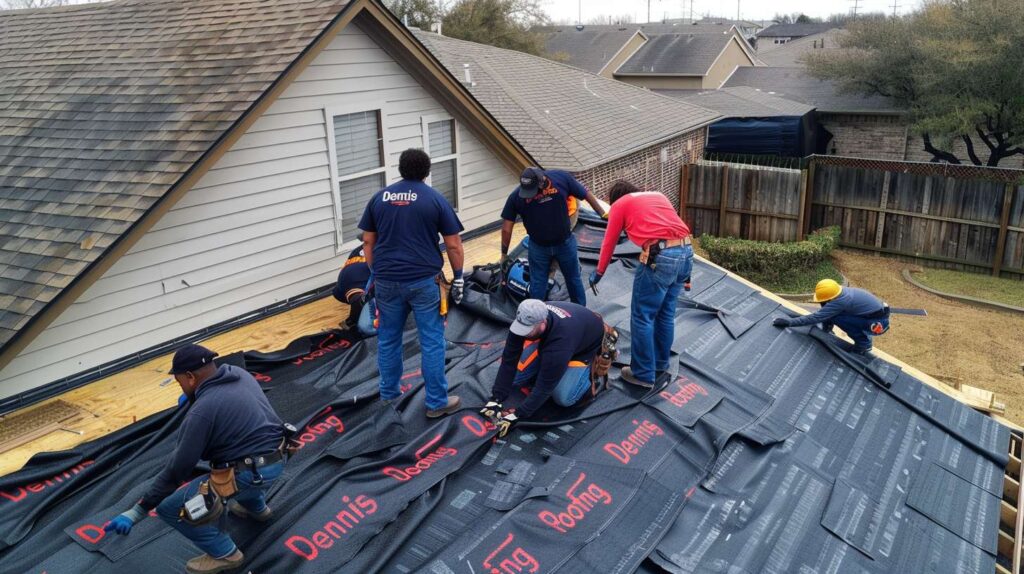
Flatlands roofs fool people because the neighborhood looks calmer than the damage is
Flatlands looks more suburban and quieter than most of Brooklyn – wider lots, more detached houses, fewer people crammed on top of each other – but that calm exterior makes homeowners underestimate how tricky the roofs actually are. You’ve got older two-story homes sitting next to low-slope rear additions, detached garages, covered porches, and the occasional mixed-use building on the corner, and every one of those rooflines has its own transitions, its own flashing details, and its own way of collecting and redirecting water before it ever shows up on your ceiling. Flatlands also sits exposed enough that wind events push moisture in from angles that don’t match where the stain lands, so roof problems here travel – sometimes sideways, sometimes uphill – before they finally show themselves indoors.
On East 45th, I can usually tell what kind of week I’m about to have before I even get the ladder off the truck. The curbline tells part of the story – ridge line, fascia condition, whether the gutters are pulling away – but the edge details and flashing lines tell more. And honestly, any contractor who walks up to a Flatlands home and acts impressed that the roof looks “fine from the sidewalk” is already starting from the wrong place. Straight shingles can have nails backed out to the point of being decorative. A level roofline can be sitting on a failed transition at the rear addition. The street view is not a roof inspection – it’s a guess with a professional tone of voice slapped on it.
| What Flatlands Homeowners Assume | What Actually Happens on the Roof |
|---|---|
| “The leak is directly above the stain.” | Water enters at one point, then rides the sheathing, a rafter, or a membrane fold until gravity drops it somewhere completely different. The stain is the last stop, not the source. |
| “If the shingles still look straight, they’re fine.” | Shingles can look perfectly level while the nails have backed out enough to let wind lift every tab in a storm. Appearance doesn’t tell you fastener or adhesive condition. |
| “A quiet block means less roof wear.” | Open-block layouts in Flatlands actually increase wind exposure at the roof perimeter and rear additions. Less visual clutter on the street does not mean less weather impact on the roof. |
| “A patch is always cheaper in the long run.” | Repeated patches on an aging system add up fast – and if moisture has already spread under the decking or membrane, each patch is just covering a problem that’s still growing. |
| “Flat roofs only fail at seams.” | Seams are one entry point, but flat roofs also fail at drains, perimeter edges, penetrations, and wherever a repair was made without proper membrane prep. Seams are just the easiest thing to see. |
Trace the water path before you decide on roof repair or roof replacement
What the stain tells you versus what the roof detail tells us
If I asked you where the water got in, would you point to the ceiling stain or the roof detail that actually failed? Sounds right, but that’s not it – at least not the way most people mean it. Water on a roof doesn’t fall straight down like a cartoon raindrop and land on your couch. It enters at a failure point, then it travels. It moves uphill under lifted shingles, sideways along underlayment, down a rafter, through a gap at a transition, and sometimes it pools inside a wall cavity before it ever hits your drywall. The stain is the last stop on a route that started somewhere else entirely, and repairing the stain location without tracing that route backward is how you end up calling a second contractor six weeks later.
The stain is the last stop, not the starting point.
I was on a roof off Flatlands Avenue at 6:40 in the morning after a summer storm, and the homeowner kept telling me the leak had to be over the couch because that’s where the ceiling was wet. I followed the water line uphill – past a bad skylight repair somebody had caulked over instead of actually resetting the curb, past two loose pieces of chimney flashing that were barely hanging on – and the actual entry point was roughly fourteen feet away from the stain in the living room. That kind of tracing work is exactly why Joe Santangelo, with 17 years in roofing and a reputation built on finding leak entry points around chimneys, skylights, and low-slope transitions, doesn’t quote a repair until the water’s full travel path is mapped. The homeowner wanted a patch over the couch. What he actually needed was chimney flashing repair and a proper skylight reseal – two completely different line items that cost less than a surprise replacement would have, because we caught it before the decking got involved.
Once the path is traced, the right service becomes obvious in a way it never does from the ground. A chimney flashing failure calls for chimney flashing repair, not a shingle patch over the entry zone. A skylight curb that’s pulling away from the deck calls for skylight repair, not roof waterproofing sprayed over the surrounding field. A low-slope addition with consistent wet spots near the interior drain calls for roof leak detection before anything else. And if the roof is aged out across multiple zones, that whole conversation shifts toward roof replacement – because patching a system that’s failing everywhere is like fixing one pothole on a road that needs repaving.
YES → Any missing shingles, lifted metal edge, or open flashing visible?
YES → Roof Repair / Emergency Roof Repair
NO → Is the roof low-slope or flat?
YES → Roof Inspection + Roof Leak Detection – check membrane seams, drains, and transitions
NO → Check Skylight, Chimney Flashing & Penetrations
Is the roof older and failing in multiple areas?
→ Roof Replacement or New Roof Estimate
Commercial building or storefront?
→ Commercial Roof Repair or Commercial Roofing System Review
| Where the Problem Starts | What You Usually Notice Inside | Best Service to Start With |
|---|---|---|
| Chimney flashing failure | Stain on interior ceiling or wall near fireplace, often several feet from chimney base | Chimney flashing repair – reseat and seal counter and step flashing |
| Skylight curb leak | Drip at skylight frame or wet streak running away from it along ceiling plane | Skylight repair – reseat curb flashing and inspect surrounding field |
| Lifted shingle tabs | Wet spot appearing during or after wind-driven rain, often shifting locations | Roof repair – reseal or replace affected shingle field, check fasteners |
| Cracked modified bitumen seam | Slow-developing stain on flat-roof addition ceiling, often first noticed in winter | Roof leak detection + targeted modified bitumen repair or section replacement |
| Aging EPDM/TPO membrane with trapped moisture | Bubbling or soft spots on the flat roof surface; interior dampness that doesn’t map to a single spot | Full membrane inspection with moisture scan before any repair decision |
| Repeated patch failures on storefront flat roof | Recurring drips after each repair, with no clear single source from interior | Commercial roof repair – full system assessment, not another patch |
Street-view confidence is how homeowners talk themselves into one more bandage
Here’s the part nobody likes hearing. I was doing a roof inspection for a retired city bus driver – good guy, had been in his house near Flatlands Avenue for over twenty years – and he was absolutely certain his shingle roof had another five years in it because it still looked straight from the sidewalk. I picked up three tabs with two fingers. The nails had backed out so far the shingles were basically decorative at that point, just laying there in the breeze. He laughed at first, then got quiet, then asked me to price a full roof replacement instead of one more repair bandage. Some roofs look fine until someone actually gets on them – and those are exactly the roofs that fail in the middle of a storm instead of on a calm inspection day.
Don’t hire someone who quotes from the ground or promises a miracle patch without actually getting up and checking the fasteners, decking condition, membrane moisture levels, flashing lines, and transition details. A quote built on a ground-level glance is a guess – and you’re the one who pays when that guess is wrong.
Low-slope additions, storefronts, and garages need a different conversation than front-house shingles
Why flat roofing systems fail differently
A quiet block doesn’t mean a quiet roof. Flatlands is full of homes that have a pitched asphalt shingle section at the front and a flat or low-slope rear addition tacked on somewhere along the way – plus detached garages, covered side entries, and corner storefronts with their own rooflines mixed in. Each of those surfaces fails differently and needs to be handled differently. The pitched front section might be an asphalt shingle roofing situation – check tabs, check flashing, check ridge. The rear addition is a different conversation entirely: you’re now talking about flat roofing materials, membrane condition, drain placement, and seam integrity. Whether that addition is running EPDM roofing, TPO roofing, modified bitumen roofing, or an older tar and gravel roof system changes how you inspect it, how you repair it, and when you call it done. Roof coating can extend a membrane’s life as a restorative option, but it’s not a substitute for addressing underlying failures – it’s a surface treatment, not a structural fix.
What commercial roofing clients usually get wrong about repeat leaks
I remember a rubber roof job at a small storefront in Flatlands where the owner had already paid another company for emergency roof repair twice in the same month. By the time I got there, those patches looked like they’d been applied in the dark with cold adhesive and good intentions – nothing more. I cut back the failed sections and found trapped moisture under the membrane across a wider area than anyone had bothered to look. I had to tell him straight: he didn’t need a third patch. He needed someone to finally treat that flat roof like it was a roofing system and not a bicycle tire. The right move was a proper commercial roof repair that addressed membrane prep, drainage, and the full extent of the moisture intrusion. Insider tip: if you’ve had a flat roof patched more than once without resolution, ask specifically whether the crew checked for moisture under the membrane before recommending another patch. If they didn’t, the patch was decorative.
| Roofing Option | Pros | Cons |
|---|---|---|
| EPDM Roofing | Durable 20-25 year lifespan, flexible in cold temps, relatively easy to repair at seams with compatible adhesive | Seams can separate with age or poor installation; punctures from debris aren’t always visible; dark membrane absorbs heat |
| TPO Roofing | Reflective surface helps with urban heat, heat-welded seams are strong, good chemical resistance | Older or lower-grade TPO can crack at seams over time; improper welds are a common failure point; not all crews have the right equipment |
| Modified Bitumen | Solid performance in Northeast freeze-thaw cycles, granulated surface resists UV, can be torched or cold-applied | Torch application requires experienced crew; aging seams crack and allow moisture migration; limited flexibility at very low temps |
| Tar & Gravel | Proven system on older buildings, gravel provides UV and impact protection, multi-ply build-up adds redundancy | Heavy, difficult to inspect for moisture under layers, harder to repair cleanly, increasingly replaced by membrane systems |
| Roof Coating | Cost-effective life extension for sound membranes, reflective options reduce cooling load, non-invasive application | Not a substitute for structural repair; won’t seal active leaks or restore a failed membrane; requires clean, dry, intact substrate to bond properly |
▶ Shingle Roof & Asphalt Shingle Roofing
Inspection should check: Fastener depth across the field, granule loss, shingle brittleness, edge flashing condition, and any transition to a flat section.
Repair vs. replacement: Localized damage is repair-first. Widespread nail pop, brittle tabs, or multiple failing zones – move to full roof replacement.
▶ Metal Roof & Metal Roofing Details
Inspection should check: Fastener head condition across every panel row, seam integrity, and any penetration flashing – especially chimney and vent pipe collars.
Repair vs. replacement: Metal roofing is long-lasting; most problems are repair-friendly unless the deck below has rotted or the panel system is structurally compromised.
▶ Rubber Roof / EPDM Roofing
Inspection should check: All seams and perimeter terminations, drain condition, any penetration boots, and whether previous patches are bonded or just sitting on top.
Repair vs. replacement: EPDM handles repairs well when the membrane base is still sound. Widespread shrinkage, trapped moisture, or repeated patch failures signal that replacement is overdue.
▶ TPO, Modified Bitumen & Tar-and-Gravel Systems
Inspection should check: Every seam, drain edge, and penetration; moisture scanning on tar-and-gravel systems before assuming surface repairs will hold.
Repair vs. replacement: Targeted repairs work on isolated failures. When moisture has migrated under multiple plies or membrane sections, the system repair cost often approaches replacement – worth comparing both numbers.
Before a small leak turns into an emergency, know what to ask and what to expect
A roof leak is a lot like a bad subway transfer – you notice the mess where you end up, not where the problem started. So before you call anyone, do one thing first: document what you can safely observe and note exactly what weather event preceded the leak. That timing matters, because wind-driven rain behaves differently than ponding rain, and the pattern helps narrow down whether you’re dealing with storm damage repair, a flashing failure, a drainage problem at a gutter, or a slow membrane failure that’s been building for months. Don’t guess at the source – that’s our job. What you should do is have the facts ready so the first conversation leads somewhere useful. Whether it’s residential roofing on the main structure, flat roofing on the addition, or commercial roofing on a ground-floor storefront, the diagnostic process needs real information – not a guess based on where the towels are on the floor. After the immediate issue is resolved, a scheduled roof maintenance visit, gutter inspection, or roof sealing can prevent the next call from happening at 6 a.m. in the rain.
- When the leak started – approximate date and whether it was sudden or gradual
- What weather triggered it – heavy rain, wind event, hail, or a freeze-thaw cycle
- Roof type if known – shingle, flat/rubber, modified bitumen, metal, or unknown
- Whether the leak is active right now – or whether it dried out after the weather passed
- Photos of the stain and exterior if safely available – from ground level only, no ladder required
- Previous repairs or insurance claims – especially if the roof has been patched or filed on before
▶ Do I need roof repair or roof replacement?
▶ Can you fix just the flat roof over an addition?
▶ What if my leak is around a chimney or skylight?
▶ Do you handle emergency roof repair after storms?
▶ Can roof work tie into gutters and waterproofing?
If you want Dennis Roofing to trace the actual water path instead of guessing at the ceiling stain, call us for a real roof inspection – not a ground-level quote. We’re in Flatlands, we know these roofs, and we’re not going to sell you a repair your roof doesn’t need.