
East Flatbush Has a Strong Community – Let’s Make Sure the Roofs Are Just as Solid
Quiet problems are usually the expensive ones
Something doesn’t make sense here. In a neighborhood full of long-held homes, tight-knit households, and families who take care of their own – the most serious roof damage almost never starts with a dramatic event. It starts with a slow drain, a loose flashing edge, or a seam that opened just enough to let water in quietly while everyone was focused on the things right in front of them.
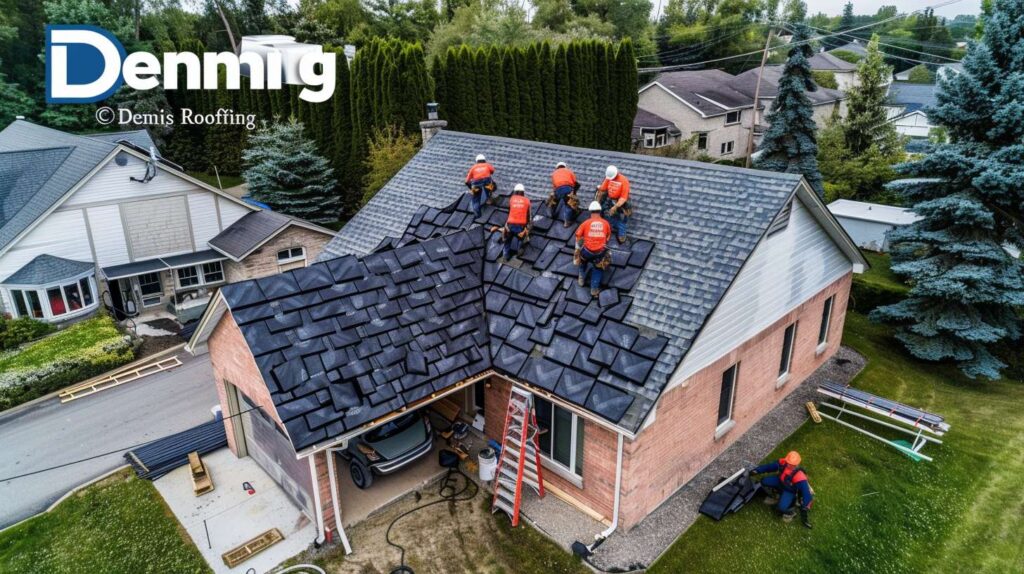
On an East Flatbush roof, the corner drain tells on everybody. Drains, gutters, flashing, and seams are like the members of a household who do their job without asking for recognition – until one of them stops, and suddenly everything else falls behind too. The row houses and two-family homes along this stretch of Brooklyn carry older roof lines, mixed-age additions, and flat roofing surfaces that were built in different decades with different materials. The same is true of small mixed-use buildings up and down Flatbush Avenue, where a commercial ground floor and a residential upper level can share the same drainage failure and not know it for a season.
What This Page Helps East Flatbush Property Owners Decide
Best First Step
Schedule a roof inspection before choosing between repair or replacement – guessing from the stain alone almost always costs more.
Most Common Hidden Issues
Drainage trouble, flashing failure, membrane seam splits, and lifted shingles – often invisible from inside until they’ve already traveled.
Property Types Covered
Residential roofing and commercial roofing – single-family homes, two-family houses, row houses, storefronts, and small mixed-use buildings.
Urgent Calls
Emergency roof repair for active leaks, and storm damage repair for wind events – these need same-day attention, not a wait-and-see.
| Myth | Fact |
|---|---|
| The stain on the ceiling is directly below the leak. | Roof leak detection exists for a reason – water travels along decking, joists, and membranes before showing up inside, sometimes feet away from the actual entry point. |
| A flat roof only needs a fresh coat of roof coating every few years. | Coating covers surface wear, not seam failures or drainage problems. Roof waterproofing and a proper inspection have to come before any coating application – otherwise you’re sealing problems in. |
| A few missing shingles after wind are cosmetic, not structural. | Exposed underlayment degrades fast in Brooklyn weather. What looks like a cosmetic issue can mean wet decking within one or two rain events. Roof maintenance and a quick inspection catch this before it becomes a full section repair. |
| Gutter problems are a separate issue from roof leaks. | Overflowing or disconnected gutters push water back against the fascia and under the roof edge constantly. Gutter failure is often the first sign of a larger drainage problem – not a separate one. |
| Patching is always cheaper than replacing the roof section. | Repeated patching on a roof that’s past its service life delays the inevitable and adds labor cost. An inspection-based recommendation tells you honestly whether a targeted repair will hold or whether roof replacement is the more cost-effective call. |
Follow the symptom back to the real service
Residential signs that point to repair
I’m going to say this plainly: a ceiling stain is not a diagnosis. It’s a clue, and not even the most reliable one. I’m Carla Ndukwe, and I’ve been solving Brooklyn roof failures for 17 years with a specialty in flat roof leak patterns – and the number of times the actual breach was nowhere near the interior stain is not a short list. I still remember a morning off Church Avenue, 7:10 a.m., after a night of hard rain. The homeowner had a stockpot, two mixing bowls, and a plastic laundry basket lined up under three separate drips. What made that call stick with me was that none of those drips were directly above the entry point – the water started at cracked chimney flashing, traveled across the decking, and showed up in the hallway. That’s the kind of problem people in East Flatbush call “small” right up until the ceiling tells the truth.
Commercial signs that point to replacement planning
A few summers ago, I watched a small storefront owner on a block near Remsen Avenue wave off everything I said with, “It’s only the back corner, Carla, just patch the back corner.” We got on the roof and found ponding water, split seams, and old coating peeling off a flat roofing surface that had been patched so many times it looked like a quilt somebody gave up on halfway through. That job reminded me how often commercial roofing problems in this neighborhood are really deferred replacement decisions wearing a repair disguise. When a flat roof reaches that point, the honest conversation is about flat roof installation with a modern membrane – whether that’s TPO roofing, EPDM roofing, modified bitumen roofing, or something other than the worn-out tar and gravel roof that’s been fighting the same battle for fifteen years. Commercial roof repair is the right call when failures are isolated. When the whole surface is compromised, repair is just postponement.
What the roof is doing quietly in the background is where this gets complicated. Membrane seams on a flat roof can open a quarter inch over winter and close enough in summer heat to look intact from the ground. Shingle edges curl slowly. Flashing works loose at the mortar line over years of freeze-thaw cycles – and on East Flatbush homes with older rear additions built at different times than the main structure, you’ve often got two or three different roof planes meeting at vulnerable points. Add tree debris from the side streets, the kind of sudden downpours Brooklyn gets in July, and you’ve got a system that needs honest eyes, not optimistic ones.
| What You Notice | What May Be Happening Quietly in the Background | Most Likely Service |
|---|---|---|
| Ceiling stain near the chimney | Cracked or deteriorated flashing at the chimney base – water enters and travels before appearing inside | Chimney flashing repair + roof leak detection |
| Bubbling or blistering on a flat roof surface | Trapped moisture between membrane layers – often a sign that the system is failing beneath the visible surface | Flat roof repair assessment, or roof replacement if widespread |
| Missing shingles after a wind event | Exposed underlayment deteriorating fast; adjacent shingles may be lifting even if not fully removed yet | Shingle roof repair + wind damage repair assessment |
| Repeated leaks around a skylight | Failed curb flashing or a deteriorated frame seal that patching keeps hiding rather than fixing | Skylight repair or full skylight installation reset |
| Gutters overflowing even in moderate rain | Blockage or improper slope pushing water back against the fascia and under the roof edge constantly | Gutter repair or gutter installation plus drainage review |
| Widespread cracking, granule loss, or sagging across the surface | End-of-service-life roof system – repair costs will accelerate faster than the roof can absorb them | New roof / roof installation estimate |
Materials decide how long a patch will stay honest
If I were standing in your hallway looking up at that stain, I’d ask one question first: what roof system is actually above it? The repair strategy changes completely depending on whether you’ve got asphalt shingle roofing, a metal roofing panel system, a rubber roof membrane, a fully adhered flat roof, or a coated surface over aging substrate. A seam repair on an EPDM membrane is a different conversation than a shingle replacement, and both are completely different from addressing a flashing failure on a metal roof edge. Here’s the insider tip worth keeping: ask the roofer exactly which detail failed first – was it the field membrane, the seam, the edge metal, the flashing, the drain, or a penetration point? That answer tells you whether the repair being proposed is targeted and durable, or whether it’s buying time on a system that’s already decided to fail somewhere else next season.
| Roof System | Pros | Cons |
|---|---|---|
| Asphalt Shingle Roofing | Cost-effective, widely repairable, good fit for pitched residential roofing on Brooklyn row houses; easy to match in sections | Granule loss accelerates in heat; not suitable for flat or low-slope roofs; lifespan drops fast if drainage is neglected |
| Metal Roofing | Excellent durability and lifespan, drains cleanly, compatible with most building types, holds up well against wind damage | Higher install complexity and cost; noise in heavy rain; expansion/contraction at seams can cause fastener issues over time |
| EPDM Roofing | Flexible, durable rubber membrane ideal for flat roofing on two-family homes and small commercial buildings; straightforward to repair when damage is isolated | Puncture risk from foot traffic or debris; seam aging in high heat exposure; requires proper drainage design to prevent ponding |
| TPO Roofing | Heat-reflective surface reduces urban heat load; strong seam welds when installed correctly; good fit for commercial roofing applications with drainage considerations | Seam quality depends heavily on installation; thinner membranes more vulnerable to puncture; performance varies by membrane thickness chosen |
| Modified Bitumen Roofing | Tough, multi-layer system well suited to East Flatbush flat roofs; good puncture resistance; handles temperature swings better than single-ply systems | Torch-applied installation requires experienced hands; seam aging over time still requires scheduled maintenance; heavier than single-ply options |
Storm calls, leak calls, and insurance questions need different timing
What is urgent today
Here’s the blunt truth most people don’t enjoy hearing: emergency roof repair is about stopping active damage first. Anything presented as a final fix during an active event is sales language, not problem-solving. I stood outside a two-family home during a windy November insurance inspection while the owner’s uncle argued that a few missing shingles were purely cosmetic. We checked the edge, found lifted sections, wet underlayment, and interior staining already starting near the top-floor window line. The roof had been staying quiet out of courtesy – but it was done being polite. That kind of damage reads as “cosmetic” on a quick street-level glance and reads very differently once you’re documenting for an insurance claim roofing submission. The evidence matters. Don’t let a temporary patch erase it before it’s been recorded.
What can be documented and scheduled
A roof behaves a lot like a household – drains carry the heavy things out, flashing protects the edges and the weak transition points, gutters keep overflow from coming back inside, and seams and shingles need to stay aligned or the whole system falls behind. When one of those parts stops doing its job, the others start compensating until they can’t. Wind damage repair and storm damage repair calls are almost always about the parts that stopped compensating first. The critical piece with insurance is timing and documentation: photos before anything is touched, damaged materials kept on-site where possible, and a written inspection scope before temporary stabilization covers the evidence. Don’t skip that step. It’s the difference between a claim that’s supported and one that becomes a disagreement.
⚠ What Not To Do Before an Insurance or Leak Visit
- Don’t spread random sealant over the problem area – it covers the evidence an inspector needs to trace the failure path.
- Don’t throw out damaged shingles, flashing, or membrane pieces – physical evidence supports your insurance documentation.
- Don’t climb onto a wet roof – seriously. Wait for conditions to be safe before anyone goes up.
- Don’t assume a handyman patch solves structural moisture – surface sealing over saturated decking just traps the problem inside.
- Don’t wait through two or three more storms before booking a roof inspection – each one expands the damage footprint and the repair cost.
Before you book, gather the clues that save time
Can you describe when the leak happens – hard rain, wind-driven rain, snow melt, or only after water has pooled on the surface for a while? That detail alone narrows the search considerably. East Flatbush homes with rear additions, porch tie-ins, secondary roof drains, older chimneys, and mixed-age roof sections can make leak tracing genuinely complicated – water that enters at a back porch parapet can show up in a front bedroom ceiling and look completely unrelated to where it started. Knowing whether the leak appears in the first five minutes of rain or only after an extended storm tells a trained eye which part of the system to look at first. The more specific you can be before calling, the faster the inspection gets to an honest answer instead of a guess.
Can you describe the leak by weather, or only by panic?
Before You Call – Note These 8 Things
When the leak appears – during rain, after rain, wind-driven rain, or snow melt
Exact interior location – which room, which wall or ceiling section, how close to an exterior feature
Roof age if known – or approximate age based on when it was last replaced or worked on
Roof type – flat roof, pitched shingle roof, metal roof, or a mixed system with both
Prior repairs – any patching, sealing, coating, or flashing work done previously and approximately when
Photos – ceiling stain, any visible wall moisture, and roof surface if accessible and safe to photograph
Whether gutters overflow – or if water sheets off the edge in heavy rain rather than channeling properly
Recent storm or wind event – whether any weather event preceded the first appearance of the problem
Common East Flatbush Roofing Questions
Get a Straight Answer – Not a Guess
If you want a clear, honest answer on whether you need roof repair, roof replacement, leak detection, or emergency service in Brooklyn NY East Flatbush – call Dennis Roofing. We’re not going to tell you what’s easiest to hear. We’re going to tell you what the roof is actually doing, and what it needs.