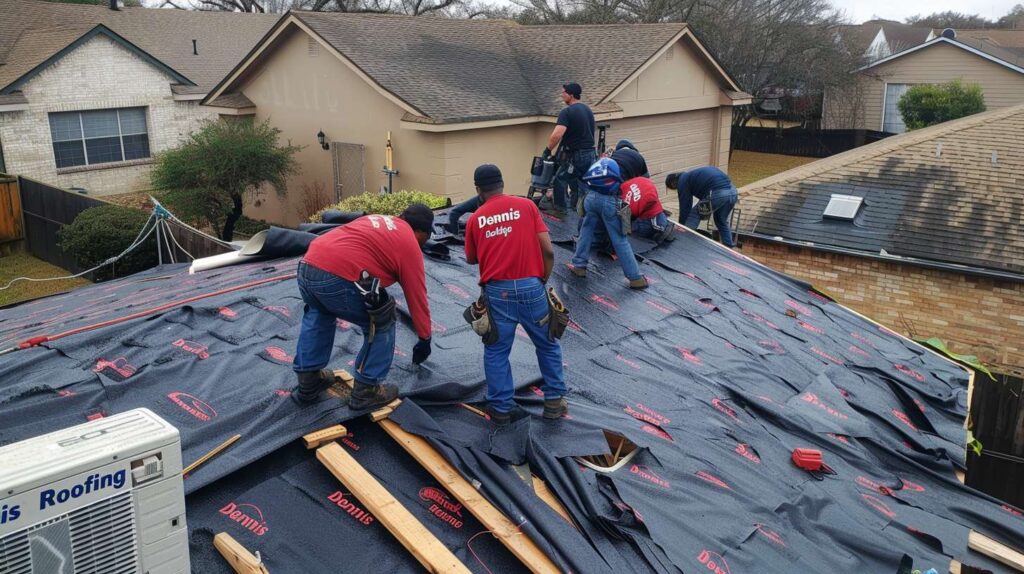
Cobble Hill Is One of Brooklyn’s Most Lovingly Maintained Neighborhoods – Keep the Roof That Way
Calm down about what you’re seeing – it’s evidence, not a verdict. The counterintuitive truth about Cobble Hill is that the best-kept brownstones on the block can hide roof problems more effectively than neglected ones, because years of careful paint touch-ups, patching, and meticulous upkeep can quietly mask the earliest warning signs until the roof itself is the only thing left telling the truth.
Why Polished Brownstones Can Hide the Earliest Roofing Failures
Seventeen years up on Brooklyn roofs has taught me this: a roof isn’t a surface – it’s a system under tension, and what you’re looking at from the sidewalk is usually the last thing to show strain, not the first. I’m Victor Reyes, and the work that shaped how I read a roof wasn’t roofing at all – it was six years restoring upright pianos in a Red Hook brownstone shop, where one warped pin block could throw the whole instrument out of tune before you heard a single wrong note. That’s the same thing happening on residential roofing and commercial roofing jobs across this neighborhood every season. That’s the symptom. Here’s the mechanism.
MYTH VS. FACT: How Maintained Properties Mislead Owners About Roofing Condition
| Myth |
Real Answer |
| Fresh exterior paint means the roof is fine. |
Paint covers wood. It doesn’t stop flashing failure, trapped moisture, or delaminating underlayment – it just delays when you notice them. |
| One missing shingle always means a simple shingle swap. |
A missing tab is often a symptom of flashing separation or uplift stress in adjacent courses – replacing the tab alone leaves the mechanism untouched. |
| A ceiling stain proves the leak is directly above it. |
Water travels along rafters, joists, and vapor barriers before it drops. The stain is where gravity stopped it – not where the water entered. |
| Flat roofing only fails when it’s old. |
Seam fatigue and drainage strain can stress a newer flat roof membrane well before its rated lifespan – especially when drainage paths are blocked or poorly sloped. |
| Gutters are separate from roof health. |
Overflowing or improperly pitched gutters push water back under drip edges and fascia, creating slow rot and leak entry points that look like roof failures but start at the gutter line. |
Quick Facts: Local Roofing Realities in Cobble Hill
Common Roof Types Here
Asphalt shingle roofing on row houses, flat roof membranes (EPDM, TPO, modified bitumen) on mixed-use buildings, and metal flashing and accent details on older brownstones.
Most Overlooked Failure Point
Chimney and skylight flashing. These transition points carry disproportionate strain and are the first to fail – often years before the field of the roof shows any problem.
When Leaks Often Appear
After wind-driven rain that pushes water under compromised flashing, or when leaf-clogged drainage causes ponding that backs water toward seams and edges.
Best First Service Call
A proper roof inspection with leak tracing – not an automatic replacement quote. Knowing where the strain actually lives determines every decision that follows.
Where the Real Strain Usually Starts on Cobble Hill Roofs
Row-House Transitions and Uphill Flashing
On a block like Warren or Congress, the giveaway is usually smaller than people expect. The issue is almost never the middle of the roof – it’s at the transitions: chimney flashing repair needs, failing skylight curbs, parapet edges that have been caulked one too many seasons, gutter lines that have pulled slightly away from the fascia, and the spots where newer asphalt shingle roofing meets original slate details on older row houses. I was on a Congress Street row house at 6:40 in the morning after a hard coastal wind, and the owner came up in slippers holding a coffee mug, apologizing for “wasting my time” over one shingle tab on the sidewalk. I looked up and the missing tab wasn’t the problem at all – it was chimney flashing starting to peel back on the uphill side, slowly funneling every wind-driven rain event directly toward the deck. By noon we had the roof repair done, and two days later she called to say the interior stain that had “mysteriously” appeared every winter never came back.
Forget the loose tab for a second; look at what was carrying the extra strain.
I remember one roof where the gutter told the whole story before the shingles did. The granule deposit in the downspout was minimal, the field shingles looked fine from the street – but the gutter had a three-inch sag at the middle run, and the leaf pack behind the outlet had been sitting wet since October. Water wasn’t getting into the house through the shingles. It was wicking back under the drip edge, softening the fascia, and running down the interior wall cavity. That’s a roof leak repair call that’s really a water-management failure. Roof cleaning, gutter repair, and proper gutter installation all live in the same conversation as roofing on these row houses – and skipping any one of them means the next call happens sooner.
Flat Roof Drainage Paths on Mixed-Use Buildings
What Your Visible Clue Is Actually Pointing To
Start here → Did you notice water, debris, or physical movement first?
Shingle on the ground
→ Inspect adjacent courses and uphill flashing before assuming it’s an isolated tab loss. The tab is usually the messenger, not the cause.
→ Recommended: Roof Inspection + Flashing Check
Stain near a chimney
→ Check uphill flashing for separation or caulk failure before assuming deck damage. Chimney flashing repair resolves the majority of these without touching the field of the roof.
→ Recommended: Chimney Flashing Repair + Roof Leak Detection
Bubbling on a flat roof
→ Inspect drainage outlets and seam tension first. Bubbling usually signals trapped moisture or delamination – not just a surface issue.
→ Recommended: Commercial Roof Repair or Replacement Evaluation
Gutter overflow at the edge
→ Clear the blockage first, then inspect the fascia and drip path for rot or separation. Don’t assume the roof is leaking until you’ve ruled out the drainage system.
→ Recommended: Gutter Repair or Installation + Roof Maintenance
Drip near a skylight
→ Inspect the curb seal, surrounding decking flex, and flashing collar – not just the skylight glass. Skylight repair is often really a curb and deck rebuild around the unit.
→ Recommended: Skylight Repair + Surrounding Deck Inspection
Symptom → Mechanism → Service
| What You Notice |
What May Actually Be Happening |
Most Likely Service |
| Missing shingle tab |
Uplift stress from flashing separation or inadequate nailing pattern in adjacent courses |
Roof Inspection + Chimney Flashing Repair |
| Repeated winter stain near a wall |
Ice dam formation or flashing gap that only activates under specific wind/rain direction |
Roof Leak Detection + Roof Repair |
| Drip at or near a skylight |
Curb seal failure, decking flex, or compromised flashing collar – often from layered prior repairs |
Skylight Repair + Deck Section Rebuild |
| Ponding on flat roof |
Blocked or undersized drainage combined with seam stress under standing water weight |
Commercial Roof Repair + Drainage Correction |
| Heavy granule loss in gutters |
Shingle binder breakdown from UV exposure or hail micro-impact – field shingles approaching end of life |
Roof Maintenance Evaluation + Replacement Planning |
| Water stain near cornice paint |
Gutter overflow or drip edge separation wicking behind the fascia into the wall assembly |
Roof Leak Detection + Gutter Repair |
How We Decide Between Repair, Maintenance, and Full Replacement
Here’s the question I ask before I say repair or roof replacement: is the strain isolated, repeating, or structural? An isolated failure – one seam, one flashing point, one section of soft decking – usually calls for targeted repair, not a full replacement pitch. A repeating failure at the same location across seasons means something in the system keeps loading that point. And a structural failure, where saturation or substrate damage has spread across zones, is when a new roof is genuinely the right conversation. This applies whether we’re talking shingle roof, asphalt shingle roofing, EPDM roofing, TPO roofing, rubber roof, tar and gravel roof, modified bitumen roofing, or metal roofing – the diagnosis framework doesn’t change with the material. And honestly, too many owners hear “new roof” before anyone has actually traced the load path or identified where the strain keeps concentrating. That’s not a diagnosis. That’s a guess with a price tag on it.
Blunt truth – paint can flatter a house longer than flashing can protect it. One August afternoon around 3:15, I was doing a roof inspection for a Cobble Hill couple who’d just bought a beautifully maintained brownstone – fresh paint everywhere except near the cornice, which should have been the first tell. It was hot enough that the old asphalt shingle roofing had that soft, tired smell, and when I pressed near the skylight curb with my thumb, I could feel the decking flex more than it should. That’s the symptom. Here’s the mechanism: three different contractors had done patchwork over the years, each layering over the last, and the curb itself had been shimmed and sealed so many times that water was now finding paths through the accumulated repairs rather than around them. They thought they were calling me for skylight repair. What they actually needed was a small section rebuild and roof leak detection to trace where the moisture had traveled through those layered patches – a much smaller job than a full replacement, and the right one.
Targeted Repair or Rebuild
- Isolated flashing failure at one chimney or parapet point
- Local membrane seam issue without widespread saturation
- Limited decking softness confined to one section
- One drainage path problem causing concentrated leak entry
- Recent roof with isolated storm damage or wind-lifted section
Replacement or New Roof
- Widespread saturation across multiple roof zones
- Repeated leaks in unrelated areas despite prior repairs
- Brittle, granule-depleted field shingles across the full slope
- Flat membrane at end-of-life with seam failures throughout
- Major substrate failure or incompatible layered repairs making targeted work unsafe
Exact Evaluation Sequence Before Recommending Any Work
1
Exterior symptom review – Walk the perimeter and document every visible clue: displaced material, paint condition near transitions, gutter line, and parapet edge before stepping on the roof.
2
Trace the water path and stress points – Follow where water enters, where it travels, and where it’s loading the system beyond what any single component should carry.
3
Inspect flashing, seams, and drainage – Every chimney collar, skylight curb, parapet cap, and drainage outlet gets a close look, not just the section above the interior stain.
4
Test substrate firmness and attachment condition – Probe decking around any soft points, check fastener pull-through risk in shingle fields, and assess membrane adhesion on flat sections.
5
Deliver a photo-backed recommendation – Maintenance, targeted repair, section rebuild, or replacement – with the specific evidence behind each call, not just a number.
When a Roof Issue in Cobble Hill Needs Same-Day Action
Signals That Can Wait for a Scheduled Visit
Not every roofing problem is an emergency – but some are, and it matters to know the difference before you’re standing over a bucket at midnight. Storm damage repair, wind damage repair, and active roof leak repair are situations where waiting even 48 hours can turn a manageable repair into significant interior damage. If you’re dealing with insurance claim roofing after a named storm or a documented wind event, documenting the damage before any temporary work is done isn’t optional – it’s what protects your claim. For problems that are real but not actively worsening, scheduling a proper roof inspection within the week is the right call, not a panicked same-day patch.
Signals That Call for Emergency Roof Repair
A roof system is a lot like a piano under tension; one drifting part pulls the rest with it. I remember a Saturday in late November when I got called for emergency roof repair on a mixed-use building right before sunset – a shop owner downstairs and a tenant upstairs, both putting bowls under drips, with holiday foot traffic starting to pick up. Once I got up there, the flat roof wasn’t failing everywhere. It was one drainage path blocked solid under wet leaves, with water backing up and loading against a seam in an aging section of modified bitumen roofing. We cleared the path, dried what we could reach, and made the temporary repair before dark. The permanent commercial roof repair went in after the weekend. Here’s the insider piece: on many flat roof situations, understanding and clearing the drainage path in the first hour matters more than guessing at the nearest visible seam. The water has to go somewhere – your job is to stop it from choosing the interior.
Urgent vs. Can-Wait Roofing Situations
📞 Call Same Day
- Active interior dripping during or after rain
- Wind-torn membrane or shingles exposing underlayment
- Ponding that’s visibly pushing toward seams or interior edges
- Skylight leak occurring during active rainfall
- Leak impacting a commercial tenant or business operation
- Visible flashing peeled back after a storm
📅 Can Be Scheduled
- Cosmetic granule loss without any active leakage
- Scheduled annual roof maintenance visit
- Roof coating or roof sealing refresh planning
- Isolated gutter tune-up during dry weather
- Roof inspection for a home purchase or sale
- Skylight installation inquiry on a stable, dry roof
⚠ What Not to Do After Spotting a Possible Leak or Wind Issue
- Don’t climb a wet roof. A wet asphalt shingle or EPDM membrane surface is far more dangerous than it looks, and a fall risk doesn’t fix anything faster.
- Don’t smear store-bought sealant over an unknown leak path. You’ll seal moisture in, not out, and the next contractor has to remove it before they can trace the real entry point.
- Don’t ignore interior moisture because it stopped dripping. It stopped because the rain stopped – not because the problem resolved. It’ll be back.
- Don’t clear debris by stepping on soft flat membrane areas. If ponding has been sitting, the membrane may be softer and more fatigued than it looks from the edge.
If a storm caused the damage, document everything with photos and video before any temporary work is done. That documentation is the foundation of a successful insurance claim roofing process – don’t skip it.
Questions Worth Asking Before You Book Any Brooklyn Roofing Crew
A good contractor should be explaining mechanism before remedy – especially on a lovingly maintained Cobble Hill property where the visible clues are almost always misleading. Before you commit to any work, it’s worth knowing whether the crew is tracing the actual strain in the system or just replacing what they can see. Ask them where the water entered, not just where it showed up. Ask what’s carrying more load than it should be. Ask whether the proposed repair addresses the source or the symptom. The answers to those three questions will tell you more than any price quote will. If you want the mechanism identified before anyone sells you work, call Dennis Roofing – we do roof inspections, leak tracing, repair, and full replacement evaluations, and we won’t recommend anything until we know exactly what’s going wrong and why.
Before You Call: What to Have Ready
- When you first noticed it – Was it during a specific storm, after a dry spell, or gradually over weeks?
- Whether the leak appears in wind-driven rain or all rain – Direction-specific leaks almost always point to flashing or transition failures, not field shingles.
- Roof type, if known – Flat membrane, asphalt shingle, metal roof details, modified bitumen – even an approximate description helps.
- Photos of both exterior and interior evidence – The stain location inside and the nearest exterior feature above it, photographed before anything is moved or cleaned.
- Whether gutters overflow at the problem area – This rules in or out the drainage-path causes before we even get on the roof.
- Any past patchwork, roof coating, or prior repairs – Who did it, when, and what they said the problem was, if you know.
- Whether this affects a tenant or business operation – Commercial situations or occupied rentals affect scheduling priority and the sequence of temporary vs. permanent work.
Common Cobble Hill Roofing Questions
▶ Do I need a roof replacement if only one area is leaking?
Not necessarily. An isolated leak – especially near a chimney, skylight, or parapet – is usually a repair situation, not a replacement situation. The key is proper roof leak detection to confirm it’s truly isolated before any work is recommended. Dennis Roofing traces the mechanism first.
▶ Can a flat roof leak show up far from where the stain appears?
Yes – and on flat roofing, this is the rule, not the exception. Water travels horizontally across the membrane or through the insulation layer before it finds a path through the deck. The interior stain can appear six feet or more from the actual entry point. That’s why roof leak detection on flat roofs requires tracing the drainage slope, not just inspecting directly above the stain.
▶ Is skylight installation or repair safe on older Cobble Hill brownstones?
Yes, with the right approach. Older brownstone roof decks require careful curb sizing, proper flashing integration with existing materials, and a substrate inspection before any skylight installation or skylight repair. We’ve done it on row houses throughout the neighborhood – the critical step is knowing what’s under the current roofing before committing to curb placement.
▶ How often should roof inspection and maintenance happen in Brooklyn?
Once a year is the baseline – ideally in the fall before coastal storm season loads up, or in early spring after winter ice and wind stress. Mixed-use buildings with flat roofing benefit from a post-winter drainage check as well. Roof maintenance and roof cleaning at consistent intervals costs a fraction of what deferred problems run.
▶ Can Dennis Roofing help with emergency roof repair and insurance claim roofing?
Yes to both. We handle emergency roof repair for active leaks, wind damage repair, and storm damage situations – including same-day temporary work when weather creates urgency. For insurance claim roofing, we document conditions before temporary repairs are made, provide detailed written assessments, and can work directly with adjusters on scope of work. Call us first, before anyone starts patching.
If you want the mechanism identified before anyone sells you work, reach out to Dennis Roofing for a roof inspection, leak tracing, targeted repair, or full replacement evaluation – we’re here to find what’s actually carrying the strain, and then tell you the truth about what it needs. – Victor Reyes, Dennis Roofing, Cobble Hill, Brooklyn