
Clinton Hill Has Beautiful Brownstones Worth Protecting – and That Starts With the Roof
Edge Clues Tell You More Than the Middle Ever Will
Compare the two estimates side by side – and the real difference usually isn’t price, it’s whether the contractor is reading the middle of the roof or the edges, seams, parapets, gutters, and flashings where Clinton Hill problems almost always start. Residential roofing and commercial roofing on these blocks involve row houses, mixed-use buildings, and rear additions where water doesn’t fall straight down – it travels.
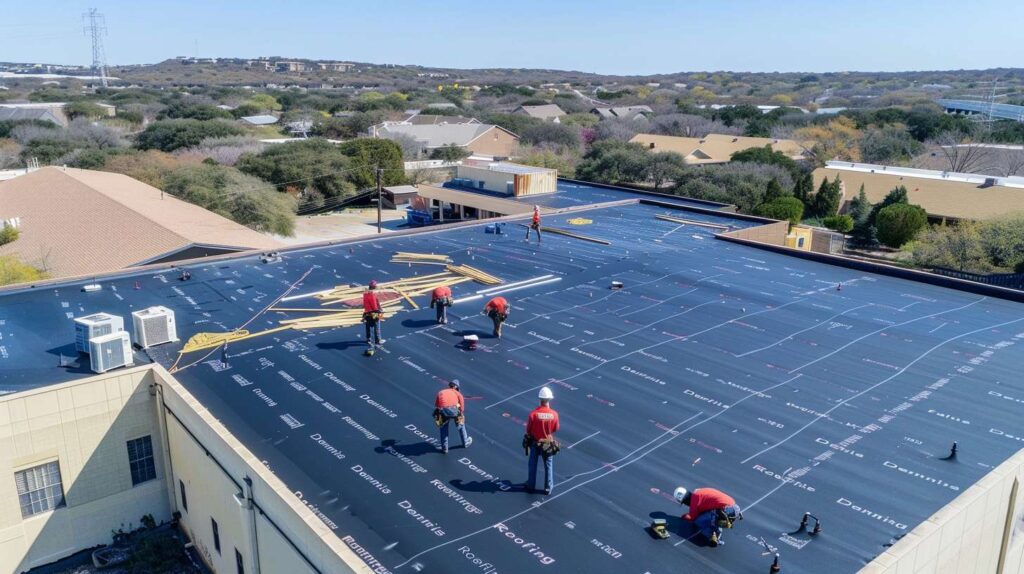
On a Clinton Hill roof, the first place I look is never the dramatic spot. It’s the parapet edge, the coping joint, the flashing seam at the rear addition transition. The house is already telling you where it hurts – through the shape of the ceiling stain, the sound when you tap the coping, the slight give underfoot near a drain. You just have to know how to listen.
Where Clinton Hill Roofs Usually Start Talking
Parapets, Coping, and Masonry Joints
Here’s the blunt part: roof repair money gets wasted when the contractor treats the visible symptom instead of tracing the actual water path. Clinton Hill brownstones are narrow, tightly packed, and often shaded by taller neighbors for half the day. That means slower drying, more freeze-thaw cycles, and rear additions that create transition joints right where drainage wants to go. When one drain discharge line pitches wrong on a row house, it doesn’t just affect one building – it can push water toward the shared masonry and punish the neighbor’s interior wall too.
I’m Ray Okonkwo, and I’ve been doing roofing in Brooklyn since 2007, with a particular focus on historic brownstone moisture tracing – which is really just learning to hear what a building is saying before it starts shouting. I remember a February morning on Greene Avenue, around 7:10, still gray outside, when a brownstone owner told me the leak only showed up after windy rain, not regular rain. That detail mattered. I stood by the parapet, tapped the coping, and heard that hollow note I’ve learned not to ignore. The issue wasn’t the middle of the flat roof at all – it was failed flashing letting water travel sideways before it dropped into the top-floor ceiling. No amount of flat roof patching would have fixed that.
Drains, Gutters, and Rear Discharge Lines
At 6:45 one wet morning, I learned this again. Just after a thunderstorm, I was called to a three-story place on a block near Fulton Street where the owner had already paid for patchwork twice. He kept pointing at the blister in the flat roofing membrane, and honestly I understood why – it looked like the problem. But I asked to see the rear gutter line first. Sure enough, the clogged discharge had been backing water toward the masonry joint, and the roof leak repair money had been going to the wrong target for nearly a year. Good roof leak detection isn’t about staring at the stain; it’s about following every drainage path the water could have taken to get there. Gutter repair and gutter installation decisions belong in the same conversation as any flat roof installation or membrane work on these properties.
| What You Notice Indoors or on the Roof | Likely Source Area | What the House Is “Saying” | Recommended Service |
|---|---|---|---|
| Ceiling stain only after wind-driven rain | Parapet, coping joint, or chimney flashing | “My edge seals have failed” | Roof inspection + chimney flashing repair |
| Standing water on flat roof after rain | Blocked drain bowl or low-pitch area | “My drainage plan doesn’t work anymore” | Drain clearing + flat roof evaluation |
| Drip at skylight frame, not glass | Curb seal or skylight flashing failure | “The transition here was never sealed right” | Skylight repair or curb rebuild |
| Damp rear bedroom wall, every heavy rain | Rear gutter backflow or masonry joint | “Water is pooling where it shouldn’t reach” | Gutter repair + roof leak detection |
| Top-floor ceiling bubbling or plaster cracking | Long-running leak from flashing or coping | “I’ve been whispering for a while now” | Full roof inspection + roof leak repair |
| Membrane blister visible on flat section | Drainage failure or trapped moisture beneath | “Don’t patch me – find why I’m wet underneath” | Moisture probe + possible roof replacement |
Patching the membrane field can miss the real leak entirely
Repeated sealant patches over a membrane blister, open seam, or ponding area are often completely wasted if the actual failure is at the flashing, coping, drain bowl, skylight curb, or gutter discharge line. The water entry point and the drip point are rarely the same location on a Clinton Hill brownstone.
Do not assume the drip is directly under the entry point. Trace the path – then patch.
Choose the Service by the Water Path, Not by the Panic
If I were standing in your top-floor hallway, I’d ask one question first: does the problem show up during every rain, only during wind-driven rain, after snow and ice sit on the roof, or constantly regardless of weather? That one answer separates an emergency roof repair from a routine roof maintenance visit, a targeted roof waterproofing job, a roof sealing application, or a full roof replacement conversation. And honestly – I’d rather give you a boring maintenance answer than sell you a dramatic new roof you don’t need. That’s not humility, it’s just what 17 years of doing this teaches you. The expensive call isn’t always the right one.
What weather has to happen before your roof starts talking?
After every rain + interior damage?
→ Emergency roof repair + roof leak detection – call same day
Only during wind-driven rain?
→ Inspect parapet, flashing seams, and chimney flashing. May need chimney flashing repair or skylight repair.
Residential or mixed-use building?
→ Residential roofing inspection first. Commercial roof repair process if multi-unit or retail ground floor.
Roof over 18-25 years old, or repeated past repairs?
→ Yes: schedule a roof replacement estimate and new roof planning conversation
→ No: roof inspection + seasonal roof maintenance visit is usually all that’s needed
Flat membrane system?
→ Add roof coating assessment and drainage check to the inspection scope
Materials Behave Differently on These Blocks
Flat Systems on Brownstones and Additions
A parapet is like a stubborn teacup rim – small edge, big mess if it’s chipped. For the flat sections that cover most Clinton Hill brownstones and their rear additions, choosing the right system matters more than picking a brand name. EPDM roofing (rubber roof) handles thermal movement well and is genuinely repairable, which matters on a 120-year-old building that shifts. TPO roofing offers better heat reflectivity and strong seam welding, which is worth considering if a rear extension bakes in afternoon sun. Modified bitumen roofing is common on older re-roofs here and holds up well when properly lapped, though seams age. The old tar and gravel roof systems are still on plenty of these buildings and are reliable – until the drain bowls clog and nobody’s checking. Roof coating can extend a membrane’s life, but don’t let anyone talk you into coating over a failed substrate or open flashing. That’s a temporary disguise, not a repair.
Three sounds matter up here: solid, hollow, and squish. Solid means the membrane is adhered and the substrate is intact. Hollow means there’s separation – air or moisture is sitting between layers and the house is whispering something you don’t want to ignore. Squish means water is already trapped and the problem is real and present. I was on a roof inspection in Clinton Hill at sunset once, helping a family that had just bought a brownstone on a side street off Washington Avenue and wanted a new roof estimate. From the street the roof looked perfectly respectable. But up top I found an old skylight – the kind with a wooden curb – wrapped in three different generations of sealant, like tree rings of bad decisions stacked on top of each other. I told them the roof wasn’t failing loudly yet. But it was whispering, and whispers in old Brooklyn houses get expensive if you ignore them. That skylight needed a proper curb rebuild, not a fourth layer of sealant. For sloped porch roofs and decorative bay elements, asphalt shingle roofing and standing-seam metal roofing both show up – and metal roof sections, done right, are among the most durable transitions on these properties. Skylight installation and skylight repair always require a separate flashing plan, not just sealant.
| System | Pros | Cons |
|---|---|---|
| EPDM Roofing | Excellent thermal flexibility; easy seam repair; long lifespan (20-25 yrs); historic-home compatible | Dark surface absorbs heat; adhesive seams can lift if not torched properly |
| TPO Roofing | Reflective surface reduces urban heat load; heat-welded seams are strong; energy efficient | Seam quality depends heavily on installation skill; thinner membranes can puncture |
| Modified Bitumen | Familiar system for local contractors; good puncture resistance; affordable re-roofing option | Lap seams age and crack; not as reflective; needs careful drain integration |
| Asphalt Shingle Roofing | Cost-effective on sloped sections; wide contractor familiarity; easy spot repairs | Not for flat areas; granule loss starts around year 15-18; poor freeze-thaw performance at edges |
| Metal Roofing | Longest lifespan (40+ yrs); excellent on decorative or sloped porch elements; minimal maintenance | Higher upfront cost; expansion noise in temperature swings; needs experienced installer for transitions |
Main Flat Roof (Primary Deck)
Rear Extension Roof (Addition Deck)
Sloped Decorative / Porch Roof
Skylight and Transition Areas
Before You Approve Any Roofing Proposal
Compare scope, not just price. A lower number on the estimate might mean an overlay instead of a full tear-off, missing flashing replacement, no drain work, skipped chimney flashing repair, no attention to roof waterproofing at the parapet edges, or a warranty that quietly excludes the transitions where problems actually start. If you’re dealing with storm damage repair or a wind damage repair situation, the documentation process for insurance claim roofing is a separate layer – and the proposal should reflect exactly what the adjuster needs to see. Here’s the insider tip that separates good estimates from great ones: the strongest proposals mention drainage details and transition scope before they mention membrane brand or total square footage. If an estimate leads with price per square and doesn’t address the drains, flashings, or gutters until the fine print – that’s a sign to ask more questions before signing.
- 1 Notes on exact leak location – which room, which wall, which corner
- 2 Weather conditions when the leak appears (every rain, wind-driven only, after snow)
- 3 Roof age if known – or approximate age of the building’s last roof work
- 4 Photos of the parapet, visible drains, skylights, and any obvious flashing issues
- 5 Whether an emergency tarp was installed – and when
- 6 Records or receipts from prior roof repairs, even rough ones
- 7 Insurance claim status – open, pending, not yet filed
- 8 Whether the estimate you’re reviewing includes flashing, gutter, and drainage scope – not just membrane
How do I know if I need roof repair or roof replacement?
Can a flat roof leak far from the stain?
Is roof coating enough for an aging membrane?
Will insurance cover storm damage repair or wind damage repair?
How fast should emergency roof repair happen in Brooklyn?
Your brownstone is worth protecting – and that protection starts at the edges, the drains, and the transitions, not in the middle of the roof field where problems are easier to see but rarely start. Call Dennis Roofing today for a roof inspection, repair estimate, or emergency roof repair anywhere in Clinton Hill – and let’s hear what your house is actually saying.