
Brownsville Has Been Through a Lot – Your Roof Shouldn’t Be One More Problem
What Brownsville Roof Trouble Usually Looks Like Before It Turns Expensive
Staying skeptical of “it looks fine” was the right instinct. Some of the worst roofing headaches in Brownsville don’t start with a dramatic collapse or a ceiling caving in – they start with a stain that dries up, a draft nobody can place, or a drip that only shows up when the rain blows hard from the northeast. Those are the calls I’ve learned to take seriously, and honestly, in this neighborhood, checking early is almost always the cheaper and calmer move than waiting for visible damage to grow.
At 7 a.m., the first thing I trust is the water stain, not the guess. A dry stain doesn’t mean the roof sealed itself – it usually means water found a path, moved through the decking or insulation, dripped once, and stopped when the rain did. Think of it like cold slipping through one torn seam in a winter coat. Water doesn’t need a grand opening. It needs one weak spot and time, and Brownsville’s mix of older buildings, wind-driven storms, and flat roofs gives it plenty of both.
Roofing Reality Check – Brownsville Edition
Water damages insulation and roof decking first – long before a single interior drip appears.
A leak that only appears during wind-driven rain. It feels minor; it usually means exposed flashing or a failing edge seal.
Lifted flashing after a storm is the most common tipping point from “I’ll get it checked” to “we need emergency roof repair today.”
A roof inspection before the next patch. Knowing what you’re actually dealing with changes the math on every decision that follows.
Signals That Point to Repair, Emergency Help, or a Full New Roof
Here’s the blunt version: roofs almost never fail all at once. That sounds reassuring, but here’s where roofs behave differently than people expect – the staged breakdown means the symptoms can seem manageable right up until they aren’t. A small leak becomes a soft deck. A soft deck becomes a mold issue. A mold issue becomes a conversation nobody wanted to have. The trick is reading which stage you’re already in.
And as Latasha Monroe, with 17 years in and around roofing and a specialty in helping Brownsville residents tell the difference between repairable leaks and replacement-level wear, I can tell you the single most common mistake I see is people underestimating what’s already happening under the surface. One July afternoon, I was speaking with a Brownsville landlord near the Pitkin Avenue corridor who was certain his flat roof just needed “a quick patch.” Our team got up there and found ponding water sitting on aging seams, and previous patchwork layered on top of older patchwork going back years. He didn’t need another bandage. He needed someone to tell him honestly that his flat roofing system had been asking for help for a long time – and waiting any longer would mean replacing not just the membrane but the damaged decking underneath it.
Brownsville’s building mix makes this even more relevant. You’ve got everything from attached row houses to older commercial low-rises, most of them carrying weather exposure on multiple sides. The combination of flat roofs, aging penetrations, and Brooklyn’s wind patterns means the line between “standard roof repair” and “we need to talk about replacement” can close faster than people expect – especially after a bad storm season.
When a repair still makes sense
When patching is just buying a little time
| What You Notice | Likely Service | Urgency | Most Common Roof Types Involved |
|---|---|---|---|
| Isolated missing or cracked shingles after wind | Roof Repair | Moderate – address within a week | Asphalt shingle roofing |
| Water stain near chimney or fireplace wall | Chimney Flashing Repair | High – worsens fast in wet weather | Asphalt shingle, flat, modified bitumen |
| Interior drip or staining that tracks back to a skylight | Skylight Repair | High – seal failure spreads quickly | Any residential roof type with skylight installation |
| Ponding water sitting for more than two days after rain | Flat Roof Installation Review | High – drainage failure, structural risk | EPDM, TPO, modified bitumen, tar and gravel |
| Visible membrane seam splitting or bubbling on a low-slope roof | Commercial Roof Repair | Urgent – water entry likely already active | TPO, EPDM, rubber roof, modified bitumen |
| Multiple leak points, aging surface, granule loss, prior patches throughout | Roof Replacement | Plan now – next storm could escalate to emergency | Asphalt shingle, older flat roofing systems |
Places Water Sneaks In Around Brownsville Homes and Buildings
I’ve heard this sentence on too many Brownsville calls: “It only leaks when the rain blows sideways.” I took one of those calls at 6:12 in the morning after a hard windstorm, and the customer kept apologizing because she thought maybe she was overreacting. By the time our crew got on the roof, they found lifted flashing near the chimney and early water infiltration working its way into the wall framing – the same framing she’d heard making a quiet tapping sound before sunrise. She called because of a sound she couldn’t explain. Here in Brownsville, with row homes sitting wall-to-wall, older roof penetrations, and wind that finds every exposed edge along the flat and pitched surfaces up and down the block, that’s exactly how it goes. Wind-driven rain doesn’t need a big hole – it presses sideways into flashing gaps, along parapet joints, and through any seal that’s aged past its working life.
That sounds reasonable to track from the interior stain – but here’s where roofs behave differently than people expect. Water can enter at the ridge or a vent boot, travel along a rafter or through insulation for several feet, and then drip at a completely unrelated spot on your ceiling. Don’t skip the part where you report what kind of weather triggers the leak – that detail actually helps. But don’t assume the ceiling spot is directly under the roof opening. Ask for roof leak detection instead of guessing based on where the stain landed.
⚠️ Don’t Chase the Interior Stain
Water travels. It moves along roof framing, soaks through insulation, follows sheathing seams, and can drip indoors several feet away from where it actually entered the roof. Caulking or patching the ceiling spot – or even the nearest visible exterior crack – frequently misses the real opening entirely.
This is especially true around skylight installation edges and chimney flashing repair areas, where water enters at a seal gap and can travel a surprising distance before showing up inside. Roof leak detection by a trained eye traces the actual path – not the symptom.
Options for Flat, Shingle, Metal, and Commercial Roofing in This Neighborhood
What works best depends on age, drainage, and prior repairs
If you were sitting across from me, I’d ask one question first: when did you first notice the change? Not because it’s small talk – because the timeline tells you more than the material does. Material choice matters, and residential roofing and commercial roofing each have their own set of options. But the honest truth is that condition and drainage history matter more than picking the right product. I’ve seen beautiful TPO roofing installations fail early because the deck underneath was never properly dried out. And I’ve seen a well-maintained modified bitumen roofing system outlast roofs installed fifteen years after it. Whether we’re talking asphalt shingle roofing for a Brownsville row home, metal roofing on a commercial build, EPDM roofing or TPO roofing on a flat structure, a tar and gravel roof on an older low-rise, or roof coating to extend a system that still has life left – the conversation always starts with what’s already happening, not what looks good on a spec sheet.
| Roof System | Pros | Cons |
|---|---|---|
| Asphalt Shingle Roofing | Wide repairability – individual shingles can be replaced without full system removal. 20-30 year lifespan on quality installs. Familiar to most contractors. | Granule loss accelerates with age and UV. Seam and nail pop vulnerabilities increase after year 15. Not suitable for flat or low-slope drainage conditions. |
| Metal Roofing | Long lifespan (40-70 years). Excellent drainage performance on pitched surfaces. Resistant to wind damage when properly fastened. | Higher upfront cost. Repairs require matching panel profiles. Expansion noise in temperature swings. Not always practical for older Brownsville attached home structures. |
| EPDM Roofing | Highly flexible – tolerates building movement and temperature swings well. Solid lifespan on flat and low-slope applications. Repairs are achievable with adhesive patches. | Seams are the primary failure point and require proper bonding. Darker surface absorbs heat. Drainage design matters significantly – ponding will still degrade membrane over time. |
| TPO Roofing | Reflective surface reduces cooling costs. Heat-welded seams offer strong bond when installed correctly. Growing track record on commercial flat roof applications in Brooklyn. | Seam quality depends heavily on installation precision. Thinner membranes are more vulnerable to puncture. Long-term lifespan data still developing compared to EPDM. |
| Modified Bitumen Roofing | Multiple layer application increases redundancy. Excellent waterproofing performance. Handles foot traffic better than single-ply systems. Long history on Brownsville commercial and mixed-use buildings. | Torch-down installation requires experienced crews. Surface can crack in extreme cold if base prep is inadequate. Patching over old layers eventually creates a compounding problem. |
Before You Book Service, Know What the Visit Should Actually Cover
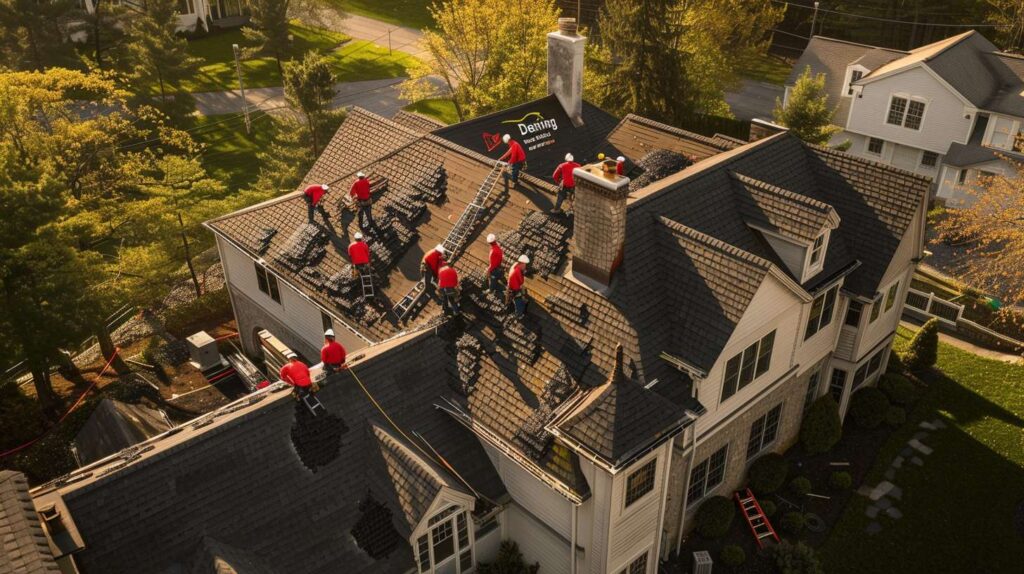
Brownsville homes have already carried enough stress; your roof shouldn’t be freelancing. A proper visit from Dennis Roofing isn’t just someone walking around and eyeballing shingles. It should cover a full roof inspection with documented photo evidence, active leak tracing (not guessing from the ceiling spot), a material condition assessment across the whole surface, flashing review at every penetration and edge, drainage evaluation, and a clear set of next-step options laid out without pressure. You deserve to know what you’re actually dealing with – not just what can be sold to you that afternoon.
I worked with a family once after water started coming in around their skylight during an evening thunderstorm. The dad kept repeating, “But we just painted that room.” I can still picture the blue painter’s tape still on the window trim and the bucket they’d set near the couch. The skylight seal had been failing gradually – but because the room looked fresh and the drip was small, nobody connected it to a roof issue until the rainstorm made it undeniable. Roof leak detection found the actual breach in about twenty minutes. If they’d called a week earlier, the framing behind that wall would have stayed dry. That job is why I always say: the sooner you get eyes on it, the more choices you still have.
Water does not need a dramatic opening; it needs one weak spot and time.
If you’re seeing signs you can’t confidently explain – a new stain, an old drip that’s back, a ceiling that’s soft to the touch, or anything that showed up after the last storm – call Dennis Roofing for a roof inspection, leak detection, repair review, or emergency roof repair in Brownsville before the next storm gets another crack at it. Don’t wait for visible damage to make the decision for you.