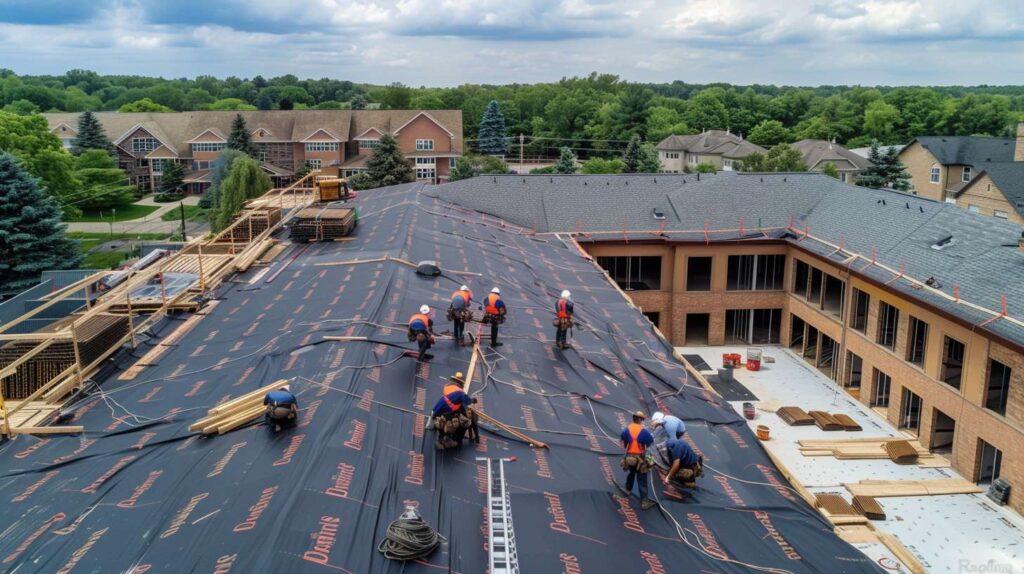
Bensonhurst’s Old-School Brooklyn Homes Deserve Old-School Craftsmanship on the Roof
Visible leaks lie on old Bensonhurst roofs
Let’s not pretend the visible sign tells you where it started. On old Bensonhurst attached homes, water doesn’t drop straight down – it travels through seams, dips, patched layers, and edge gaps, sometimes twenty feet, before it decides to show up on your ceiling.
On 18th Avenue, I can usually tell from the sidewalk what decade made the first bad decision. The rooflines on these narrow brick attached homes tell a story before I even pull my ladder off the truck – you’ll see the dip near the party wall, the patched flat roofing section that doesn’t sit flush with the rest, the metal edge that got bent back and re-bent by someone who called it fixed. I was on a Bensonhurst block at 6:40 in the morning after one of those sticky August nights, and the homeowner swore the leak had to be from the skylight because that’s where the stain showed. Walked three houses down, looked back, and spotted the dip by the party wall clear as anything. Turned out water was traveling under old layers near a patched flat roofing section and showing up a full twenty feet away – which is exactly why I don’t trust ceiling stains to tell me the truth. The stain lied. The patched membrane uphill told the truth.
MYTH VS. FACT: What Bensonhurst Homeowners Assume About Roof Leaks
| The Myth |
What the Roof Is Actually Doing |
| The stain on the ceiling marks where the leak is. |
Water follows the path of least resistance. On older layered roofs, it can travel several feet horizontally before showing up indoors. The stain is where it gave up, not where it started. |
| If the skylight leaks, the skylight is the problem. |
Skylight stains often originate uphill – at a flashing gap or membrane seam – and water runs toward the skylight opening because it’s the low point nearby. The curb edge is rarely where the failure started. |
| If roof coating was applied, maintenance was handled right. |
Coating over failing metal or cracked flashing traps moisture and accelerates rot underneath. Coating is a system choice for sound substrates – not a substitute for actual repair. |
| Ponding water on a flat roof is just cosmetic. |
Standing water adds dead weight, stresses seams, and accelerates membrane breakdown. On older flat roofing systems, persistent ponding signals drainage failure – and drainage failure is structural stress, not a cosmetic issue. |
| One patch proves the repair is done. |
On older attached Brooklyn homes with layered modified bitumen roofing or asphalt shingle roofing, a single patch addresses one exit point. The failure pattern underneath frequently spreads. Patching without inspection is a temporary stall, not a solution. |
Quick Facts: What This Article Helps You Figure Out
Most Misleading Symptom
Interior ceiling stain – it shows where water stopped, not where it entered.
Most Common Hidden Issue
Transition failure near the party wall or at a height change between roof sections.
Roof Types Often Involved
Flat roof, shingle roof, modified bitumen roofing, asphalt shingle roofing – often layered on the same property.
Best First Step
Full roof inspection before committing to roof repair or roof replacement – period.
Where the roof changes, the story usually changes
Transitions that fool people first
If I asked you where the water showed up, would you also tell me where the roof changes height? Those two pieces of information together are worth ten times more than just the leak location. Transition points – chimney flashing repair zones, skylight installation edges, parapet caps, gutter lines, metal drip edges, and seams where old membrane meets newer material – are where old Brooklyn roofs quietly come apart, often years before anyone looks. I’m Joe Santangelo, with 27 years of roofing experience and a specialty in tracking leaks across older attached Brooklyn homes, and I can tell you that the moment a roofer skips the transition audit and heads straight to the wet ceiling, you’re paying for guesswork.
Here’s the part homeowners don’t love hearing: the roof inspection has to come before any promises. On a flat roofing system on an attached row of Bensonhurst homes, water doesn’t just move down – it moves sideways, pooling in low spots, backing under seams, following the slope of old decking that’s shifted over decades. A promise made before that map is drawn isn’t a promise; it’s a sales move.
Roof Transition Points & What They Usually Signal
| Transition Point |
What Often Goes Wrong |
Service Usually Needed |
Urgency |
| Chimney Base |
Flashing separates, gets coated over instead of replaced; mortar crumbles at the base joint |
Chimney flashing repair or full re-flash |
High |
| Skylight Curb |
Uphill membrane separates; water runs to curb edge and appears to originate at the skylight |
Roof leak detection + skylight repair or curb re-flash |
High |
| Party Wall Seam |
Differential movement between attached structures opens seams; older caulk fails silently |
Seam repair, re-membrane, or roof waterproofing at the joint |
High-Medium |
| Rear Gutter Line |
Clogs force water uphill under the membrane edge; ice damming in winter worsens this |
Gutter repair or replacement + membrane edge check |
Medium |
| Metal Drip Edge |
Lifted or corroded edge allows wind-driven water to wick under asphalt shingle roofing or flat membrane |
Wind damage repair + edge resecurement or replacement |
High after storm |
| Patched Membrane Section |
Old patches shrink and lift at the edges; surrounding substrate has often rotted underneath |
Full section assessment; flat roof installation repair or roof replacement consult |
Medium-High |
Transitions That Fool People First
1. Chimney Flashing That Was Coated Instead of Repaired
Coating laid over cracked or separated flashing doesn’t bond to failed metal – it just bridges the gap temporarily. When that coating peels (and it does, usually by the second winter), the gap underneath is worse than before because moisture has been trapped there the whole time. This is one of the most common cosmetic cover-ups on older Bensonhurst homes.
2. Skylight Stains That Started Uphill
A stain ringing the skylight frame looks like a skylight leak. Often it’s not. Water traveling from a failed membrane seam or open parapet joint uphill will run to the skylight curb because that’s where the roof dips or stops. Fixing the skylight first wastes time and money when the source is three feet back on the flat roof.
3. Gutters Forcing Water Under a Membrane
When gutters are clogged or pitched wrong, water backs up along the fascia line and finds the membrane edge. On older flat roofing systems, that edge is often the weakest seam on the whole roof. The result looks like a roof failure when it’s actually a drainage failure – and the fix starts at the gutter, not the membrane.
4. Height Changes Between Roof Sections on Older Additions
Rear additions on Bensonhurst brick homes create a step where the main roof meets the addition roof. That step is a collection point for debris, standing water, and failed sealant. It’s also where two different construction eras meet, meaning two different movement patterns are working against each other. Those joints need regular inspection – they’re quiet until they’re not.
Pick the service by the failure pattern, not by panic
Blunt truth: old houses do not reward neat little guesses. And honestly, in my opinion, the fastest way to waste money on a roof is to buy the service name first and ask what failed second. That’s how homeowners end up with a patched shingle roof on top of a moisture problem that’s already eaten through the decking, or a full roof replacement on a section that only needed targeted roof leak repair. The way to sort it out is by matching what you find to what the roof actually needs – not by picking a price point and working backward. That means separating roof maintenance from roof sealing, distinguishing targeted roof repair from emergency roof repair, and knowing when storm damage repair is about stabilization versus when it’s about full system assessment. The pattern drives the service. Always.
I remember standing on a cold black flat roof with my gloves half frozen, doing a roof inspection for an older couple whose son “usually handled things.” He’d smeared roof coating over cracked chimney flashing repair work from a previous season and called it maintenance. When I lifted the edge with one finger, the coating peeled back like old tape. The husband just looked at me and said, “So that was theater?” I told him yeah, expensive theater. Coating over cracked flashing doesn’t seal a roof – it delays the conversation while the damage underneath keeps going. Cosmetic fixes that skip the substrate are theater, and old roofs don’t care how good the show looks from the street.
If the explanation starts and ends with the wet spot, you’re not hearing the whole roof talk.
Decision Tree: Repair, Replacement, or Emergency Stabilization?
Is water actively entering right now?
YES →
→ Emergency Roof Repair
Stabilize first. Tarp, secure edges, contain interior damage. Don’t approve full replacement until daylight inspection confirms scope.
Is this after a storm?
→ Storm Damage Repair: Document before touching. Check metal edge, gutter, and membrane seam for wind-driven entry first.
NO →
→ Schedule a Full Roof Inspection
Map transition points, drainage, and material condition before deciding anything.
Did a previous patch already fail?
→ Targeted Roof Repair if isolated failure found
→ Roof Replacement Consult if spread-out failure pattern or multiple failed patches across layered old roof system
Urgent vs. Can-Wait: Roofing Situations on Bensonhurst Homes
📞 Call Now
- Active interior dripping or visible water movement
- Lifted metal drip edge after wind event
- Bubbling membrane near a seam or parapet
- Water backing up behind the gutter line
- Exposed or open gap around a skylight frame
📅 Book Inspection Soon
- Isolated granule loss on an aging shingle roof
- Surface debris or moss – roof cleaning needed
- No active leak but overdue for roof maintenance
- Older shingle roof with no known leak yet
- Wondering if roof coating is appropriate for your flat roof
⚠ Why “Just Slap Some Coating On It” Backfires
Roof coating applied over failed flashing, trapped moisture, rotten edge wood, or loose membrane seams doesn’t solve anything – it seals the problem in. Coating is a valid protective step for a sound, prepared substrate. It is not a magic eraser for ignored maintenance or a substitute for roof sealing done after proper substrate assessment. If someone’s recommending coating as the first move without inspecting what’s underneath, that’s not a repair plan. That’s a delay.
Storm nights, flat roofs, and the false emergency
What gets stabilized now versus rebuilt later
A Bensonhurst roof is like a ride that’s been repaired by four different mechanics and still has the original bolts underneath. That’s not an insult – it’s a description of how these houses age. Every roof system on these narrow attached homes carries weight, sag, drag, and movement that nobody ever mapped out, because each repair was done in response to a symptom instead of the system. Flat roof, EPDM roofing, TPO roofing, modified bitumen roofing, tar and gravel roof, rubber roof, metal roofing – every one of those systems fails differently at its edges and seams, especially when they’ve been layered over each other across different eras. The hidden stress points are where decades of shifting have separated what should be bonded, and you don’t see it until something finally gives.
But that’s the trap. I remember a Sunday emergency roof repair call around 8:15 p.m. after a hard spring storm on a block of attached brick homes – the kind of night where all the neighbors come outside at once and point at different things. The customer thought they needed a full roof replacement immediately because water was dripping near the back bedroom light. What they actually had was wind damage at the metal drip edge plus a clogged gutter installation from years back that had been forcing water under the membrane every time it rained hard. We stabilized it that night – secured the edge, diverted the water, contained the interior. Came back in daylight and showed them exactly why emergency roof repair is about stabilizing first, diagnosing second, and rebuilding only when the evidence actually says to. They didn’t need a new roof. They needed someone who didn’t panic alongside them.
How an Emergency Roof Repair Visit Should Unfold on an Older Attached Home
1
Interior Symptom Check
Locate every interior sign – stains, drips, bubbling paint, wet insulation. Map them. The crew is not diagnosing here; they’re collecting evidence of where water exited the roof system, which will be cross-referenced against what’s found outside.
2
Exterior Edge and Drainage Check
The crew checks gutter line, drip edge, parapet caps, and visible membrane seams – every point where water could have entered under wind or weight load. This is where the transition points from Section 2 get physically confirmed, not assumed.
3
Temporary Stabilization
Tarping over open areas, securing lifted edges, seam clamping where needed, and diverting active water flow away from the interior. Nothing permanent. The goal is stopping the bleeding before you operate.
4
Daylight Re-Inspection
This is where the real scope gets drawn. The crew traces water movement uphill from the interior stain, checks substrate condition under any lifted sections, and confirms whether the failure is localized or spread across layers. Photos go with the report.
5
Permanent Repair or Replacement Plan
Only after steps 1 through 4 are complete does the recommendation get made – whether that’s a targeted roof repair, a section rebuild, or a full roof replacement consult. The plan is evidence-backed, not gut-level.
Emergency Stabilization vs. Permanent Repair
What Stops Water Tonight
- Tarping open or lifted sections
- Seam securement at wind-damaged edges
- Temporary edge protection on lifted drip edge
- Water diversion away from interior entry points
- Interior containment – catch, redirect, protect
What Actually Solves the Problem
- Membrane replacement where substrate confirmed sound
- Flashing rebuild at chimney base or parapet
- Flat roof installation section repair after full tear-back
- Gutter repair or full gutter installation with proper pitch
- Roof waterproofing and sealing only after substrate check confirms no trapped moisture
Before you approve any work, ask for this kind of explanation
Now here’s where people get fooled – a quote shows up, there’s a number on it, and the conversation skips straight to price without ever explaining the diagnosis. Before you approve anything, a trustworthy roofer should be able to tell you in plain language: where the water likely entered, how it traveled to where you saw it, which specific component failed, and whether residential roofing logic or commercial roofing-style flat system logic applies to what you’ve got on top of your house. Every service on that estimate – whether it’s a new roof, a targeted roof installation repair, commercial roof repair on a flat section, flat roof installation, a roof inspection, gutter repair, skylight repair, or roof leak detection – should have a clear reason behind it that connects to what was actually found. If it doesn’t, you’re not getting a repair plan. You’re getting a guess dressed up in a work order. Ask the roofer to show you the uphill source and the nearest height change before you even talk about price – that one habit alone separates the real diagnosticians from the guys who spotted your stain and stopped looking.
Before You Approve Roofing Work on a Bensonhurst Property
- Ask where the leak likely started – not where you saw it, but where the roofer traced it back to uphill.
- Ask where the roof changes height – every transition point should be accounted for in the diagnosis.
- Ask whether drainage contributed – gutter failure, pitch problems, and ponding can all drive interior leaks with no membrane failure at all.
- Ask if flashing or membrane failure was found – and which specific component, not just a general “the roof is old.”
- Ask why repair or replacement is being recommended – the answer should match what was found, not what the estimate happens to include.
- Ask what is temporary versus permanent – know exactly what the first visit fixes and what it defers to a follow-up scope.
- Ask for photo-backed roof inspection notes – if the roofer can’t show you what they found, you have no way to verify the recommendation is tied to actual conditions.
Common Questions About Older Brooklyn Roofs
Do I need a new roof if water came through once?
Not necessarily. A single entry event – especially after a storm – can be caused by a lifted edge, a cracked flashing joint, or a backed-up gutter rather than systemic roof failure. A proper roof inspection determines whether it’s an isolated repair or evidence of a bigger pattern. One event doesn’t automatically mean roof replacement.
Can a flat roof leak show up far from the actual damage?
Yes – and on older Bensonhurst homes, it happens regularly. Flat roofing systems channel water along the membrane or decking slope, and on attached homes with party walls and multiple patched sections, water can travel sideways for ten to twenty feet before it finds a way through. The stain and the source are rarely in the same place.
Is roof coating the same as roof waterproofing?
No. Roof coating is a protective layer applied to a sound, prepared surface to extend membrane life and reflect heat. Roof waterproofing involves addressing penetrations, seams, and substrate vulnerabilities as a system – it’s a more comprehensive process. Coating without waterproofing prep on a failing surface is surface coverage, not actual protection.
Can clogged gutters cause emergency roof repair conditions?
Absolutely. When gutters back up under heavy rain or after a storm, water has nowhere to go except uphill under the membrane edge. On older flat roofing, that edge is often already compromised. The result can look exactly like a roof failure – interior dripping, wet walls, soaked insulation – when the fix starts with gutter repair and proper drainage restoration.
What a Legitimate Local Roofing Company Should Show You
✓
Licensed and insured – verifiable documentation, not just a verbal claim
✓
Documented roof inspection findings – photos, notes, and a traceable diagnosis
✓
Emergency availability after storms – not just weekday hours when you need them most
✓
Real experience with older attached Brooklyn homes – the transition-point and travel-pattern knowledge that generic contractors skip
✓
Ability to handle both residential roofing and commercial roofing-style flat systems – most Bensonhurst homes have both
✓
Clear scope separating repair from replacement – in writing, with the reasoning that connects evidence to recommendation
If you want the honest version of what your roof is actually doing – not the wet-spot version, the real one – call Dennis Roofing for a roof inspection and a repair-versus-replacement explanation that matches the evidence. We’ll show you where it started, how it traveled, and what it actually takes to fix it right.