
Barren Island Is About as Exposed as It Gets in Brooklyn – the Roofs Here Have to Earn It
Why Exposed Barren Island Roofs Usually Break Down at the Perimeter First
Staying skeptical of “it looks fine” was the right instinct. Out here on Barren Island, the center of a roof can look completely acceptable while the actual trouble has been building for months at the flashing, the corners, the gutter lines, the skylight edges, the chimney transitions-every place where two surfaces meet and exposure gets its hands in. A roof out here doesn’t get one kind of stress. It works sun shift, wind shift, water shift, and salt shift, one right after the other, and the perimeter details take every single one of those shifts harder than the open field does.
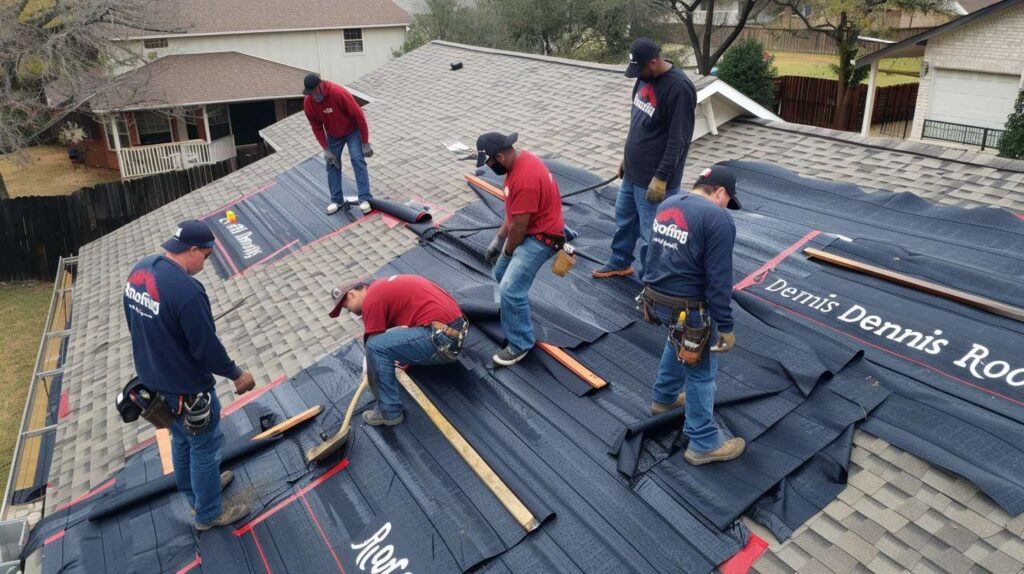
At the edge lines, that’s where I start. Not because the roof is automatically old or badly built-because the weak point got worked harder than the rest, and edge failures deserve a lot more respect than they usually get. On a shingle roof, that might be lifted starter courses or pulled flashing at a dormer. On a flat roof, it’s edge metal separating or a drain collar that’s been moving with every temperature swing. On a metal roof, it’s fastener back-out at the perimeter or panel seam separation where the wind gets underneath and works the joint open like a lever. Residential roofing and commercial roofing both show this pattern, and I’ve seen it enough times that checking the perimeter first isn’t a habit-it’s just the honest starting point.
| Myth | Real Answer |
|---|---|
| Shingles look fine, so the roof is fine. | Shingles are the field. The field outlasts the edges. Flashing, starter courses, and ridge caps all take harder exposure than the mid-slope shingles you’re looking at from the street. |
| Flat roofs always pond a little-no urgency. | Some minor drainage delay is normal; standing water 48 hours after rainfall is not. On an exposed flat roof, ponding accelerates seam fatigue and membrane stress at exactly the points that are already working hardest. |
| Loud flapping or banging means the whole roof is going. | Noise travels. A loose gutter edge or lifted piece of edge metal can amplify wind sound dramatically. Loud doesn’t mean widespread failure-it means something at the perimeter got loose and needs to be identified before it creates a real opening. |
| A ceiling stain is directly below where the leak enters. | Water travels. Wind-driven rain especially can enter at a flashing gap, run along a rafter or deck seam, and appear on the ceiling several feet from the actual entry point. Roof leak detection has to follow the path, not the stain. |
| New roofs don’t have flashing problems. | Installation quality and exposure stress are two separate things. A new system installed with under-secured flashing or improper edge detailing can develop problems in the first wind season, especially out here where the gusts have an unobstructed run at the perimeter. |
What Exposure Changes Out Here
Most Common First-Fail Zones
Edges, flashing transitions, drains, skylights, chimney bases, and gutter lines
Roof Types Commonly Seen
Flat roofing, asphalt shingle roofing, metal roofing – all present across residential and commercial properties
Service Triggers
Roof leak detection, roof inspection, and roof repair are the most common entry points for calls from this area
Weather Stressors
Wind, salt air, standing water, and temperature cycling – sometimes all four inside the same 24-hour stretch
Sorting Repair From Replacement Without Guessing
Here’s the part people never love hearing: the call between roof repair, roof replacement, and emergency roof repair isn’t made by age alone. It’s made by how far the failure has spread-across flashing details, membrane seams, decking condition, and the path moisture has already traveled inside the assembly. Latasha Monroe, with 17 years of experience around Brooklyn’s exposed working waterfront conditions, knows that appearance can lag behind actual deterioration by months, sometimes longer. A roof that looks tired but passable might have dry, sound decking. A roof that looks fine from the street might be sitting on wet insulation that’s been wicking since last spring.
One windy morning, I learned this the expensive way. A Saturday emergency call came in from a property near Flatbush Avenue Extension where the owner was convinced they needed a whole new roof because they’d been listening to flapping all night. When the crew got out there, part of the problem was roof-related-a lifted section of edge membrane at the parapet-and part of it was loose gutter metal rattling like a bad speaker against the fascia. That distinction matters enormously, because the right answer in one case was a targeted roof repair and gutter repair, and in the other case it might have been a premature roof replacement nobody needed. Separating noise, nuisance, and actual structural risk before picking a service path is the actual skill here.
A loud roof is not automatically a failed roof, but a quiet leak can still rot the structure underneath.
| What the Crew Finds | What It Usually Means | Likely Service | Common Roof Systems Affected |
|---|---|---|---|
| Isolated flashing failure, no deck damage | Edge or penetration detail worked loose under exposure; rest of system is sound | Roof Repair | Asphalt shingle roofing, metal roof, modified bitumen roofing |
| Repeated roof leak repair in the same zone | Patch history suggests a systemic failure underneath a surface-level fix | Immediate Inspection | EPDM roofing, TPO roofing, asphalt shingle roofing |
| Storm-torn shingle section on one slope | Wind event pulled tabs; adjacent slopes and decking are likely intact | Emergency Roof Repair | Asphalt shingle roofing |
| Membrane seam fatigue across multiple zones on flat roof | Seams have been cycling under thermal and wind stress; single-point fixes won’t hold | Roof Replacement | EPDM roofing, TPO roofing, tar and gravel roof |
| Saturated insulation or soft decking found during inspection | Moisture has been traveling inside the assembly; structural risk is real | Roof Replacement | Modified bitumen roofing, EPDM roofing, tar and gravel roof |
| Widespread fastener back-out across metal panels | Wind cycling has worked fasteners out of substrate; panel movement risk is high | Emergency Roof Repair / Replacement Assessment | Metal roof |
Reading Flat, Shingle, and Metal Systems by the Kind of Stress They Clock In For
If I were standing in your driveway, I’d ask this first: what kind of roof is it, and what kind of trouble is it showing-after wind, after heavy rain, or after a run of damp days with no obvious storm? That question tells me more than the age does. A flat roofing system and a shingle roof don’t fail the same way, and metal roofing is its own conversation entirely. Flat roofs take the water shift and the standing-water shift hardest-drainage and seam integrity are everything. Shingle roofs take the wind shift at the edges first, losing tabs, starter strips, and ridge caps before the main field even moves. Metal roofs handle the sun shift and wind shift well but develop problems at fasteners, seams, and penetration boots when they’re cycled hard for years without maintenance. Knowing which system you’re dealing with changes every part of the diagnosis.
Blunt truth-exposure doesn’t grade on effort. One gray November afternoon, I was helping coordinate a roof inspection for a small commercial property not far from the old landfill edge where Barren Island’s open-air exposure really has no buffer. The owner kept apologizing because “it’s just an old flat roof, they all pond a little.” By the end of that inspection, what looked like minor flat roofing fatigue had become a lesson in how waterfront air, unobstructed wind runs, and drainage stress compound each other out here in ways that don’t happen two miles inland. The seams had been working against pooled water weight for two seasons, and what the owner assumed was a cosmetic maintenance issue was sitting right on the edge of a commercial roof repair that needed to happen before it crossed into a full roof replacement. Barren Island’s geography means small weaknesses turn into repeated service calls faster than anywhere else in the borough.
| Roof System | Pros in Exposed Conditions | Cons in Exposed Conditions |
|---|---|---|
| Asphalt Shingle Roofing | Cost-effective; wide contractor knowledge base; good mid-slope durability on pitched residential roofs | Edge tabs and starter strips lift in persistent wind; flashing details require close attention; salt air can accelerate granule loss |
| Metal Roofing | Excellent wind uplift resistance when properly fastened; sheds water fast; long service life with correct seam detailing | Fastener back-out under thermal cycling; salt air promotes oxidation at exposed edges and penetration boots; panel noise during wind events |
| EPDM Roofing | Flexible membrane handles temperature swings well; good puncture resistance in field areas; straightforward seam repair | Seams and edge terminations are weak points under repeated wind; standing water accelerates edge adhesion failure; dark surface absorbs heat in summer |
| TPO Roofing | Reflective surface reduces thermal stress; heat-welded seams hold well when installed correctly; good resistance to ponding water | Seam quality is heavily installation-dependent; edge detailing requires precision in wind-exposed locations; some formulations become brittle in cold |
| Modified Bitumen Roofing | Multi-layer system adds redundancy; handles foot traffic during maintenance well; excellent waterproofing when seams are sound | Seams can separate under repeated thermal movement; requires careful edge and drain detailing; aging granule surface loses reflectivity |
| Tar and Gravel Roof | Gravel ballast resists wind uplift on the field; proven long-term system; good UV protection under intact gravel layer | Heavy; drains can clog under gravel shift; edge flashing and drain maintenance are critical and often delayed; hard to inspect membrane beneath ballast |
Knowing When the Call Is Routine and When It Is a Same-Day Problem
A roof out here ages like a dock rope, not like a living-room floor. I remember taking a call a little after 6:10 in the morning from a homeowner near the water who told me the bedroom ceiling “only dripped when the wind got rude.” That phrase stuck with me. When the crew got out there, the leak wasn’t anywhere near the main shingle field the owner had been eyeing-it was flashing at a dormer that had been getting bullied by exposure for years, moving just enough in the wind to let water in through a gap that only opened under pressure. That’s exactly why roof leak detection out here can’t just follow the ceiling stain. It has to account for wind direction, flashing pathways, and the hidden routes water takes once it finds a way past an edge detail.
Here’s an insider tip worth writing down before you call anyone: note whether the leak appears during calm rain, wind-driven rain, or hours after the storm stops. Those three patterns point to completely different causes. Calm-rain dripping usually means a straightforward penetration or membrane failure. Wind-driven leaks almost always trace back to flashing, edge metal, or a lifted detail that only opens under lateral pressure. Delayed dripping-showing up well after rainfall ends-suggests water that traveled inside the assembly before finding its exit point. That information changes whether the crew is diagnosing for roof waterproofing, chimney flashing repair, skylight repair, storm damage repair, or a longer roof leak repair that involves pulling back material to follow the moisture path. Tell the roofer what you observed. It’s not oversharing-it’s the fastest way to an accurate diagnosis.
⚠ What Not to Do While Waiting for a Roofer
- Don’t climb an exposed roof – wind-exposed surfaces with any moisture on them are dangerous, and an untrained eye often misses the actual entry point anyway
- Don’t smear random sealant into an active leak path – a moving leak has a source that shifts; sealing the visible gap often redirects water to a worse spot
- Don’t ignore wet insulation – saturated insulation holds moisture against decking long after the leak appears to stop, and that’s where structural rot starts
- Don’t assume insurance claim roofing begins before documentation – photograph everything accessible from the ground before any tarps, patches, or temporary work changes the visible damage
Practical Service Paths Dennis Roofing Can Handle in This Part of Brooklyn
Not every exposed roof out here needs the biggest service on the menu-but every exposed roof does need the right one. A roof inspection tells you where you actually stand before money gets spent. Roof maintenance and roof cleaning keep drainage and surface conditions from sliding into repair territory ahead of schedule. When something is actively failing, roof repair and commercial roof repair address the specific failure without touching work that doesn’t need it. When the system is past that point, roof replacement and flat roof installation put a proper new assembly in place that’s detailed correctly for what this location actually throws at a roof. Emergency roof repair and storm damage repair exist for the moments when waiting is not an option. Wind damage repair, roof coating, roof waterproofing, gutter installation, and insurance claim roofing round out the service paths depending on what the inspection turns up. If you want a roof checked before the next hard-weather shift clocks in, Dennis Roofing is ready to take that call-reach out for an inspection, a repair assessment, or same-day help, and don’t let a small edge problem get a head start on the structure underneath.