
Roof and Skylight Work Together – So Should Your Contractor
Map where the stain travels when it rains. That single habit will tell you more about your so-called skylight leak than any number of product warranties, because most skylight leaks in Brooklyn aren’t proof the skylight unit failed – they’re proof the roofing and skylight contractor services were never coordinated in the first place. This article will help you figure out whether you’re dealing with a skylight problem or a system problem, and what to look for when hiring someone who treats the whole assembly as one accountable job.
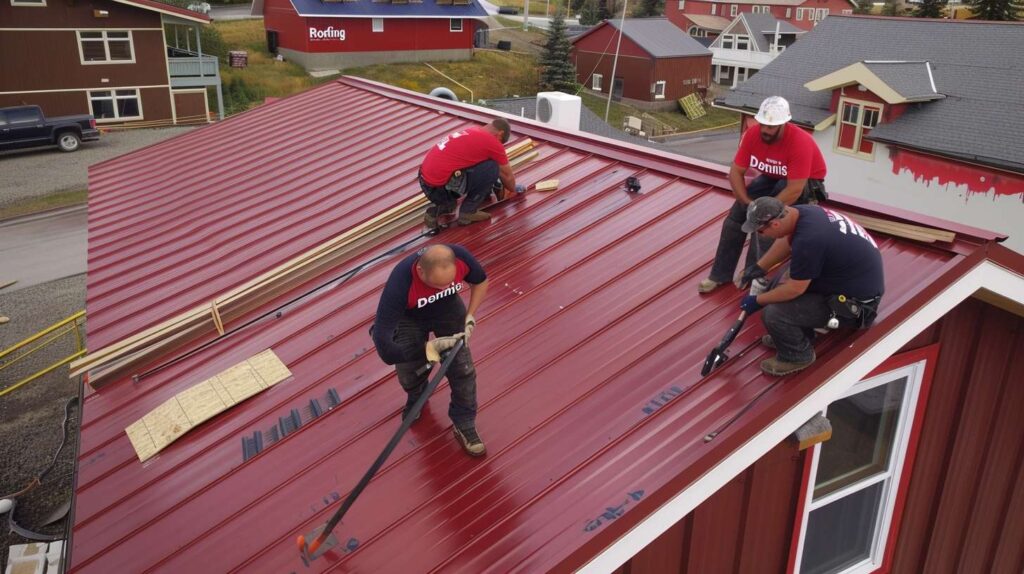
Why most skylight leaks begin at the handoff
At 8:15 on a sleeting Brooklyn morning, the ceiling stain usually tells me more than the skylight does. The stain’s shape, its travel path, where it shows up relative to the curb – those details point you toward where the water wants to go, and nine times out of ten that path doesn’t start at the glass. The skylight is usually the last stop on the water’s route, not the originating failure point. Coordination between the roof field and the skylight opening is what breaks down first.
I remember a February morning in Bay Ridge when a customer told me, “The skylight is leaking again,” and by 8:15 I was looking at photos of a stain that had actually started two rafters away from the skylight curb. It had snowed, then melted, then frozen overnight, and the real problem was a roofing patch trapping water uphill of the unit – the skylight itself was fine. That job stuck with me because it’s exactly how these situations unfold: the glass gets blamed, the roofing details go uninspected, and the customer ends up paying for a new skylight that doesn’t fix the underlying problem. Follow where the water wants to go, not where it finally shows up.
| Myth | Real Answer |
|---|---|
| If water appears near the skylight, the glass or frame failed. | Water travels along rafters, sheathing, and insulation before showing up inside. The appearance point is rarely the entry point. Roof transitions and underlayment failures uphill are far more common culprits. |
| A new skylight means the old roofing details around it are fine. | Swapping the unit without evaluating the surrounding field membrane, underlayment, and flashing integration is like putting in a new door and leaving the rotted threshold. The new unit only performs as well as what surrounds it. |
| A quick caulk bead solves flashing problems. | Caulk is a temporary band-aid on a structural detail problem. Flashing must be properly lapped, integrated with ice-and-water protection, and tied into the roof system. Caulk fails with the first freeze-thaw cycle – and Brooklyn gets plenty of those. |
| Condensation on the skylight glass and a roof leak are the same issue. | Condensation is a ventilation and humidity problem – often tied to bathroom fans venting into the attic shaft or missing shaft insulation. A roof leak is liquid intrusion from outside. Treating one as the other wastes money and leaves the actual problem untouched. |
| Hiring two separate contractors gives you more specialized expertise. | What it actually gives you is an accountability gap at exactly the seam where leaks happen. When callbacks arrive, each contractor points at the other’s work. Nobody owns the flashing, nobody owns the callback, and you’re stuck in the middle paying twice. |
Quick Facts: What Coordinated Roofing & Skylight Contractor Services Should Cover
Roof Area Involved
The skylight opening plus the surrounding field area running both uphill and downhill from the unit – not just the curb perimeter.
Leak Source
Water typically travels a distance before it appears inside. Entry points are often uphill of where the stain shows up on your ceiling.
Best Ownership Model
One contractor accountable for flashing, roof tie-in, and leak callbacks – not two companies splitting responsibility at the seam where problems actually originate.
Brooklyn Reality
Freeze-thaw cycles and older rowhouse roof transitions turn minor flashing details into serious leaks faster than in other climates. Precision matters more here.
Ownership beats finger-pointing every time
I still think about that Park Slope bucket catching water while two contractors argued on speakerphone. One July afternoon, right before a thunderstorm rolled in over Brooklyn, a brownstone owner had hired one company for the roof and another for the skylight – and when the rain hit around 4:30, neither company would own the seam. The customer stood in the hallway with a bucket while two professionals debated liability on a conference call neither of them had expected to be on. That job cost significantly more to resolve than it would have if a single contractor had been responsible from the start. Divided responsibility doesn’t give you more expertise; it gives you a built-in exit ramp for whoever wants to avoid the repair bill.
What one contractor should own on paper
If I’m sitting at your kitchen table, I’m probably asking one question first: who is responsible for the flashing? That one question surfaces the accountability gap faster than anything else – and after Gina Ferraro’s 17 years running the front office at Dennis Roofing while coordinating roof leak diagnostics and skylight tie-ins, I can tell you that the answer should always be a single name, a single company, and ideally a single sentence in the written scope. My opinion on this isn’t complicated: one company should own the flashing, the roof tie-in, and the callback path. Full stop. Splitting those responsibilities is how small details get skipped, and small skipped details in Brooklyn winters become expensive interior damage by March.
Bluntly, the leak does not care which company wrote which invoice.
| Task | Why It Matters | Best Single Point of Responsibility | What Goes Wrong If Split |
|---|---|---|---|
| Deck Inspection | Rotted or deflecting sheathing affects curb stability and flashing performance | Roofing contractor | Skylight installer skips it; deck issues surface after installation |
| Curb Assessment | Curb height and integrity determine whether water clears the opening threshold | Roofing contractor | Each trade assumes the other checked it; neither did |
| Skylight Unit Selection | Unit must match slope, curb dimensions, and available flashing kits | Roofing contractor coordinating with manufacturer specs | Mismatched kit leaves gap in flashing sequence |
| Ice/Water Protection Around Opening | Self-adhered membrane must run under flashing and integrate with field underlayment | Roofing contractor | Installed out of sequence; ice damming drives water under it |
| Primary Flashing | Step and saddle flashing controls how water sheds away from the unit perimeter | Roofing contractor | Skylight installer sets flashing without coordinating shingle tie-in |
| Counterflashing / Manufacturer Kit | Must be correctly lapped over primary flashing and sealed per spec | Roofing contractor using manufacturer-matched kit | Non-matching kit voids manufacturer warranty; laps are wrong |
| Roof Material Tie-In | Shingles or membrane must integrate cleanly with flashing edges; no exposed nail heads | Roofing contractor | Skylight trade leaves tie-in to roofer who wasn’t on site |
| Attic/Shaft Moisture Review | Condensation, fan ducting, and insulation gaps mimic roof leak symptoms | Roofing contractor at minimum; HVAC if fan rerouting needed | Nobody checks the shaft; condensation is misdiagnosed as leak |
| Interior Stain Documentation | Before photos establish the repair baseline and support warranty claims | Roofing contractor conducting intake inspection | No photos = no baseline; callback disputes become he-said/she-said |
| Warranty Language | Warranty must explicitly name flashing and roof tie-in, not just the skylight unit | Single contractor in writing | Each warranty excludes what the other company did; seam is unprotected |
| Final Water Test | Hose test confirms the full assembly – not just the glass – is sealed before the job closes | Roofing contractor who owns the full scope | Test skipped because neither party wants to be present for it |
What happens when nobody owns the seam
Trace the path, not just the window
Here’s the part people do not love hearing: a skylight is only as good as the roof details around it. When I walk a job, I’m not starting at the glass – I’m starting where the water enters the system and tracing it downhill through the underlayment, past the flashing laps, into the shaft, and finally to wherever it shows up on your ceiling. That path tells you everything: whether the problem is in the field membrane, the step flashing, the curb, or somewhere in the assembly below. Stopping the inspection at the skylight frame and calling it done is how this problem repeats itself year after year.
A roof opening is like a subway transfer – if the handoff is clumsy, everything backs up fast. I once met a family in Midwood just after sunset, the only time both spouses were home, and they were convinced the installer had botched everything because of condensation on the skylight glass in winter. When I got there, the bathroom fan was venting directly into the attic space, and warm humid air was collecting right around the skylight shaft. No roof leak at all – a ventilation problem doing a convincing impression of one. And honestly, that visit is the reason I always ask: before anyone quoted you a skylight replacement, did they check whether the bathroom fan ducting was inspected, whether the attic airflow around the shaft was reviewed, and whether the insulation on the shaft walls was intact? If those questions weren’t asked, you may be replacing a skylight that was never the problem.
How a Proper Roof-and-Skylight Leak Inspection Should Unfold
Document the interior stain pattern – photograph the location, shape, and travel direction of any ceiling or wall staining before anyone touches the roof.
Identify the roof slope and uphill water path – trace the likely entry point by following the slope above the skylight, not just around it.
Inspect the flashing sequence and roof tie-in – check step flashing laps, counterflashing integration, underlayment coverage, and how the surrounding field material terminates at the curb.
Check curb height and the unit’s physical condition – confirm the curb clears the surrounding roof surface and the frame itself shows no cracking, separation, or seal failure.
Review attic/shaft ventilation and nearby penetrations – confirm fan ducting exits the building correctly, shaft insulation is intact, and no other penetrations nearby are contributing to moisture in the same path.
Define one repair scope with one owner – the written proposal should name every element being addressed, who is responsible for flashing callbacks, and what the warranty explicitly covers at the seam.
⚠ Red Flags During Diagnosis
Walk away – or ask very pointed questions – if any of these come up:
- The contractor recommends replacing the skylight unit before inspecting the surrounding roof field and flashing sequence
- Caulk is described as the primary or complete repair solution for flashing failure
- The scope of work doesn’t name – in writing – who owns flashing and leak callbacks after the job closes
- No one on the crew checks the attic or shaft before quoting any interior work
- The proposal covers only the skylight perimeter with no mention of the uphill roof surface
Choose service that matches Brooklyn roofs
Brooklyn roofs don’t behave like suburban ones, and a contractor who hasn’t worked extensively on brownstones and attached rowhouses is going to miss things. Atlantic Avenue to Bay Ridge, Bed-Stuy to Midwood – the housing stock here is old, layered, and full of patched flat-to-sloped transitions where previous repairs left odd details buried under newer materials. Freeze-thaw cycles hit these transition zones hard, and the older penetrations – pipes, vents, exhaust fans from kitchens two renovations ago – complicate the water path in ways you don’t see on newer suburban builds. A contractor who understands Brooklyn’s specific roof conditions isn’t a bonus; it’s a baseline requirement for this kind of work.
The right contractor for this job explains exactly where the water wants to go, tells you what will be opened versus what will be patched, identifies what will be replaced versus repaired, and puts the warranty language in plain sentences you can read without a law degree. That’s the standard worth holding out for. A proposal that skips any of those details – especially the warranty language around the seam – is a proposal worth asking harder questions about before you sign.
Questions worth asking before you sign
Before You Call: What to Have Ready
Photo of the stain location – shoot from a few feet back so the stain’s travel path is visible, not just the wet spot
When the leak appears – during rain only, after snow melts, or in winter regardless of precipitation (that last one changes the diagnosis)
Roof age if known – even an approximate year or “it was replaced when we bought the house” gives the inspector a useful baseline
Skylight age if known – original to the renovation, replaced recently, or unknown are all useful starting points
Whether condensation appears mainly in winter – winter-only moisture on the glass is a ventilation flag, not necessarily a roof failure
Whether any prior caulk or patch repair was done – previous caulk repairs often mask flashing failures that still need to be corrected at the source
What Trust Signals Actually Matter on This Kind of Job
Licensed & Insured
Licensing and active general liability coverage protect you from uncovered damage if something goes wrong at the roof opening.
Documented Leak Diagnosis Process
The contractor should explain – before quoting – how they trace a leak path and what they’ll inspect beyond the skylight glass itself.
Written Scope Naming Flashing Responsibility
The written proposal should explicitly state who owns the flashing and leak callbacks – not leave it implied by proximity.
Experience with Brooklyn Roof Types
Brownstones, attached rowhouses, and flat-to-sloped transitions require specific detailing knowledge – general roofing experience doesn’t automatically transfer.
Call Dennis Roofing and ask for a coordinated roof-and-skylight inspection – one that traces the water path, puts flashing responsibility in writing, and keeps a single contractor accountable for everything from the roof field to the curb. That’s where the problem lives, and that’s exactly where we start.