
Roof and Gutter Work at the Same Time – Here’s Why One Contractor Makes It Easier
Why Separate Crews So Often Create One Shared Problem
Fast and long-lasting rarely coexist. Splitting your roof and gutter work between two separate contractors sounds organized on paper, but in practice it creates more handoff mistakes, not fewer – and almost every one of those mistakes lives right at the edge where the two systems meet. If you follow the runoff from shingle edge to gutter to downspout, you realize quickly that the water path doesn’t respect contract boundaries.
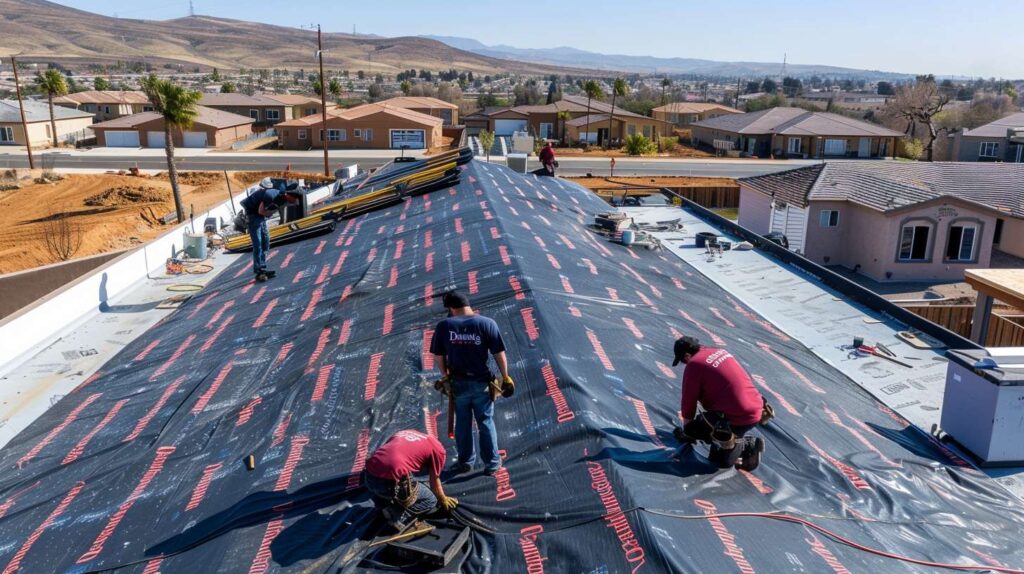
I’m going to take a side here: one contractor is usually the smarter move. One company controlling layout, drip edge, gutter apron, fascia alignment, pitch, and discharge points means nobody gets to shrug and point at the other crew when something fails – and as Brett Callahan, with 17 years in roofing and a specialty in older Brooklyn roof-and-drainage details, keeps seeing on rowhouses from Sunset Park to Crown Heights, the blame-shifting is almost always more expensive than the repair itself.
| Connection Point | What One Contractor Coordinates | What Goes Wrong When Crews Split | Likely Result |
|---|---|---|---|
| Drip edge & gutter apron | Projection, overlap, and order of install spec’d before materials are ordered | Gutter crew finds drip edge in wrong position; shims or skips the apron entirely | Water channels behind fascia; rot within 1-2 seasons |
| Fascia board condition | Inspected and repaired as part of edge sequence, before any metal goes on | Roof crew notes it; gutter crew assumes it was handled – nobody replaces it | Hangers pull from soft wood; gutter sags and floods foundation |
| Gutter pitch & outlet placement | Mapped to roof plane slope and runoff volume before gutter run is cut | Gutter crew places outlets where it’s convenient, not where the math says | Overflow, standing water in gutters, ice backup in winter |
| Downspout discharge location | Routed away from entries, seams, and neighbor property lines during planning | Placed at the nearest wall penetration; conflicts with grade or building entry | Pooling at foundation, erosion, or discharge onto neighbor’s lot line |
Where Brooklyn Homes Punish Tiny Measurement Errors
On a 20-foot Brooklyn rowhouse, an inch in the wrong place is a whole repair call. I was on a narrow Park Slope rowhouse at 7:15 in the morning, coffee still too hot to drink, when I watched water from a second-floor gutter run straight behind a brand-new fascia because the roof crew had finished first and the gutter crew guessed at the drip edge. The homeowner had paid for “all new everything,” and by breakfast we were already pulling sections back apart. That job never left me. Rowhouses, brownstones, rear extensions, tight lot lines, older fascia conditions – Brooklyn’s housing stock means the margin for guessing is basically zero.
Trace that water for a second. Newer roofing materials – especially architectural shingles – shed water faster than old 3-tab, which means runoff arrives at the gutter edge with more speed than the previous roof created. If the gutter transition isn’t tuned to that new rate, water either jumps the lip or backs up under the edge metal. Both outcomes look like a roof problem. Usually, they’re not.
Edge Details That Fail First
The edge is where both systems hand off to each other, and it’s the first place to show a mistake. Five details decide whether that handoff works – or whether you’re getting a call in the rain.
Five Small Details That Cause Big Callbacks
- ✅ Drip edge projection: Must extend far enough past the fascia to direct water into the gutter, not behind it – typically ¼ to ½ inch minimum, confirmed before shingles go down.
- ✅ Gutter apron overlap: The apron needs to sit behind the gutter lip and over the drip edge – installed in the right order, or it’s decorative metal doing nothing.
- ✅ Fascia straightness: A bowed or rotted fascia board means the gutter hangs at an angle – that’s a pitch problem before the gutter is even up.
- ✅ Correct gutter pitch: ⅛ inch of drop per foot of run, toward the outlet – not eyeballed, measured – or water sits and stains, then freezes.
- ✅ Downspout exit location: Placed away from door entries, window wells, seams, and – on Brooklyn rowhouses – the neighbor’s side wall where lot lines are inches apart.
Brooklyn House Conditions That Change Roof-to-Gutter Planning
Open to see how house style changes the water path.
What Changes When the Same Crew Traces the Full Water Path
If I’m standing in your driveway, the first thing I’ll ask is: where do you think the water goes after it leaves the shingles? Most people can describe the shingles and maybe the gutters, but they’ve never thought about the full sequence – roof plane, edge metal, gutter sizing, outlet count, downspout route, discharge point – as one connected system that either works together or fails at the weakest link. When the same crew is responsible for every step of that chain, they can’t hand off a problem and walk away from it. And here’s the insider part: on older Brooklyn homes, outlet placement and gutter sizing should be confirmed before material order, not adjusted in the field after tear-off. Once the old roof is off and the edge is exposed, you’re working against time and weather – that’s not when you want to be measuring for a gutter size you should’ve ordered last week.
If two crews need to “figure it out later,” the water usually figures it out first.
How One Contractor Should Plan Combined Roof & Gutter Work
Should You Replace Roof and Gutters Together?
YES ↓
Are gutters older than 10-15 years, leaking, undersized, or being removed for roof access?
- If NO: Replace or modify gutters and edge details with the roof.
- If YES: Inspect carefully and keep – but document the confirmation in writing.
NO ↓
Are current leaks occurring at the roof edge or behind the fascia?
When Doing Both Together Saves Money, Time, and Arguments
Here’s the blunt truth – water does not care whose contract caused the gap. I remember a Sunday emergency in Bay Ridge after a hard summer storm, around 6:40 p.m., where the customer swore the leak was “the roof, definitely the roof.” It wasn’t definitely the roof. A loose gutter apron and a badly pitched gutter were pushing water under the lower edge shingles, and because two separate contractors had worked weeks apart, each one blamed the other while her dining room ceiling on Ovington Avenue bubbled. She paid two service calls to get an answer that one coordinated inspection would’ve caught before either crew touched the house.
I learned this the annoying way on a sleeting Thursday in Midwood. A retired engineer was standing beside me in his yard, pointing at ice forming at the gutter edge and asking why the problem came back after a full roof replacement. The answer was simple and annoying: the gutters were undersized for the slope, and the new roof – a proper architectural shingle job – shed water faster than his old 3-tab. Changed runoff speed, same undersized gutter, same problem. He hated that I was right. He hired us to redo both systems together two weeks later, and the ice issue hasn’t come back.
Separate bids can look cheaper on day one. But duplicate setup time, conflicting scopes where nobody owns the fascia repair, and callbacks that require two crews to remobilize – those erase the savings fast. Follow the runoff from shingle to downspout discharge and ask yourself: if something goes wrong at any point in that path, do you have one phone call to make, or two?
⚠️ The Lowest-Bid Coordination Trap
Don’t compare a roofing bid that excludes drip edge and gutter integration to a gutter bid that assumes the roof edge is already correct. Those two bids don’t cover the same work – they just both assume the other guy handled it. If responsibility for fascia repairs, apron detail, outlet count, and post-install water testing is not written down in the contract, you’re not buying a roof and gutters. You’re buying a future argument.
Questions to Ask Before You Sign Anything in Brooklyn
A roof and gutter system are like two gears; if one is a hair off, the whole thing chatters. Before you agree to anything, you’ll want to know: who is measuring runoff volume, who is specifying the edge metal, who handles fascia repairs if the boards are soft, who performs the water test after installation, and who owns the warranty conversation if something shows up six months later. Those five questions will tell you faster than any sales pitch whether a contractor is thinking about your full water path – or just their piece of it.
Common Questions & Planning Answers
If you want one team to map the full water path and quote the roof and gutters as one coordinated system, call Dennis Roofing for a Brooklyn inspection. We’ll trace every inch of it – shingle edge to downspout discharge – before anything gets pulled apart.