
Remodeling Your Roof – Here’s What It Costs and What’s Actually Involved
Anything from $6,500 to $18,000 or more is a realistic range for a roof remodel on a Brooklyn row house or small detached home – and that spread exists before a single shingle gets lifted. Two roofs that look nearly identical from the sidewalk can land thousands of dollars apart once hidden wood condition, flashing complexity, roof shape, and neighborhood access all get factored in.
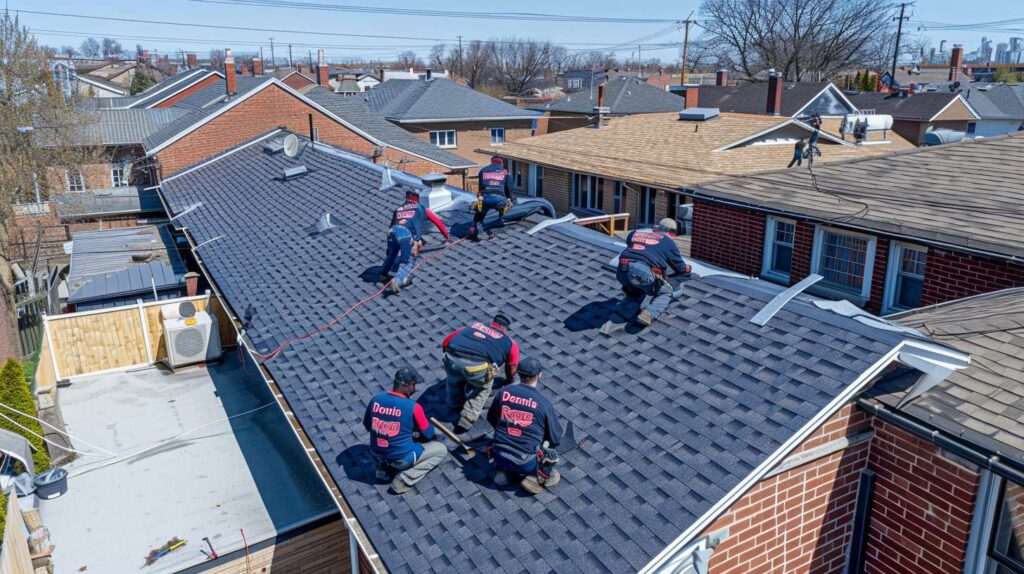
Brooklyn Price Bands Before the Roof Gets Opened Up
In Brooklyn, I’ve seen a basic remodel start around one number and wander fast if the wood underneath has opinions. There are really three layers to any roof estimate: what you see from the sidewalk – the surface material, the slope, the visible flashing – what’s underneath, meaning the decking condition, the underlayment quality, the ventilation setup – and what comes back to bother you later, which is the stuff nobody replaced because nobody could see it rotting. A small flat row house remodel in a neighborhood like Flatbush or Sunset Park might start around $6,500 if the deck is clean and access is reasonable. But add one bad layer of decking, a chimney flashing that hasn’t been touched in 20 years, and a narrow driveway that makes material staging a puzzle, and you’re somewhere else entirely.
Two roofs on the same block can look identical at street level and still separate by $4,000 to $6,000 once the real work begins. Tear-off conditions matter – whether there’s one layer or three, whether the old material is dried out or waterlogged. Access matters – can a delivery truck actually get close, or is someone hand-carrying bundles through a gate? Ventilation matters, even though nobody photographs ventilation when they’re shopping estimates. Edge details, drip edge installation, and how the old flashing meets the new system – all of that adds labor time that a cheap estimate quietly leaves out.
Take a second before you look at price ranges – what’s your roof actually made of, and when was the last time anyone opened it up?
Quick Facts: Brooklyn Roof Remodel Pricing
Typical Brooklyn Remodel Starting Range
$6,500-$18,000+ depending on roof type, size, and condition
Most Common Surprise Cost
Rotted or soft decking discovered during tear-off
Usually Cheapest Roof Type to Remodel
Small flat row house roof with clean decking and simple membrane
Often-Missed Line Item on Low Bids
Debris disposal and dumpster placement in tight Brooklyn streets
Roof Remodel Pricing Scenarios – Brooklyn, NY
| Scenario | Roof Type / Condition | What’s Included | Estimated Range |
|---|---|---|---|
| 1. Small flat row house, clean deck | Modified bitumen or TPO membrane, 1 layer, good decking | Tear-off, new membrane, edge metal, basic drainage check | $6,500 – $9,500 |
| 2. Asphalt shingle on small detached home | 1-2 layers, average slope, accessible site | Tear-off, new underlayment, shingles, drip edge, ventilation check | $9,000 – $13,500 |
| 3. Flat roof with moderate decking replacement | Older membrane, soft spots in 30-40% of deck | Tear-off, partial decking replacement, new membrane, flashing at walls | $10,500 – $15,000 |
| 4. Remodel with skylight & chimney flashing updates | Asphalt shingle or flat roof, multiple penetrations | Full tear-off, new roofing system, skylight re-curbing, chimney step and counter flashing | $12,000 – $17,500 |
| 5. Complex roof, tight access, multiple penetrations | Multiple valleys, skylights, vents, or parapet walls; narrow lot or no street parking | Full system replacement, all flashing, hand-carry material staging, extended disposal logistics | $15,000 – $22,000+ |
Where Estimates Quietly Gain Weight
The Parts Homeowners Assume Are Automatic
Here’s my blunt take: the shingles are not usually the part that surprises people. After 14 years in Brooklyn roofing, Pam Guerrero has learned that estimates go wrong where scope gets fuzzy, not where shingles get photographed. The real cost buckets are tear-off labor, decking repairs, underlayment quality, flashing at every edge and penetration, ventilation adjustments, debris disposal, and crew access – and in Brooklyn specifically, access is its own line item. Parking on a residential block near Ditmas Avenue on a weekday takes planning. Getting a dumpster permitted, placed, and picked up on a tight row house block adds time and money that the cheapest estimate quietly skips. And honestly, the cheapest estimate is usually just the least complete explanation of the job.
Why Low Bids Often Skip the Expensive Truths
One August afternoon, with that heavy Brooklyn heat sitting on everybody’s shoulders, I watched a customer in Midwood compare two estimates at her patio table. One price was almost suspiciously low, and when I walked her through it line by line, there was no ventilation adjustment, no flashing replacement, and no disposal listed. She looked at me and said, “So that cheap number is basically just a polite lie,” and honestly, that was one of the cleanest summaries I’ve ever heard. Row house staging in Brooklyn means crews are often working from ladders over shared fences, materials get hand-carried through narrow side gates, and dumpsters sometimes have to sit two blocks away. That is not an excuse – it’s a cost reality that belongs in every proposal you review.
What Adds Cost to a Roof Remodel
| Cost Driver | What You’re Paying For | What Nobody Sees | What Bites You Later If Skipped |
|---|---|---|---|
| Shingles or Membrane | The visible surface material | Quality variance between grades isn’t obvious until 6 years in | Early cracking, blow-off, voided warranty |
| Underlayment | The waterproof layer under the surface | Completely buried and never inspected after install | Leaks that don’t appear until years later |
| Decking Replacement | Replacing soft, rotten, or damaged roof boards | Unknown until tear-off – can’t be priced in advance | New roofing over bad wood fails faster and unevenly |
| Chimney Flashing | Metal sealing at chimney-to-roof transition | Old caulk patches look fine from below | Interior water damage, mold, ceiling staining |
| Skylight Work | Re-curbing and flashing skylight perimeters | Old patchwork around curbs looks sealed until it isn’t | Water intrusion at the most expensive interior spots |
| Ventilation Changes | Ridge vents, soffit vents, balanced airflow | Attic heat and moisture problems invisible from outside | Premature shingle failure and attic moisture damage |
| Tear-Off & Disposal | Labor to remove old roofing, dumpster, haul-away | Multiple layers multiply weight and labor time fast | Surprise invoices when layers or weight exceed estimate |
| Access & Staging | Permits for dumpster placement, crew setup logistics | Brooklyn lot constraints often add half a day of labor | Job delays, rushed material handling, neighbor disputes |
⚠ Watch Out: Suspiciously Low Estimates
A low number without explicit mention of flashing replacement, debris disposal, ventilation handling, decking contingencies, and material quantities is not a bargain – it’s an incomplete proposal. Missing scope language is exactly where remodel budgets go sideways, not during the work itself, but during the conversation you didn’t know you’d need to have mid-job.
If you can’t find each of those items spelled out in the written proposal, ask for it before you sign. A contractor who gets annoyed by that question is telling you something important.
What Shows Up Only After Tear-Off Day
One rainy Monday, we pulled back a section near a chimney and the whole estimate changed shape. That was a job in Bensonhurst – we were there at 7:15 in the morning, coffee still too hot to drink, and the tear-off exposed wet decking clear across the back third of the roof. The homeowner had budgeted for shingles and underlayment, nothing more. I had to explain right there, while the old material was still piling into the dumpster, why the number had just changed. It’s a conversation nobody enjoys. But the answer isn’t to pad estimates with huge contingency guesses upfront – it’s to plan for the possibility and agree in advance on how change orders get handled so nobody’s surprised at the worst moment.
Now put that aside for a second, and think about what the most common hidden discoveries actually are. Soft wood near parapets and edges. Multiple old roofing layers that weren’t disclosed or even known. Failed flashing that was caulked over instead of replaced. Rotten nailer boards along the low edge. Moisture sitting around old pipe penetrations for what looks like several seasons. Every one of those adds labor, materials, and time that no estimate could have perfectly anticipated. That is where budgets get honest.
What Happens Once a Roof Remodel Starts
Delivery & Protection Setup
What you’ll see: Materials dropped at the curb or side entrance, tarps over landscaping and windows. What you won’t notice: The crew assessing access before a single shingle comes off – this decision affects the whole day’s pace.
Tear-Off
What you’ll see: Old material coming off fast, going straight into the dumpster. What you won’t notice: The crew watching for soft spots and color changes in the wood that flag trouble areas.
Deck & Edge Inspection
What you’ll see: The crew slowing down, pointing at areas, sometimes taking photos. What you won’t notice: The mental math happening on how much decking replacement is about to be necessary – this is the moment the final number becomes real.
Change-Order Review & Approval
What you’ll see: A conversation – in person or by phone – about anything that wasn’t in the original scope. What you won’t notice: How much smoother this goes when it was already discussed as a possibility before the job started.
Waterproofing, Flashing & Roofing System Install
What you’ll see: The roof coming back together – underlayment, drip edge, new surface material going down. What you won’t notice: Every flashing transition being sealed in layers, which is exactly what separates a 5-year roof from a 25-year one.
Cleanup & Final Walkthrough
What you’ll see: Magnet drag for nails, dumpster pickup, crew walking the perimeter. What you won’t notice: The final check at every penetration point – chimney, skylight, vent – where most long-term leak problems start.
Questions Worth Asking Before You Sign Anything
How to Test Whether a Proposal Is Actually Complete
If you were sitting across from me at the kitchen table, the first thing I’d ask is: how old is this roof really? Not the age on paper – the actual condition age, because a 12-year-old roof that was poorly installed can look worse than a 20-year-old one that was done right. The questions that reveal missing scope are the specific ones: How many layers are coming off? What happens to the price if decking replacement is needed – and can I see that spelled out before we start? Which flashing gets replaced versus reused? How is ventilation being handled, and is it in the quote? Where does the debris go, and who’s paying for permits if the dumpster needs to sit on the street? Who documents change orders and how fast do I hear about them? Ask all of those. A complete proposal has answers to all of them in writing.
I once had a Park Slope client call me after a weekend rain because water showed up near a skylight two days before their remodel was supposed to start. When we opened things up, the issue wasn’t just the skylight curb – it was old patchwork around it, plus soft wood that had probably been quietly failing for years. That job is still the one I think about when someone assumes square footage tells the whole story. It doesn’t. A 900-square-foot roof with a skylight, a chimney, and a parapet wall can cost significantly more than a clean 1,200-square-foot roof with no penetrations. My insider tip: ask your estimator to physically walk you through every transition point on the roof – chimney base, skylight perimeter, parapet edge, pipe boots, edge metal – and confirm in writing whether each one is included in the scope. If they hedge on any of those, you’ve found where the budget risk is hiding.
Before You Call for an Estimate – Gather This First
- Approximate roof age: Check your closing documents or ask a neighbor who had similar work done – even a rough decade helps the estimator calibrate.
- Leak locations: Note where water has shown up inside, even if it was years ago and patched. Water travels, so the interior spot and the roof entry point are rarely the same.
- Prior repairs you know about: If someone patched a section or re-coated the flat area, write it down. Patchwork affects tear-off labor and sometimes hides bigger problems.
- Number of existing layers (if known): Two layers versus one can change labor cost noticeably; if you’ve never had a full tear-off, assume more than one.
- Photos of all penetrations: Skylights, chimneys, vents, HVAC curbs, pipes – pull out your phone and photograph every one before the estimator arrives.
- Attic moisture signs: Check your attic or top-floor ceiling for dark staining, soft spots, or a musty smell – these clues tell the estimator a lot before they ever get on the roof.
- Access limitations: Note any fencing that blocks the side yard, narrow gates, shared driveways, or parking restrictions on your block – Brooklyn access affects price more than most homeowners expect.
Common Roof Remodel Pricing Questions – Brooklyn
Roof remodel pricing in Brooklyn is less about the material on top and more about everything the surface is hiding – and the only way to know what you’re actually getting into is to work with someone who’s honest about that before the first shingle comes off. If you want a line-by-line estimate with no vague scope language, call Dennis Roofing and we’ll give you a straightforward assessment of what your roof actually needs.